
I remember that yellow engineering pad sitting out on the kitchen bar nearly every evening when I came home from soccer practice during high school. It was a not-so-subtle nudge from my parents to finish my math homework—something I typically delayed by turning on the TV and scrounging for food.
My dad would usually get home about an hour later after a long day at Hewlett Packard’s Boise office, where he worked as an R&D engineer for over 30 years. Our conversations as he walked into the kitchen usually went something like:
Dad: How was your day? How was practice?
Me: Not bad. Did you remember to bring food home? I already ate a hamburger and plate of spaghetti, but I’m starving.
Dad: Same deal as always—there’s a footlong meatball sandwich in my bag. You can plow through it while we do your math homework.
And then he would take out his own yellow engineering pad, and we’d start isolating variables and proving equations. After a 12-hour day at the office, he was patient, easy-going, and steady. I, typically, was not.
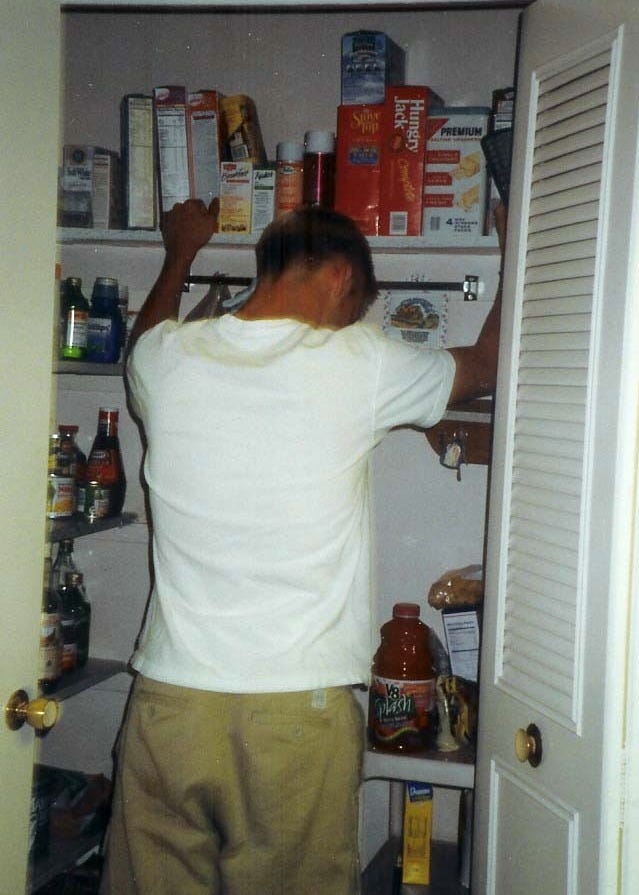
See: Brian looking for more food in the pantry at age 16
Years later, I found myself coming home from a long day of graduate school to my own young family. During that time, my oldest daughter entered 1st grade at Hosmer Elementary School and received her first math homework assignment. Without even thinking about it, I pulled out two yellow engineering pads and sat beside her at the kitchen table.
Me: What did you learn about in school today?
1st Grade Daughter: How to play dodgeball. Did you remember to bring home the Ben & Jerrys?
Me: Same deal as always—it’s in the freezer.
1st Grade Daughter: Yay! What did you learn about today in school dad?
At which point, I would tell her about a case from one of my classes while she danced around our small Soldiers Field Park apartment—twirling around and barely listening to my stories.
One night I told her a story about Catalina Hoffmann, an entrepreneur in Madrid that had developed an organization that helps grandmas and grandpas live a healthy and happy life. As I finished, she stopped dancing and started walking toward the freezer with her younger sister to grab some ice cream. She paused for a moment, and then turned around and said:
1st Grade Daughter: “The stories about the girls are much more better.”
It was an unexpected moment that changed my life.
After she went to sleep, I flipped through the business school cases I’d read during nearly two years of grad school. Founder after founder, executive after executive, almost all of them men. And the difference wasn’t lost on my daughter. Nor was it lost on Lesley Simons, who—two years later—wrote a powerful article for Harvard Business Review titled: Only 11% of Top Business School Case Studies Have a Female Protagonist.
Since then, I’ve often wondered about the things we pass down from generation to generation—sometimes with care, but often without intention.
Some of those things are good. A parent taking time to sit beside their child after a long day. The comfort of a familiar question. Two yellow engineering pads sitting on a kitchen table.
But others are more complicated. The stories we tell. The people we center. The assumptions we normalize without even realizing it. My daughter didn’t just want more stories about women—she expected them. And she was right to.
International Women in Engineering Day
When I see events like International Women in Engineering Day (INWED) roll around, I know there will be a chorus of support—and an inevitable round of criticism:
Why the extra emphasis on women?
Aren’t we past all this by now?
Why isn’t there an International Men in Engineering Day?
My inclination is to respond sincerely by first acknowledging the real progress women have earned. And then I point to the outcomes we still see—the facts that show up in everyday life.
Like how a recent UK study found that eight in ten young people couldn’t name a single female entrepreneur.
Or how just 3% of Nobel Prizes in the sciences have ever been awarded to women, despite generations of contribution and discovery.
In my experience, the vast majority of people believe that these outcomes are problematic and need to be addressed. I often find that criticisms come less from ill will and more from unawareness of how deeply we’ve normalized a man’s world in our stories, our classrooms, our media, our labs.
Which is exactly why we need events like International Women in Engineering Day: to intentionally address what we’re passing down—and to ensure the next generation hears the full story.
See: Nestlé International Women in Engineering Day 2025 Event
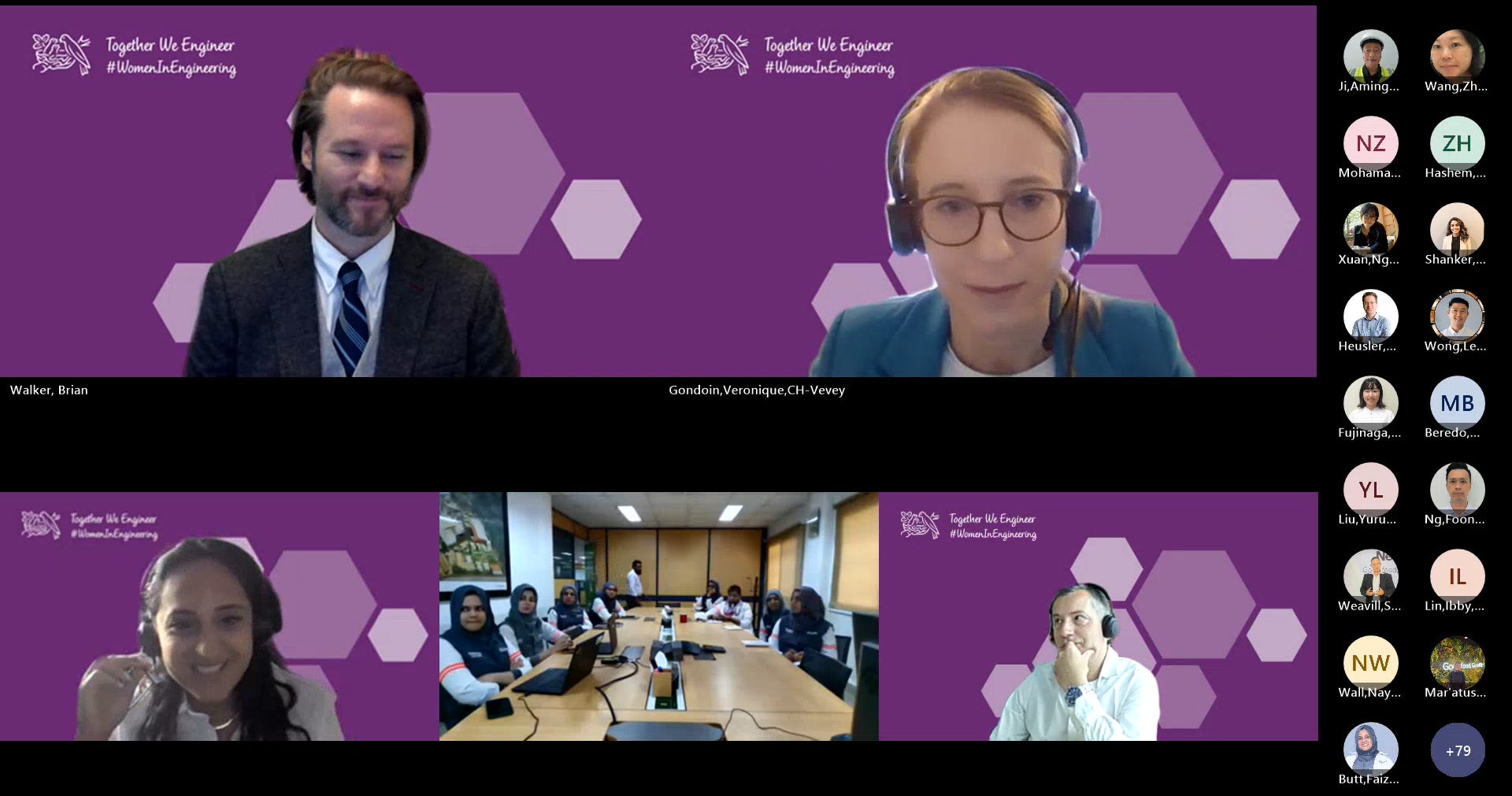
This week, I spoke to Nestlé’s global engineering team as part of the company’s INWED celebration. The event was attended by hundreds of women and men from across the globe and led by three outstanding engineering executives whose work spans continents, technologies, and teams:
Myra Adnan Malik, Global Manufacturing Sustainability Expert
Véronique Gondoin, Chief Engineer, Nestlé Nespresso & Nestlé Suisse
Marina Nagel, Chief Engineer, Nestlé Malaysia & Singapore
In my remarks, I shared stories about leadership lessons I’ve learned from Judy Faulkner, the technologist who founded and leads Epic; Regi Herzlinger, the first woman to become a tenured professor at Harvard Business School and a pioneer in health care innovation; Aitana Bonmatí, the Ballon d’Or–winning footballer who led the Spanish national team to World Cup glory; and Jacinda Ardern, whose different approach to power will hopefully inspire a new wave of global leaders.
What are the things we’ll hand down from generation to generation?
What are the stories we’ll tell?
If creating helps us discover meaning, what lessons are we missing when so many creators are left out of the story?
Creating. Meaning. Everywhere.
Thanks for reading about my visit with Nestlé.
This summer I’ll be traveling to Switzerland, Pakistan, the U.S., Ethiopia, and a few other places to meet with people who are creating meaningful change in their communities.
About 3–4 times a month, I’ll share reflections on what I’m learning—stories from the road, insights from my work with entrepreneurs and leaders, and thoughts on how we create meaning through what we build.
If that resonates, I’d love for you to follow along.
Comments
Nothing yet. Say the first thing.
Sign in to join the conversation.