
Years ago I offhandedly mentioned to Claire that I used to “read for pages” when I was in middle school. She was like, “wait, back up, what?” Let me explain.
In seventh grade, my English teacher Mrs. Wisneski prompted us to read more. Read a certain number of pages throughout the year and you’d get a C. Read more and you’d get a B. Read even more and you’d get an A. And if you hit a certain page count above the A threshold, you earned a coupon for free pizza at our local Pizza Hut.
I was the kind of kid who got the As. But I didn’t earn them in the best way. I didn’t cheat, and I read every word of every page I logged, yet I didn’t take any of it in. I didn’t comprehend what I was reading. The words went in through my eyes and out through some back door in my brain.
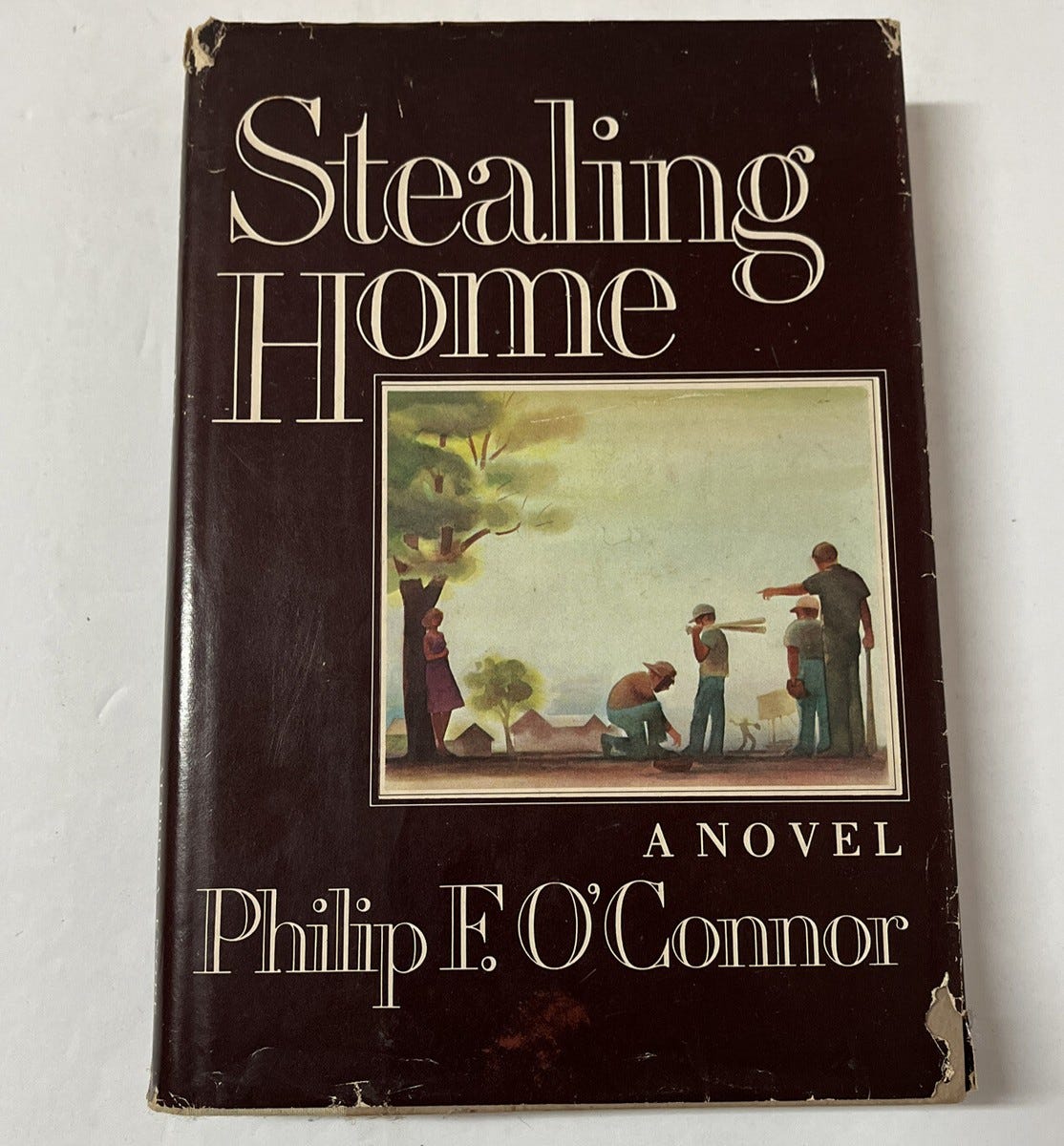
I remember one particular book, Stealing Home by Philip O’Connor. I read it two times, because I was short on pages and didn’t have anything else around. Every word, all the way through, twice. I couldn’t tell you a single thing about it. I knew it had a brown cover.
This might be a deeper problem. I’m the kind of person who belts out my favorite songs at the top of my lungs, really feeling the melody, until Claire asks, “Do you know what that song is about? It’s kind of dark.” Nope, not at all. Had no idea, because I didn’t listen to the words. It has a good beat though.
Claire, for her part, can read up to five books a week. People often ooh and ahh when they hear that number, but she doesn’t think it’s impressive. She uses reading the way others might watch TV or scroll social media, as an escape and way to unwind. It comes naturally to her. It did not come naturally to me.
For a long time after my seventh grade pizza triumph, I barely read at all. Then, somewhere in my twenties, I picked up The Pelican Brief, followed by The Da Vinci Code, and finally Claire convinced me to read The Lord of the Rings. (As I write this, I’m realizing The Hobbit was the same story. I read the whole thing and took in none of it. Whew.)
Those books primed me, and I quickly turned to nonfiction, which is where things really clicked. The Tipping Point showed me how ideas spread in interesting ways. Made to Stick changed how I communicate. The Simple Path to Wealth and The Psychology of Money reshaped how I think about financial decisions. Never Split the Difference made me a better negotiator.
I was finally reading (really reading). Taking it in, comprehending it, even putting the lessons to use. I’d come a long way from Pizza Hut.
Then in 2024, I had a crazy idea to write my own book. And I did. I learned so much along the way about knowing your reader, about voice, and about the sheer stubbornness required to finish something that takes so long.
If I can go from “reading for pages” to reading books I actually love to writing one myself, I have to believe others can too. If you’re a professional with ideas you want to put out into the world, my advice is simple: start reading (but not for pages). All of that reading will seep into your efforts as you develop your writing skills.
Which brings me to this week. I’m reviewing the final draft of my book, the last pass before it goes to print. I mentioned to Claire that this is the perfect excuse to recall my old skill. I don’t need to take in the ups and downs of the stories, or absorb the lessons and frameworks. I just need to find typos, misplaced commas, and words that got duplicated somehow.
After all these years, I’m ready to “read for pages” again but on purpose this time. And with full awareness of how far I’ve come.
No posts
Comments
Nothing yet. Say the first thing.
Sign in to join the conversation.