
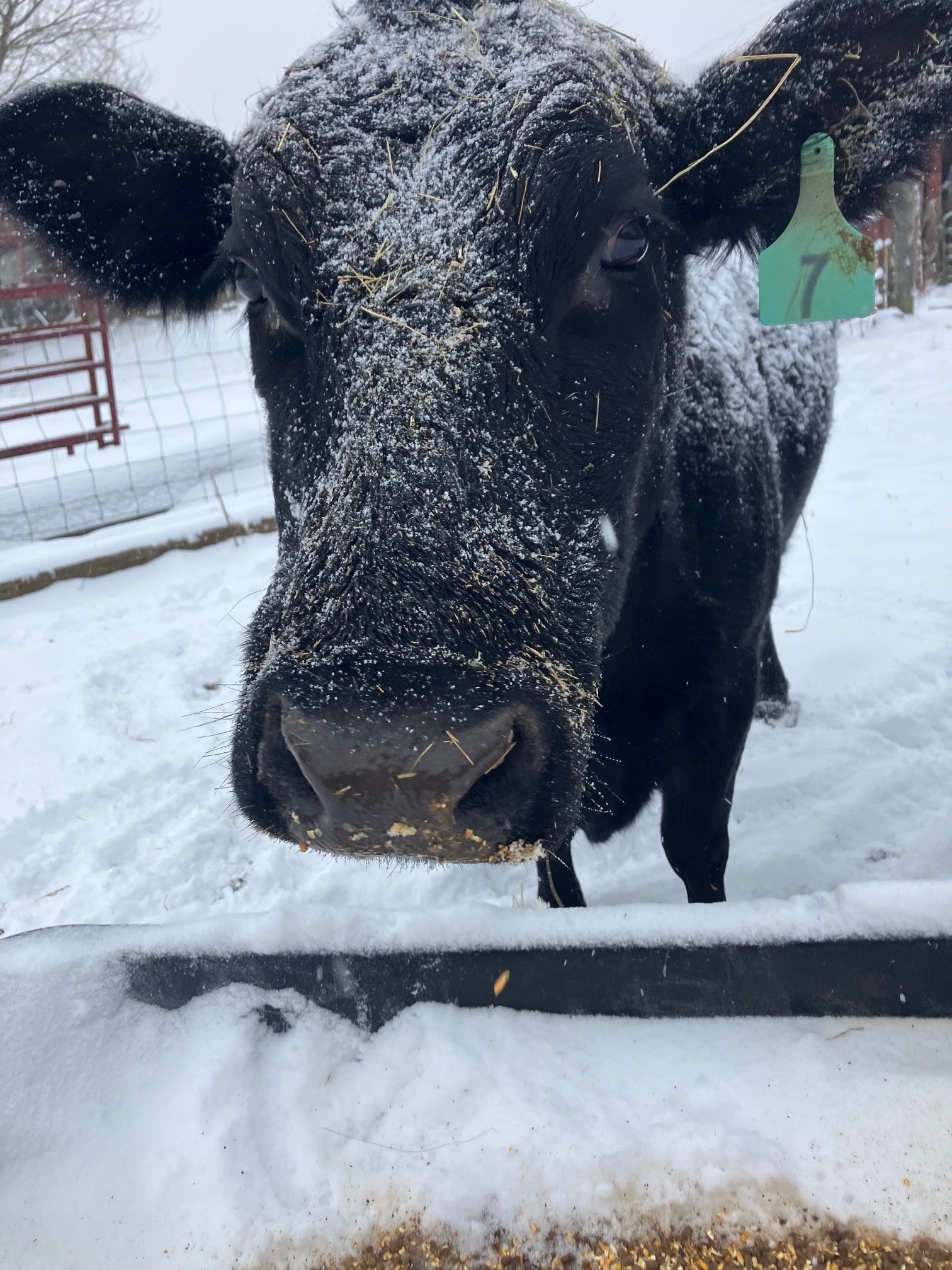
In the shade of a cattle shed sits a 300-gallon watering trough, its contents frozen top to bottom. The day is sunny, and recent temperatures have risen into the mid-40s. As a result, the low-angled sun has forced the ice to release its grip on the trough’s sides. A rim of open water—and also a peek at the ten-day forecast—signals a change for the good.
Nearby, on the backside of an equipment shed lies the family hog, grown fat by indolence. A trailer hooked to the farm truck is parked at the closest gate, the floor covered with straw bedding. So goes the annual act of betrayal set to begin later today: enticing the gilt out of her home in the pig paddock and into her new transient quarters, in preparation for early tomorrow morning, when I’ll drive her to Ward’s to be dispatched and butchered. A few weeks from now a small batch of weanlings will replace her. Those piglets will be raised out over spring and summer for customers in the fall.
Later this morning I trundle a wheelbarrow of composted sheep manure past the trailer and into the garden area. The garlic cloves planted last fall poke green shoots above the straw that has sheltered them this winter. Between the raised bed of the garlic and the wall of the hoop house is a strip of soiled snow. Like the last holdout of a monthslong party, it looks tired and ready to go home. I open the hoop house door and push my load inside, where the temperature is already in the 80s. For the first winter in many years, the raised beds have been left fallow. Following a trip to Williams Greenhouse in a couple of weeks, though, two of the beds will be packed with cole-crop transplants or sown with seed. I dump the manure and rake it into a smooth bed to await the new arrivals.
Having returned the wheelbarrow to its place, next to another alongside the corral fence, I feed the chickens in their pen. They are anxious to be let out and have the run of the farm, but they’ll have to wait. In the four inches of snow that fell this past week, I tracked hundreds of footprints of what appeared to be a fox, from the point where it entered the cattle paddock next to the woods to where it ultimately scratched at the chicken run’s gate. Along the way, the fox seems to have been diverted by a rabbit, its distinctive prints—narrow at the small front feet and wide between the larger backs—marking a wild flight from a cunning enemy. The outcome, I don’t know. I didn’t spot a splash of blood or remnant of fur, so perhaps the fox came away empty-handed. In any case, I’m glad it went after the rabbit. I’m not generous enough to want to feed a fox or any other predator with our egg layers.
I head back to the house, where Cindy has made a pudding from leftover cornbread to go with our afternoon coffee. I carve out a chunk now, just to make sure it is okay.
……………………………………………….
Reading: The White Nile (A. Moorehead), a truly enjoyable armchair journey with Victorian era explorers into the heart of Africa. And, Immoderate Greatness: Why Civilizations Fail (W. Ophuls), a short inquiry into civilization’s tendency to organize for failure.
Comments
Nothing yet. Say the first thing.
Sign in to join the conversation.