

*Please read the disclaimers at the base of this report. The author may maintain a position in the company (or companies) mentioned below. Does not constitute a recommendation to buy or sell the securities mentioned herein. Do your own due diligence. This report constitutes opinion journalism and commentary and should not be read as investment advice. For Permitted Recipients only (UK - see disclaimers).
Warren Buffet’s once famous dictum was never to invest in airlines. In fact he did over the years, but never particularly successfully. Airlines are notoriously hard to run, often unionised, with high fixed costs faced with price sensitive consumers and always with the fear that one day, somewhere, something could go badly wrong (like a passenger being sucked out of a broken window..ahem). Holiday companies have not fared much better (witness the fate of Thomas Cook and others).
And yet no frills low cost airlines have changed the game over the years proving that airlines can be profitable, costs can be managed, and capacity can be flexed. Yet there have always been concern over the implicit leverage these operators run, their economic sensitivity and pricing pressure. In contrast to its competitors Jet2 has always been conservatively run. Originally a freight operator, Philip Meeson turned the company into a passenger charter carrier in 2001. The name Jet2 was adopted in 2003 and it began as a leisure airline operating flights from Leeds Bradford Airport to Amsterdam and expanded from there into a number of sun and city break destinations, whilst expanding its UK hubs to the Midlands, Glasgow and more recently London Gatwick. Jet2’s package holiday business was launched in 2008 and operates in tandem with the flights business. Whilst no longer involved in the day-to-day running of the business Meeson still owns a material stake in Jet2.
The company’s 10 year track record has been impressive, growing revenues at an 18%+ CAGR and generating around £3bn of free cashflow over that period. In that time operating margins have oscillated between 6-8% and are recently at the low end of that range. Ex Covid period, returns on capital have been in the solid mid teens. Margins are significantly lower than Ryanair’s as revenues include hotel accommodation costs that are passed through and a significant portion of revenues (80%) come from the package holiday business. The trailing PE ratio is now around 7x, which on the surface looks like a bargain.
Jet2 historic financials:
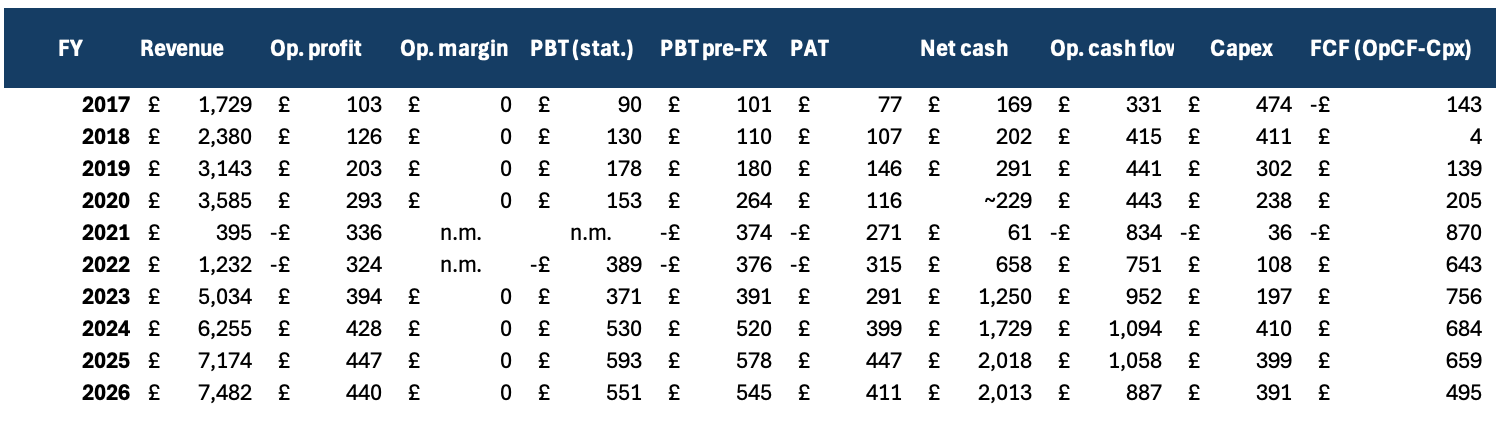
However, the free cash-flow generation and cash war-chest is backwards looking. Going forward the company is embarking on a major capex programme of (on average) £750m per annum through to 2032 as builds out its A321neo fleet (£4.5bn total following an price advantageous order placed in the aftermath of COVID). For the next few years free cash generation (operating cashflow minus this capex) will be constrained even if the capex is part funded by Jolco lending. The extra depreciation along with mix effects (package to flight only shifts) will also bring down EPS quite materially in the short term, even if EBITDA and operating cashflow hold up relatively well.
However, at least for the next year or so (with a lower capex phasing) operating cashflow should still outstrip capex. And given Jet2’s substantial cash surplus any cash outflow can easily be funded from own cash, alongside tapping the Jolco market (plane financing facilities linked to tax breaks in Japan). Moreover, a post Iran war recovery in bookings could should help deliver improved cash from working capital via deferred revenue growth. Presumably, also, the ramp up at Gatwick (set to continue in 2027) will begin to absorb the additional costs deployed in setting up the hub and mitigate any historic drag on margins from starting up.
Here’s Jet2’s operating cost breakdown:
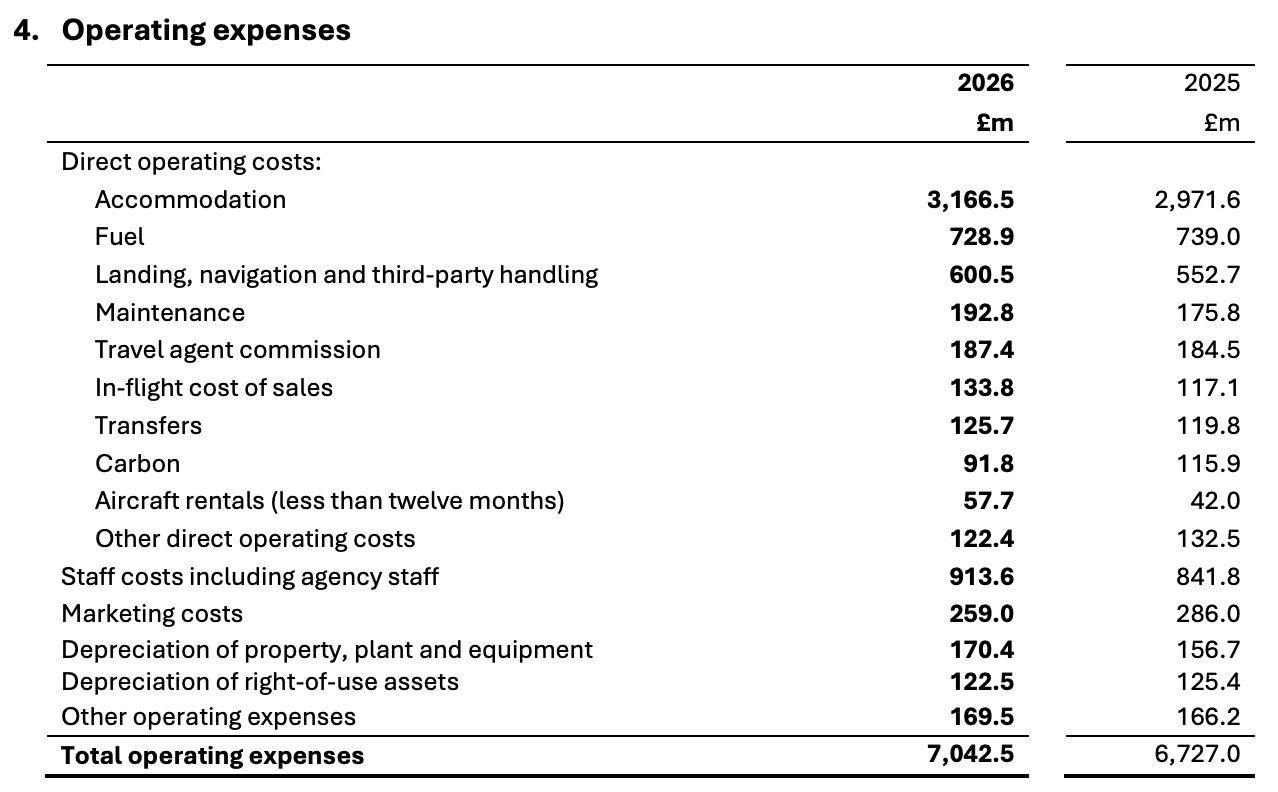
Cash opex above is likely to track at £350m+ growth in 2027, while revenue growth may end up at or around the £400-500m level with passenger gains from higher capacity presumably offsetting discounting pricing on flight only sales: in other words operating cashflow plus perhaps a little bit from working capital (advance bookings) should deliver enough to more than offset capex of £625m - leaving room for around £300m to return to shareholders post Jolco financing. The backloaded capex phasing (given Airbus delays) will likely reduce that number by 2028-2029 but not wipe it out.
Below the paywall we examine cash generation and valuation as well as detailing the risks to the invetment case…
Comments
Nothing yet. Say the first thing.
Sign in to join the conversation.