
Among all the principles that guide a meaningful life, few carry as much immediate, practical power as the call to love our neighbors. This is not a sentiment reserved for greeting cards or Sunday mornings. It is a living, breathing commitment that shows up in small daily choices and in sweeping moments of collective action alike.
Loving your neighbor means extending genuine care and compassion to everyone around you, including friends, strangers, and even those with whom you disagree. Love in this context is not confined to warm feelings; it is often a deliberate decision to act with kindness and decency.
Every major spiritual tradition, philosophical school, and ethical framework across human history has arrived at some version of this same instruction. It is not a Western idea or an Eastern one; it belongs to all of us.
The principle of loving your neighbor matters because the quality of our shared world depends on it. Inner peace and world peace are not separate destinations; they are connected through the daily practice of treating others with care and dignity. When enough individuals commit to this practice, it scales outward into communities, institutions, and nations. As the principle reminds us, we should love ourselves and others as if world peace depended on it, because it does.
In early August, when a hiker went missing in British Columbia's Comox Valley, ordinary people chose to act. Strangers shared information, volunteers turned out, and a coordinated effort by search and rescue teams and supporters helped ensure the missing hiker was found alive in the Comox Valley backcountry. Comox Valley Search and Rescue publicly thanked the media and the public for sharing information and supporting the search effort. That is love your neighbor in its most literal and life-giving form: a deliberate choice to show up for someone you do not know, simply because they need you.
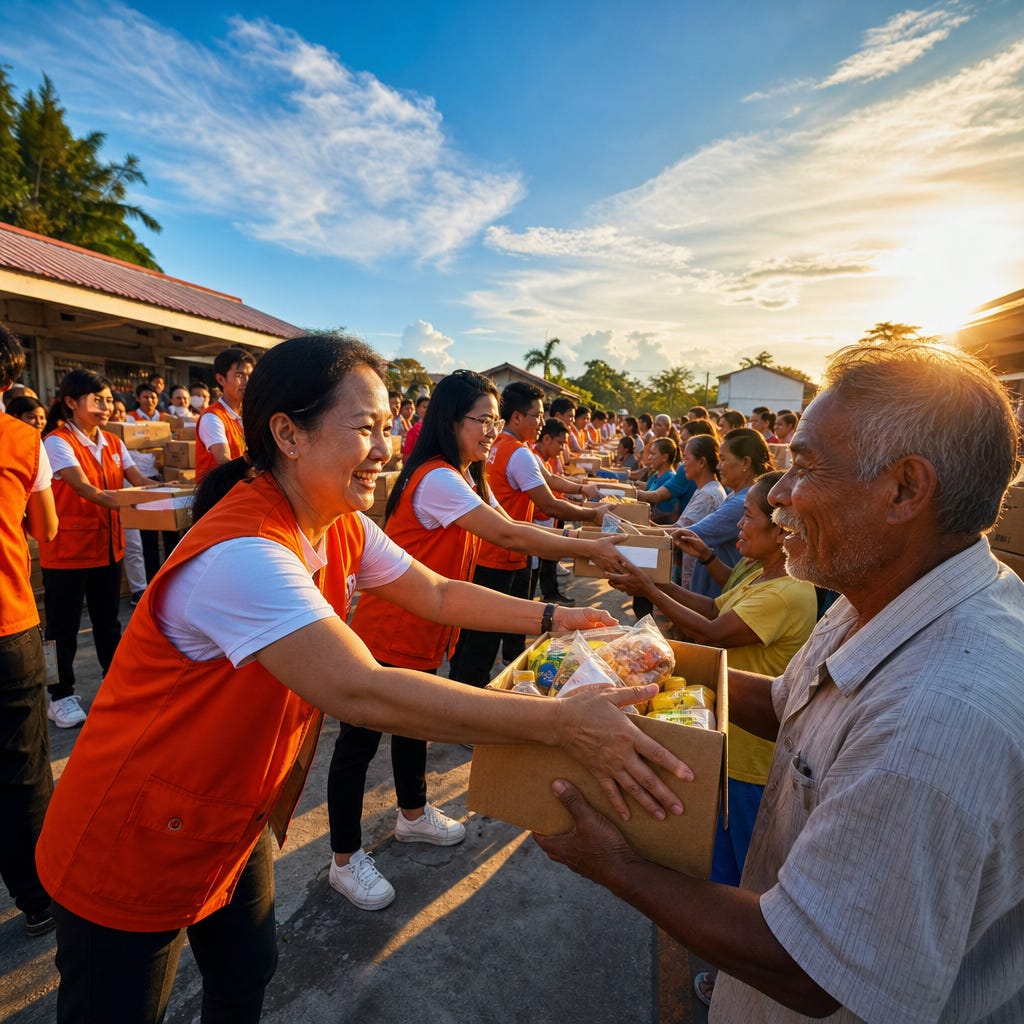
On August 9 in Butterworth, Malaysia, One Hope Charity and Welfare launched its 2026 aid distribution program, planning food assistance and cash support for 10,000 underprivileged and single-parent families. The scale of that effort reflects what organized, collective love for neighbors can accomplish. It is not sentiment; it is logistics, planning, and sustained commitment translated into meals and stability for families who are struggling. This is the principle at its most organized and its most powerful.
When you consider the people in your life who are hardest to love, what would it look like to offer them a deliberate act of care rather than waiting for the feeling to arrive first?
If loving your neighbor truly does connect to world peace, where in your daily routine is there a small, overlooked opportunity to extend that kind of care?
How might your community, neighborhood, or workplace look different if everyone in it practiced even one concrete act of neighborly love each week?
More principles, daily reflections, and 15 wisdom-tradition perspectives in 44 languages at https://TheRainbowBridge.TV.
For an extra boost of positivity and energy throughout your day, check out http://TheDailyEnergizer.com.
No posts
Comments
Nothing yet. Say the first thing.
Sign in to join the conversation.