
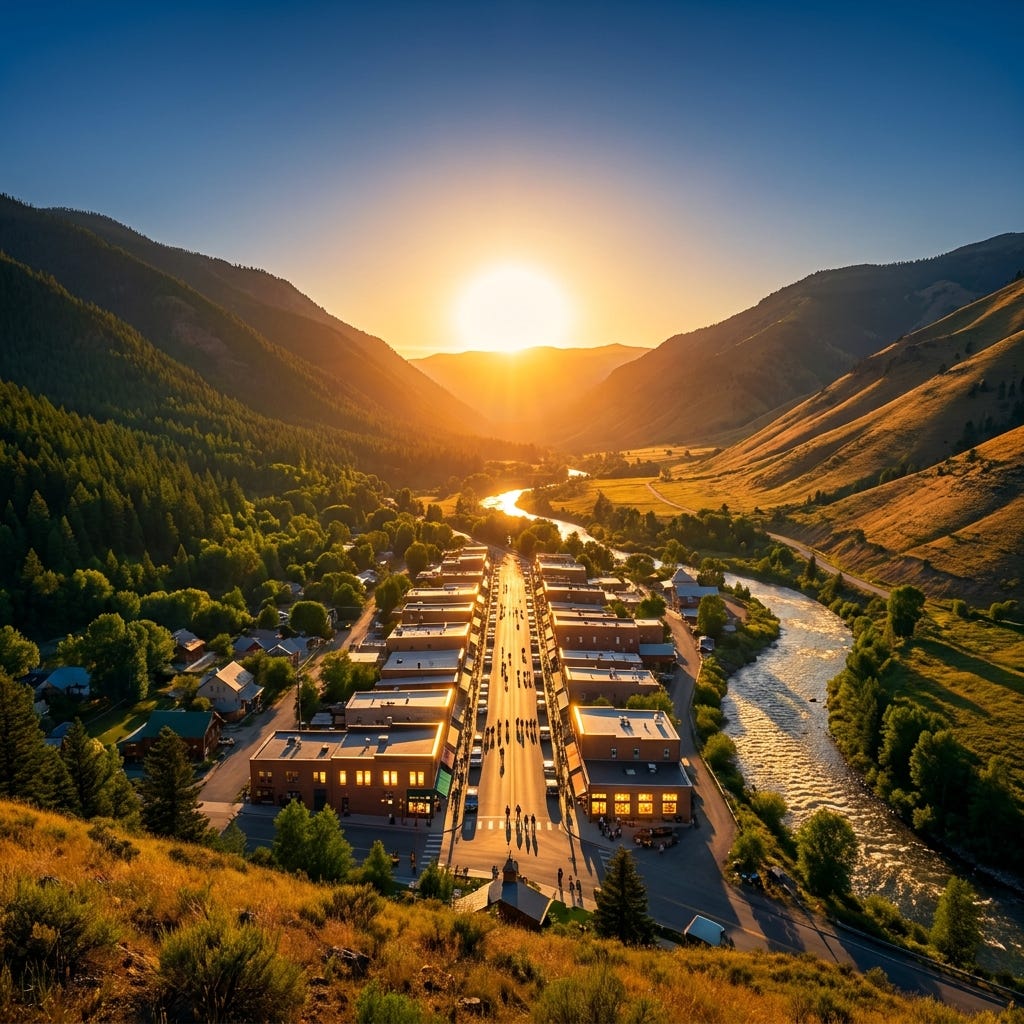
Life moves in rhythms. There are seasons of great momentum and seasons of quiet, stretches where everything seems to flow and stretches where it does not. Understanding that this movement is natural, rather than something to fix or fear, opens a door to greater peace and resilience.
The principle of Peaks and Valleys recognizes that vital energy is experienced in peaks and valleys, in ebbs and flows, as a natural part of life. Energy does not disappear during a low period; it shifts and transforms into different forms. When energy is not appearing in an abundant fashion, conservation becomes a wise and practical response.
Every person on earth, regardless of culture, background, or circumstance, experiences these fluctuations. No individual, community, or nation moves in a straight upward line forever. This is not a personal failing; it is the shared texture of being alive, and it connects us all in a fundamental way.
Recognizing Peaks and Valleys as a natural pattern helps us respond wisely rather than react in panic or despair. When we know that a valley is not a permanent condition, we can conserve our energy, trust the process, and prepare for the return of flow. This understanding transforms how we navigate both the high points and the low ones.
Anyone who has trained for an athletic competition knows this pattern firsthand. A runner may have weeks of strong, confident training followed by days of fatigue and flat performance. The energy has not vanished; it is being processed and reorganized in the body. Honoring the valley with rest rather than forcing through it is often what makes the next peak possible.
Economic life offers one of the clearest illustrations of this principle at work. After the U.S. economy contracted in 2022, real GDP grew at a 2.1 percent annual rate in the second quarter of 2023, a visible swing from valley to peak. The underlying energy was never gone; it was transforming, shifting through uncertainty before re-emerging with renewed force. Knowing that such reversals belong to the natural pattern helps communities and policymakers respond with steadiness rather than alarm.
When you are in a valley, what practices help you conserve your energy and trust that the flow will return? Looking back, can you identify a time when a period of low energy was actually preparing you for something meaningful? How might your relationships, your work, or your community change if everyone understood that valleys are a natural and necessary part of the cycle, not a sign of failure?
More principles, daily reflections, and 15 wisdom-tradition perspectives in 44 languages at https://TheRainbowBridge.TV.
For an extra boost of positivity and energy throughout your day, check out http://TheDailyEnergizer.com.
Comments
Nothing yet. Say the first thing.
Sign in to join the conversation.