
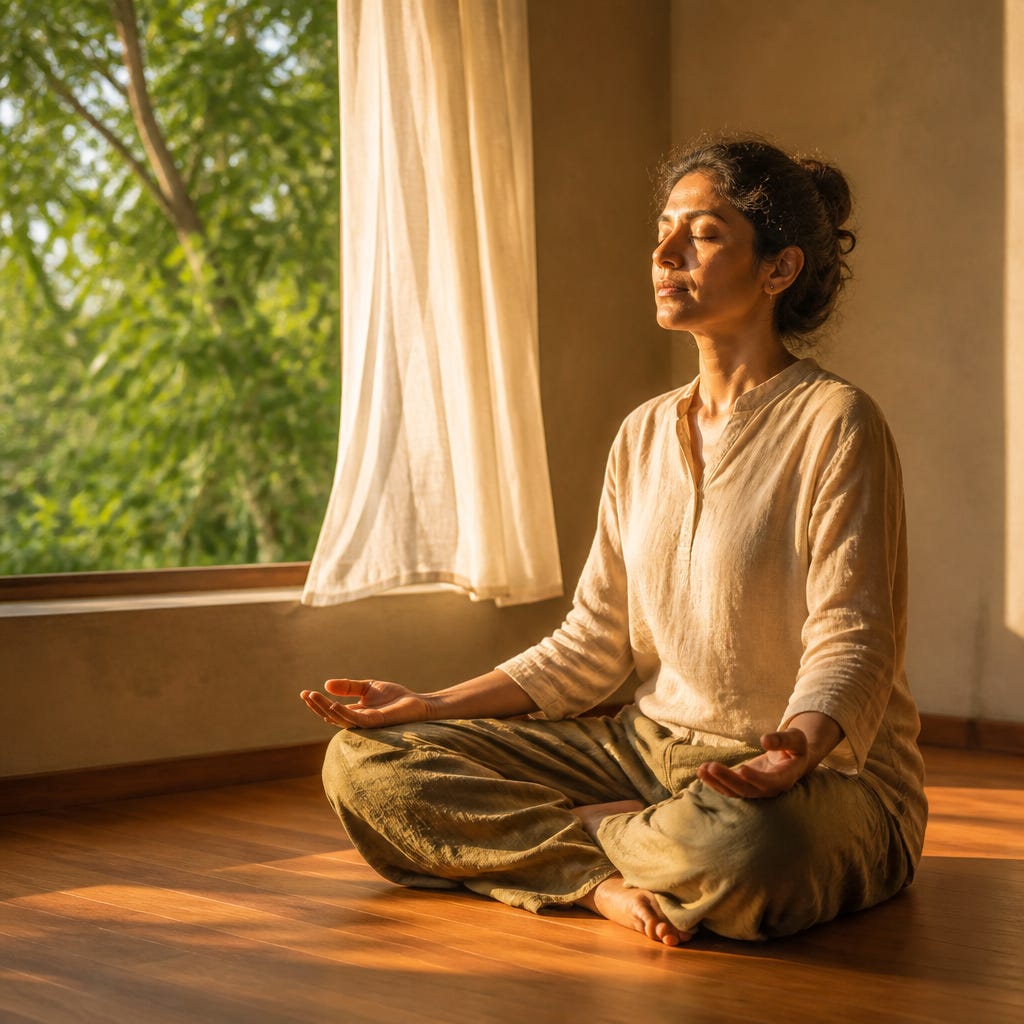
In a world that rewards constant motion and relentless output, the idea of simply sitting still can feel almost radical. Yet there is a kind of wisdom that only arrives when we stop reaching for it. The principle of Meditation and Sitting invites us into that quiet, and what we find there often surprises us.
Meditation and Sitting is the practice of pausing, settling into stillness, and allowing ourselves to just be. It does not require a particular technique or tradition; it asks only that we step out of the noise of our own thinking and rest in the present moment. Whether through formal meditation, quiet contemplation, or simply sitting without agenda, this practice leads us from the restless activity of the mind into the steadier ground of the heart. From that ground, surrender, acceptance, and genuine inner peace become possible.
Every human being, regardless of culture, background, or belief, knows what it feels like to be overwhelmed by the pace of life. The longing to pause, breathe, and find a moment of stillness is not the property of any one tradition; it belongs to all of us. From ancient monastic practices to a parent sitting quietly after the children are asleep, the impulse to just be is one of the most universally shared human experiences there is.
Without regular stillness, we lose touch with the part of ourselves that knows what we actually feel and what we truly value. The mind accumulates noise the way a room accumulates dust, and sitting quietly is how we clear it. This practice does not merely reduce stress; it restores perspective, deepens self-awareness, and opens a channel to the kind of inner clarity that no amount of busy thinking can produce.
Consider someone navigating a period of personal uncertainty, perhaps a career crossroads or a difficult relationship, who has exhausted every angle of analysis and still feels lost. At some point, the thinking itself becomes the obstacle. Choosing to sit quietly, even for ten minutes, without trying to solve anything, can shift something fundamental. The answer that could not be forced through the mind often surfaces naturally once the heart is given room to speak.
Communities around the world have long used shared stillness as a way of moving through collective difficulty. When a neighborhood gathers after a tragedy, or a congregation sits in silence before a difficult conversation, something shifts in the room that words alone could not achieve. That shared act of just being together, without the pressure to perform or produce, creates a kind of communal trust and resilience that carries people through what individual effort cannot.
When was the last time you sat quietly with no purpose other than to be present with yourself, and what did you notice?
In the moments when you have been most overwhelmed, what might have changed if you had chosen stillness before action?
What does it mean to move from your head into your heart, and how might that shift change the decisions you make today?
More principles, daily reflections, and 15 wisdom-tradition perspectives in 44 languages at https://TheRainbowBridge.TV.
For an extra boost of positivity and energy throughout your day, check out http://TheDailyEnergizer.com.
No posts
Comments
Nothing yet. Say the first thing.
Sign in to join the conversation.