
Sorry to be the bearer of bad news, but the standard warranty for a new home in America is 1 year. A toaster has a longer warranty. Does it surprise anyone? The 1-year warranty is on materials and workmanship, while a structural warranty is usually 10 years.
I find the 1-year warranty bar, to be far too low, and believe it is the single strongest proof that our houses are built to be disposable. Manufacturers are building products that only have to clear the 1-year mark for them to move on with no consequences. Sadly, many homeowners actually expect many of these cheap products will fail and, worse still, have grown to accept it.
In my last article, I wrote about the irony of technology. As technology gets better, it actually diminishes our ability to craft. The irony of that irony is that bad craft contributes to a downward spiral of quality building products. When building material companies apply new technology to siding, trim, or flooring, they end up making products that are built to last longer (questionably) but are often easier to install. One result is that trades are being dumbed down to a point that you don’t need any skill or training to build a home.
Have you ever wondered why siding is available in 50 different iterations of products, from fly-ash to plastic, vinyl, metal, concrete, fiber wood, and who knows what else? Why is the building industry so intent on providing siding in every wild combination of materials except the original, most readily available, naturally reproducing product on the market: wood?
I believe I can build a structure with wood siding that will last as long or longer than, any other product on the market. My only caveat is that it has to be installed correctly, and I would want to paint it with linseed paint. The key to my statement is that it must be installed correctly. And here is the dilemma.
Ask any product rep, and one of their great challenges for bringing products to market is poor installation that causes the product to fail. Even worse, often their solution to the quality installation problem is to dumb down the product to make it so easy that even a homeowner can do it.
Their other solution is to make the product so that it can’t fail, rot, or twist. This is the reason why plastic, concrete, and wood fiber are so prevalent. These products don’t stop failure. Water still gets in and is rotting the house; you just don’t see it as readily.
A consequence of dumbing down a product so that it is easy to install is that manufacturers will want fewer parts and pieces. Compare a Victorian house in all its variety and wonder to the same house covered in vinyl siding.
One of the reasons I don’t like Hardie, vinyl, and many of the other faux siding products is because, on a historic home, they cover up and hide all the good details. Houses with vinyl siding on a historic house never have the same charm as they do with wood. A few pictures from the old house guy. He has a great article here.
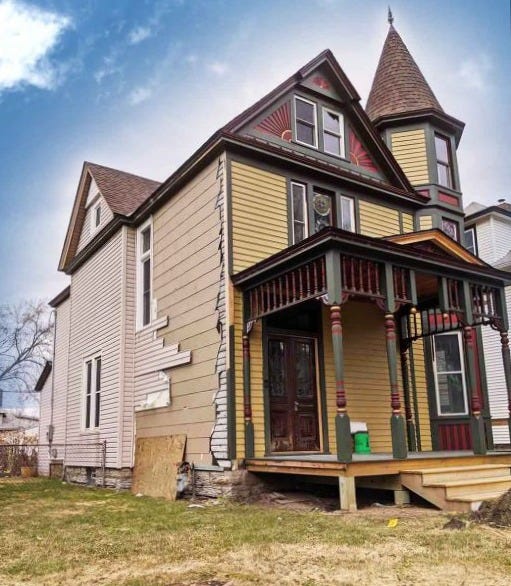
This first house has original wood siding that was then (look at the left side) covered later by asbestos and then covered again with vinyl. Was the change driven by fashion or a desire to avoid maintenance and not have to paint again?
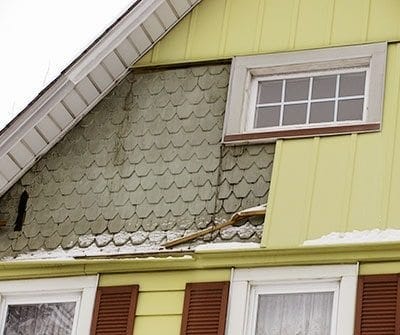
This picture shows how vinyl siding dumbs down the original parts and pieces. It is not as interesting and hides the architectural details.
Realize that manufacturers don’t want variety; they want uniformity. They don’t want creativity; they want simplicity. The result is what we see when we drive through new neighborhoods: all the houses are starting to look the same.
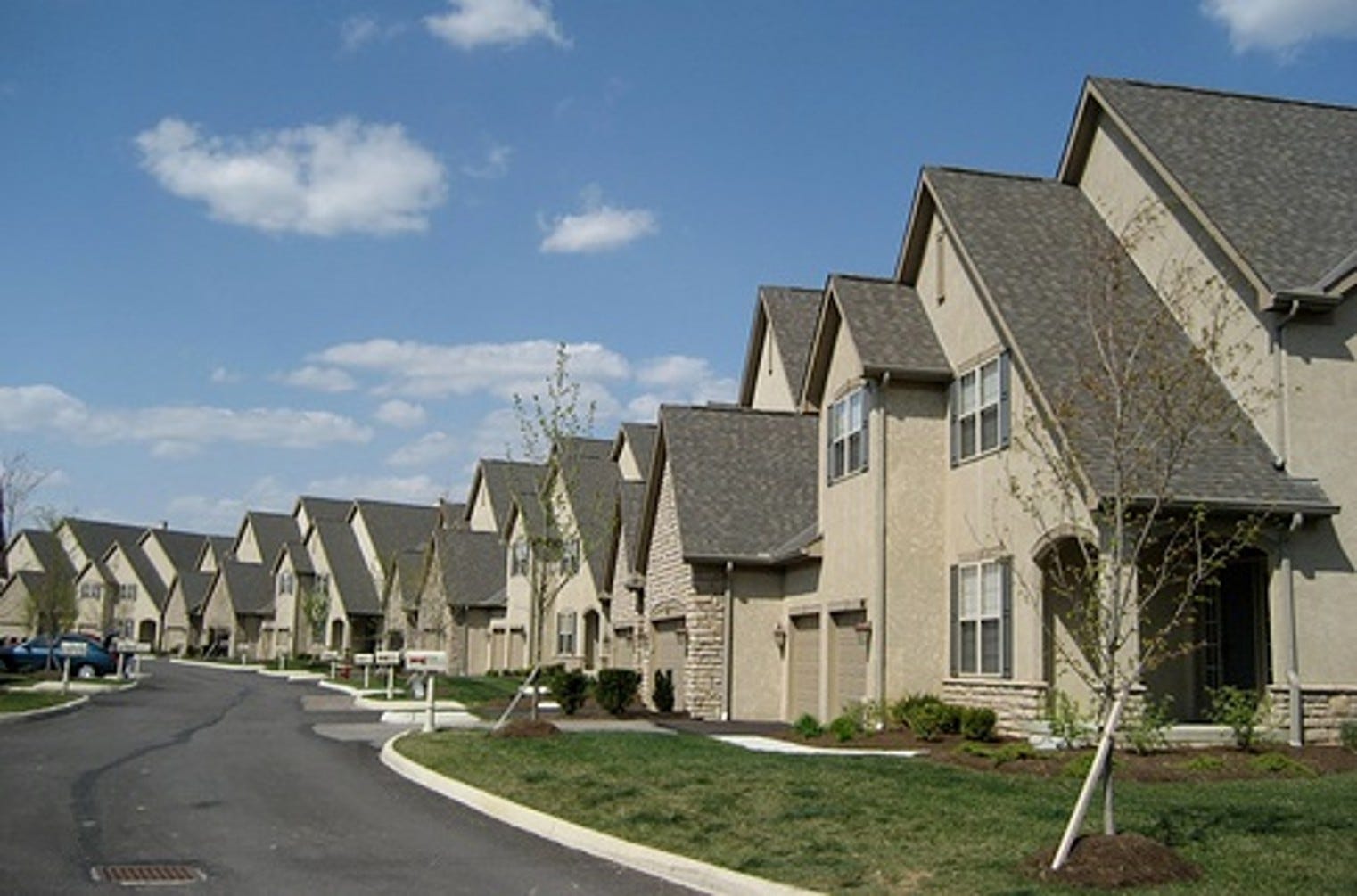
The sad truth is that building product manufacturers are much more interested in managing warranty claims than they are in building a beautiful house. Let me say that again: building product manufacturers care more about warranty claims than building a beautiful house. This is important because it only highlights the need to fight for beauty in our homes.
Part of the challenge in my world is trying to convince clients that wood siding is the best product for their home. There is no siding in America with a longer track record than wood siding. One hundred years, 200 years, yes, even 300 years old. The problem is not the wood siding; the problem is we have forgotten how to build so that wood siding can last. We assume that we need plastic or concrete, and that is not true.
In order to build beautifully, we need to remember that the manufacturer has a different set of challenges in order to be successful. We, as homeowners, architects, designers, and (hopefully) builders, are tasked with making the home beautiful. Let’s fight for beautiful homes. Let’s fight for beauty.
Comments
Nothing yet. Say the first thing.
Sign in to join the conversation.