
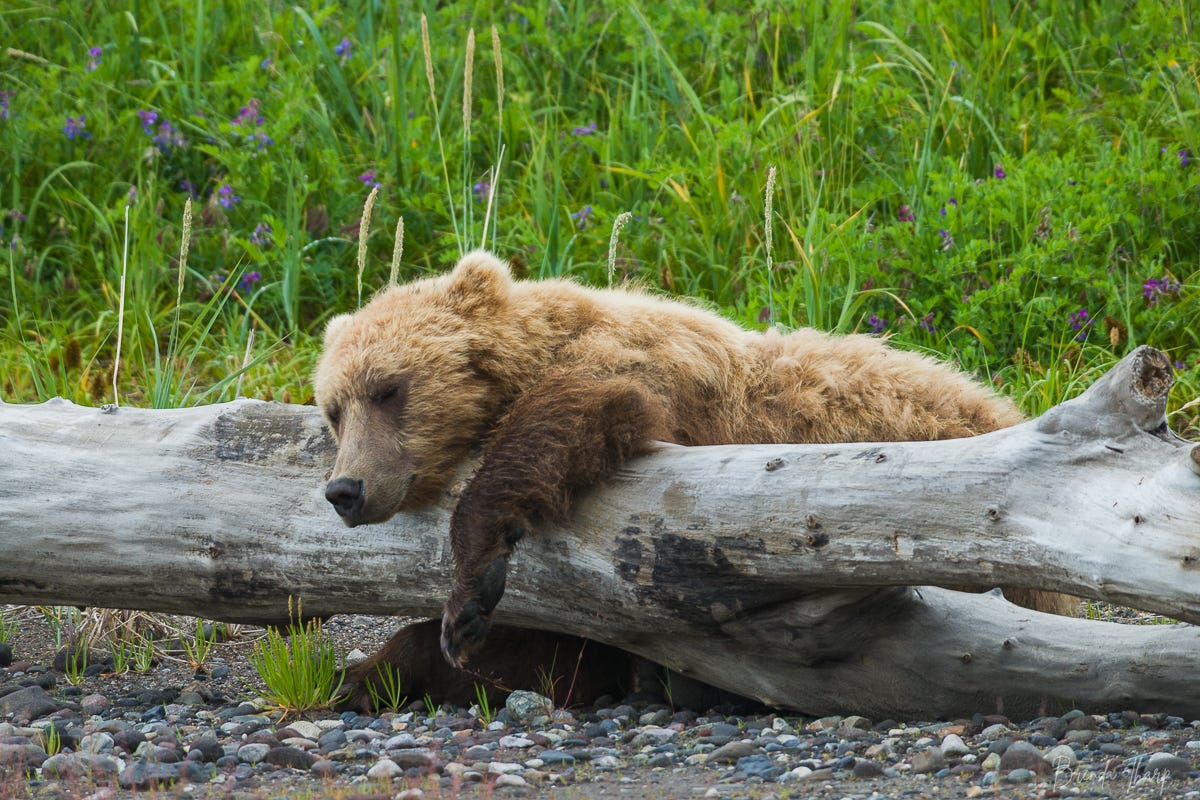
If you are new to my channel, welcome! I post weekly articles with tips and insights that I hope you will find useful.
This week’s post comes about because I have been selecting/editing images for my upcoming new website, and I was in my Alaska folders. Every time I come across the bear photographs in there, I get a warm feeling and a smile spreads across my face. I have simply loved observing and photographing both coastal grizzly bears and black bears in Alaska. I have been photographing bears since about 2004, on various boat tours in southeast Alaska, and since 2007, on various photo tours on mainland Alaska, all of which I’ve led.
I have been to places where you can get rather close - scarily close, in fact, yet safely close, if the bears are habituated to human presence. Such places like Anan Creek, and Lake Clark National Park are two such locations that are terrific. Many other places exist in Alaska, too - Geographic harbor, Katmai, being just two others that come to mind.
When I enter bear territory, as I have done many times at Lake Clark, all of my senses kick in. Even though I have a naturalist/guide who is trained to assess the situation, I still have my own instinct engaged.
Photographically speaking, I look for more than just the iconic ‘bear in the meadow’ or ‘bear catching fish’. I have always taught my workshop groups to look beyond those, to become keen observers of all the other things bears do beside fish for salmon or eat sedges! There are silly bears, serious bears, bears trying to cool off in the heat, standing bears, cute bear cubs – the list goes on!
In addition to simply sharing some fun and rather cute bear photos here, I want to share some insights and photo tips in case you ever get to photograph bears, too. These tips are actually great for wildlife in general!
Pay close attention to what’s going on when you viewing bears. You never really know what they might do next, and being ready with your gear and your settings will help you seize the moment(s).
Sometimes, it can be a while before anything exciting happens. I remember one person who had her camera set on the fastest frames per second possible, and if the bear’s ear twitched, she fired off many frames! That can work, but think about all that you’d have to edit. Best to be more aware of body language, etc., and wait for something a bit more than just an ear twitch!
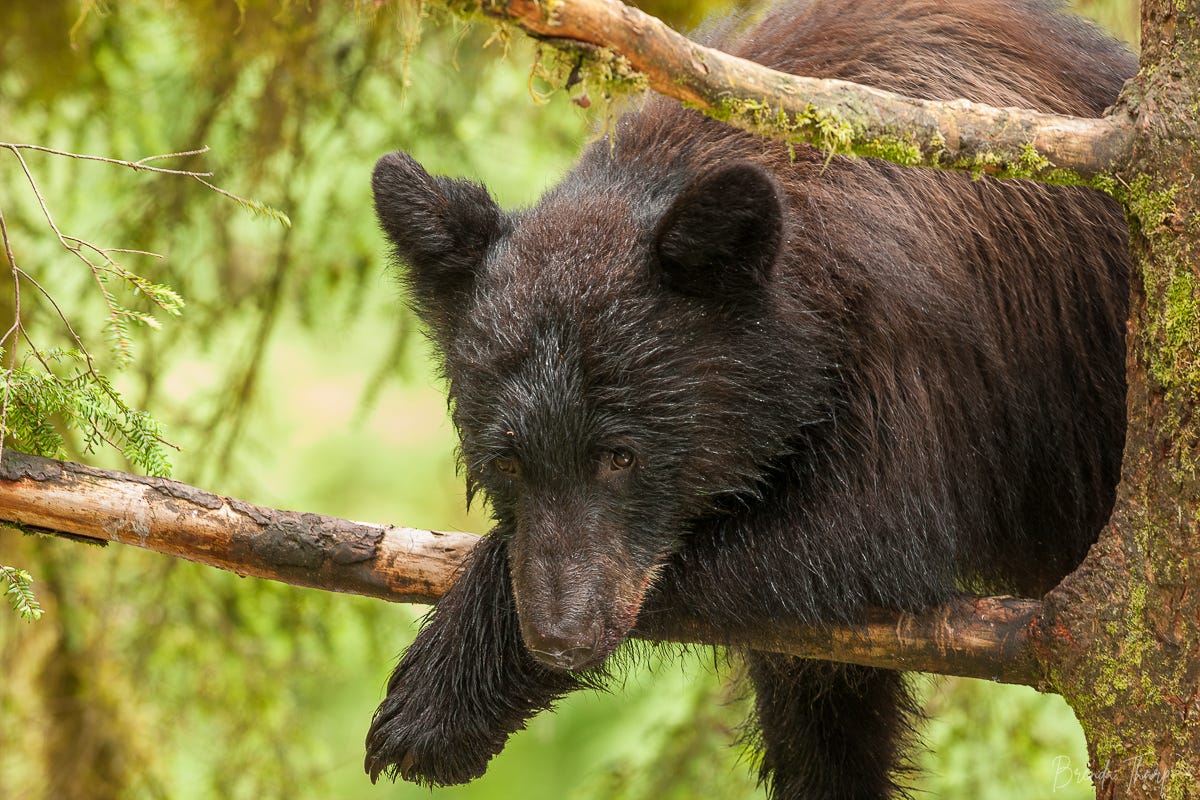
The above image is a black bear, at Anan Creek, who climbed a tree to take a nap. Seriously? Does this look comfortable to you?
This bear below was trying to cool off in a shallow pond, and it rolled around to get itself wet. As I saw it roll, I was ready to capture it midway. I do wish it was facing me, but it is still a fun behavioral photograph.
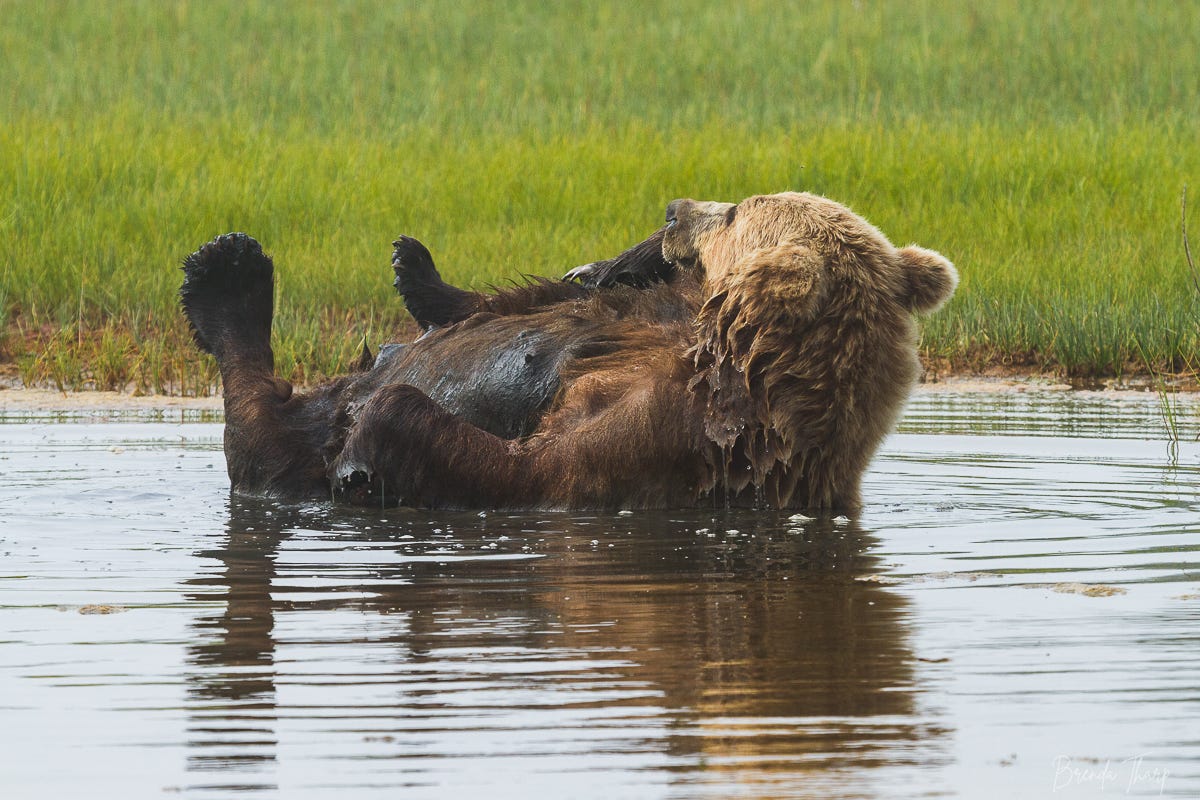
Anticipate Action - this may be hard if you’ve never watched bears in real time, yet if you simply pay attention, you’ll be more ready for when something surprise does happen. It means not putting the camera down in your lap, but holding it up to your eye the whole time you are watching. Believe me, the minute you put it down, that’s when something will happen!
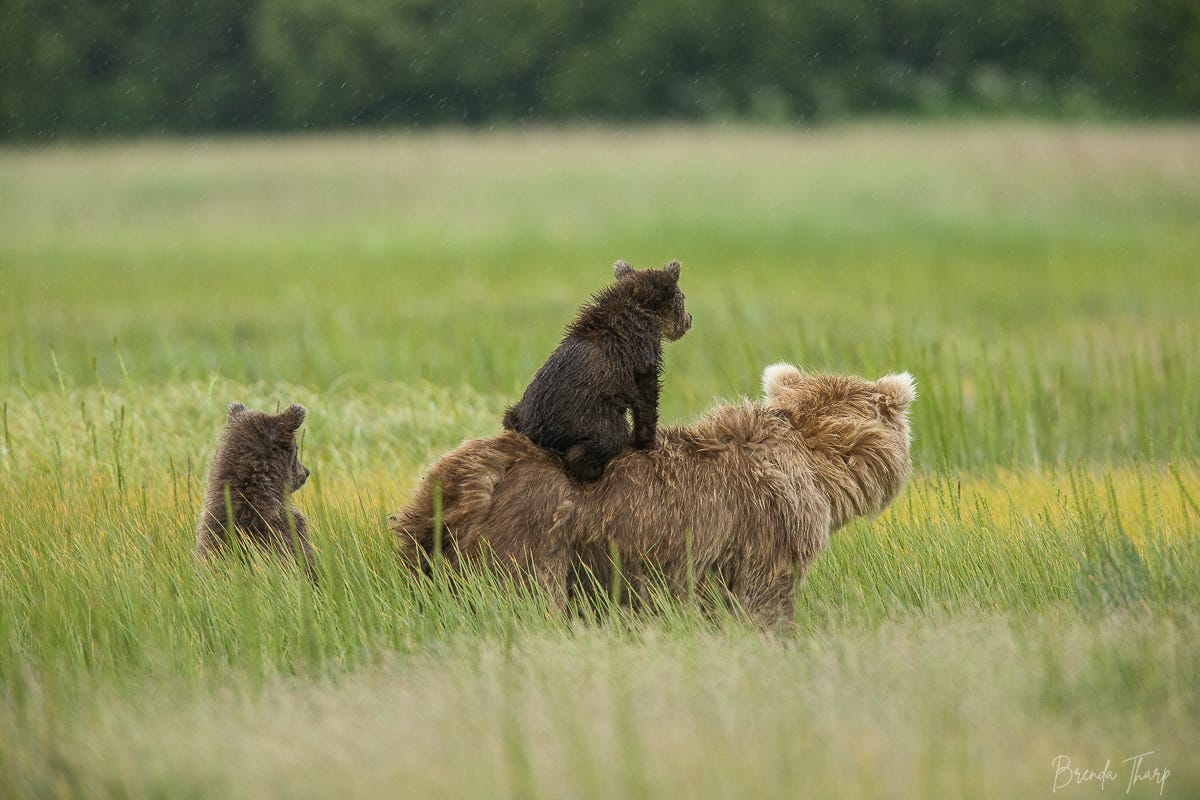
Of course many times they are simply eating tons of sedges in the meadow, but even then you never know what action might occur. This small cub decided to climb on Mom’s back to get a better view. Its sibling could only stand up in the grasses.
These two cubs were standing on all fours on the dirt track, unsure about us, when suddenly the braver one stood up! They do this to assess danger, and had I relaxed, I would have missed it. It’s no wonder I sleep well at night, it’s a lot of hard work staying focused and holding your gear up ‘at the ready’.
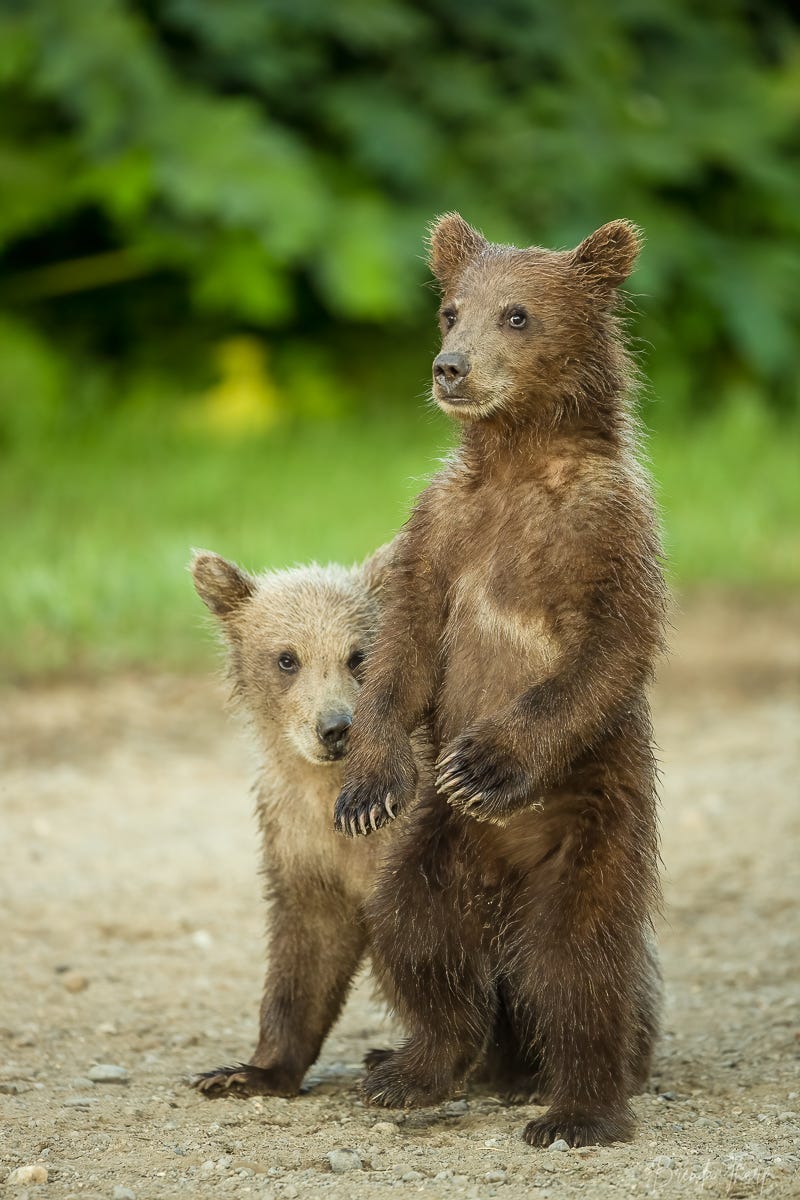
Watch your background. It’s really nice to have a blurred/softer background with wildlife portraits, yet if you use too wide an aperture, the bear’s nose or eyes may be out of focus, if they are looking at you. Just how much aperture you need depends on how close you are to the bear(s), how close it is to the background, and whether it’s looking your way or at a profile angle. I typically keep my lens set at f8-f11, having learned that f5.6 often wasn’t enough. I change it as needed for each situation if given enough time. Of course, at those apertures, and fast enough shutter speeds to handhold my gear to be flexible, that means the ISO will shoot up, too. I’m not concerned about that, with current advances in noise reduction software. My goal is really to try and minimize distractions behind the animal. The softer background makes this image below more pleasing - keeping the bear the focal point.
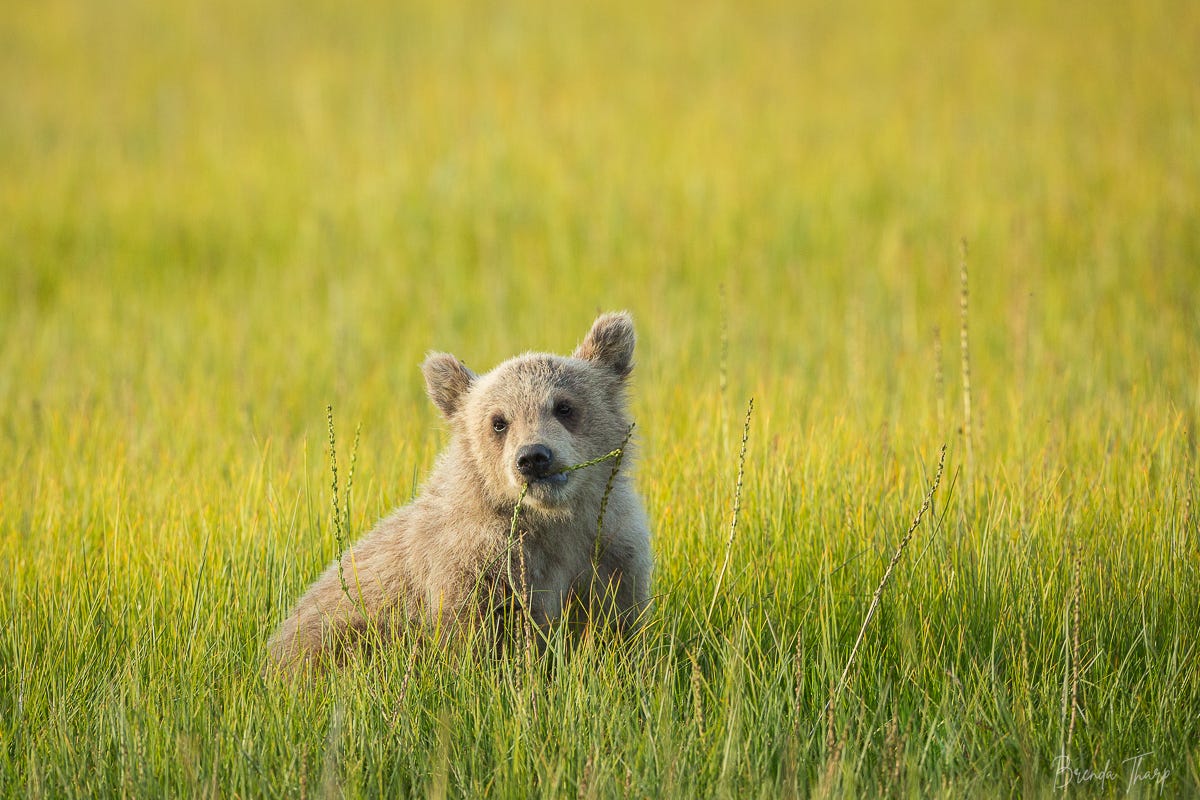
Take a low viewpoint; getting down to bear head level creates an impact with more impact. I told my photo group to drop to the ground in a mud flat! Heck, we’re all wearing rain pants, or waders, and knee high rubber boots. Getting low allowed everyone to make images like the one below that had so much more impact. I often end up kneeling or sitting to get that low point of view.
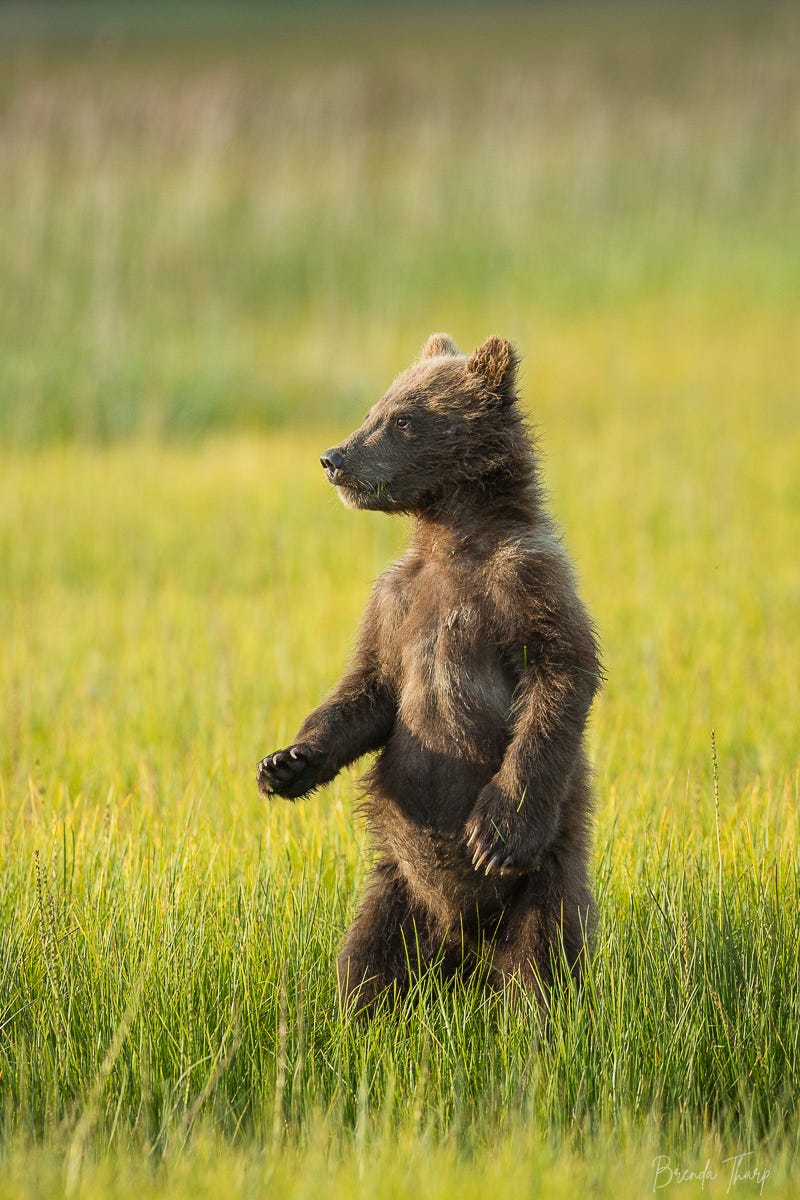
Shoot verticals! Many images seem to work out as horizontals when bears are in the fields or on the mud flats. Yet countless times, I’d be photographing horizontally when suddenly the bear would stand up and it wouldn’t fit in the frame anymore! You have to act quickly to rotate the camera to vertical and recompose, and you often only get a few seconds before the bear starts to drop back down. This young one stood for a while, thankfully!
Thanks for reading Visual Journeys: Becoming a Better Photographer! This post is public so feel free to share it.
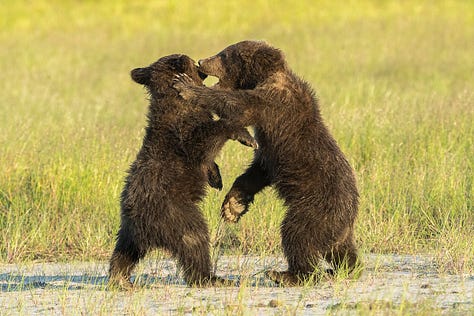
Shoot-shoot-shoot! If you are fortunate to have a situation where the cubs decide to play, it’s a gold mine of opportunities. They run, tumble, slap at each other, ‘dance’ in an embrace, and it’s great fun to observe and photograph them. This is where a high frames per second drive mode and continuous focus are a necessity! No matter what wildlife it is, when there are young involved, you will get interesting action.
Here’s a small gallery of young cubs interacting:
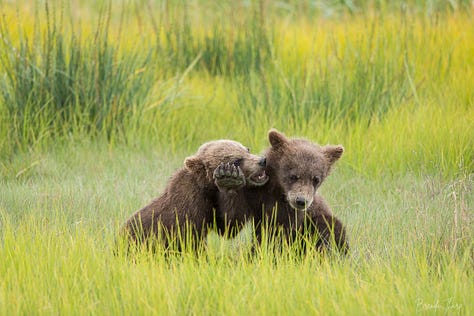
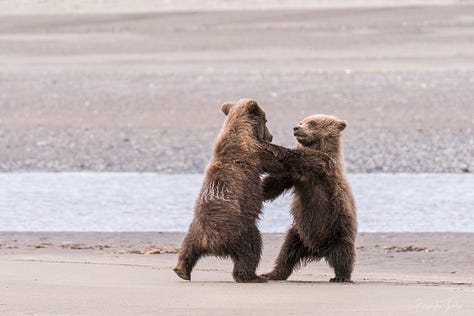
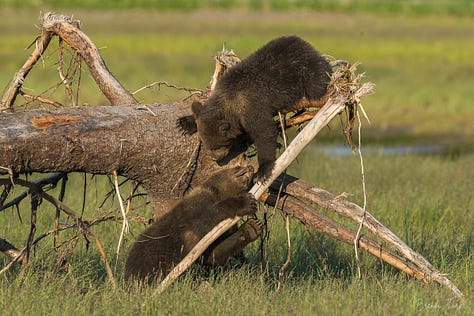
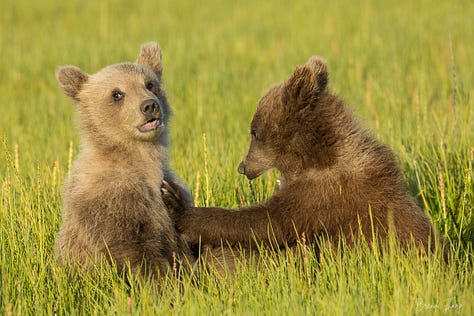
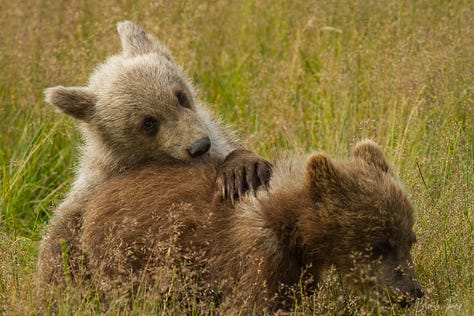
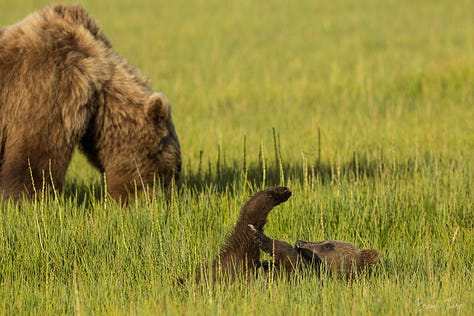
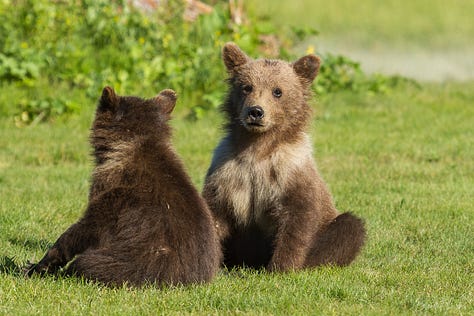
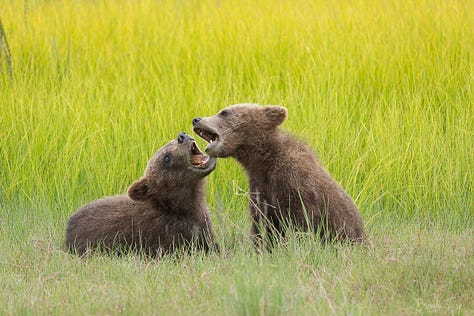
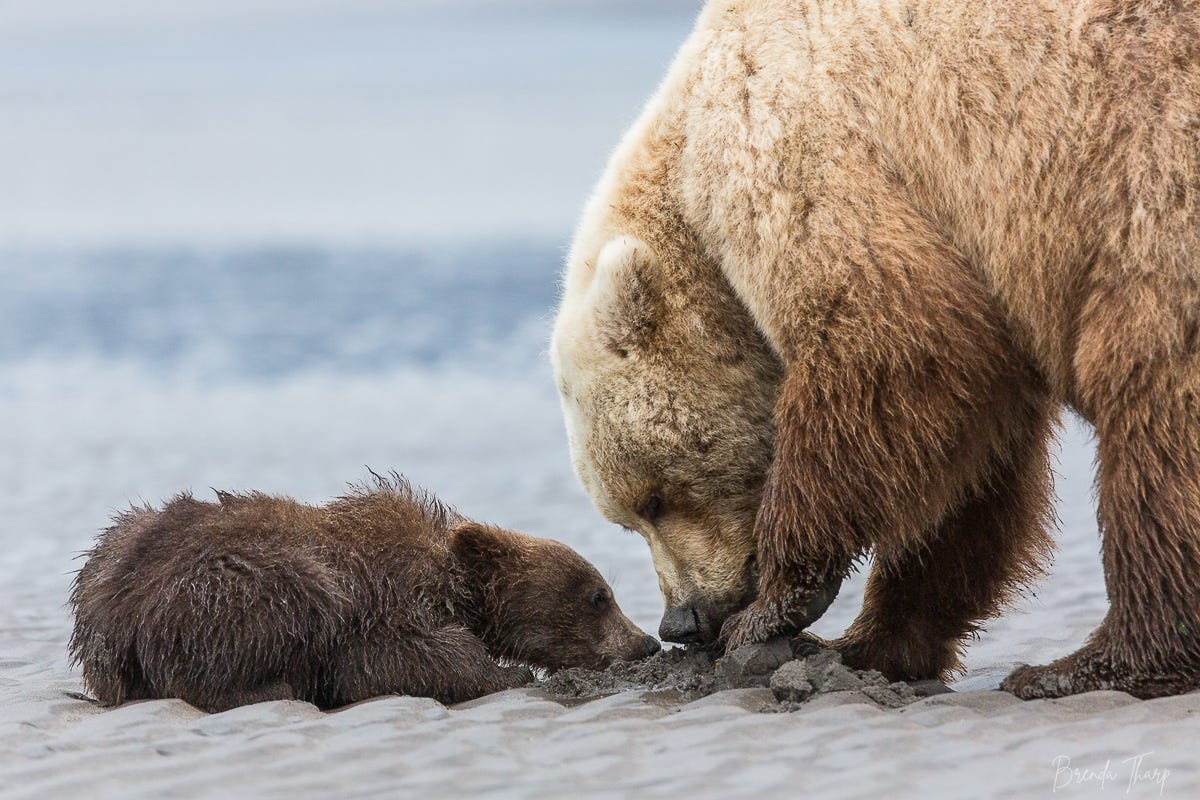
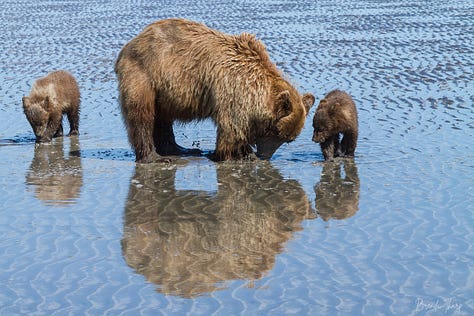
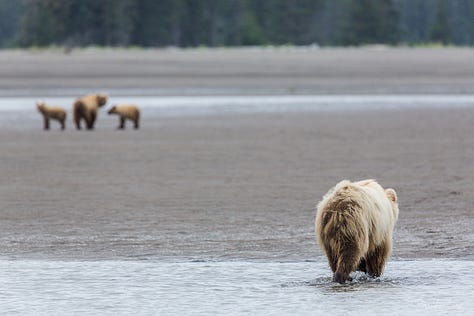
Look for unique stories and moments. Bears do more than just eat in meadows and fish for salmon, and you would do well to realize that there are many other wonderful opportunities for photographs. While waiting for the salmon to arrive in the river, they will seek clams at low tide, and the reflections can be amazing. While sows will avoid other sows and cubs, there are sometimes stories that are told in juxtaposition. This young orphaned bear in the middle image below just wanted to be friends, but as she tried to approach, momma bear didn’t trust the situation, and you can see her looking back.
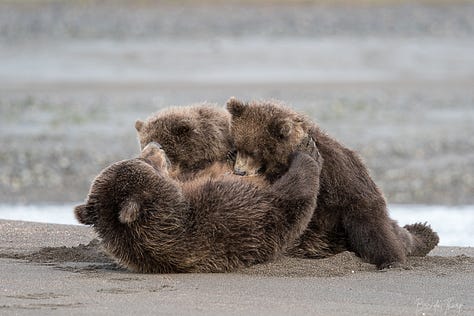
Have patience! Bears live on their own schedule, not yours. The sheer fact that you can be this close to witness their daily activities is amazing enough. We waited over an hour while this mom searched the river for fish. When her cubs finally came running over mewing, she lay back and they climbed aboard. What a tender moment to witness and photograph! It’s a tough call, to know whether to wait it out or go elsewhere for perhaps a ‘better’ opportunity.
Leave breathing room - We often get so excited that we want to fill the frame with the bear - or other wildlife, but resist that urge! Leave a little breathing room, and if the bear is looking off to the side, leave room on the side it’s looking towards. Remember that habitat photographs are just as powerful as head shots, and do some wider angle photos, too.
If you get the opportunity to get up close and personal with some grizzly bears, do it – it will be a trip of a lifetime. I giggle like a kid every time I am with them - adults and cubs alike, they provide such wonderful experiences and photographs.
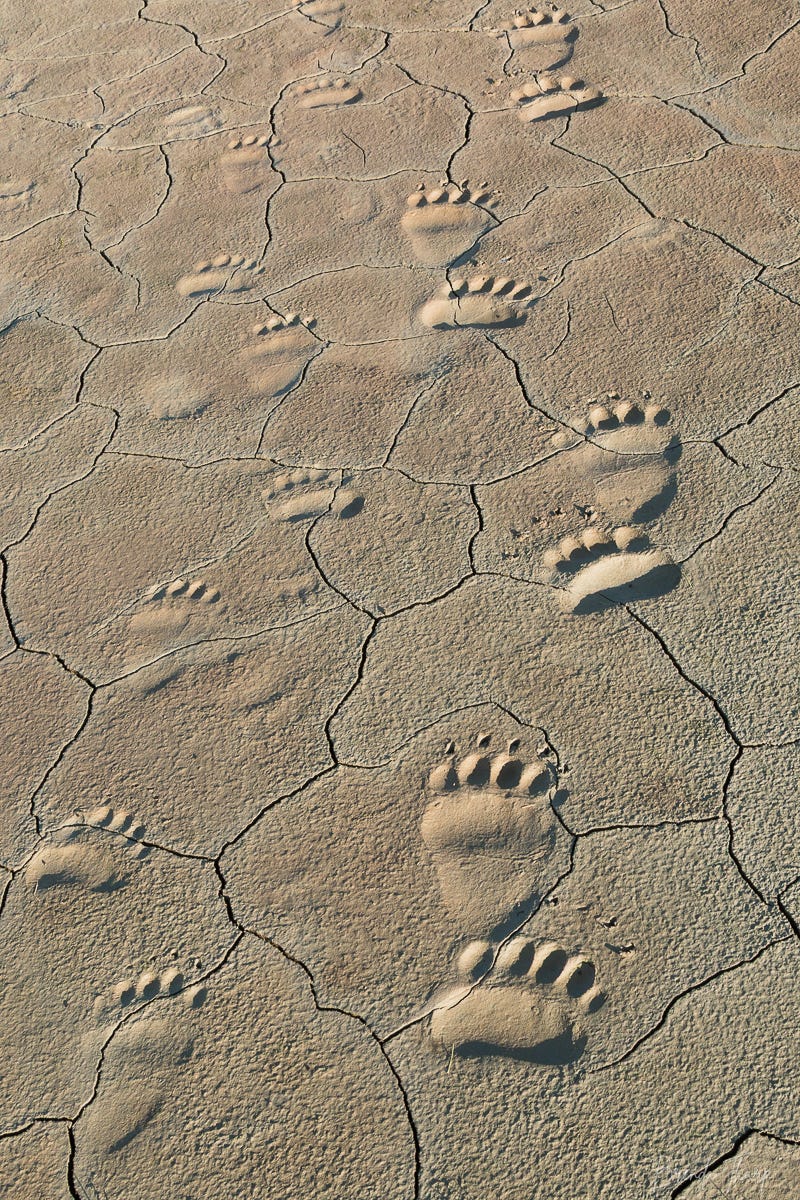
I hope these photographs bring a smile to your face!
Have a great weekend and week ahead,

Worthy Articles on Substack I’ve read this week:
Workshipping with a Camera - a series currently discussing the photography of small rodents, snakes and insects as ‘just as important’ as the big 5. By Gordon Illg
What Art Consultants Really Want - by Beth Young of ‘The Healing Frame’
No posts
Comments
Nothing yet. Say the first thing.
Sign in to join the conversation.