
this essay is part of the sisters to witches curriculum. join us on discord to discuss it (and many other things!)
un. ding-dong the witch is alive
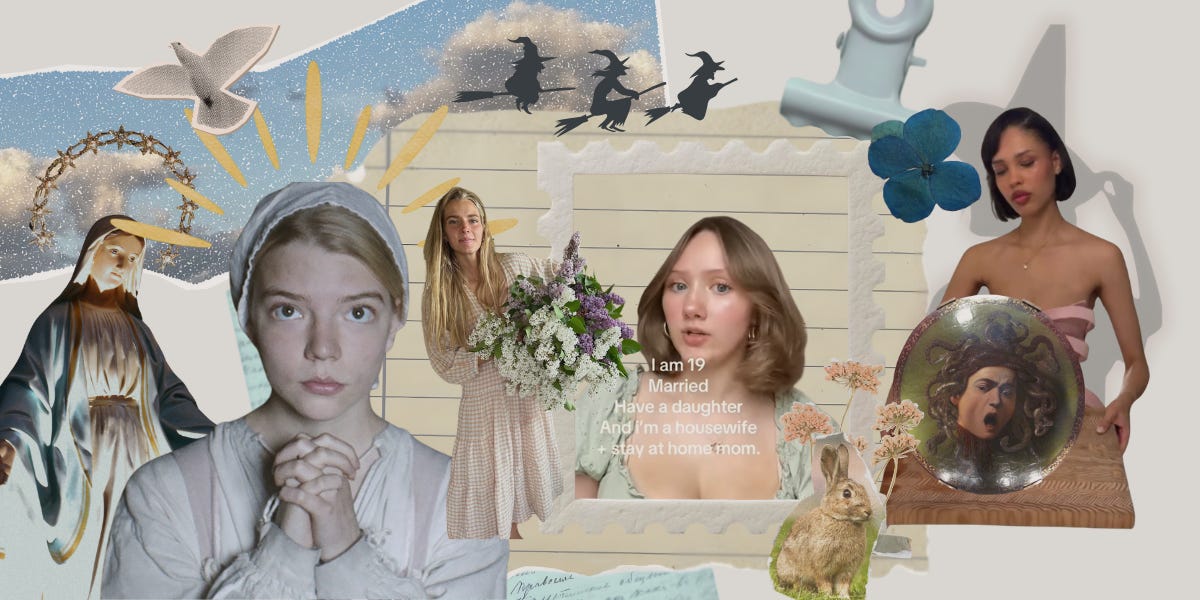
We all know her. She is old, has a crooked nose, probably a huge mole on her chin. She rides a broom into the moonlight. With her coven of sisters she dances around the fire in the middle of the woods in a strange ritual. They are all naked; they sing and laugh in a grotesque fashion. The witch lives outside of civilized society, having made a pact with the Devil himself.
We’ve know these witches from both horror and folk stories, usually portrayed exactly this way: horrible, disfigured, evil, deviant. In historical accounts of witch-hunts, though, they were women of all ages and of all backgrounds. All of them were innocent of the crimes of which they were accused. They lived in villages, towns, cities. They were young and old, married and widowed and not yet ready for marriage. They were midwives and housewives and good, obedient daughters.
With all these differences between hundreds and thousands of women, across Europe and the colonies, the question isn’t (cannot be) what is a witch? but rather what was the witch created for?
deux. from community to isolation
(the severing of women from each other)
The witch-hunts didn’t happen overnight. It was the culmination of decades of the careful spreading of a new and worsened image of The Witch. A key consequence of the accusations of witchcraft, and the fear of witches, was the severing of women’s bonds to each other. From the Middle Ages into the Renaissance, women had enjoyed access (if still restricted) to female communities and work in professional guilds and artisan spaces. With the advent of the Counter-Reformation and the spread of witch-hunts in the Early Modern period, women’s communal bonds would be tested and, ultimately, dissolved.
In the Middle Ages, these female communities were mainly found in self-governed convents; female spaces seldom visited or cared for by the Church. Other communities included the Béguines, a non-religious space without male authority where women could live out their days surrounded by other like-minded, independent women.
But beyond self-sufficient, restricted female communities, women also enjoyed their own distinct roles and duties in villages and towns: they worked as midwives, healers, artisans, and more. They had their own female spaces shared with their neighbors and friends, where they shared knowledge and news and everyday pains and joys. The word “gossip” used to be akin to “friend” before it became a derogatory word, again during the witch-craze of the Early Modern period.
The drastic change against women-centered communities and knowledge came during the late Renaissance, as society turned towards individualism and the seeds of capitalism were planted. The rise emergence of a wealthy mercantile class, reaping the benefits of growing trading empires in both Europe and its colonies, accelerated the promoting of the individual over the community. This nascent individualistic mindset weakened communal bonds with the idea that one’s personal success was more important than the community’s long-term survival.
“We must,” Jean Bodin declared, “spread terror among some by punishing many.” - from Caliban and The Witch by Sylvia Federici
Once the idea of the witch was introduced, and suspicions led to arrests, torture and death, women’s position became extremely precarious. Midwives were no longer seen as essential pillars of their community: they were treacherous women acquiring their knowledge through witchcraft and devilish practices. Young women were accused of making men lustful; proof of their dealings with the Devil. How could a woman save herself from the stake but by accusing another woman of witchcraft, before being accused first?
The constant fear of accusations, the spreading of rumors, the actual torture and death of women (whether seen or heard about) had a debilitating effect on women everywhere. This was done over decades and centuries, constantly and obsessively, by the state and by religious institutions. In effect, this was the deliberate torture of the female psyche1, a way to not only dissolve the bonds of women and eradicate their communities, but a way to ensure their spirits would be broken for many generations to come. By the end of the witch-hunts, women were left powerless, deliberately isolated from one another, and at the mercy of men.
trois. the bad witch vs the good magician
(the severing of women from knowledge)
Now that women could no longer rely on each other, their networks were broken, and they had no one to turn to, it was time to strip them of their access to knowledge. Because, as the saying goes, knowledge is power. Access to education has always been restricted not only to women, but to anyone considered “unworthy” or even “unhuman”: women, Black people, Indigenous peoples, even unlanded men. Education and knowledge have always been feared in the hands of the persecuted: they’re the key to ascending the steps of power.
The “real” witches of pre-Early Modern Europe were midwives, healers, older women who held the traditional knowledge their communities relied on. They were highly regarded members of society, positive figures other women could aspire to become. The science they, and other women, possessed and shared was indispensable. They knew about pregnancies and birth, about medicinal herbs and healing methods, about contraceptives. Knowledge that had been passed down through generations.
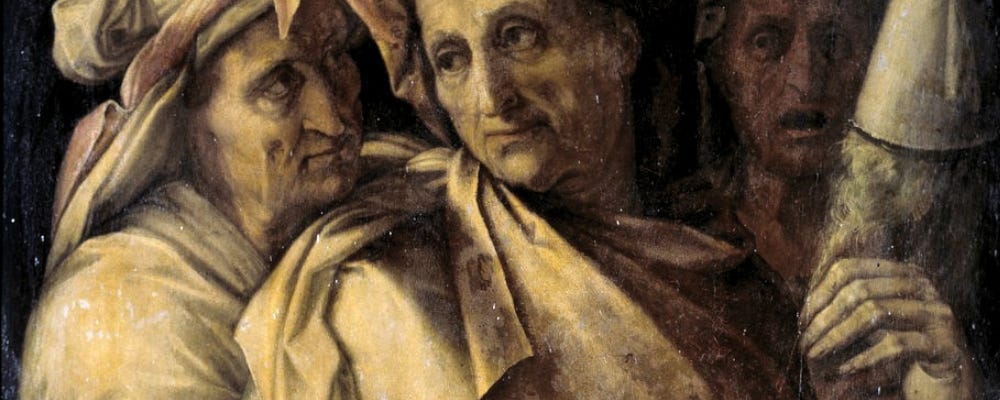
But once the witch-hunts spread, men sought to appropriate that knowledge for themselves and themselves only. That science was deemed too dangerous to leave in the hands of inferiors (the women). The demonologists of the time, tasked with outlining what witchcraft was and how to recognize a witch, went to great lengths to distinguish “High Magic” from its devilish cousin. Because magicians (well-born men serving aristocrats and princes) should not be punished for practicing such important “sciences” as astrology and alchemy. Meanwhile, women were persecuted for practicing the same arts, or for using folk knowledge to care for their communities.
As science advanced, midwives, now cast as witches, were excluded from practicing medicine alongside their male counterparts. Even though they had, objectively, more knowledge both practical and theoretical, the creation of the witch as an evil figure barred women from work and education for centuries. Wealthy men would go on to to earn an education, attend universities, while the knowledge that women had held for centuries and millennia, was deemed wretched and distrustful.
In the end, it wasn’t about the practice itself, but about who was practicing it. Knowledge is power, and women were being robbed of theirs.
quatre. the good housewife
(the severing of women from their labor)
What’s the best way to leave someone powerless in an emerging capitalist society? Take away their means of earning their keep.
As previously mentioned, in the Middle Ages women were able to survive in a multitude of ways: in self-governed female communities, as religious figures, as artisans or midwives or healers, as housewives, as nobles, as political figures. They were economic actors in a communal society.
At the end of the Renaissance, women slowly began to lose their rights. In France, they were declared “legal imbeciles” and could no longer conduct any kind of legal activity by themselves. Before then, in many European countries, they could have enjoyed the status of femme sole (a single woman, legally independent). Everywhere in Europe, from Catholics to Protestants to philosophers, everyone (men) was finally cooperating on one thing: the vilification of women. From then on, women were essentially legally infantilized, stripped of any legal way to protect themselves.
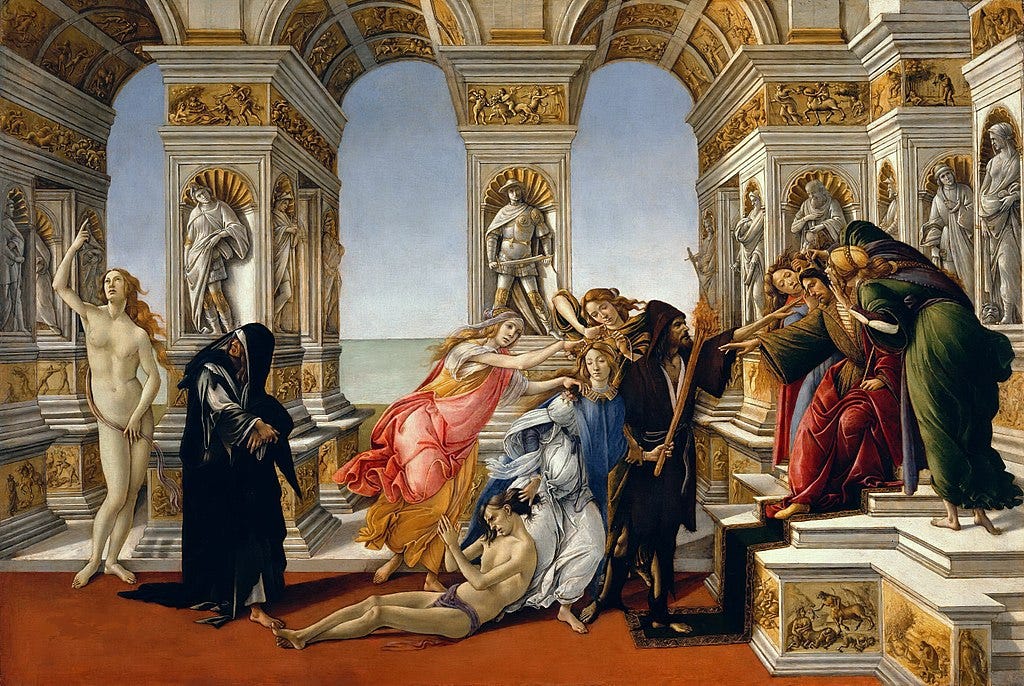
Since women could no longer make contracts, hold property, or represent themselves, they could no longer work, either. Now, any work done by women was, by default, “housework.” Even if the work was to be sold at a market, a woman’s work was always going to be seen as “nonwork”. The labor of women became, truly and resolutely, free and disregarded. Many women had to turn to prostitution (in fact, we see at this time a “massification” of sex work) as the only way to earn a wage. Though that did not last long: laws were swiftly put in place to make prostitution illegal, as well as any contraceptive practices, or the distribution of such “recipes”. Because those activities, the only remaining accessible wage-earning occupations available to women, were going against the plans of the state. Women were to stay at home and refrain from any type of economic activity.
But they were not totally useless. The emerging political class became concerned with population decline, as it was believed that “a large population is the wealth of a nation.”2 So women, now conveniently stripped of any means of work, would stay home and produce citizens for the nation: an endless production of labor by housewives whose work was not recognized and could only be legally represented in the justice system by a male relative. Very convenient indeed.
Now that the evil witch had been created, and countless women were being sent to their deaths, there was only one thing left to be in order to survive: a good housewife. and so a new kind of femininity emerged: the passive, obedient, thrifty, almost silent, diligent, wife. This was the ideal forged on the stakes, built on the bones of innocent women. The positive figure of the witch, the one who cared for her community, the one her neighbors came to for help, was turned into an evil woman to be tamed and banished.
Now, a woman could only aspire to be a housewife, at the mercy of a man.
cinq. the hatred of men
(the severing of women from their social class)
Another important consequence of the witch-hunts was the spirit-breaking of the men. The witch-craze, obviously intended to cause great harm physically and psychologically on women, also taught men to fear and hate the women of their own communities. Therefore, class solidarity was broken in irreparable ways, a major victory for the emerging capitalist bourgeoisie.
The propaganda started with the portrayal of women as sinful and demonic. But this is hardly new: Eve was the original sinner, tempted in Eden and bringing about the expulsion of humanity onto Earth. In the late Renaissance, the figure of the witch takes a more concrete shape: she’s not just any strange recluse living on the outskirts of society. She flips religion and its morals on its head: she’s a woman who binds herself to the Devil in a perverted sort of marriage, she drains a man of his potency while simultaneously inflaming his lust. She is sin personified. All women, in the end, are sinful from the start and should be treated as such.
The men were subjected to years and decades of this propaganda, not only being told that women are sinful but that they would be the cause of their own sins. This constant terror sowed a deep psychological alienation from women. On top of this obsessive campaign of women’s vilification, the men who resisted were themselves at risk of prosecution. No one was ever truly safe from the stake: the political, noble, and religious classes held the power, not the laboring men of the villages.
“The contempt and hatred of women were instilled with a greater intensity; love of power and betrayal were among the lessons of selfishness taught by the Church.” - from In Defense of Witches by Mona Chollet (my translation)
Over time, the demonization of women and their portrayal as inferior to men, took deeper root in the collective minds of men, and the chasm between the genders only grew wider and wider. With weakened bonds not only between women, but between the men and the women of the lower classes, their collective power became less of a threat to a political class growing ever richer.
The witch-hunts accomplished their final goal: setting the exploited class against each other while the elites grew their own fortunes and power, unchecked. The mania of the witch wasn’t about magic; it wasn’t about men versus women; it was about who would gain the most on the other side of that pain: the wealthy elites.
six. and here we are
The witch-hunts are a thing of the past, a relic of our barbarous history, of ancestors who didn’t know any better.
And yet.
We never reinvent the wheel. In the same countries where witch-hunts took place, we have now criminalized contraceptive practices; we have revived the ideal of the traditional housewife; we have gender wars, online and on social media; we have a growing anxiety about population decline among the political class. And what happens? The women are blamed. For not having enough children, for being too educated, for not wanting to stay home with the children. A witch-hunt can be a witch-hunt without the burning pyres in the middle of the public square.
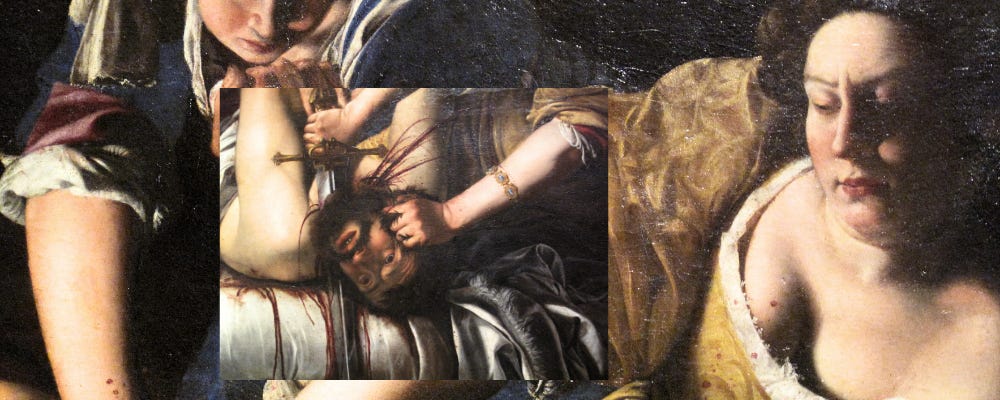
When we watch horror, when we tell folk stories, the witch is always there because we can’t erase her legacy. She was created as a means to manufacture the perfect woman: an obedient housewife, dependent on the man, a source of labor-production for the state. The witch’s purpose is to demonize, to control, to sexualize, to brutalize, to torture, to scare, to manipulate, to kill. The witch is the symbol of the brutality that capitalism and patriarchy have inflicted on all of us.
In the end, the witch is the woman we needed to fear so we’d become the woman they needed us to be: the good housewife, docile, quiet, providing free labor and an endless stream of future workers. They feared women with knowledge, women with land and money, women with connections, women standing together. They feared women with power. They feared the witch.
fin.
bree beauregard
thanks for reading and being here! if you can’t become a paid subscriber right now but would like to support my work, you can buy me a coffee :) and join us on discord!
references
Silvia Federici, Caliban and the Witch
Mona Chollet, In Defense of Witches (original title: Sorcières: La puissance invaincue des femmes)
The VVitch (2015)
Julia Kristeva, "Stabat Mater"
you may also enjoy:
torture of the female psyche, a concept developed by Sylvia Federici in Caliban and The Witch. I highly suggest you read the book!
again, from Caliban and The Witch.
Comments
Nothing yet. Say the first thing.
Sign in to join the conversation.