
Below is the account of one woman’s breastfeeding journey with her two children. Her first baby was born via emergency C-Section. Between her first and second child, she had breast reduction surgery. You might be thinking how challenging both of these situations could be. In fact, you might already be formulating an idea of how things went with each baby. But there are no “cookie-cutter,” outcomes with breastfeeding. Each mother-baby pair is unique, as is each breastfeeding journey. Here is my client’s story, written in her own words. (shared with permission)
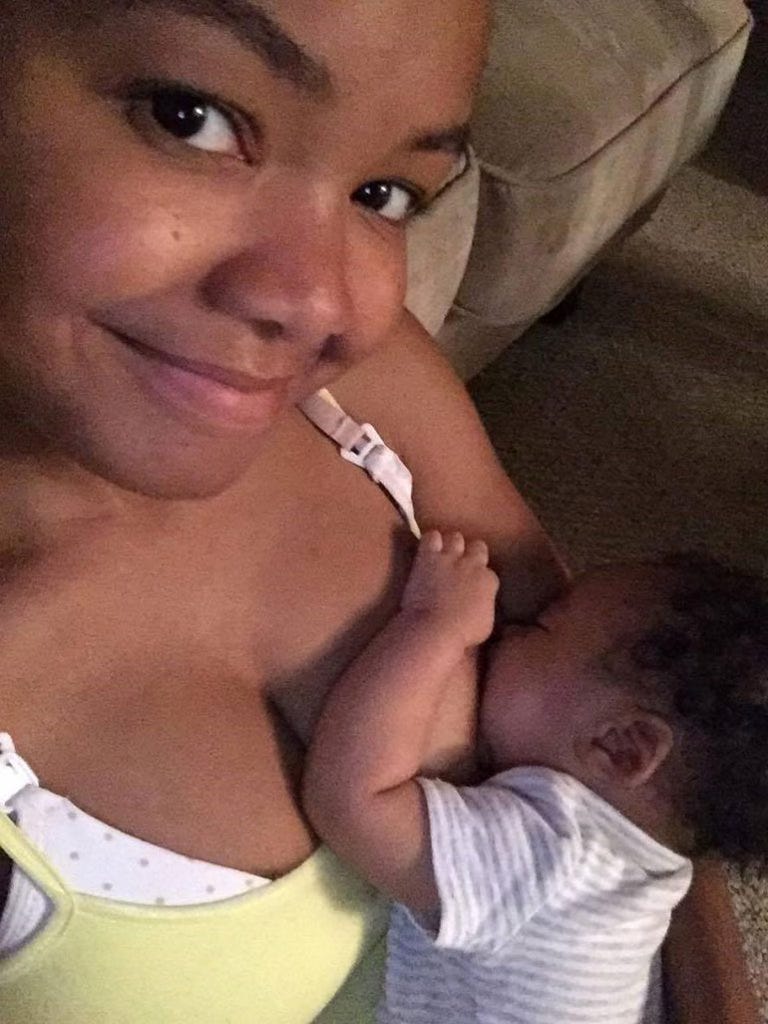
When I had my first daughter, breastfeeding didn’t go as planned. I had an emergency c-section and some trauma that resulted in her being bottle fed formula before I ever had the chance to put her to my breast. The first moment I could, when she was one day old, we discovered that she couldn’t latch, due to me having flat nipples. The lactation consultant ordered a nipple shield for me and that took two days to receive. Not only was I waiting on the tools I needed to embark on my breastfeeding journey, add to this the fact that my milk still hadn’t come in (and didn’t until day five) and I already felt defeated. By the time my little girl was a week old, breastfeeding was such a struggle. She was fussy and refusing to latch, even with the shield because, up until this point, she had been solely bottle fed. I wasn’t pumping enough to feed her, so she continued to drink formula every day, despite the fact that I longed to breastfeed her. I wasn’t around anyone breastfeeding. I had never been exposed to it. I didn’t have much support and returning to work six weeks postpartum without having adequate pumping facilities and breaks didn’t help. I still held on. I pumped enough for a couple bottles a day of breastmilk. That soon became a couple bottles a week. I tried everything and held on to the hopes that things would turn around for nine weeks. They never did. I gave up.
When I had my second, a baby boy, I had a plan already in play. “If anything goes wrong with my c-section, don’t let them give him a bottle. I want to exclusively breastfeed.” Little did I know, the hospital where I gave birth wouldn’t have done that anyway, since they are certified Baby-Friendly. They were very pro-breastfeeding and receptive to all of my needs and concerns from the start. Lucky for us, this time around, I had no latch issues. My son was doing great! This was such good news to me. I was doing it—I was breastfeeding my son! On day two, I started to get nervous. I wasn’t able to hand express or pump much colostrum. That night when he was weighed, I was told that he had lost over 7% of his birth weight. “What did this mean?” I asked more than a few times. It meant that if he lost 10% and didn’t start gaining, I would need to supplement. I hated that word “supplement” because I misunderstood it. I cried because I thought it meant formula and I came into this birth with my plan. I wanted to exclusively breastfeed. The next night, he was over 10% weight loss. I cried again. My plan wasn’t working and my body was failing me at feeding my baby, yet again. One of my night nurses asked me why I was so upset at having to supplement my son to help him gain weight. I told her I didn’t want to give formula—that it wasn’t in my plan. She reminded me that I had the option of donor milk. I had forgotten all about that from the breastfeeding folder I was given when I first arrived on the maternity floor. I was hesitant at first. I wondered how safe another mother’s milk was for my son. She assured me that it was screened and perfectly safe for him. I said I would think about it. After nursing him again and hearing his poor cries because he was unsatisfied and hungry, I finally asked if I could have some. The special care nursery prepared the milk and it was delivered to my room within the hour. My hungry baby was fed—and it was breastmilk!
This moment…the choice to have pasteurized human donor milk in place of formula saved my breastfeeding relationship. Had I not been given the choice, who knows what would have happened? I could have chosen formula and felt like I didn’t succeed at my goal, yet again. I could have chosen to do a combination of formula and breastmilk. Instead, I ended up here. My milk came in on day three, which is also the day we left the hospital. I left empowered, knowing that I had stuck to my plan from the very beginning. I was determined to try and continue to nurse my baby, despite potential obstacles. Since the birth of my daughter, I had had breast surgery and wasn’t sure if I’d physically be able to breastfeed exclusively. I was unsure if my milk ducts had been protected in the process. In my favor, instead of returning to work six weeks postpartum, I now had the option to stay home for his first year, which would allow me to devote much more time to working on my supply and breastfeeding on demand. I am proud to say that my son is now fifteen weeks old, has been EBF, and has more than doubled his birth weight! Breastfeeding has been one of the most tiring and challenging, yet most amazing and rewarding things I have ever done in my life. Many mothers choose formula and have beautiful, healthy, happy babies, and that is perfectly fine, but I had a plan, and I chose breastmilk. I am so thankful to the local milk bank for allowing it to be my choice from the very start and even more thankful to all of the mothers’ selfless donations that made it possible.
So, if you had some initial thoughts before reading this story, how did your thoughts compare to what actually happened? I appreciate this story because I think it highlights a few important things:
The first milk supply is fragile. Although my client was young and healthy with her first baby, because of the emergency cesarean birth, she was not able to get off to a good start with breastfeeding. There is ample evidence which shows poor early management can lead to a low milk supply. Over my years of practice I have found that this especially true for first time mothers. It makes sense really. The first time mom has never made milk before. Her body is new at this and is sensitive to even minor delays or interruptions in that crucial first week. With multiparous mothers, the body has “experience.” Breasts have produced milk before and so subsequent milk supplies seem to be less impacted by early challenges.
Breast reduction surgery does not mean “no milk.” Each woman’s body reacts differently. In the case above, mom was anxious about her milk supply and early weight loss didn’t help, but ultimately she was able to make a full milk supply! Not everyone with a history of breast reduction is so fortunate. Mothers will need to determine for themselves, as their journey progresses, what success looks like to them. For some, even one breast milk feeding per day will feel like success. Others may feel differently. Some mothers may be comfortable pumping many times each day. For others that may feel like a burden. One of my colleagues advises mothers to “pump as much as brings you joy.” I love that.
Pasteurized human donor milk (PDHM) serves as a reassuring bridge. More and more hospitals are providing PDHM for term infants with documented need. (Mothers’ Milk Bank Northeast) For mothers with a goal of exclusive breastfeeding, but who face early difficulties, this can make all the difference. Shout out and sincere thanks to the generous mothers who are willing to participate in the donor screening process and who provide their milk to milk banks across the world.
Prenatal education. Prenatal education. Prenatal education. Have I mentioned prenatal education? Anyone with a history of breast reduction and a plan to breastfeed needs a prenatal consult with an IBCLC. Period. There is no need for a mother to be hearing for the first time in the post-partum unit that she is at risk for low milk supply. If you work with mothers prenatally you can help to facilitate a connection with an IBCLC for mothers who have had a breast reduction.
We need to be cautious about assumptions - even our own. Based on this mother’s first experience with a low milk supply and then subsequent breast reduction surgery, I might have made an assumption that things would not go well for her. I would have been wrong. We have to approach each mother-baby pair with fresh eyes and meet them where they’re at. You never know exactly how things will turn out.
This story was also shared by Mother’s Milk Bank Northeast. Visit their website for more information:
For breastfeeding related CERPS & Contact Hours please visit my “sister” site:
Comments
Nothing yet. Say the first thing.
Sign in to join the conversation.