
Hi writing friends, Chris and Bec here with a bonus post for midsummer
Last week we gathered a few friends for a stomp up a hill to a place called Midgley Moor – a local area close to where we live in Calderdale, Yorkshire. The moor is famous for its Bronze Age monuments and standing stones. We were joined on the walk by local historian and folklore expert John Billingsley, who regaled us with tales about the stones (some more believable than others) while we waited for the midsummer sun to set.
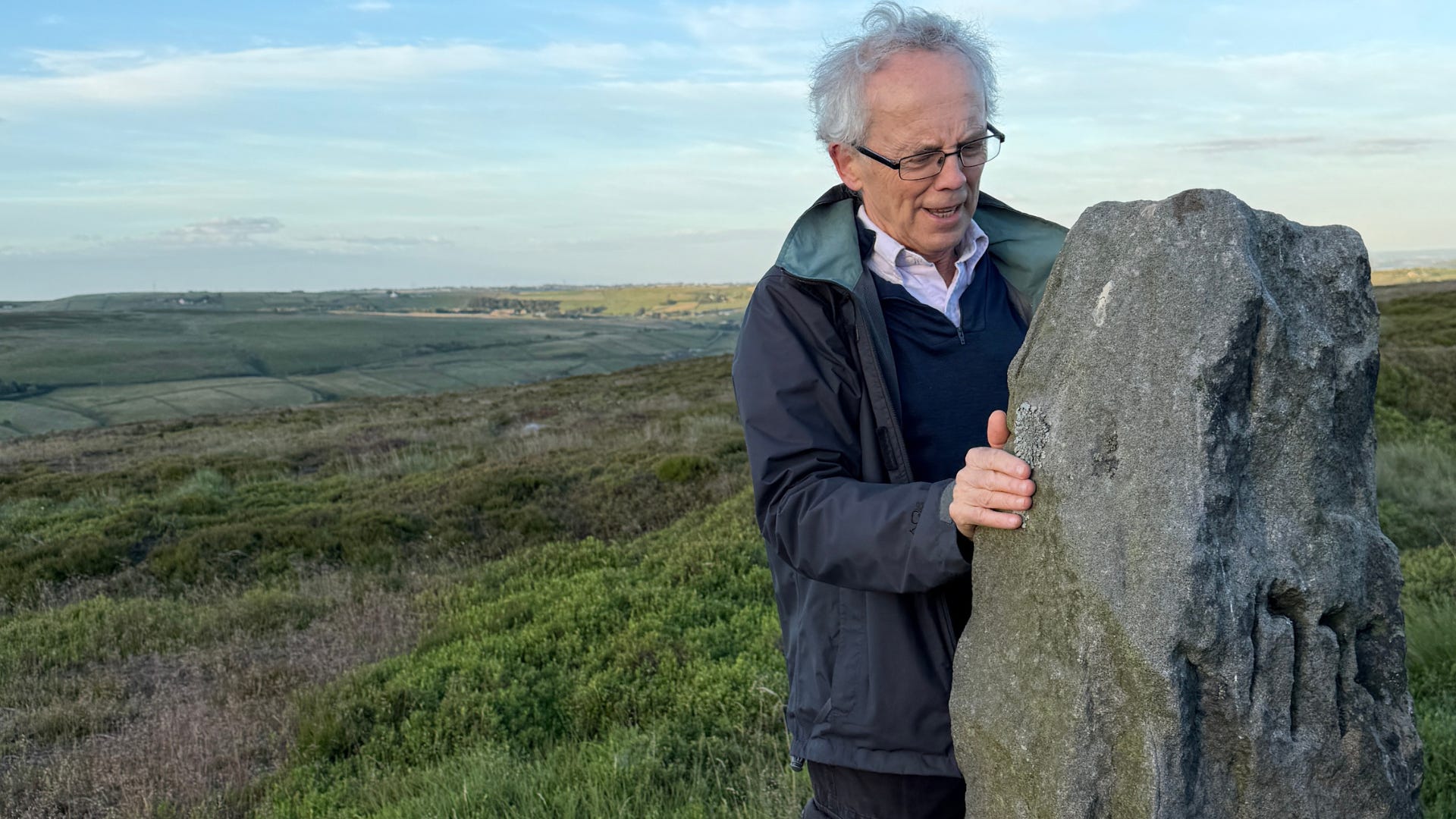
When it did, we saw that it aligned perfectly with two monuments, the Miller’s Grave and Robin Hood’s Penny Stone – both featuring large glacial boulders. While many fantastic legends and stories swirl around the monuments, nobody really knows why these stones are there, how they got there and why they align with the setting midsummer sun and the rising midwinter sun.
You’re probably wondering why I’m telling you this. It’s because as human beings, we make up stories to explain things we don’t fully understand – to make sense of things and fill in the blanks. We do this with giant Bronze Age boulders in the middle of an otherwise barren moorland landscape, and we do this about ourselves – and our writing.
Facing our own myths
We told this story at our midsummer member meetup, where we explored the tales we tell about ourselves in more depth. When we write, we often fall into the habit of believing certain things about ourselves are ‘facts’ when they’re actually just assumptions that have formed over time. ‘I’m the kind of person who always procrastinates…’, ‘I’m the kind of person who never finishes things’, etcetera.
I’m sure you have your own stories too. These stories matter because they shape us not just what we think but what we do – and, crucially, what we don’t do. The stories we tell ourselves influence the opportunities we take and the decisions we make.
Around the world and throughout history, midsummer solstice is a time for celebration. We wanted to share a taste of what we covered to help you explore your personal writing folklore. Grab a notebook and pen and take a few minutes to consider the following questions.
What stories do you tell yourself about your writing?
What are the good things you tell yourself?
What are the unhelpful things?
Look back over the first six months of 2026 - what are you celebrating about your life and writing?
Consider your celebrations - do they have anything in common, any themes emerging?
How can you take forward some of that celebratory feeling for the rest of the year.
These questions alone are worth thinking about. But the real value came in the discussion that followed – working through why we tell ourselves these stories, and how to start rewriting the ones that aren’t serving us. Members can watch the video and explore the other prompts beneath the paywall.
That’s all for now, catch up on Wednesday.
Chris & Bec
Join us!
Here’s the dates for our upcoming writing sprints. Find out more in Everything you need to know about our 7-Day Writing Sprint.
7-Day Writing Sprint start dates
Monday 27 July 2026
Monday 31 August 2026
Monday 2 November 2026
Monday 30 November 2026
Autumn member meetup
Wednesday 7 October 2026 6pm BST, 1pm EDT, 10am PDT
If you can’t afford the membership right now, just drop us an email and we’ll gift you one - no questions asked.
Comments
Nothing yet. Say the first thing.
Sign in to join the conversation.