
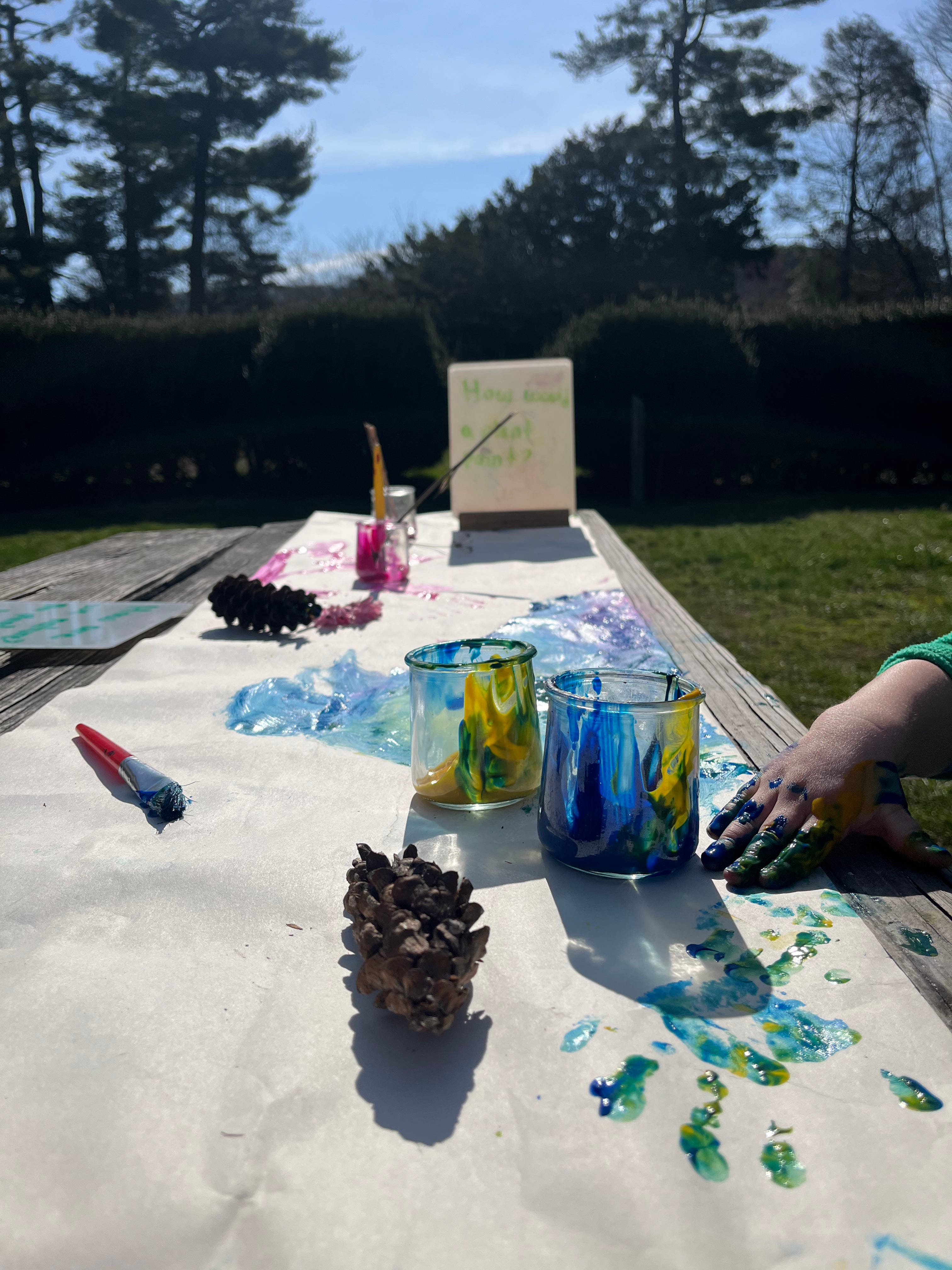
This Sunday morning began bright and sunny. S was the first friend to enter the garden and got right to exploring the paints at the table. We have been wondering, are we nature? And this week we were exploring the connection between nature and art.
As we painted, we asked ourselves, “How would a plant paint?” On the table, we had some plants to help us with this question. S and H used pine cones, stems, and fingers to paint.
We noticed how their choices lingered between imitation and invention, as if they were testing what it might feel like to create as something other than human. Their gestures suggested a curiosity not just about materials, but about perspective.
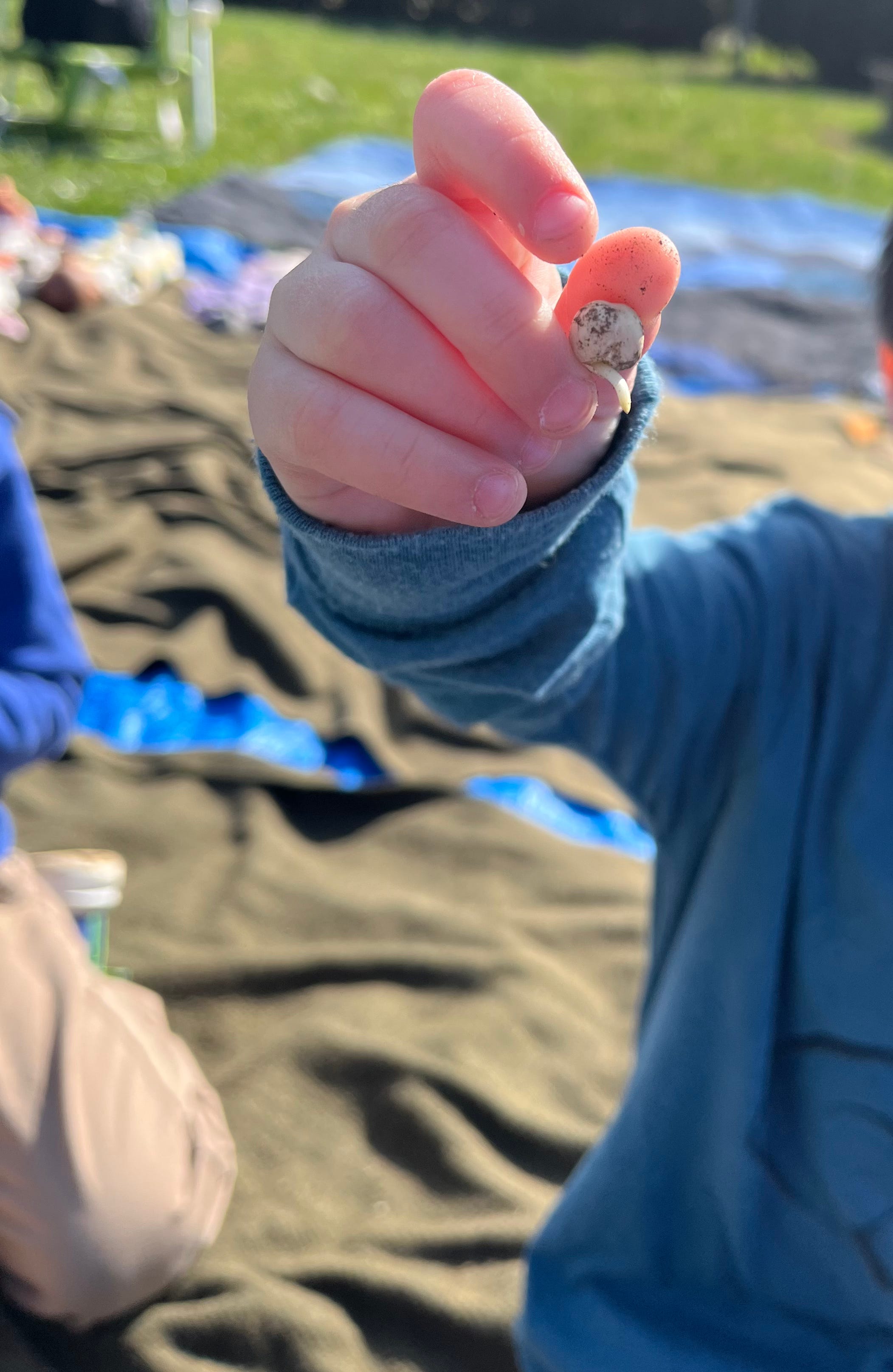
When R arrived, he played tag with H until we all met on the blanket to look at a pot of pea seeds that had sprouted! We marveled at the little shoots poking out from each of the peas. We held them gently, so new, reaching out into the world and looking for nutrients.
It seemed the group was negotiating care together. We wondered what the seeds might need, and decided that, to give them the best chance at life, we would plant them in the garden so they could have more room to grow.
Their attention to the fragility of the sprouts suggested an emerging sense of understanding, shaped through touch, observation, and shared decision-making.
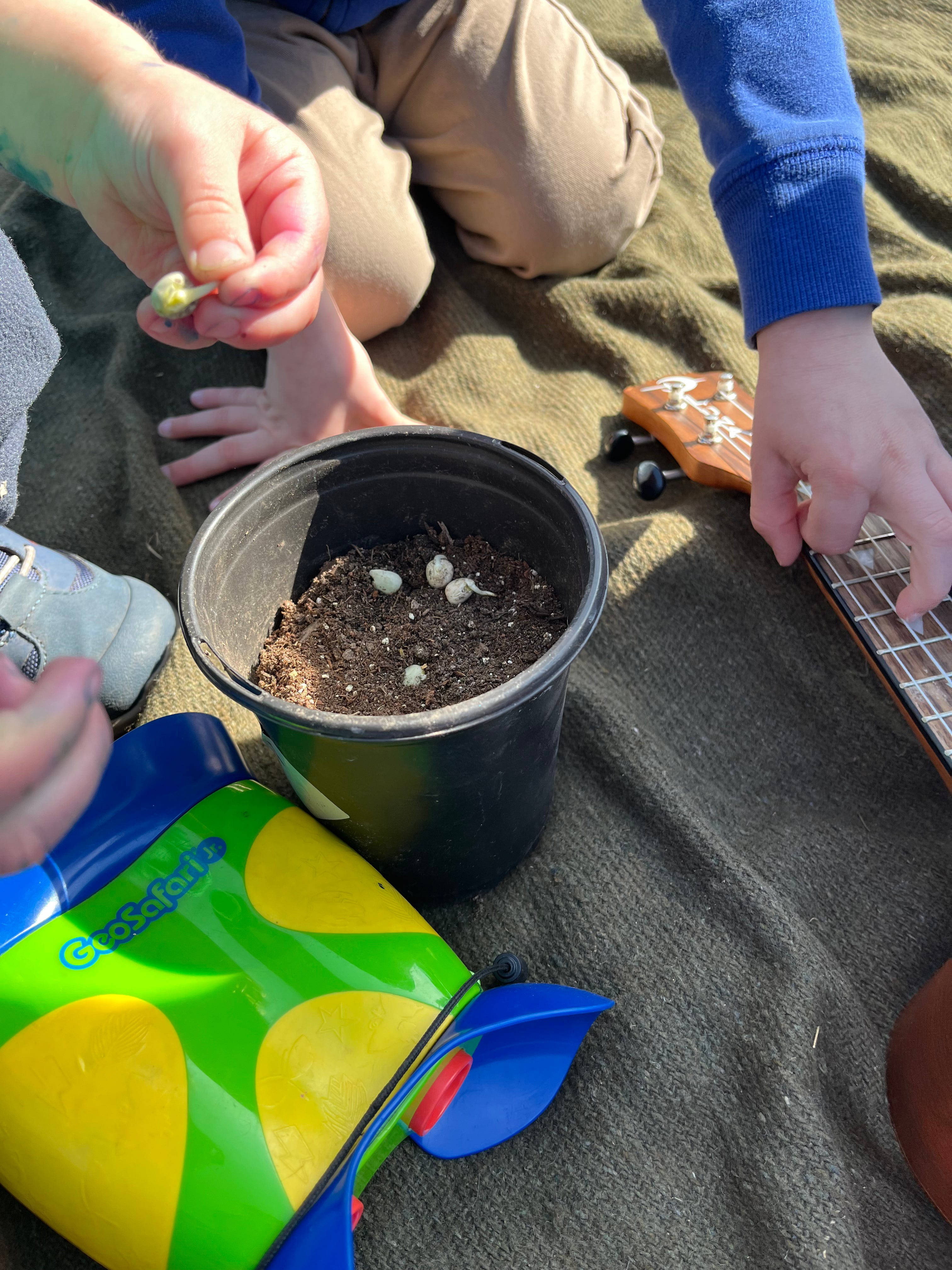
As we were walking to the garden, K arrived. She was excited to get to work. We made holes for the peas and pressed them into the dirt.
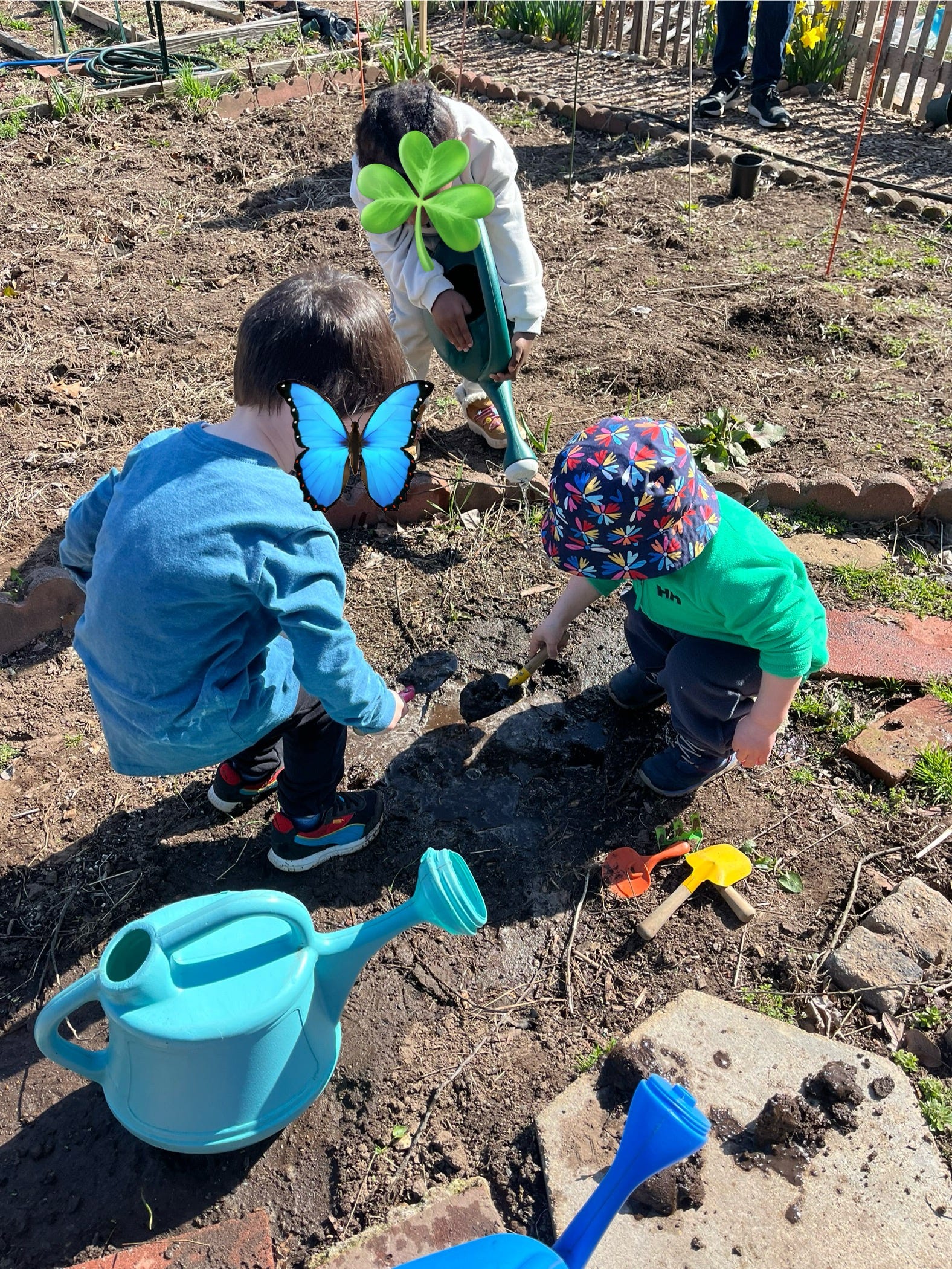
K mentioned that she wanted to make cookies, and we thought, how about mud cookies? R asked, “What do mud cookies taste like?” and we grabbed some watering cans to find out. Each friend had a plan. S made cookies for members of his family to enjoy, saying, “This one is for Grandma!” R found a broken watering can and filled it with mud. K cooked up some “black and white cookies,” while H filled a hole of dirt with water to make more “batter.”
It felt like the garden became both kitchen and story space, where materials shifted meaning through play.
Friends saw a birdhouse and knocked on the wood exterior.
“Hello? Is anybody home?”
No one was, but we heard a chorus of birdsong through the garden, so we placed the birdhouse gently back. We noticed the animals that return in the spring months, and how active our year-long residents at Edgerton Park seem when the weather warms. Birds greet us with loud calls each morning, and squirrels swish their tails and chase each other around the trunks of trees. Sometimes we join them.
Then we headed out into the park with a question: What will trees draw if we give them a chance?
We gently tied string to tree branches and taped markers to the ends so that when the breeze moved the branches, the markers would follow a path. Friends were determined to help the trees. They chose what colors the tree might want to draw with and worked together to weigh the paper down with rocks so it would not blow away.
As we personified the plants together, it seemed to draw us closer to them. While the tree did not pick out the colors or choose to draw we made a connection with the tree, not just as a feature of the park but as a living member of our park community!
In attending to the movement of branches, the buds breaking above our heads, and the roots twisting under our feet, we found ourselves noticing more closely, as if trying to understand what the tree might need.
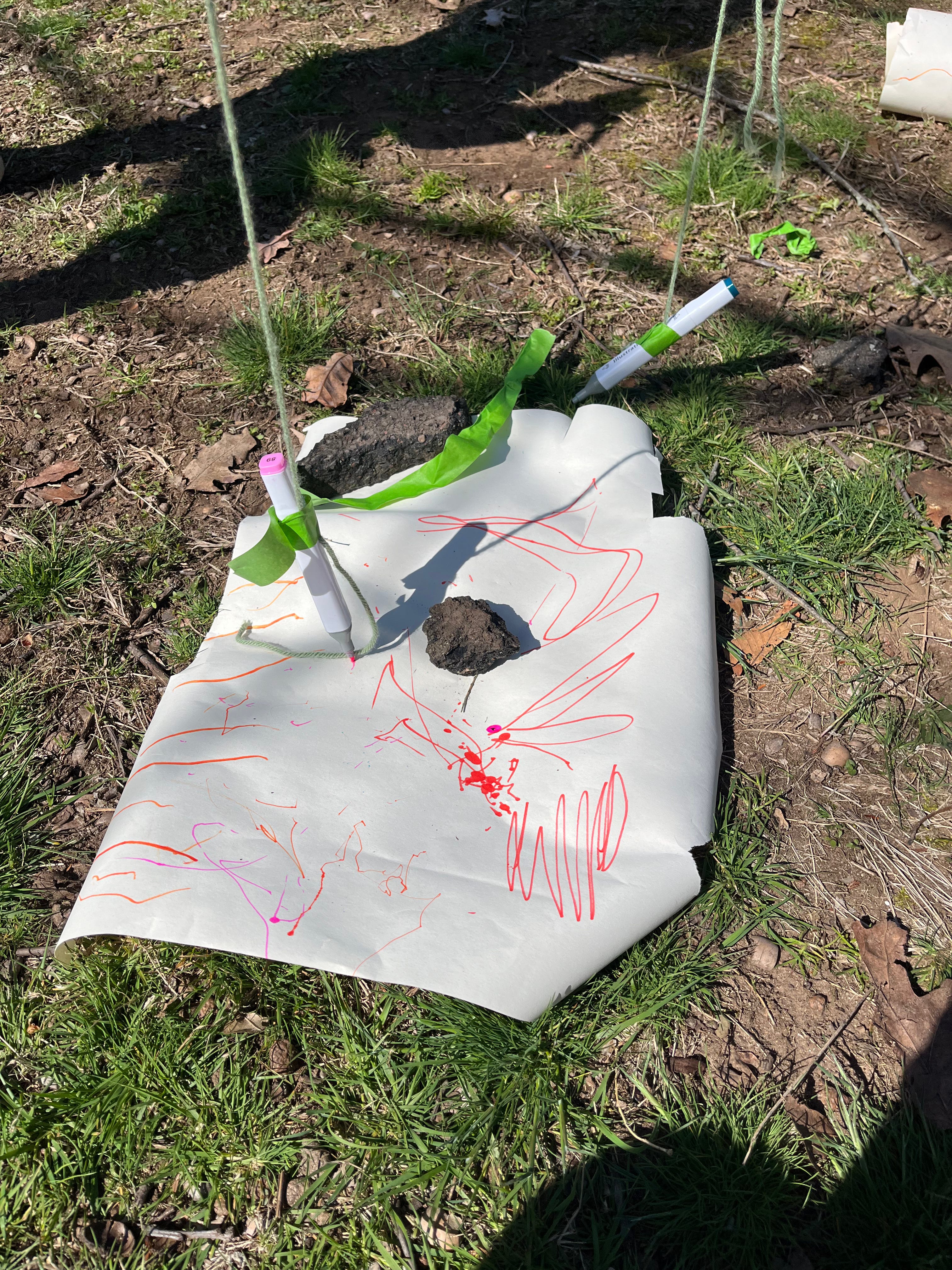
We let the trees continue drawing while we sang “Five Little Ducks” and ran across the green space. K fell, but R was right by her side, checking on her until she was ready to play again. Their closeness suggested an attentiveness to one another that moved alongside the play.
The game led us to the rhododendron bush, where H climbed into the branches and bounced among the leaves. K, R, and S wanted to bounce too, but they were unsure how to get up. H climbed down and showed them how to place one leg, then the other. When his friends tried, they were able to do it too. It seemed that caring for one another, in this moment, looked like slowing down and offering patient guidance.
We sang a song about driving in the car, and each friend chose where they would go. When it was time to return to the circle, leaving the rhododendron felt difficult. But with the promise of the parachute, friends made their way back.
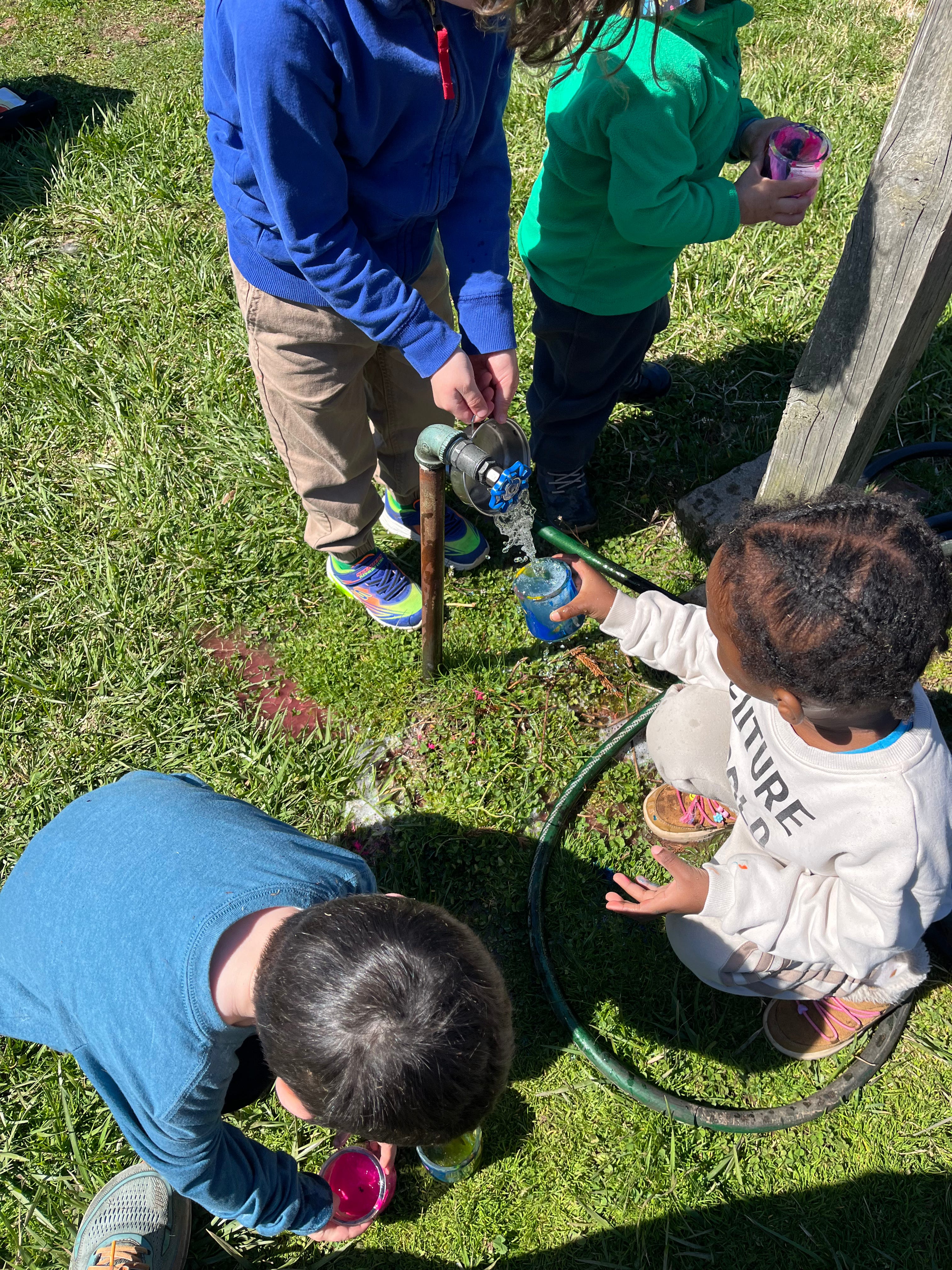
We sang “I love the Mountains” and “Love is a Circle” with the parachute until it was time to clean up. H made a fountain with a small pot and the spigot so that his friends could fill the paint cups and rinse them.
S told H that he did not want to be splashed. Sometimes we need to set boundaries about what does and not feel good to us in that moment. Sometimes we need to set boundaries about what does and not feel good to us in that moment.
When everything was tidied, we sang goodbye to one another, carrying the rhythm of the morning into the rest of the warm spring day.
Thanks for being part of Brave Nature Collaborative.
Subscribe for free to receive new posts directly in your inbox, revisit our growing archive any time, and support the collective work of our community.
Some of the book links in this post are affiliate links through Bookshop.org. If you make a purchase, we receive a small commission—at no extra cost to you.
Comments
Nothing yet. Say the first thing.
Sign in to join the conversation.