
The forsythia had dropped their petals, and the tulips were in full bloom. This Tuesday, we met in the garden under bright spring sunshine. Mt was the first to arrive and went straight to the table where watercolor paints and crayons awaited him. We had some paintings left behind by the Sunday cohort, and we thought we could add to them with crayon and more paint, a collaborative mixed-media project across time.
Mt experimented with painting with sponges. When Baby H arrived, she explored the blue paint with her hands, and to learn more, she used her mouth to test the paint as well. N used the red paint and painted around his name. When Ha arrived, she wondered what would happen if she added yellow paint to one of the blue paintings from Sunday. Everyone had their own way of approaching the materials and colors. Would crayon mix with the wet paint? If the paint was poured, where would it flow? How would the paint taste?
Our friends’ wonderings and our own wonderings led us toward discovery.
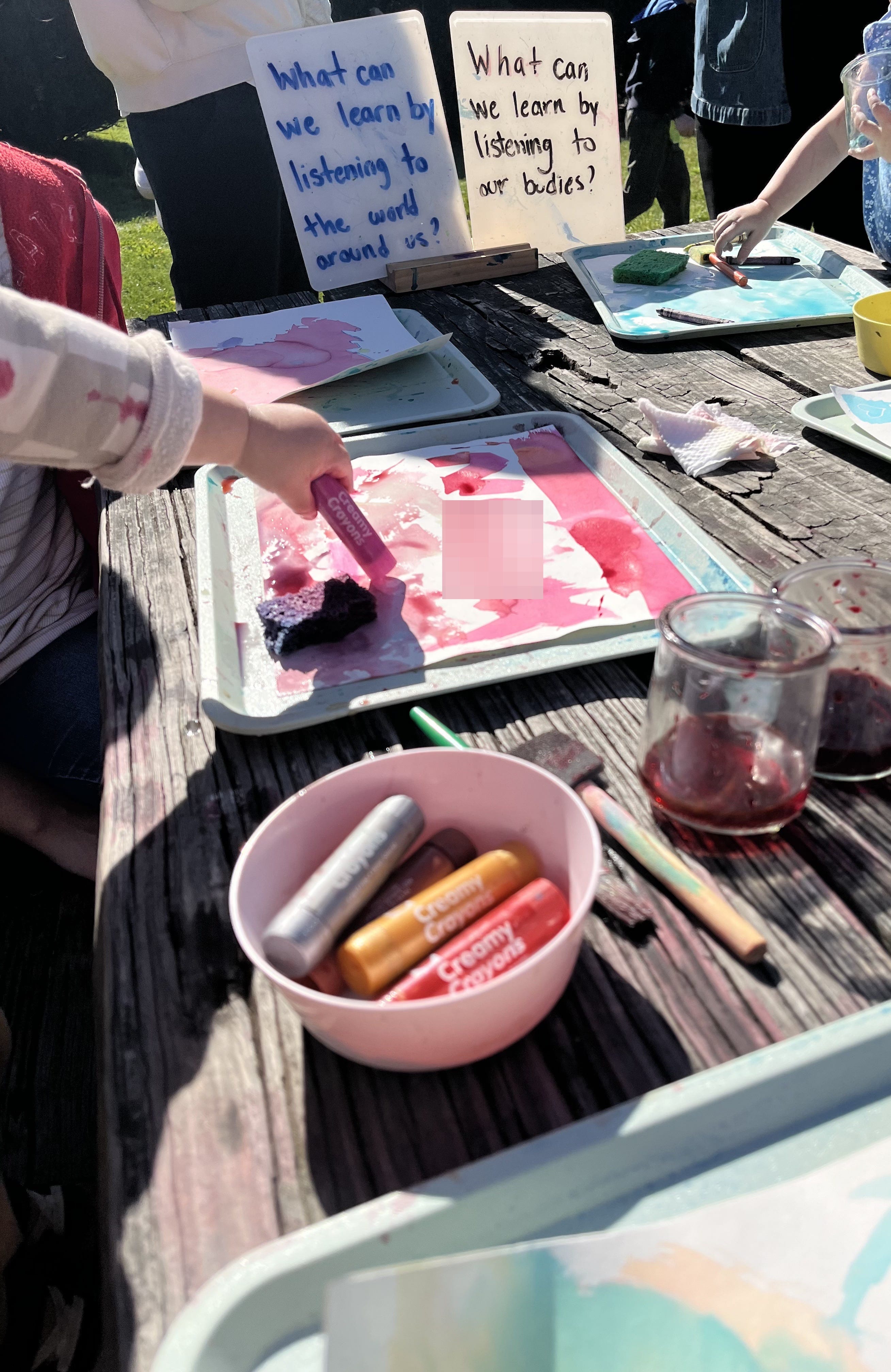
As more friends arrived we asked some questions. What can we learn from taking a quiet moment to listen to the world around us? What about when we listen to our bodies? And our friends?
As more friends arrived, we asked some questions. What can we learn from taking a quiet moment to listen to the world around us? What about when we listen to our bodies? And our friends?
Then we headed to the blanket, and each friend was greeted by the bee puppet. Sometimes listening also includes noticing what our friends are not saying. When the bee came around to tickle a friend’s hand, a look away or a closed fist let the bee know that a tickle was unwanted. We noticed how carefully the children read one another’s gestures and pauses, and how communication often moved beyond words.
Then we read Robin and the Stick by E.B. Goodale and headed out to the garden to plant. We received donations of plant starters from Hein Farm, including kale, carrots, and parsley. Friends got to work in the garden. Everyone had a hand in tending and planting. F and her caregiver pulled up weeds and planted parsley in a row.
K and her caregiver found a place for the carrots. Mc and his caregiver set up a nice spot for the kale to have some sun. N and his caregiver planted lettuce and peas. Baby H taste-tested a bit of lettuce before planting. Hn reminded us to “break up the root ball” before planting. Mv, Mt, and Ly went to get water to hydrate the garden.
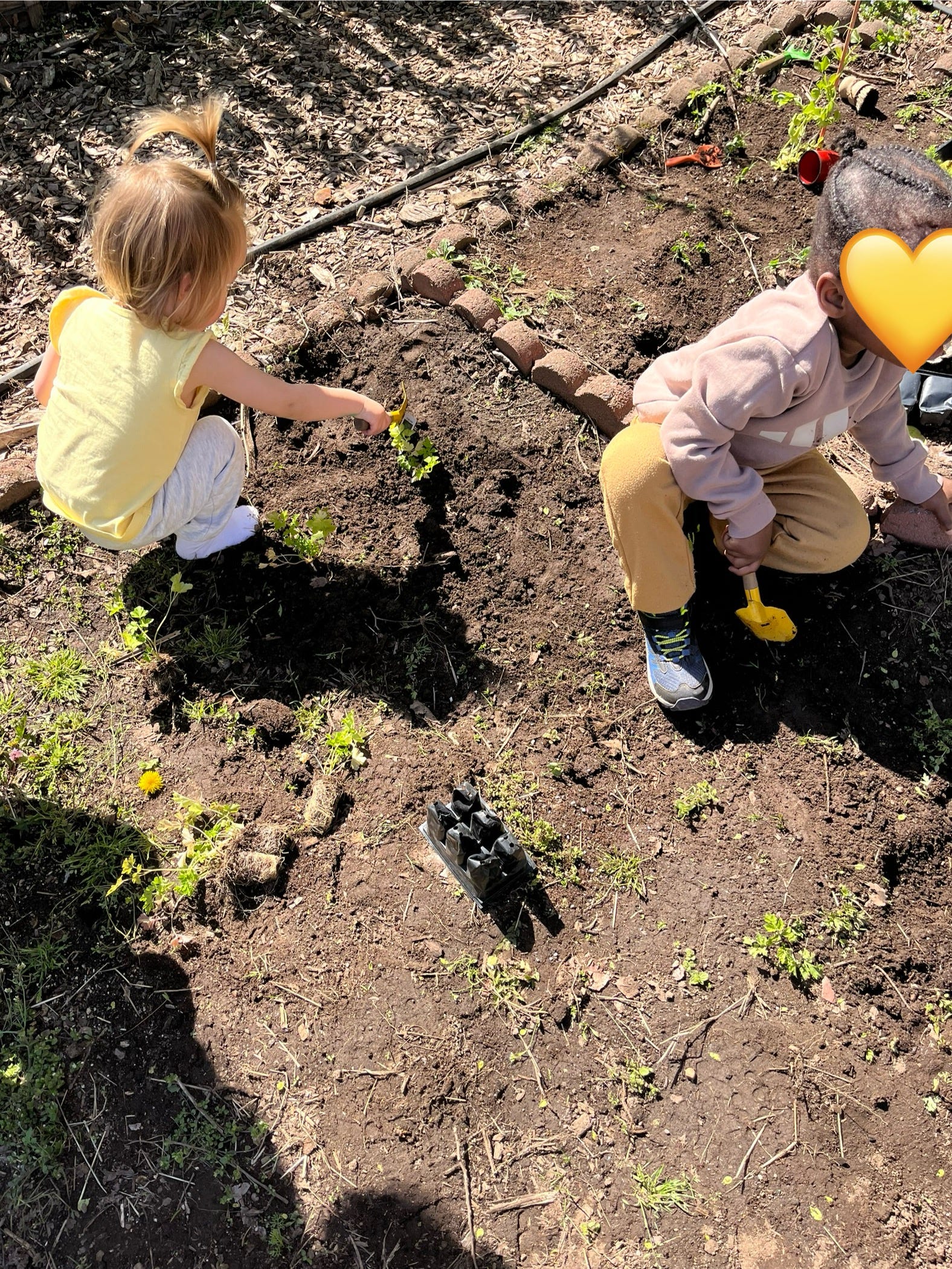
We all want this garden to flourish and this group to flourish together. Some actions we take together are small, like sharing a snack or a paintbrush, and some are big, like planting a garden together. Both build memories and stronger relational ties as we nurture each other and the world around us.
While we were gardening, Baby H’s caregiver found a bumblebee that was no longer alive, and we gathered around to get a closer look at a creature that is normally too fast to observe. We marveled at the diminutive wings and fuzzy body of the deceased pollinator. The children lingered with careful attention, noticing details that might otherwise pass by unnoticed during a bee’s quick movements through the garden. We placed the bee in its final resting place in the garden so it could return to the earth.
Baby H was getting tired, so we rocked her stroller back and forth and sang to her. H sang Twinkle, Twinkle, Little Star, and Ly sang a song from Little Bear. With droopy eyes and big yawns, we sensed that Baby H was almost in dreamland, so we said goodbye to her and headed back to the circle.
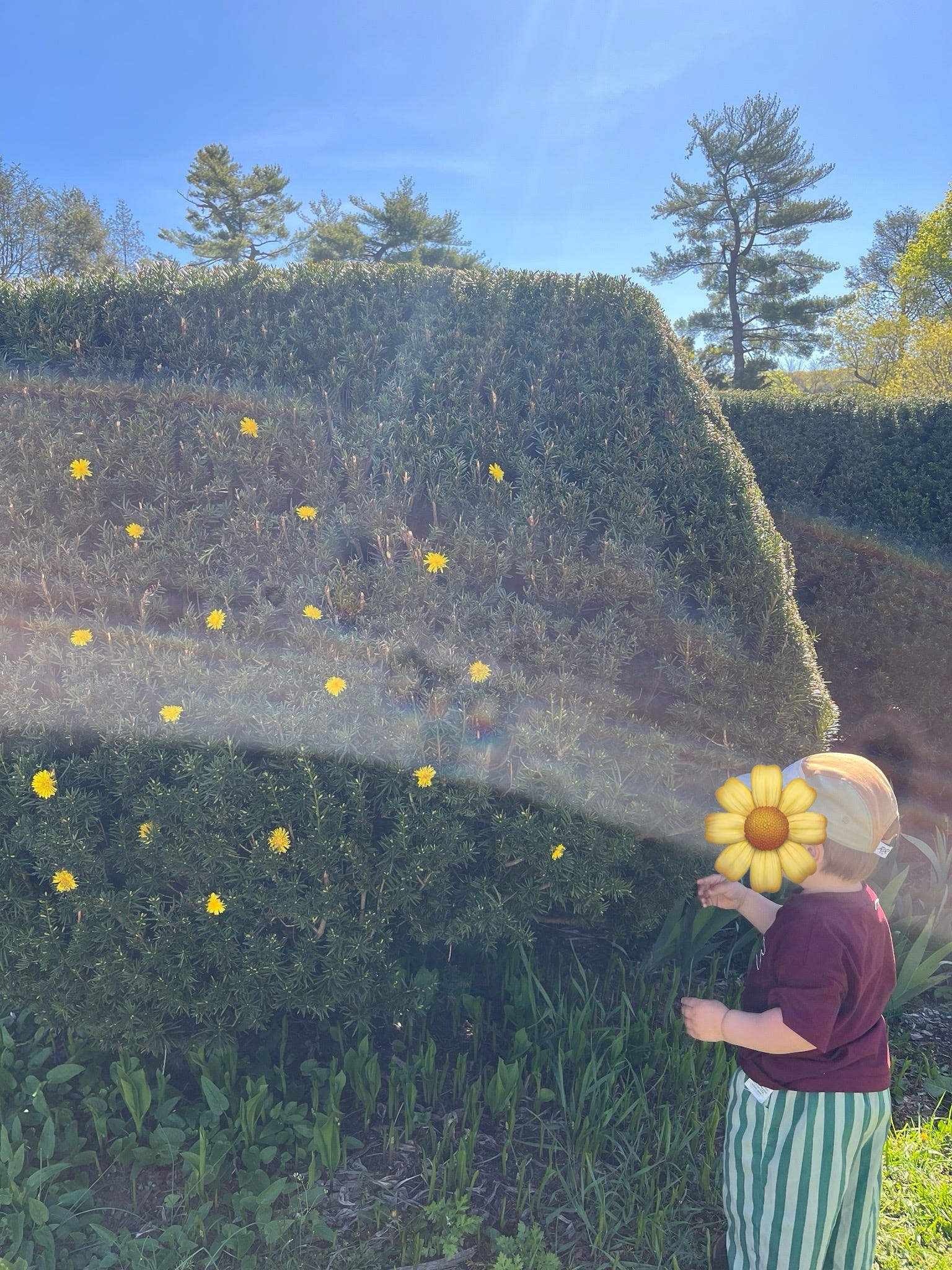
Friends who were not planting had been busy with projects of their own. Mt collected sticks just like in the story, and R collected dandelions. While we were planting, R decorated a bush with dandelions. We marveled at his creation and counted them together. When Ha heard us counting, she said, “I better hide!” and that started a big game of hide-and-seek through the garden.
It seemed the garden continued offering invitations for connection and imagination throughout the morning. Stories moved into stick collecting, flowers became decorations, and counting transformed into a game of hiding and seeking together. The children’s play suggested how one idea often carried into another, shaped collaboratively through shared attention and response.
In the end, we found our way back together and sang Love Is a Circle before saying our goodbyes.
Thanks for being part of Brave Nature Collaborative.
Subscribe for free to receive new posts directly in your inbox, revisit our growing archive any time, and support the collective work of our community.
Some of the book links in this post are affiliate links through Bookshop.org. If you make a purchase, we receive a small commission—at no extra cost to you.
Comments
Nothing yet. Say the first thing.
Sign in to join the conversation.