
Dear Cherished Reader:
Do you have an eagle eye?
If so, you might have noticed something I said toward the end of my June 27 newsletter.
I am working through my feelings about my country [the United States], one I left six years ago, as I usually do, with pen in hand.
If I manage to reach some kind of agreement with myself, I’ll share my thoughts in the [July 4] newsletter. If not, I’ll post something from the archives.
So what happened?
I posted from the archives.
It’s not that I didn’t come to an agreement with myself.
It’s just that it doesn’t matter.
Nothing that mattered yesterday will matter tomorrow.
My ideas, everyone’s, are moot.
Most important now is what’s coming, not just for America, but for the world, and how we respond to it.
It’s what I and some others see…
By the time you get this letter, Fabi and I will be in the Faroe Islands. She asked me weeks ago what I wanted to do for my 70th birthday, and I said, “Hike in the mountains.”
We picked the Faroe archipelago because of its largely uninhabited, pristine, natural landscape, plus the hope for cooler temps. Italy is an oven right now.

Planning the trip, however, was unusually complicated. Just getting to the Islands requires days of travel:
A flight from Milan to Hamburg, Germany;
A long bus ride to a Danish port on the Jutland Sea;
A 40-hour ferry to the Faroes
Then there is moving around the archipelago. We plan to use public transport to keep costs down and maintain our peace of mind (driving is stressful).
But it’s complicated. The Faroe archipelago consists of 18 islands. To get around, there are buses, ferries, helicopters, long undersea tunnels, meandering sheep, and muddy footpaths.
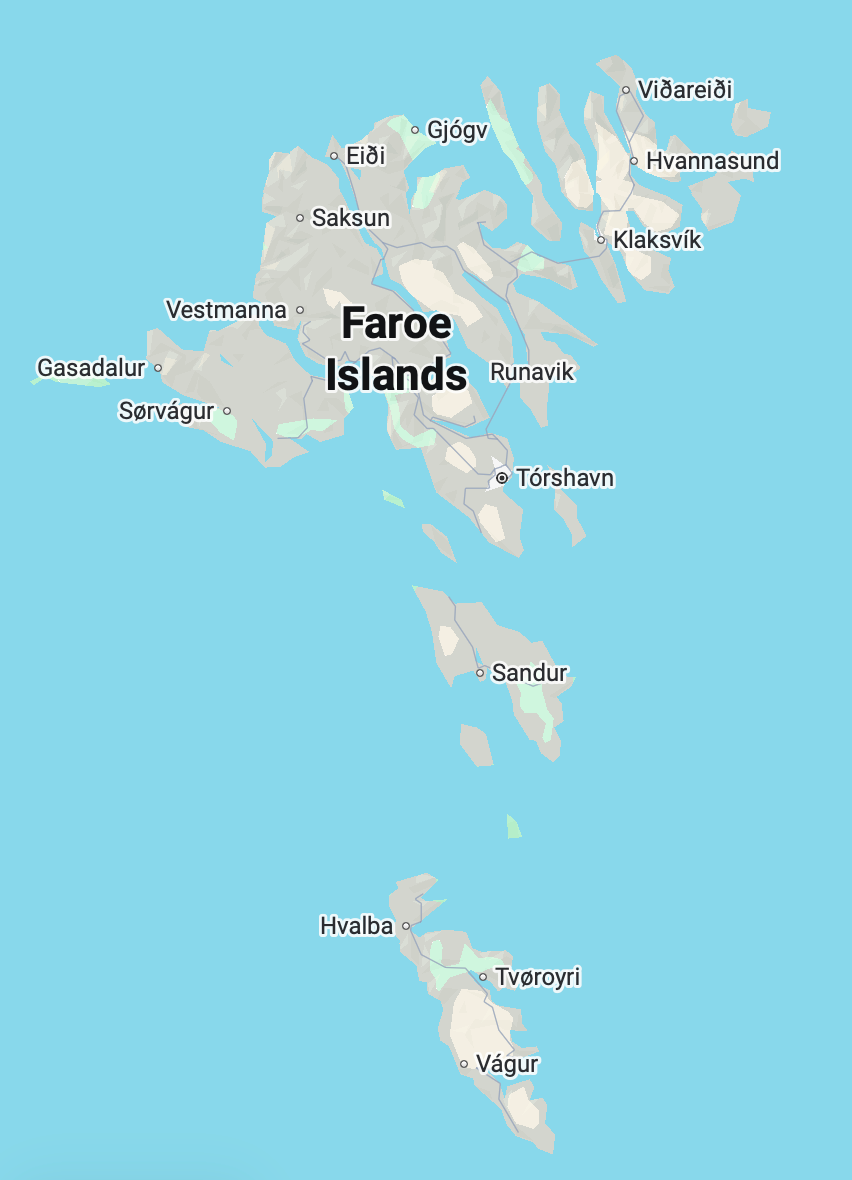
It took Fabi, the family trip planner extraordinaire, several hours just to plan one excursion — from the capital, Tórshavn, to “the loneliest lighthouse in the world.” The excursion involves four legs: two buses, a ferry, and a three-hour hike.
“Say,” she asked me when she was done working. “Why don’t we ask AI if my plan is correct?”
“That sounds like a good idea,” I said. “It would be a good sanity check.”
We asked.
Claude planned the excursion in seconds and even recommended the optimal time to go.
We were, again, astounded by the power of AI.1
And a little scared.
Some people take to the streets to provoke change, and that’s good. People should do that. Others throw soup to be the change they want to see in the world.
Me? I write letters. I learned the practice from my mom.
“I’m gonna write a letter,” Mom would say with a harumph whenever she encountered something she thought needed to change.
And write she did. Mom was an activist.

I’ve been on a letter-writing campaign lately. I wrote to six historical societies, asking them to verify if the United States was slipping into fascism.
I wrote another to Donald Trump urging him to visit an island in South Korea and pay his respects to the people massacred there.
There is one more letter I sent, one I want to share with you here in case you also want to send it.
I did not write it; it was written for me by this organization concerned about the uncontrolled use of Artificial Intelligence.
Here is the letter:
To the UN AI Advisory Body [aiadvisorybody@un.org],
I am writing to express my urgent concern regarding the lack of direct public representation in global AI governance.
As AI technologies transcend borders, it is essential that the voices of ordinary citizens are included in decision-making processes.
I am especially concerned about the following:
AI could help prevent conflict through better intelligence, faster diplomacy, and precision that reduces civilian harm. But in the absence of any international treaty framework, it is triggering a global autonomous weapons race with no agreed baseline for human oversight.
AI could distribute capability and opportunity broadly across society. But without antitrust action and open-access policy, it will be the fastest wealth and power concentrating technology ever built.
AI could help individuals control their own data and protect their digital lives. But in the hands of governments and corporations with no guardrails, it’s becoming the most powerful surveillance apparatus in human history.
I urge the Advisory Body to establish formal mechanisms for public input and ensure that AI development serves the global public good.
Sincerely,
Brant Huddleston
I sent the letter after watching THE AI DOC: OR HOW I BECAME AN APOCALOPTIMIST. Here’s the trailer:
For you word buffs:
“Apocaloptimist” is a portmanteau: a word made up of two other words, in this case “apocalypse” and “optimist.” It aptly expresses how the film’s producers and I feel about AI.
I said earlier in the letter that I am a little scared.
Why is that?
It’s because we humans denied the gods and ignored the prophets.
I’ll write about that another time. For now, enjoy the summer.
.
Fabi started using AI much more after that, but she found that it makes mistakes. It is fallible. If it is a god, then it is a flawed one, as most gods made by men are. AI is, as Ernest Becker says in “The Denial of Death,” a god who shits.
No posts
Comments
Nothing yet. Say the first thing.
Sign in to join the conversation.