
Dear Cherished Reader,
By the time you get this letter, Fabi and I will be island hopping in Cabo Verde, somewhere off the west coast of Africa. We are so grateful to have the opportunity to travel as we do!
Since I won’t have access to my computer for a few weeks, I am resending a newsletter (with minor edits) that I wrote in August, 2020, shortly after Fabi and I moved to Türkiye. It’s an oldie but a goodie!
Let’s get right to it. It’s what I saw back then…
From the Balcony
I thought it was raining. The windows of our bedroom were ajar, and as my sleepy eyes opened and focused on the gauzy cream curtains billowing inward, I thought, “Rain? Is it possible?”
It was not. Datça, Türkiye, in August is as dry and hot as an Arizona desert. The sound of rain I thought I heard was actually the morning breeze wafting through the emerald fronds of a tall palm tree just outside our hotel window, combined with the rustle of blood-red Turkish flags still hanging from yesterday‘s “Victory Day" celebrating the country’s Pyrrhic victory in a 1923 battle with arch-enemy Greece.
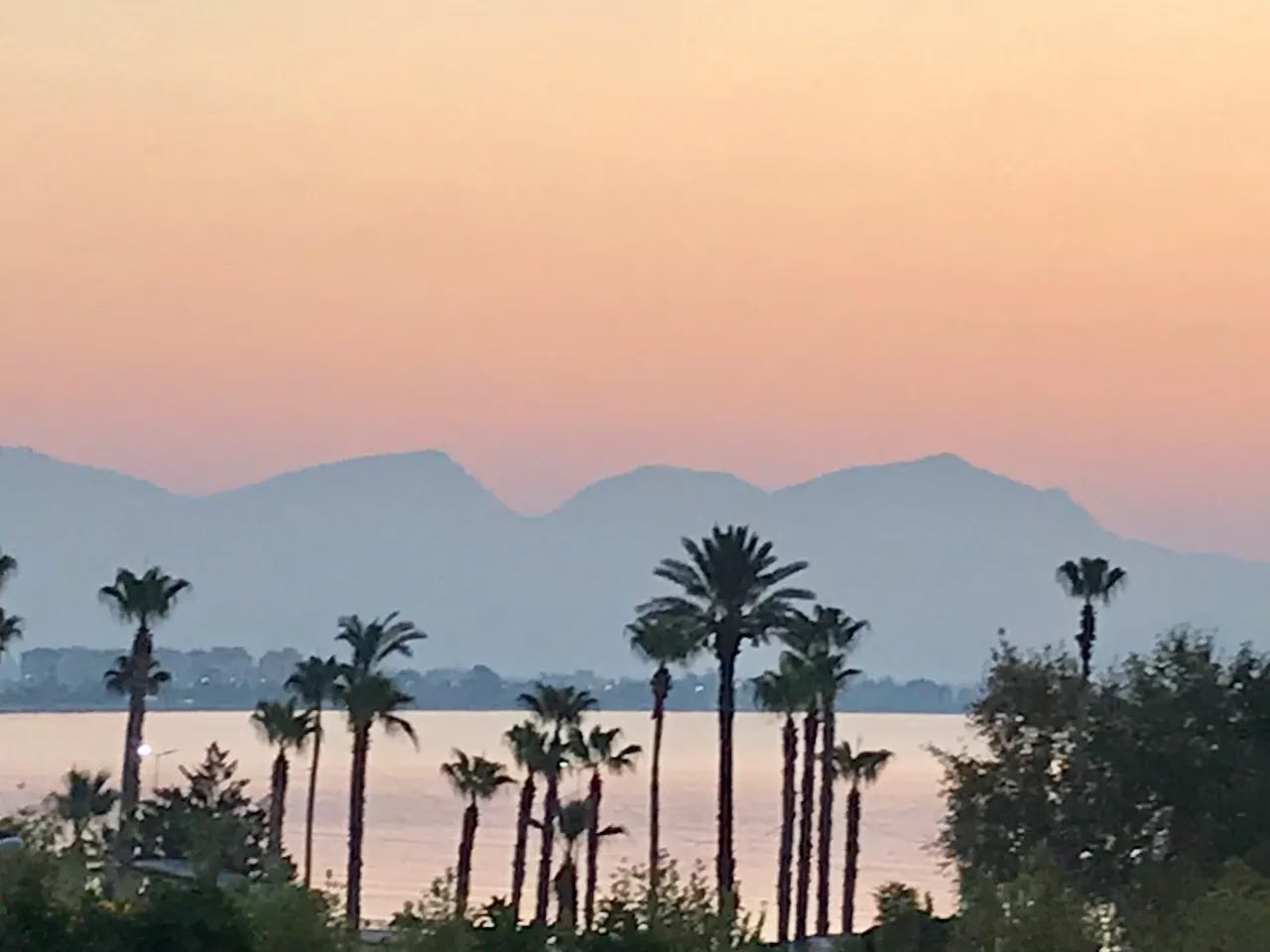
Now I am up, sitting on the balcony, watching a calico cat walk across the rust colored tiles of the rooftop across the street. Small flocks of taupe-grey birds, a dozen or so at a time, rocket between the buildings at dazzling speeds, twisting and turning around rose bushes and lime trees in a stunning display of aerial choreography.
In another hour or so, the roof will be too hot for the cat, but for now, the day is bathtub warm and brushed with a soft, salty breeze. The rising sun, so brutal at midday, is still low on the horizon, its pure light illuminating white-washed buildings hung like starched white laundry upon the rocky gray hillside overlooking the cobalt blue waters of the Mediterranean Sea.
Fabi has just set before me a glass of blackberry tea and a chunk of crusty, brown coffee cake purchased from the local bakery. “Just like the kind my grandmother would make,” she said, and one bite confirms her truth. It’s a perfect morning, and a strange time for me to be thinking about poverty.
Growing Up Poor
My mom grew up “dirt poor,” as they say, the daughter of a cruel, shiftless man and a stern, stoic mother. Mom didn’t speak much of her childhood, but once, just a few years ago, while she was in her 90s, she told me how her mother would glean the frozen fields for a few handfuls of grain and boil them in water to make mush. That would be the only meal Mom would have for the day. Growing up in the Great Depression of the 1930’s was hard.
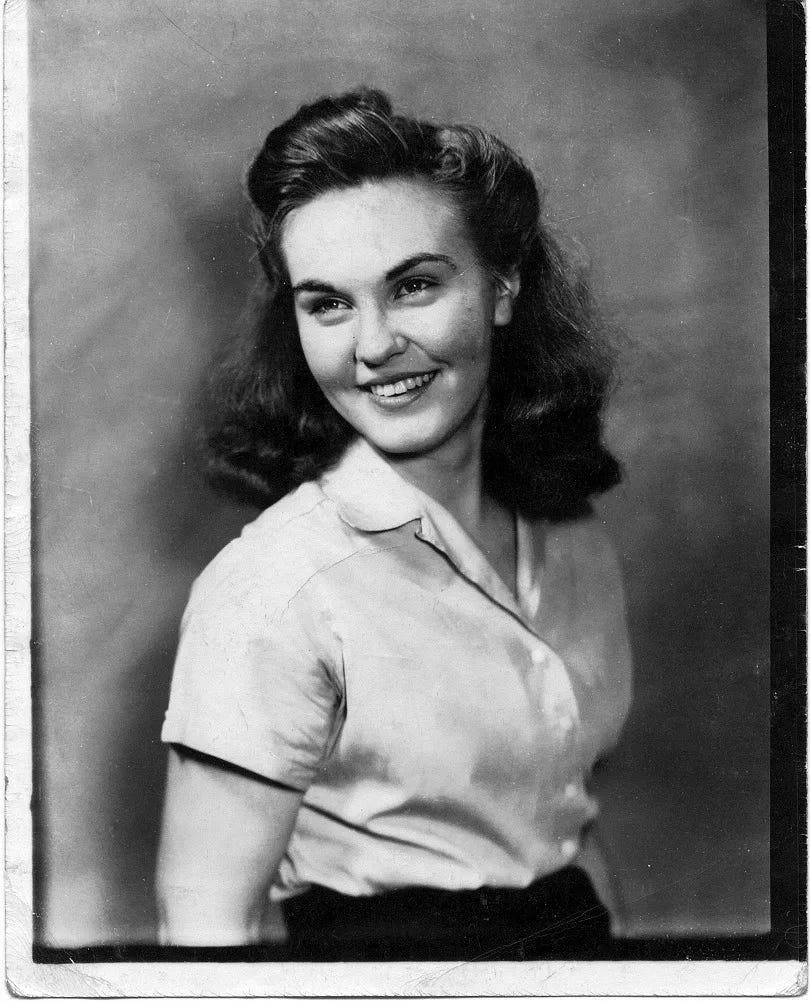
It’s no surprise to me that after Mom died, we found little treasures — crumpled balls of recycled tin foil, sheets of broken glass, boxes of pencil nubs — hidden away in every nook and cranny of her house. For her, they were all good for something and saved for a “rainy day” or for “just in case.”
That’s one way poverty affects people. They value everything, no matter how humble: even things others thoughtlessly throw away.
What is Poverty?
I generally think of poverty as a negative thing, that is, the absence of money or the things money can buy. Poverty can, and often does, mean a lack of essentials like food, clean air, and water. Poverty can mean genuine suffering.
In contrast, my childhood in the 1950’s and 60’s was a veritable Disneyland of abundance, filled with toys and opportunity. Thanks to my parents, I truly had a privileged childhood. I never suffered from poverty. Not once.
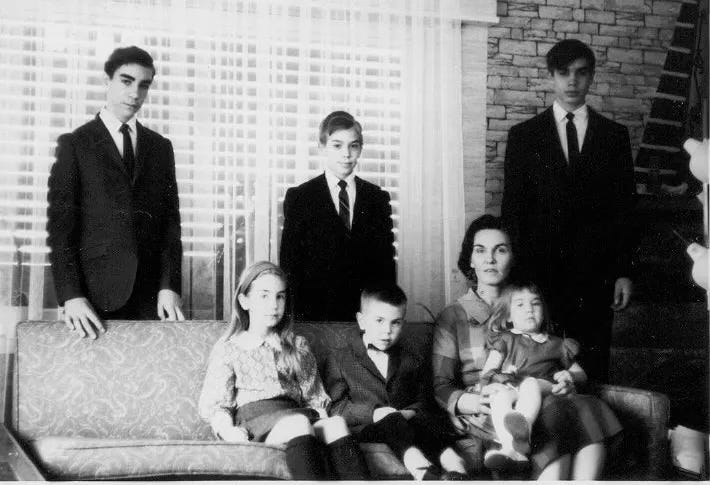
That abundance may have warped me in some ways. I wonder what kind of person I would be today if, when I was growing up, in addition to field trips to the Smithsonian Museums, the National Zoo, and Civil War battlefields, my parents and school had exposed me to real poverty. That wonder is what gave me the idea for the poverty museum.
Brant’s Poverty Museum
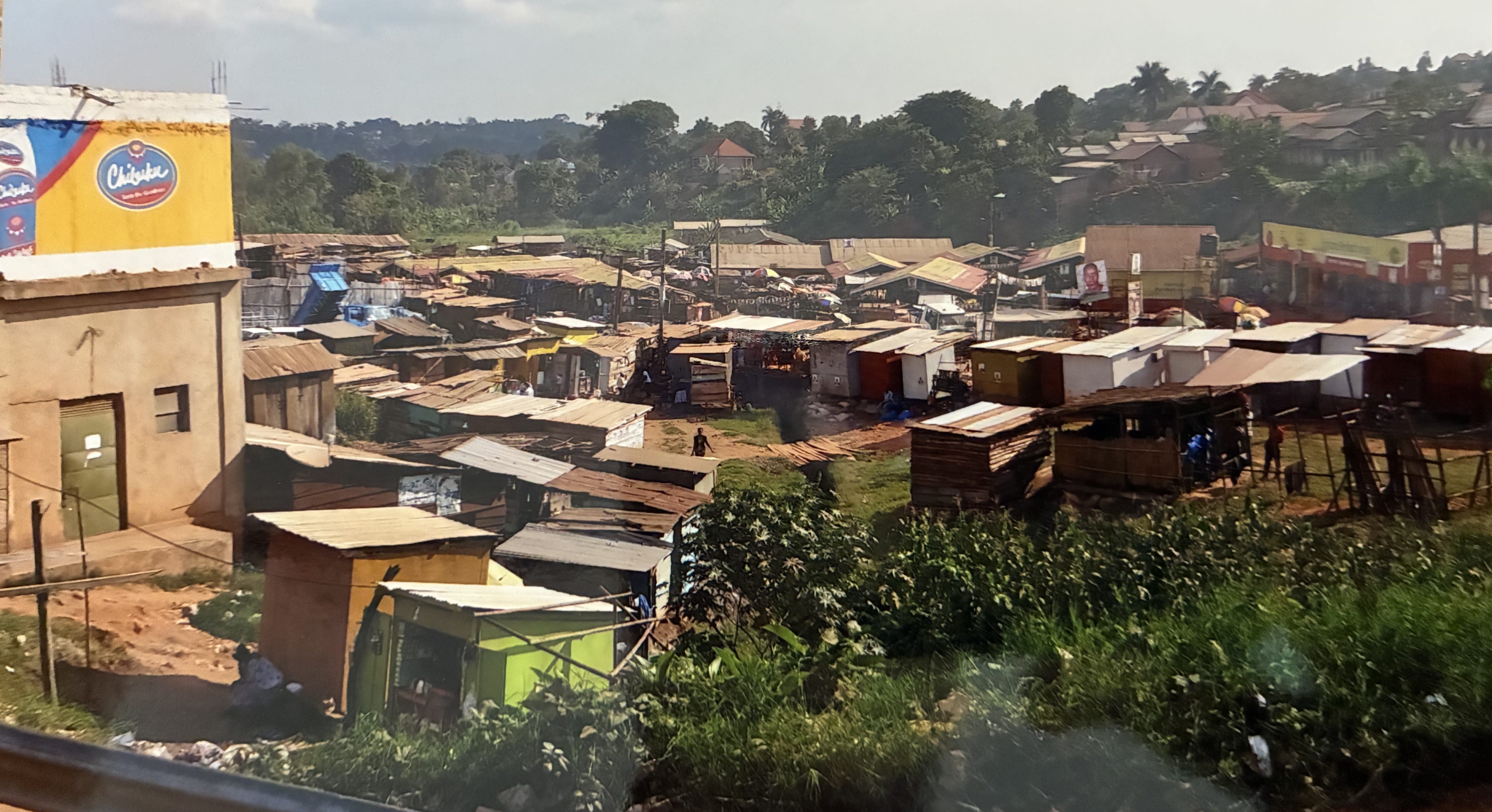
Imagine a poverty museum near Washington, D.C., including full-size replicas of the kinds of houses people live in around the world. Imagine little rich kids like me visit the museum to see the electric fences and barbed wire surrounding the houses of Panama, the tin-roofed shacks of Guatemala, the squalid favelas of Brazil, the stick bungalows of Indonesia, and the mud huts of Africa. Make them look, smell, and feel authentic.
I wonder how I would have felt if I had to rummage for my lunch in the Museum’s “fetid garbage piles of India,” exposition, just so I got a taste of how so many others live every day.
The Poverty Museum would provide spoiled American teenagers like me with week-long camps where they would receive fewer than 800 calories a day and dung-soaked water to drink. They would sleep on the bare earth with one eye open, watching for snakes and other wild animals released onto the Museum grounds. They would play as others play; learn as others learn; and live as others live, just for a week or three.
No showers or hot water. No A/C. Maybe a taste of dysentery. Then, see if I ever complain about life in America, which I did as a teenager, and sometimes still do.
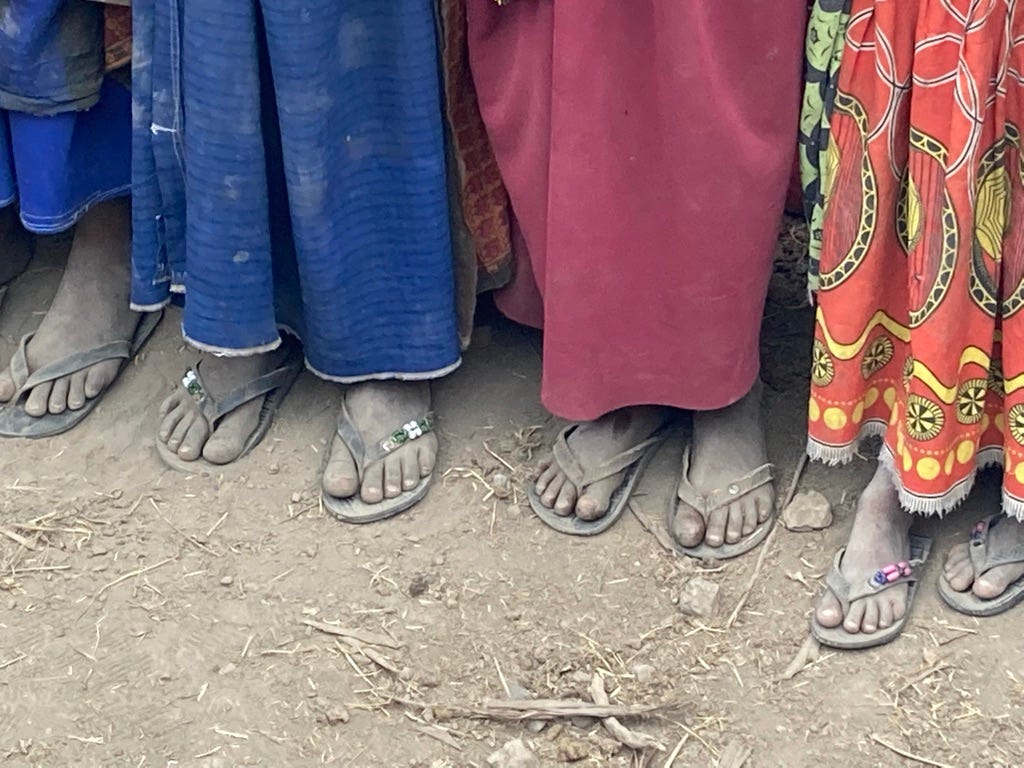
I suspect a trip to the Poverty Museum would have made a big impression on me. Nothing teaches gratitude like walking in another’s shoes for a few miles, especially if those shoes have holes in them.
I Was and Am Privileged
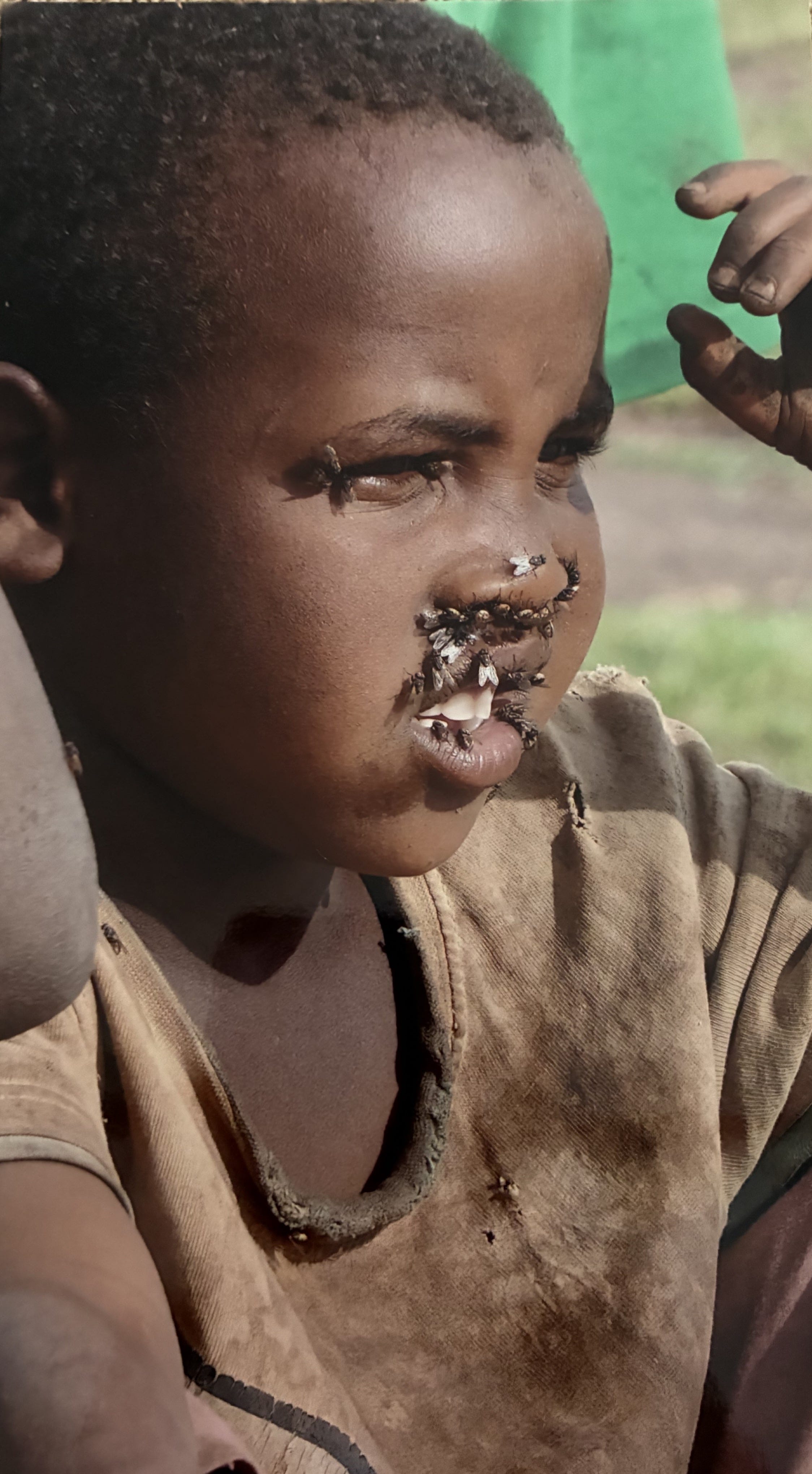
I’ve seen bitter poverty through a camera lens, but I have never experienced it. Neither have any of my descendants, although some came close. Thanks to my Mom and my Dad, who was also relatively poor, I had a rich upbringing and was able to pass it forward to my children.
How we see poverty, how we think about it, all depends on one’s point of view. My grandkids probably think I was poor as a child because Santa only brought me one gift for Christmas (usually a sweater passed down from my older brother, blah!) and I never got exactly what I wanted: a race car set. I had to save up and buy that for myself!
Poverty often means suffering, but a broader definition of poverty is “an absence of things,” suggesting it is not always bad.
When Poverty Serves
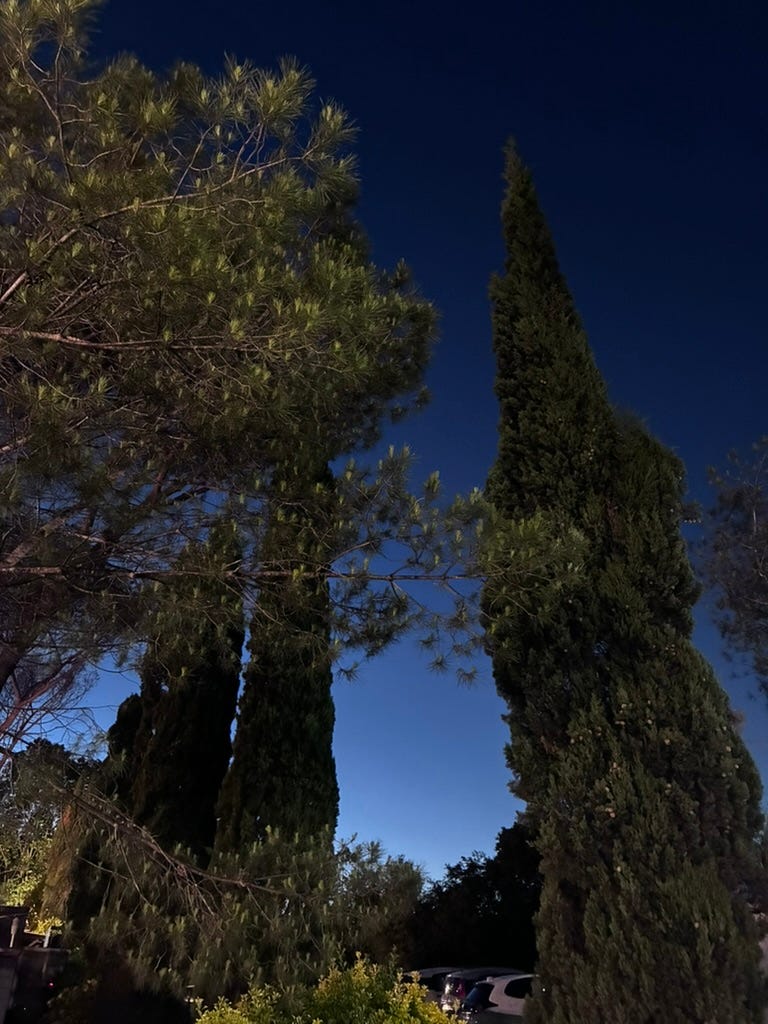
When there is no ambient light from a nearby city, we see the brilliance and glory of the starry sky, the Milky Way, and the planets. We experience wonder in a poverty of light.
When we have the absence of human-generated sound, rumbling trucks, jet airplanes, and cell phones ringing, then, as I am enjoying right now on this balcony, we hear the symphony of silence that only nature can conduct. The lonely call of a distant bird. The warm buzz of a bee. The soft rustling of the wind in the palms. The gentle patter of rain, when it finally comes. We find peace in a poverty of sound.
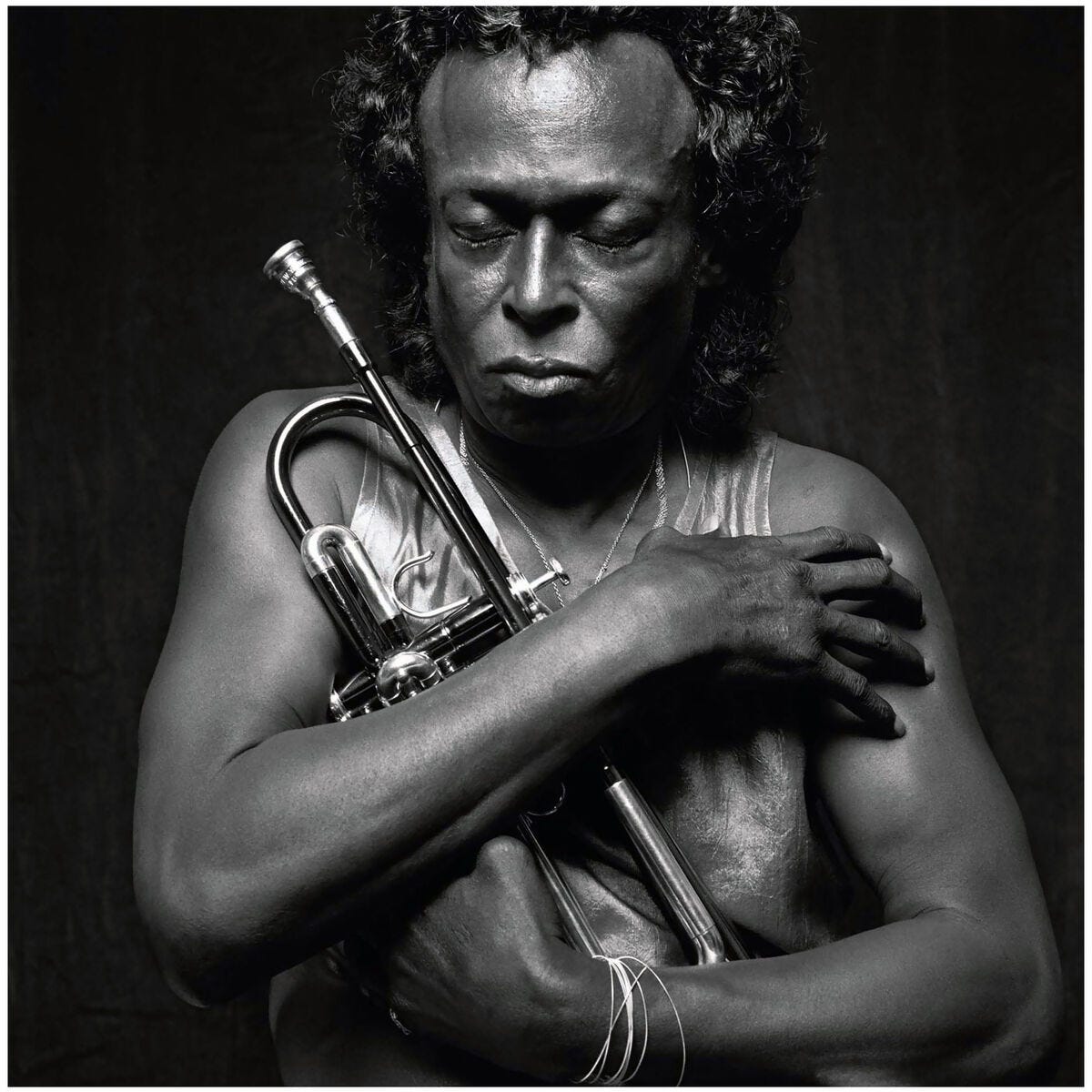
The great jazz musician Miles Davis believed that a single note from his trumpet, played with heart and soul, was more meaningful than a thousand notes played without thought or care. (Words are like that, too, although I wouldn’t know. I’m a blabbermouth!)
When we have a break from nonstop bad news about COVID and bad-faith politics, we remember that the world is good and healthy and that “this too shall pass.” We have our faith restored in a poverty of information.
Sometimes less is more.
That’s a Wrap!
I’m back in the present, writing this on May 25, 2026, just hours before we leave for Africa. I’d love to hear your thoughts, perspectives, and opinions on my concept of a poverty museum. Please leave comments! I try to respond to each one.
By the time you get this letter, you will have received two posts about “Map of Dreams,” one of which is posted behind Substack’s paywall. If you get hung up at the paywall, you have two options to blast through it.
First, and easiest, is just to upgrade from here. Your contribution helps Substack keep the lights on, and my portion goes to charity.
But wait! There’s more! There is a second option.
I give a one-year free upgrade to anyone who sends me a message, public or private, letting me know they have donated to any non-profit that provides food, water, shelter, or medical care to those in need. No questions asked. The words “I donated” are enough.
Since I am on the road, it may take me a while to upgrade you, but I’ll get to it when I get home.
Thanks for following along. I’ll see you… on the road!
Comments
Nothing yet. Say the first thing.
Sign in to join the conversation.