
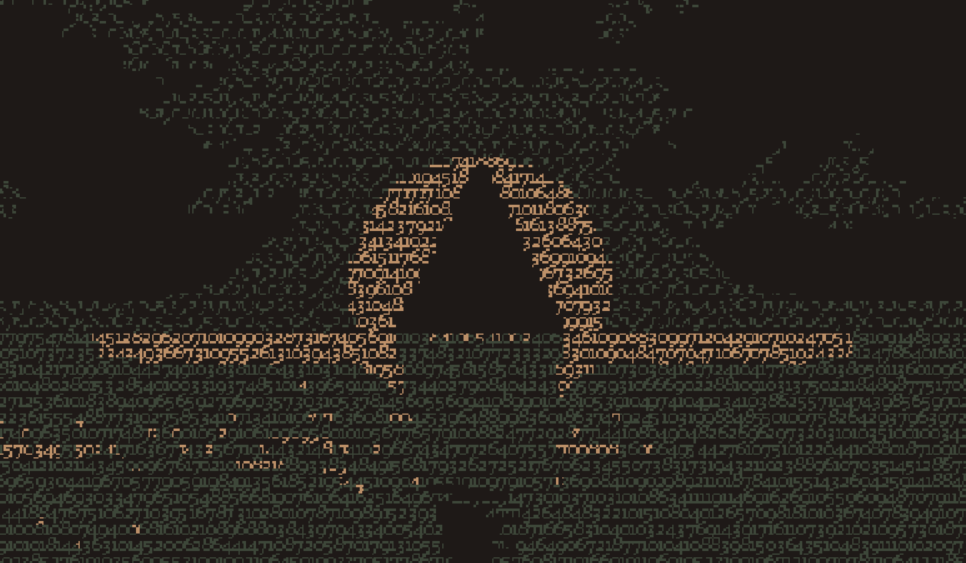
A big ol’ content warning, folks, on the topic of suicide. I won’t be describing the game’s depicted suicide in graphic detail, as I don’t want to read that myself. Today is more about the question of whether this kind of subject matter is worth depicting for a greater point. But if you want to just keep this entire topic out of your mind, no worries. I’ll see you in a couple weeks.
Anyway:
When I was in high school, I was in a short play where we burned the American flag on-stage. People were angry (obviously). The burning did make sense in the context of the show, as the point was that adults can convince children to believe anything, including the idea that burning a flag is good. (I played a child in the show, which wasn’t very believable casting until one performance where I accidentally audibly choked on a Tootsie Roll for a moment just before I burned our country’s flag. A+ performance, no notes.) The show had a great point to make, but people were still angry that we burned an actual American flag. There was no justification, claimed the angry villagers, to Burn The Flag. That’s a bad thing, and a play was not an excuse to do a bad thing.
Everyone in the production laughed it off, saying that the complaints were stupid because they missed the point. And, look, everyone complaining was stupid. Their complaints would have been right at home in a town hall segment of Parks and Recreation, with one guy creating a petition without seeing the show, and another guy saying that “art and literature get away with so much,” before saying that the Iraq War was actually good. (These both really happened.) But a nagging idea stayed in my mind: we did still burn the flag. We did do the bad thing. In reality, both sides were right: we were making a good point, and we were doing something harmful. This is a question that came to my mind as I played Without a Dawn this week: is there a case where showing bad things is worth the pain?
Without a Dawn is a game made by one person, which is understandable when you realize that the runtime is less than an hour long (and thus by Why My Father-In-Law Should Respect Videogames standards, is a Perfect Game), but the one-person-sized-team becomes immediately infuriating when you see the art and the prose together. It looks arrestingly beautiful in a unique, retro way that would only ever be done in videogames or a video art installation. And the prose does an outstanding job of capturing the blistering inner monologue of a mentally unwell person with circular, ruminating thoughts. I’m no stranger to these types of thoughts, which is why if you start a conversation with me, you should know that you’re interrupting an argument in my head with someone that I haven’t seen in weeks. (I am an extremely chill person.) This is a game that is singular in look, intent, and scope. But when it ended, I did not feel finished with it. I didn’t feel the catharsis of an ending, because the tension went in the opposite direction than I expected it to.

The game’s story is about a young woman who has retreated to a remote cabin to try and escape her incessant anxiety and paranoia. Her thoughts have ramped up to an 11, causing her to flinch at every sound and shape, all the while experiencing severe insomnia due to deeply troubling dreams. You’re presented with choices you can make as this haunted woman, but they’re all false choices; the healthier choice is always a dead end, forcing you to make the choice that entertains (and thus strengthens) the negative thought spiral. The delusions ramp up, causing you to become increasingly worried about the protagonist’s state of mind, praying that she can find a way out of the spiral. And the climax is: she doesn’t. She ends her own life. Even worse, while you don’t see her take the action herself, you do see the effect of it on her body, which is just gut-wrenching to see (and to remember as I write this). She then experiences a beautiful moment of peace, and the game ends. You don’t feel the catharsis you do for standard storytelling, but your mind absolutely lingers on and engages with what you’ve just witnessed.
While the ending choice is interesting, anyone who understands mental health can see how this ending could be irresponsible, especially if you have experience with and/or knowledge of suicidal ideation and how it works. I’m personally very experienced with it as someone who went through an aborted attempt in my early twenties (I’m much better now after having found help.) The reason suicides are hard to prevent is that when a tortured person decides to end their own life, they become euphoric. They finally feel relief that the pain will stop, so they don’t appear tortured to anyone around them. You get to see that relief in the game, depicted poetically in the form of a dawn that the protagonist will never actually see again. That depiction is fraught, as I would be worried that those at risk of suicide could see this and possibly be encouraged to go through with the act. These people are desperately seeking relief, and boom, there it is. Helping people in this state is one of the great challenges that humanity has faced since the dawn of time, and we don’t want to work against that goal.
But on the other hand, there is the fact that people should know what goes through the mind of someone on the verge of making this life-ending decision. A lot of folks don’t know what it’s like, confused by their very reasonable arguments bouncing off of someone in this state. This game displays the thought spiral and relief with astounding accuracy (although for a very narrow, specific, delusion-littered version of the experience). While I’m worried about the potential consequences of certain people experiencing this game, those same people would likely be massively helped by having the people around them experience this game themselves.
One of the reviews for Without a Dawn claims that the game is deeply moving. Another review argues that the game is dangerous. Both of these are true. But the fact that the game is making me question whether it should exist means that it should absolutely exist. This kind of internal struggle is rare to successfully invoke, and struggle is essential to life; it’s one of the reasons you should choose to stay in this world.
My only note is that the main character doesn’t choke on a Tootsie Roll before ending her life. That would have really made it an A+ game. Instead, it’s just an A.
Also, don’t play this just before bedtime like I did. Jesus fucking Christ.
The Alters - A story-driven management game where a stranded man makes clones of himself to survive a space expedition. Think Multiplicity but not just a punchline. People love it, and the question of trusting yourself sounds fascinating in this context. Throw it on the pile, I’ll play it in two or three years.
No posts
Comments
Nothing yet. Say the first thing.
Sign in to join the conversation.