
For a long time, this newsletter has been about seeking—through travel, spirituality, relationships, and the many mysteries of being alive.
Lately, I’ve felt something shifting. Less seeking. More arriving. More creating. More participating in my own life.
This week’s essay grew out of a mountain drive, a Bruce Springsteen memoir, and a question that has been quietly changing me.
And if you haven’t yet become a paid subscriber, please consider supporting my work. It helps make these essays possible.
This Substack is reader-supported. To receive new posts and support my work, consider becoming a free or paid subscriber.

A few weeks ago, I escaped to the mountains for a few days.
I loaded my backpack, and, like I had done countless times when I worked as a magazine adventure writer, I tossed it over one shoulder. I strode out of the house, and set it in the back of my Kia Soul, next to a cooler full of Spindrift Blood Orange sparkling water. I fired up the Kia, and I felt familiar butterflies fill my belly.
Maybe you know the feeling. You leave home thinking you’re simply taking a break or getting out of your routine. Then somewhere along the road, without warning, you feel a shift—no, a full on renovation project—inside you.
Memories rise from the deep. You hear a voice—is it you or outside you?—asking you a question. A part of your past that seemed long-settled begs to be re-opened.
I drove south on Broadway to Golden, the I wandered west. I followed the Colorado River through Glenwood Canyon. I soaked in hot springs. Next, I drifted south along the Roaring Fork River toward Basalt. Eventually, I headed west toward ranch country.
I wasn’t headed anywhere in particular. The driving was the point. Spring runoff was pouring out of the high country. The river ran thick and fast beneath the bridges. Cottonwoods flickered green against the red-black canyon walls. Snow still lingered high on the peaks.
Everywhere I looked, the world seemed to be waking up. Or maybe I was the one waking up. Sometimes it’s hard to tell the difference.
When I’m on vacation, I like to listen to memoirs by musicians or artists who fascinate me. It helps re-ignite my own creative spirit. This vacation, I spent much of those drives listening to Bruce Springsteen’s memoir Born to Run. When a chapter of the audiobook ended, I’d switch over to the music. Then I’d return to the book. Then back to the music again. For several days, Bruce Springsteen rode shotgun with me across western Colorado.
At one point I came to a passage I found myself replaying over and over. Have you ever encountered a paragraph that seemed to know you? Have you read sentences that hold secrets about you that nobody else could possibly know? This felt like that.
Springsteen was describing a battle of the bands at a bar called the Family Dog in San Francisco, where his band had been beaten by a group of musicians who possessed a level of sophistication and musicality he knew they hadn’t yet reached.
“ I was all I had. I had only one talent. I was not a natural genius. I would have to use every ounce of what was in me—my cunning, my musical skills, my showmanship, my intellect, my heart, my willingness—night after night, to push myself harder, to work with more intensity than the next guy just to survive untended in the world I lived in. As I sat there in the black, I knew when we got back home, there would have to be some changes made.”
I hit rewind.
I wanted to hear that last part again.
“I was all I had. I had only one talent. I was not a natural genius. I would have to use every ounce of what was in me—my cunning, my musical skills, my showmanship, my intellect, my heart, my willingness—night after night, to push myself harder, to work with more intensity than the next guy just to survive untended in the world I lived in. As I sat there in the black, I knew when we got back home, there would have to be some changes made.”
I hit rewind again and again.
“I would have to use every ounce of what was in me—my cunning, my musical skills, my showmanship, my intellect, my heart, my willingness—night after night.”
must have listened to those words ten times.
The passage struck me because it wasn’t really about music. At least not for me. It was about a man standing in front of his own life and recognizing that if he wanted to discover who he was or could be, he would need to bring everything he had to life. Not just his talent. His heart. His willingness. His discipline. His courage. Every ounce.
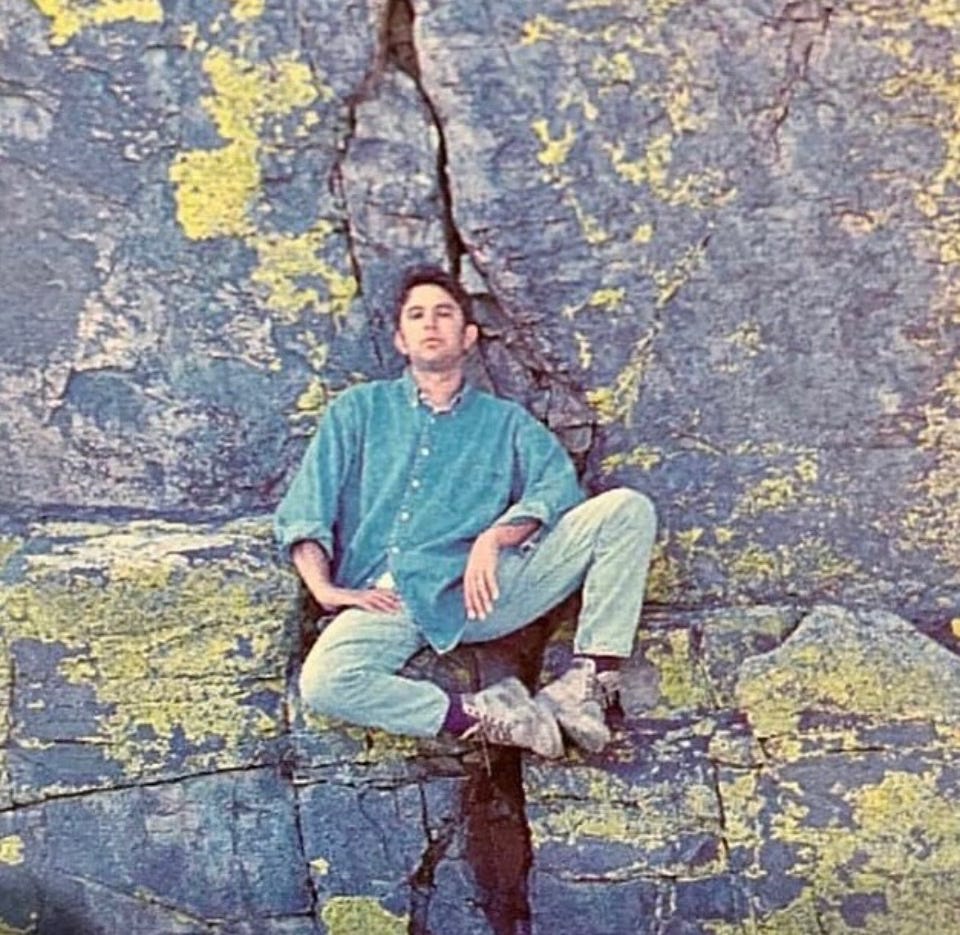
As the Colorado River flashed beside me, I found myself thinking about another Colorado trip, one that happened forty-four years ago, when I was sixteen years old and my friend Steve was fifteen and we climbed into my Ford Fairmont Futura in Prairie Village, Kansas, and pointed it west toward Breckenridge.
The dashboard rattled so violently somewhere out on the plains that it looked as though it might detach itself from the car entirely. We didn’t care. We were headed for the mountains. At sixteen years old, the mountains represented everything we wanted life to become. Adventure. Freedom. Girls. Music. Possibility.
We spent the week hiking trails, camping beneath the stars, eating badly, and listening to Born to Run until the cassette might as well have been fused into the tape deck. At some point we became convinced that the album should be transformed into a Broadway musical. We spent hours around campfires inventing characters, scenes, and plotlines, trying to determine where each song would fit into the story. The fact that neither of us knew anything whatsoever about Broadway musicals didn’t seem particularly relevant.
We also spent an embarrassing amount of time talking about the girls who worked at the A&W in town. Every afternoon we’d wander in for root beer floats and discuss what we planned to say to them. Then we’d order our floats, sit there awkwardly, and say almost none of it.
Looking back now, what I remember isn’t the details. What I remember is the feeling.
The future felt enormous.
The mountains felt enormous.
Life itself felt enormous.
Every road seemed to disappear toward some adventure waiting just beyond the next ridge. Every song felt like a clue. Every dream felt achievable. I hadn’t published anything. I hadn’t traveled the world. I had no career. I had no idea who I would become. Yet something inside me already sensed that life was inviting me into a larger story.
What strikes me now is that I spent decades following that invitation. For better or worse (definitely sometimes for the worse), I’ve been the type who buys the ticket and takes the ride—and sorts out the details later.
After graduate school at Northwestern, I landed my dream job at Outside magazine during what now feels like a golden age of journalism. Editors still sent writers into the world chasing ambitious stories. Magazines still had budgets. The internet hadn’t yet flattened everything into content. For more than thirty-five years, writing became both my vocation and my passport. It carried me around the world.
I traveled to many remote, wild places, including Greenland. I found myself playing Jimi Hendrix above the Arctic Circle with a group of Greenlandic teenagers beneath a midnight sun. I wandered through India and sat beside the Ganges in Varanasi watching funeral pyres burn through the night. I took a houseboat hundreds of miles up the Amazon. I followed the footsteps of Jesus across Israel and Palestine. I spent time with monks, mystics, adventurers, seekers, scientists, and ordinary people whose lives quietly altered my own.
For years I thought I was chasing adventure. Later I thought I was chasing stories.
These days I think I was searching for evidence that the world was alive, alive in the way a chance encounter can alter the trajectory of a life or a piece of music can suddenly unlock a room in the heart we didn’t know was still there.
The older I get, the less convinced I am that we’re moving through a dead mechanical universe. I still love science. I still love reason. Yet after decades of travel, reporting, grief, love, and paying attention, I find myself increasingly suspicious of the idea that reality consists only of what can be measured.
The universe speaks to me through rivers and songs, through strange coincidences and dreams, and also through stories.
Everything calls us into a deeper relationship with our own lives.
I was searching for mystery and meaning.
I was searching for the same feeling I had experienced as a sixteen-year-old kid driving toward Breckenridge with a Bruce Springsteen cassette rattling in the dashboard.
At the time I couldn’t have articulated any of this. I simply knew I wanted more life.
The funny thing about getting older is that eventually life stops teaching through distant landscapes and begins teaching through your own heart. The lessons I once sought in Greenland and India eventually arrived through grief, heartbreak, forgiveness, aging, friendship, and loss. Relationships ended. Dreams changed shape. People I loved died. My former wife Andrea, who later became my friend, died, and grief arrived. Its hands held questions for me that no amount of studying, achieving, traveling, or spiritual seeking could answer.
I’ve done a lot of work around all of this. I’m grateful for every bit of that work. It’s deepened me and softened me. It taught me compassion. It helped me understand parts of myself I had spent decades avoiding.
Yet one of the unexpected gifts of that journey was realizing that healing doesn’t eliminate mystery. If anything, it enlarges it. The deeper I traveled into my own history, the stranger existence itself began to appear.
Beneath all the stories I told about who I was, beneath the wounds, explanations, and narratives, I kept encountering something vast and difficult to describe.
Something powerful and real is moving through all of us.
Listening to Springsteen in Glenwood Canyon, I realized this shift had already happened.
The question that’s now tugging on my life is no longer the question that dominated me a few years ago.
For a long time I simply wanted healing.
Now I want expression.
I want to create.
I want to connect.
I want to participate more fully in my own life.
I want to bring every ounce of myself to the years I have remaining.
The older I get, the less interested I am in self-improvement for its own sake. I want to
write. I want to love. I want to laugh with friends over dinner. I want to swim in mountain lakes. I want to make things. I want to stand in front of a blank page and discover what I think. I want to continue becoming whoever I am becoming.
And somewhere in the middle of all that, I realized that this shift has quietly transformed my teaching as well.
When I first began teaching memoir years ago, I thought I was teaching writing. I thought I was teaching scenes, structure, narrative arc, character development, and all the other tools that help shape a story. I still love those things. They matter. Storytelling matters.
Yet after years of teaching, I’ve come to believe that something deeper is happening.
Again and again, I’ve watched people arrive believing they’re coming to learn how to write and leave having discovered something about themselves.
A woman in a recent class spent weeks working toward writing about a traumatic childhood experience she had carried for decades. By the end of the course, supported by the women in the group and the trust that had developed between them, she felt safe enough to read it aloud. The next day she wrote to tell me that the experience had been transformative.
Another student has written an eighty-thousand-word memoir over the past year.
Others have found friendships.
Others have found courage.
Others have found language for experiences they had never spoken aloud.
What I’ve witnessed over and over is that story becomes a bridge. We arrive carrying scattered memories, half-understood experiences, heartbreaks, triumphs, questions, and longings. We begin writing, listening, and sharing. Slowly, my students’ words and stories begin speaking to one another.
In community, memories that felt fragmented begin to form shapes. Sometimes these shape appears through the storytelling. Other times, they appear through shared tears or an unexpected insight. Together, we all have begun to see the stories of our lives in ways that we could not see sitting alone behind the four walls of our conventional, more isolated lives.
This realization is one reason I recently changed the name of these classes from Writing the Soul to Writing the Heart.
The new name feels closer to what we’re actually doing.
Some people join because they want to write memoirs.
Some want to write essays.
Some are working on books.
Some don’t consider themselves writers at all.
Some are moving through grief.
Some are standing at a crossroads.
Some simply want a place to slow down and reflect honestly. They want to spend time with thoughtful human beings who are trying to live with intention and curiosity.
What we all share is the desire to engage more deeply with our own lives. To listen and remember and imagine and to simply tell the truth. To discover what happens when we bring a little more heart to this work of being human.
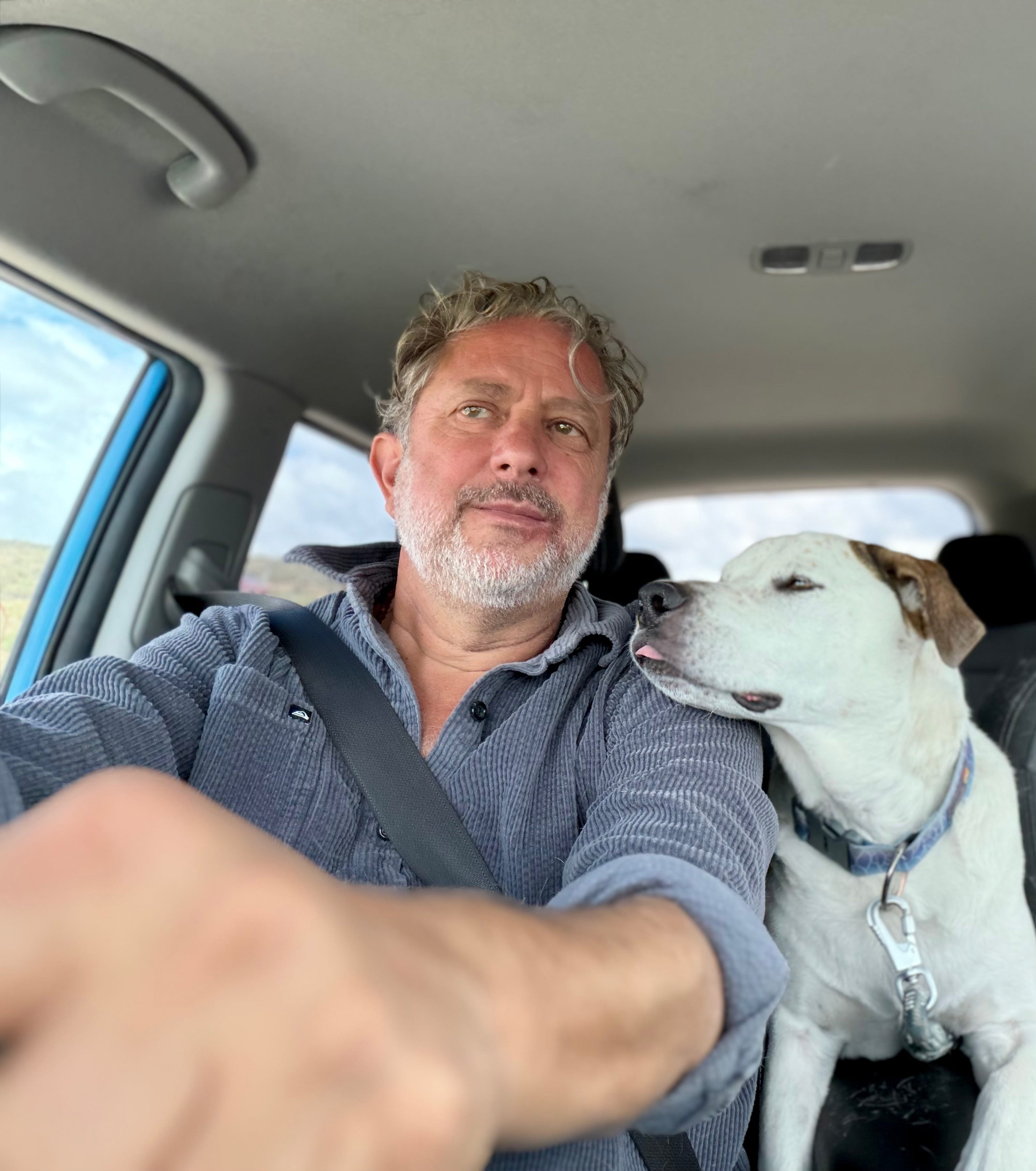
I pointed my Kia east again. The river emerged from Glenwood Canyon and widened into the valley beyond. Tommy woke up and stretched. The audiobook ended. The mountains opened toward home. I drove for a while in silence, thinking about Springsteen sitting in the dark after that battle of the bands, recognizing that there were changes he needed to make, recognizing that he would have to bring every ounce of himself to the road ahead.
It wasn’t his ambition that impressed me. Ambition is cheap and leads nowhere. I know this.
I was impressed with his commitment.
His willingness to keep becoming.
His refusal to settle for a smaller version of himself.
As I drove east toward Boulder, I realized that was the part that had lodged itself in my heart.
Life is still asking something of me.
Life is still asking something of all of us.
And perhaps this is the great surprise I discovered on my trip into the mountains. We spend years believing we are searching for meaning. But get this: isn’t meaning searching for us?
We spend years trying to understand life, while life keeps appearing in songs, rivers, dreams, dogs asleep in passenger seats, chance encounters, heartbreaks, mountain roads, and impossible coincidences that arrive carrying exactly the message we need to hear.
The universe feels stranger to me now than it did when I was sixteen, stranger than it did when I was thirty, stranger than it did when I was fifty. The longer I live, the more existence resembles a conversation. It’s an ongoing exchange between ourselves and a vast, creative mystery. And mysteries are not problems waiting for our minds, our science, to understand them. Mysteries are beyond our capacity to understand.
The universe is asking for our attention, creativity, and courage. It’s asking for our honesty. It’s especially looking for our love. It is asking us to play our part in full. To show up. To bring more of ourselves to the page, to our relationships, to our work, and to the brief and beautiful lives we have been given.
That sixteen-year-old kid I was in 1982 driving toward Breckenridge caught a glimpse of this truth. The 60-year-old man listening the now 70-something Bruce Springsteen in Glenwood Canyon caught an even deeper glimpse.
Perhaps you have caught glimpses too.
That, more than anything, is what Writing the Heart is about.
It’s a place to write, certainly. A place to tell stories. A place to work on memoirs and essays and books if that’s what calls to you.
It’s a place to write, certainly. A place to tell stories. A place to work on memoirs and essays and books if that’s what calls to you.
It’s also a place to listen more carefully to your own life and to notice what keeps emerging.
Like that sixteen-year-old kid driving toward Breckenridge, I am always listening for the feeling that the road ahead still leads somewhere worth exploring, that the mystery has not gone anywhere, that the world remains far stranger, more alive, and more enchanted than we have been taught to believe.
If you enjoyed this week’s essay, I hope you’ll leave a comment:
To sign up for Writing the Heart, please click here:
If you haven’t bought my memoir, Into the Soul of the World: My Journey to Healing, yet, I hope you will.
Here’s what author Hampton Sides wrote about it:
“Brad Wetzler has led the very definition of an adventurous life, but in Into the Soul of the World, he gives an unflinching account of his interior adventures. Wetzler’s soulful quest, by turns anguished and transcendent, will resonate with readers around the world who struggle to find purpose and a sense of the holy in the ambient jitter of the digital age.”

This Substack is reader-supported. To receive new posts and support my work, consider becoming a free or paid subscriber.
Comments
Nothing yet. Say the first thing.
Sign in to join the conversation.