
First, welcome back to my newsletter, where I share about my world:
living and embodying the life of a working professional writer with 30+ years in the publishing industry
teaching you about storytelling, creativity, and travel and memoir writing, in particular, and
occasionally write about what’s lighting me up, most often essays about living open-hearted and embracing the mystery of this wild world.
I’m glad to be sharing news from my world.
These words area labor of love, and it’s made possible by readers like you. Please support my work by:
hitting the like button
if you enjoyed this post (and comment, if you’re able)
subscribing for free or upgrading to paid
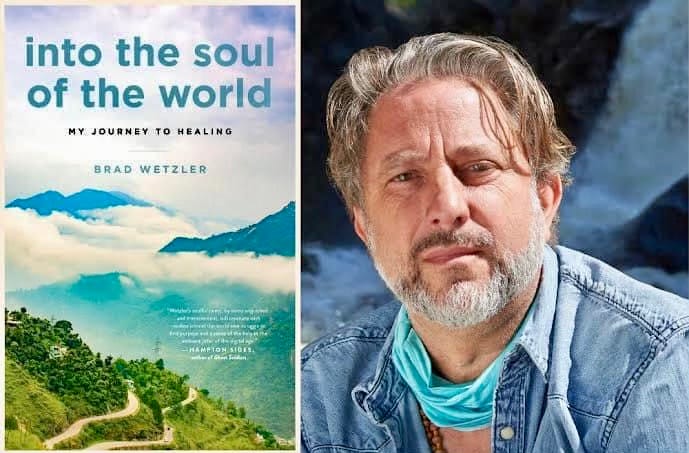
purchasing a copy of Into the Soul of the World or listening to it on Audible (or Spotify for free)
sharing this post with a friend (I love my friends in this community)
One of the strange things about a human life is that, while we are living it, we almost never know how to see the story of it.
Years pass in what feel like ordinary days and only later, sometimes decades later, do we look back and recognize the shape of a story. And even then, there is rarely just one story. There are often several.
The stories we write work this way too. Life hands us an endless stream of events, but meaning begins to appear when we recognize the moment where the story we want to tell actually begins. Once you see that moment, everything else begins to arrange itself around it.
I first began to understand this one afternoon when I was working as an editor at a magazine.
The fax machine started buzzing in the hallway outside my office at the magazine, and I felt the familiar rush of anticipation that comes when a long-awaited story finally arrives. The machine began feeding out that ribbon of warm, inked paper one page at a time, and I grabbed the pages as they slid out of
the rollers and started reading them while climbing the stairs back to my office. By the time I reached the landing I was already halfway through the opening section, and I carried the stack out onto the small balcony outside my office where I often read manuscripts in the afternoon light.
The story came from a high-profile writer we had sent on a dangerous assignment. I had researched the idea, pitched it to my editor, and helped arrange the expedition that would become the feature. The trip itself had carried real risk. The terrain was remote, the logistics complicated, and during the weeks he was out there more than one of us quietly wondered whether the worst might happen. In some ways the worst-case scenario did unfold during that journey, although thankfully the one outcome we feared most did not. Our writer returned alive, shaken but intact, with a remarkable experience behind him and what we hoped would become a powerful story for the magazine.
The writing itself was solid. He was a professional and the sentences showed it. The scenes were vivid, the reporting was clear, and yet within a few minutes I could feel that something was wrong.
The story had begun in the wrong place.
Nothing on the page was technically broken, yet the structure felt slightly off balance, as if the narrative had missed the point where the real tension of the story lived. Because the story began too early and too cautiously, the reader never quite felt the full force of the experience the writer had actually lived through. The material was powerful, but the structure was muffling that power.
Later that day the writer called to ask what I thought. I remember choosing my words carefully because writers who have just returned from dangerous trips often feel protective of their first draft. I told him that the writing was strong and the reporting was excellent, but I had a suspicion about the structure.
“I think you’re starting the story in the wrong place,” I said. “What if you began more in the middle of the action, and then moved back to explain how you got there?”
At the time I was about thirty years old. I had been editing and telling stories for years, but I had never heard the term “in medias res.” I was simply trusting the instinct that every storyteller develops sooner or later, the quiet human sense of where the energy of a story actually lives.
Decades later, after teaching writing for many years, I know the technical term. “In medias res” means beginning in the middle of things, allowing the reader to enter the tension of the story immediately before circling back to explain how the journey began. The term itself hardly matters. What matters is the instinct underneath it, the same storytelling instinct most of us carry naturally once we learn to listen for it.
The writer paused for a moment, thinking about it, and said he would try it.
A few days later the fax machine started buzzing again. Once more the pages began sliding out in that steady mechanical rhythm, and once again I grabbed the stack and started reading as I climbed the stairs toward my office. I carried the new draft back out onto the balcony and began reading.
Within a few paragraphs I knew.
The story had found its true beginning. The tension was alive on the first page, and the narrative now moved with the kind of energy the real experience deserved. The piece went on to become one of the most widely read adventure stories we published that year, and even now, decades later, I still remember the quiet satisfaction of realizing how much power can live inside a single structural decision.
I did not know it at the time, but that moment on the balcony would become one of the clearest lessons of my editing life.
Over the past thirty years I have watched the same dynamic unfold again and again, not only in magazine journalism but also in memoir. Writers often sit down with extraordinary life experiences and begin writing pages filled with genuine emotion and insight. Yet the deeper narrative arc of the story remains just out of reach because the structure of the story has not yet come into focus.
Most people believe they have a writing problem.
What they actually have is a story problem.
They begin writing their memoir before they understand the deeper architecture of the narrative they are trying to build. They know important things happened to them. They know those experiences changed their lives. Yet the central desire that drives the story, the struggle that shapes the journey, and the transformation that gives the book its meaning remain partially hidden.
Without that structure, even powerful experiences remain scattered across the page.
I eventually faced the same challenge in my own life when I began writing my memoir, “Into the Soul of the World: My Journey to Healing,” which was published by Hachette in 2023. I had lived the experiences and understood their emotional meaning, yet the book only began to take shape once I stepped back and asked the deeper structural questions that every memoir eventually has to answer.
Where does the real story begin?
What struggle carries the narrative forward?
What transformation gives the journey its meaning?
Once those questions become clear, the writing itself becomes far easier.
Over the years I have helped hundreds of writers reach that moment of clarity. I taught memoir for the Book Project at Lighthouse Writers Workshop in Denver, I taught writing at the College of Santa Fe, and I have guest lectured at several universities, including the University of Denver, University of Colorado Boulder, University of New Mexico, New Mexico State, and the University of California. I have also edited hundreds of memoirs and nonfiction books. Again and again I see the same thing happen. Someone arrives with a life full of powerful experiences but no clear narrative path through them. Gradually, through reflection and careful attention to story, the deeper pattern begins to reveal itself.
That process is the foundation of the class I now teach called Map Your Memoir.
Map Your Memoir is a five-week course designed to help writers step back from the chaos of memory and begin seeing the architecture of their story. The course meets on Zoom for five consecutive Wednesdays, starting on April 15 and concluding on May 13. The meeting time is 8 pm ET, 5 pm PT.
Each week we focus on a different part of the narrative puzzle. In the early sessions we explore the pivotal moments that shifted the direction of your life and begin identifying the deeper question your memoir is asking. From there we look closely at the desire and struggle that drive the story forward and begin shaping the narrative arc that will carry a reader through the book.
As the weeks unfold, writers begin mapping the major movements of their memoir and clarifying where the story truly begins, where the emotional turning points live, and what transformation the journey reveals. The class includes guided exercises, conversations about memoir craft, and the chance to test the emerging structure of your story with a small group of writers who are engaged in the same process.
By the end of the five weeks, most writers do not simply have more pages. They have something far more valuable. They have a map of their memoir, a clear understanding of where the story begins, what forces drive it forward, and where the journey ultimately leads.
Once a writer can see that map clearly, the writing of the book becomes far more possible.
If you have been circling a memoir for years, or if you feel a life story pressing quietly on the back of your mind and you are not quite sure how to begin, this is exactly the stage where this kind of work can help. The writers who come to this class are usually not beginners. Most of them have lived complicated lives, gathered powerful material, and written at least some pages already. What they need is a way to see the deeper structure of the story so the book can finally begin to take shape.
Your life has already been telling a story for years. Sometimes the most important step is learning where that story truly begins, and then having the courage to follow it all the way to its end.
Paid subscribers will receive a $150 discount on the course. Please message me to receive your discount. (You must pay me through Venmo or Zelle.)
Others, click on the button below to read more about the course and to sign up. If you have a question for me, please leave a comment below. Or DM me.
I look forward to seeing you in April.
Comments
Nothing yet. Say the first thing.
Sign in to join the conversation.