
Earlier this year I was asked to write about the late photographer Sarah Charlesworth for Aperture Magazine. I was surprised, because I don’t think of myself as a photography guy—as much as I absolutely love photography. Then I remembered that I take photos myself, and I’ve published more photography than painting books, so it shouldn’t have shocked me. I thought it might’ve been because Charlesworth occasionally made images of Buddha, and I’ve been known to praise him occasionally.
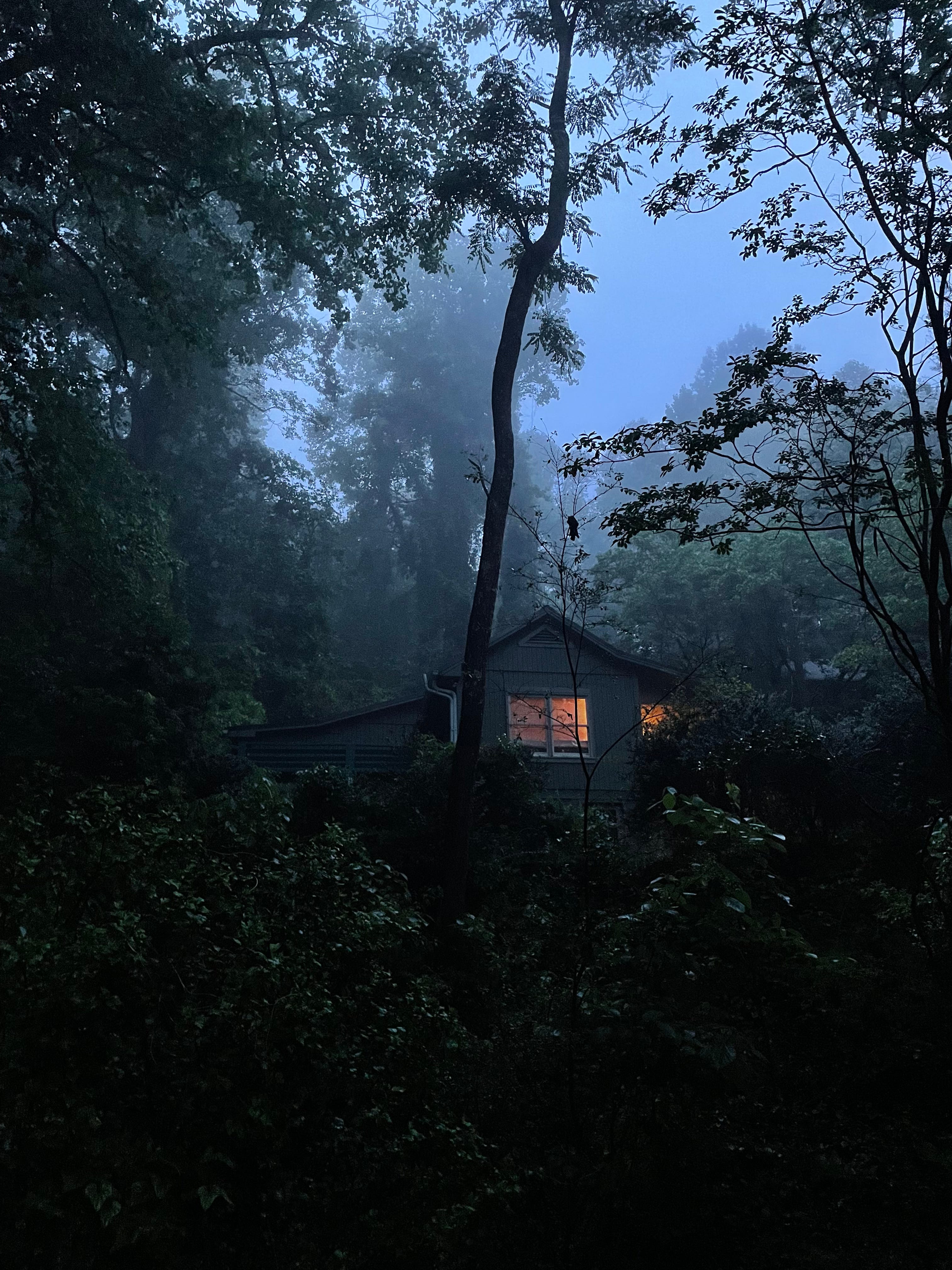
I’m in Saluda, North Carolina right now, in a home belonging to my ultra-generous friend Verne Dawson. The landscape is overwhelmingly beautiful, full of kudzu so lush it’s pornographic. When I’m here, I understand why cameras were invented. Sadly, they’re incapable of truly capturing scenes like the one outside my window, which I find constantly disappointing. Put the camera down, I tell myself, you’re not gonna get what you want. Verne, who I’ve never seen take a photograph, has clearly accepted that just looking is the smartest thing one can do. But I’m stubborn, stupid, hopeful. I keep trying, keep failing. I mention this because Sarah Charlesworth rarely sought to depict the world with her camera. She knew it was pointless. Instead she made pictures about pictures, as many artists from her scene did. Her early death impacted her recognition. She should be more widely known. Here’s what I wrote, and here’s where I am.
Sarah Charlesworth should be here now, to see how the witchy power of images has cursed America. She might know what to do about it.
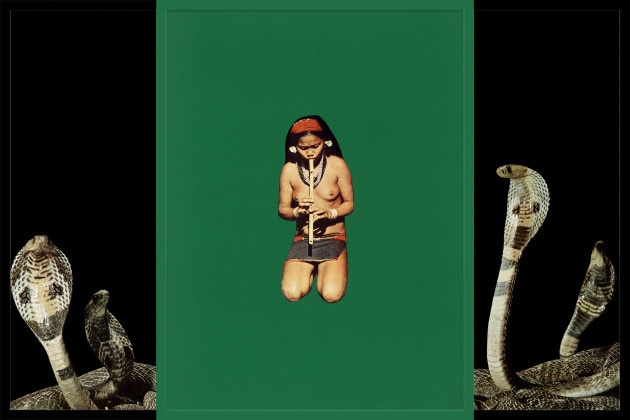
Born in New Jersey in 1947, Charlesworth died, far too young, of a brain aneurysm in Connecticut at the age of sixty-six. Among the many contributions she left behind is Academy of Secrets (1989). In this series, Charlesworth excised images from educational and art history books—spoons, clocks, antlers, hearts, lotus flowers—photographed them on a white board, and intensified the colors in the darkroom. Stripped of context, floating in saturated fields of pigment, these objects become empty talismans, begging to be assigned meaning.
Charlesworth was a central figure in that loosely knit group of artists that came to be known as the Pictures Generation. Her mentors included Joseph Kosuth and Douglas Huebler, whose 1978 artist book Secrets—a gripping compilation of nearly two thousand anonymously written secrets—made an impression. She appreciated the rigor of those artists, but challenged the Conceptual art movement’s academic stuffiness by treating images, not language, as the primary sites where meaning, authority, and ideology are produced. At a time when American culture was increasingly governed by mass media, Charlesworth understood that photographs were not to be trusted. They were not documents neutrally reproducing reality, but components of a system through which narratives of power and victimhood are manufactured and circulated. She emphasized beauty in an art world drowning in wall texts, index cards, instructions, and Formica—but with the awareness that every rose has a thorn sharp enough to slice you open. The “secret,” for Charlesworth, is not buried inside the image; it emerges in the act of looking—in the viewer’s need to stabilize what resists explanation.
One of art’s most profound qualities is its ability to describe things for which language is utterly inadequate. That feeling in your stomach as a child when you briefly lost your mother in the grocery store, a broken heart, a frightening diagnosis. Impossible to write accurately, but somehow a Munch painting or a crushed car by John Chamberlain says it perfectly. This is clearly magical, and “magic” was a word Charlesworth used often. In her Polaroids she makes it clear that artists and illusionists share similar powers. Who else can freeze flowers in mid-air, or liberate a pair of eyes from its face? A good artist, like a good magician, imitates God.
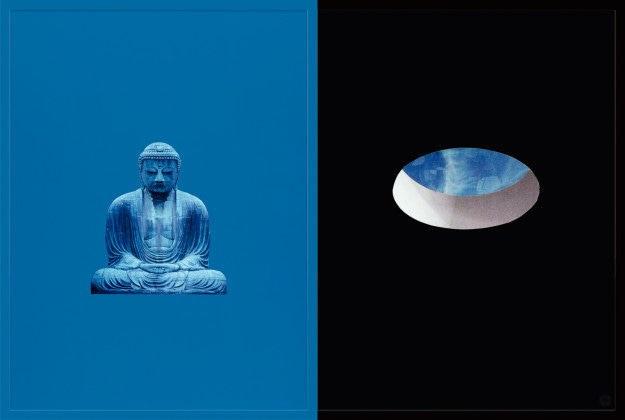
Seeking to understand what photography does instead of what photography shows, Charlesworth used her camera, her X-Acto knives, and her impeccable sense of composition to explore the spooky power of an image to convey discrete, often contradictory meanings, while masquerading as objective truth.
Comments
Nothing yet. Say the first thing.
Sign in to join the conversation.