
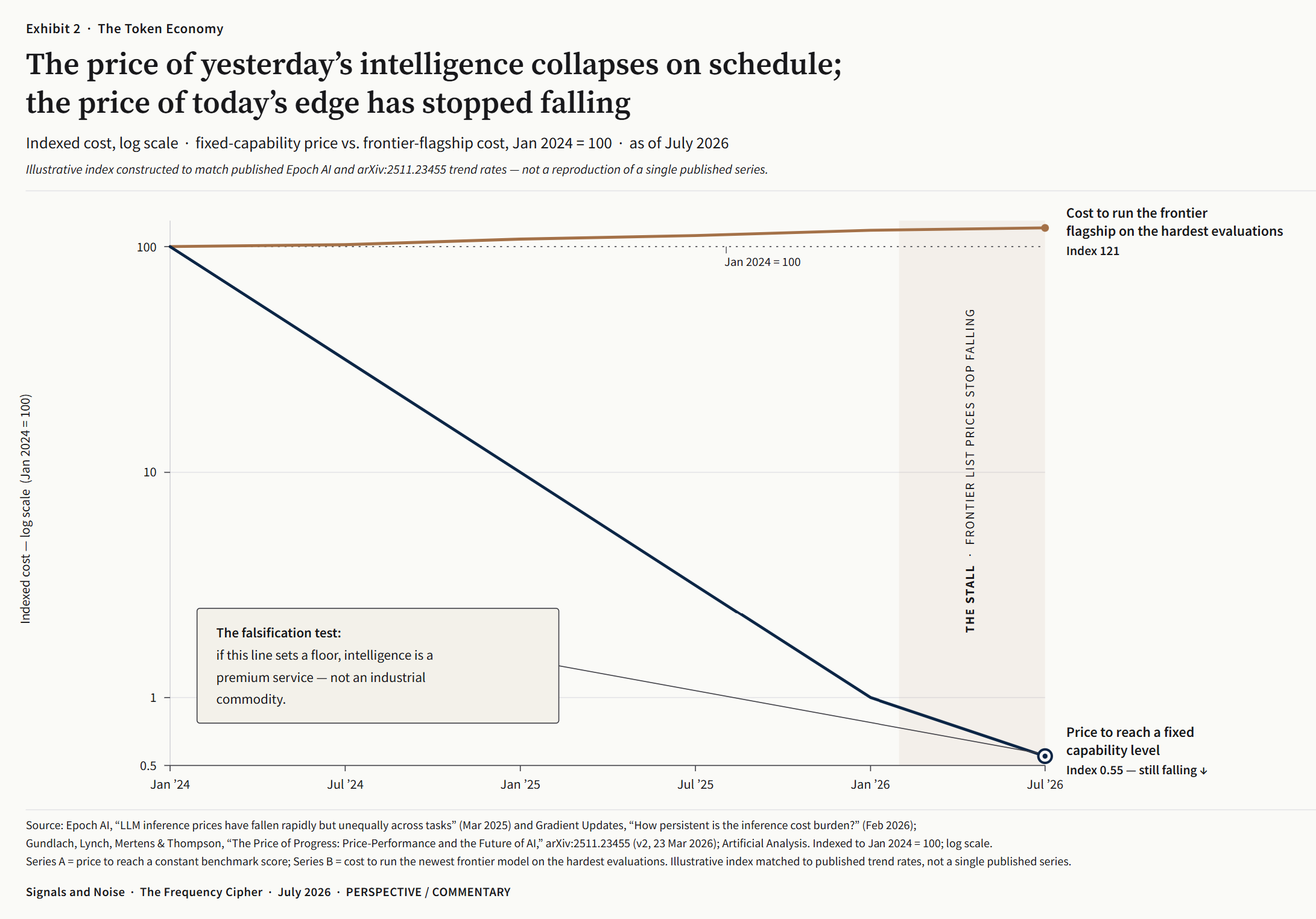
The most sophisticated companies in the world have spent 2026 learning to ration the one input that is supposed to be getting exponentially cheaper. Uber burned through its annual budget for AI coding tools in four months, then imposed hard monthly caps. Tesla capped employee spending on outside AI tools at $200 a week — its own xAI products exempt, an expense policy doubling as a crude router toward house models. Salesforce’s Marc Benioff, who expects to spend some $300 million on one provider’s tokens this year, called for an intermediary layer to route routine work to lower-cost models. On earnings calls, “tokens” has gone from an engineer’s word to a number executives field questions about. A resource starts getting metered like a utility when it starts being consumed like one.
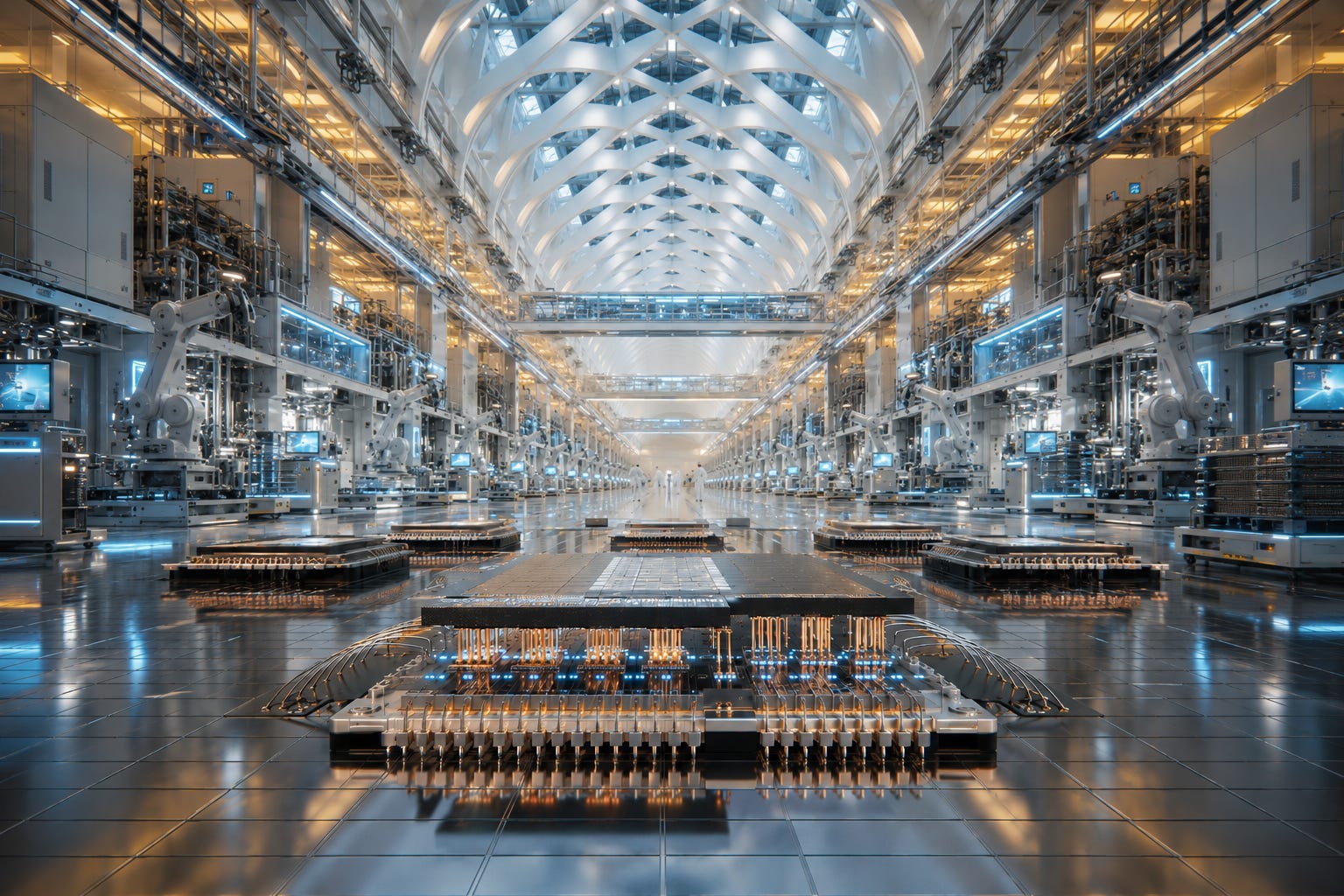
Set that beside the idea Jensen Huang made the centerpiece of two keynotes this year. At NVIDIA’s GTC in March, and again in Taipei in June, its chief executive told his audiences that a data center is no longer a place to store files; it is a factory, and its product is a token — a discrete packet of machine-generated intelligence, produced from electricity and data, and sold. He gave chief executives a way to keep score, one the market quickly reduced to an equation: revenue scales with tokens per watt times available gigawatts. He told them to budget tokens for their engineers alongside salary, and described a future workforce of AI agents numbering in the hundreds of thousands.
Put the two together and the shape of the thing appears. You do not build spending caps and routing layers for a software feature; you build them for a raw material — something manufactured, metered, and priced by the unit, bought in bulk by firms that now have to watch how much they burn. This is the argument the series has been circling since it opened with software, and has now earned the right to state plainly: intelligence itself is being industrialized. Cognition — for the whole history of the knowledge economy a scarce resource rate-limited by the supply of trained humans — is becoming something a factory makes. Software was merely the first business model to break, because software was the purest financial bet ever placed on human cognition staying scarce and licensable. The rest of the value chain is next.
Comments
Nothing yet. Say the first thing.
Sign in to join the conversation.