
Welcome to the very first post of Bowtied Gracie’s Quantum Computing substack!
I initially started off with BJJ topics but noticed that wasn’t working out (lol) as well.
Thanks for reading BowTied Gracie's Dojo! Subscribe for free to receive new posts and support my work.
So I shifted to quantum computing.
This one is going to be a banger because quantum computing will revolutionize a lot of industries: finance, military communications, insurance, logistics, medicine, materials science, to name a few. By reading this book you are getting several years of experience over your competition.
I’ve read a couple other so called beginner books and this one by far explains it in a way somebody with a high school education would be able to understand it. There’s no linear algebra or pages of math formulas. There’s advice for everybody, whether you’re a developer or somebody in business (IE venture capitalists).
So tl;dr just buy this book because quantum computing is going to be the next big thing.
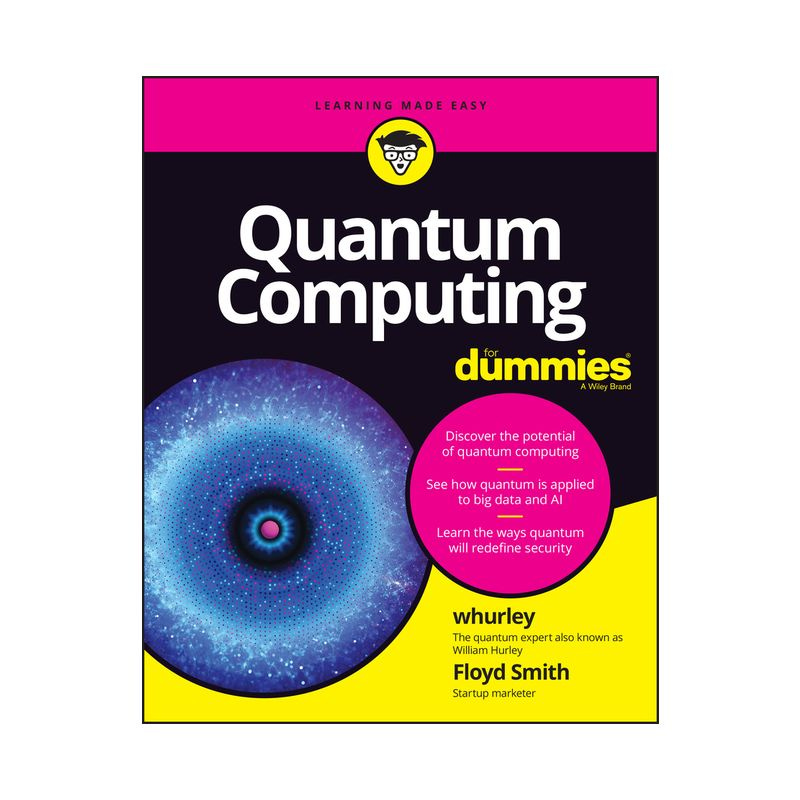
Let’s start with a general overview:
The book covered history of quantum computing (it has origins dating back to the 1800s), how it will impact the world, current challenges, algorithms, manufacturers, at least 20 other resources (books, schools, communities) to look into, developer advice, and predictions for the future. Much like other books in the Dummies series it will address common questions such as the difference between classical and quantum computing.
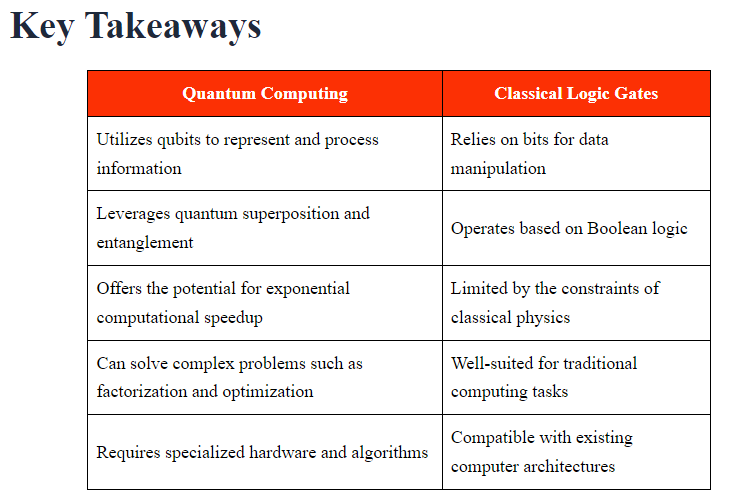
Will quantum computing replace classical computing? Well no, because they’re two different sets of tools that each can solve their own set of problems. The book will elaborate a lot more on the differences. Check this graphic out from Lambda Geeks:
Have you ever heard of the traveling salesman problem? The Traveling Salesman Problem (TSP) is a classic optimization challenge where the goal is to find the most efficient route that visits a set of cities exactly once and returns to the starting point. The task is to minimize the total distance or cost of the journey, exploring all possible permutations of city visits to determine the optimal solution. TSP is a representative example of a combinatorial optimization problem, and its complexity grows exponentially with the number of cities, making it a computationally demanding task for classical computers.
Quantum computing's advantage in solving the TSP lies in its ability to process multiple solutions simultaneously through superposition and entanglement. Classical computers tackle TSP sequentially, exploring paths one at a time, becoming inefficient for larger problems. Ongoing research continues to explore the potential of quantum computing for optimization problems like the TSP. As you can imagine, this has implications on logistics.
Even if you’re already in tech and are working on another technology like a coding project, this book will not take long to read. You can tackle this over a weekend and it will be a good way to get ahead of the competition.
Out of respect for the author I’m not going to give away all the book, but I will make reading this article worth your time. We’ll break this article into 3 sections: pecking order for access, predictions for the future, and some of the resources.
Pecking order for access:
The author gave this pecking order: quantum manufacturers, cloud platform companies, consultancies and application vendors.
I was talking to several people that work in tech and everybody agreed QC was the next big thing. One notable conversation I had was one guy said the big boys (think Google, IBM) were going to make the most money while the smaller companies will get the scraps. It’s because it’s going to take a lot of resources and manpower to get this stack up and running. “It will be like the operating systems wars again” (he was referring to Microsoft vs Apple in the 90s and 2000s).

Predictions for the future:
The author gave some rough predictions and he divided it up to today, before 2030, and after 2030.
For today (as in near present): This will involve simulators, universal quantum solutions for problems are moving from research to development.
Before 2030: Quantum based machine learning will continue to mature and deliver business value.
After 2030: QC will be more widely used
The author may or may not be accurate with the timeframes but my general take on this is QC is coming and it’s best to start positioning yourself while most people aren’t aware of what it is. I just checked Amazon and there’s only 9 reviews of the book.
Some of the resources:
IBM Q community
IBM Q Qiskit Community
Q Community
Bits of Qubit by QuTech Institute
Quantum Frontiers
Conclusion:
Quantum computing is coming and as of December 2023 it’s very early to get into it by networking with keyplayers and/or learning to code. This article is informative enough to point you in the right direction but my advice is to buy the book and read it. Get that money!
A special thanks to the early feedback of this article I got from:
Thanks for reading BowTied Gracie's Dojo! Subscribe for free to receive new posts and support my work.
Comments
Nothing yet. Say the first thing.
Sign in to join the conversation.