
“Darkness is good. Dick Cheney. Darth Vader. Satan. That’s power.” - Steve Bannon
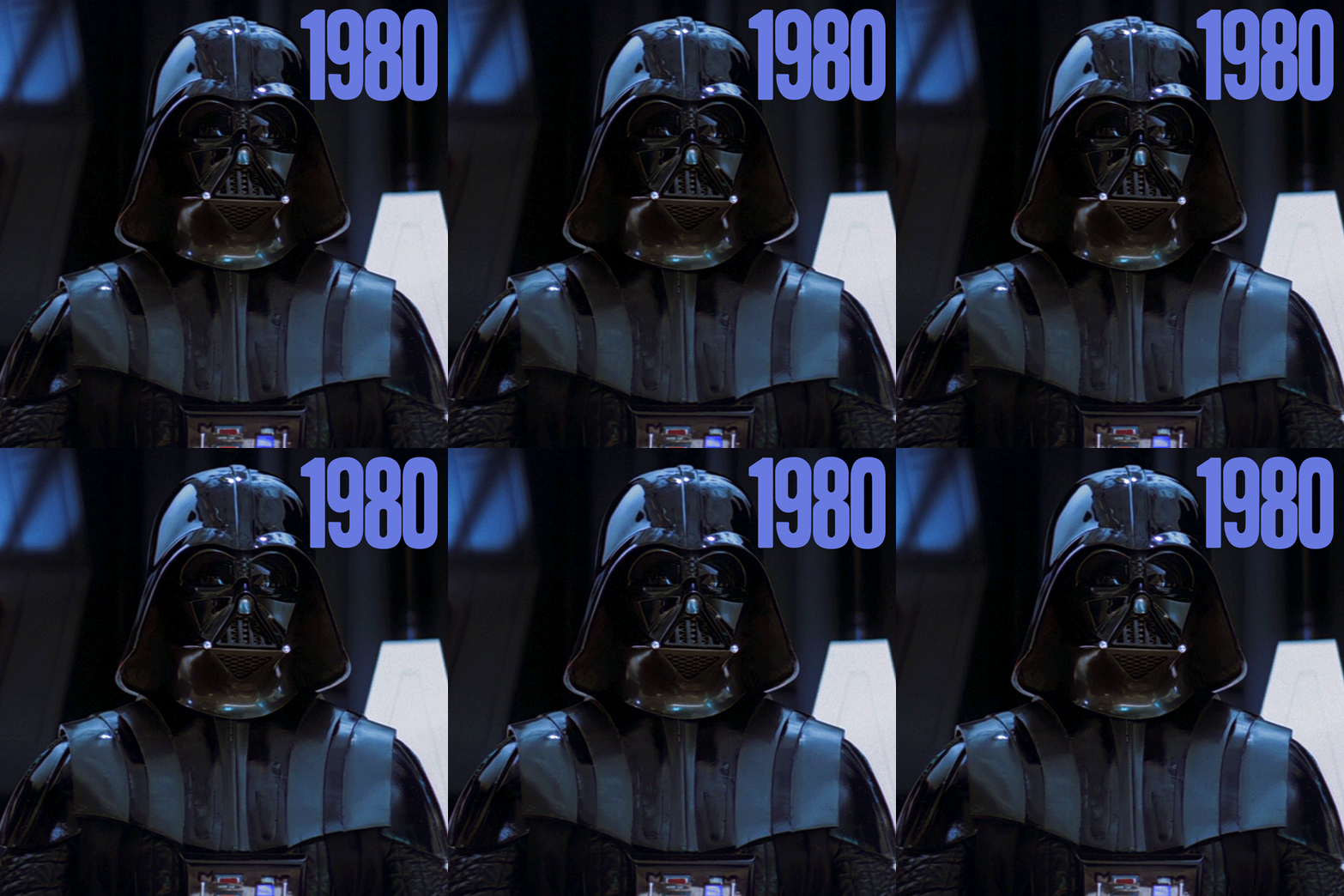
GROSS is every year’s top-grossing movie, since 1913, historicized.
Another free post. I’m brewing a part two, which will be for paying subscribers and might just focus on Steve Bannon’s Ronald Reagan hagiography In the Face of Evil: Reagan’s War in Word and Deed. The film came out in 2004 but, of course, it’s about the period that began in the year of this film’s release.
My first proper job - aged 18 - was as a civil servant at Her Majesty’s Land Registry in Stevenage. This is 1981, so I think you can guess what was involved. I spent my days pushing a trolley around filing branch - a long basement, filled to vanishing point with ceiling-height shelving. I was locating dusty land titles and deeds and plans to be sent out to solicitors and land-owners. About half the time - so goes the iron rule - I’d be putting the same documents back on the shelves.
It wasn’t a high-pressure job and I was surrounded by indulgent colleagues; older women who’d been there a long time and evidently thought it part of their job to provide me with mugs of tea and Blue Riband biscuits1. I quickly learnt some important things. First of all, it didn’t really matter where I put the files. I mean it did matter - strictly speaking these documents belonged in very specific locations - but it didn’t matter to me. I was sure that I’d be long gone before anyone needed these things again, so I felt free to shelve them more-or-less anywhere. This made the putting-away aspect of the job very easy indeed. I’d just shove the files into any available gap (I still feel a flush of shame about this, although I have rationalised it as kind of punk and, of course, I was right in thinking I’d be long gone before anyone noticed).
Second, down in the basement we were very lightly supervised, so when I got bored, I could just wander off. What I’d do is grab an official-looking piece of paper (there were plenty of those down in filing branch) jump in our special, double-sized filing branch lift and go upstairs - light-headed with the freedom of it. I’d walk the floors of this approximately International Style office block (it was built in 1964), consulting my piece of paper, occasionally looking, with feigned curiosity, through doors into other people’s offices, waiting for lifts or actually leaving the building and doing a circuit through the car park and back to the front door. I’d do this until I was bored again, when I’d go back downstairs for a Blue Riband. This could easily consume 45 minutes or an hour of my day.
In all of this wandering, across the year or so that I worked at the Land Registry, I was challenged only once. It was the Area Manager. I didn’t even know we had an Area Manager so the whole thing was a bit of a shock. On being asked to account for myself as I day-dreamed along a sunlit corridor on the management floor, I blustered incoherently. He wasn’t happy. I think he’d intuited my scheme at a glance (I wonder if he’d seen it before - “oh look, another pimply work-dodger”). He walked me briskly back down to filing branch, while I sweated and tried to construct a justification for my absence. I don’t know what this Area Manager was saying to me as we descended. I’d blocked it out in my panic.
It was all fine, though. The ladies took me back in, and smoothly - as if they’d also intuited my scheme and had known what I was up to all along. My filing branch supervisor explained away my need to carry a piece of paper around the building. I practically cried. The Area Manager nodded, grunting with frustration, visibly gave up and then evaporated, backing into the double-sized lift, and that was the last I saw of him. I waited a few weeks before I wandered off again.
What brought this thoroughly unproductive, slightly ridiculous section of my life to mind was Darth Vader’s Area Manager vibe in The Empire Strikes Back. He’s supposed to be the Empire’s most terrifying entity, a fearsome knight, damaged beyond pity (and somehow endowed with extra Force not available to others), a warrior but also evidently no mug - a man smart enough to slink away from the Death Star before the rebels blew it up.
Vader’s current, post-Death Star ride is a vast spaceship imaginatively called the Executor2. The Death Star may be gone but the Empire is back on the front foot. We wonder was the destruction of its super-weapon actually an existential crisis for the Empire or did the rebels really just blow up a pointless, bloated boondoggle, somebody’s vanity project?3 Was the Imperial leadership secretly happy that this stupid, monolithic, over-budget piece of shit was atomised by the hippy retards of the rebellion.
It’s his flagship but we know that Vader's not actually the boss. He walks the decks with that awkward ‘I don’t actually work here but I could cause you pain’ authority. He drops in and throws his weight around. He’s the Area Manager. Near the beginning of this film he literally kills the ship’s commander - an Admiral with the perfectly Star Wars name Kendal Ozzel - for some tactical snafu (of course, the lore tells us that Ozzel is an over-promoted Imperial civil servant who deserved it anyway).
On the ship Vader can do what he wants. He cruises around looking purposeful but obviously not 100% across the layout. He’s allowed to use the double-sized service lift but you can tell he doesn’t really know how to, so someone has to show him. The coffee machine in the staff lounge is beyond him and, although the toilets are in the same place on every deck, he can never find the VIP bathroom.
In more recent Star Wars expressions - guerrilla war drama Andor, for instance - the Empire’s bureaucracy is fleshed out a bit. We learn more about its essentially colonial-extractive economics, we get some detail about policing (George Orwell the colonial police officer would have recognised these methods). At this point, though, two movies into the original sequence, Lucas’s Empire is still incomplete: a non-specific polity vaguely modelled on - what? Leopold’s Belgian Empire? Britain in India? Stalin’s Soviet Union? We know it’s brutal, arbitrary and acquisitive but we don’t get an org chart or a five-year plan.
Vader’s status is essentially that of colonial enforcer. He’s not in charge (that’s the Emperor obvs) and he may not even be on the management committee. Strategy’s not his thing and he’s certainly not a figurehead. He’s important but he’s not a world-historical figure, despite his status in a state that spans a galaxy. Space Hegel would not have swooned and called Vader ‘the world-spirit in a tie fighter’4. What Hegel thought he saw in Napoleon; his will to change everything, to overturn the old order and replace it with pure rationality, is not present here.
And this obviously makes Vader, well, uninteresting. The history of the galaxy does not pass through him, he will not be remembered as anything other than a brute. To the Emperor’s Stalin he is not Trotsky but Beria. I’m no expert but I assume this explains the whole Sith situation - setting up a parallel regime in the shadowy, immaterial realm of The Force - it’s an effort to give Vader a more consequential role - beyond workplace bullying and vaporising the natives.
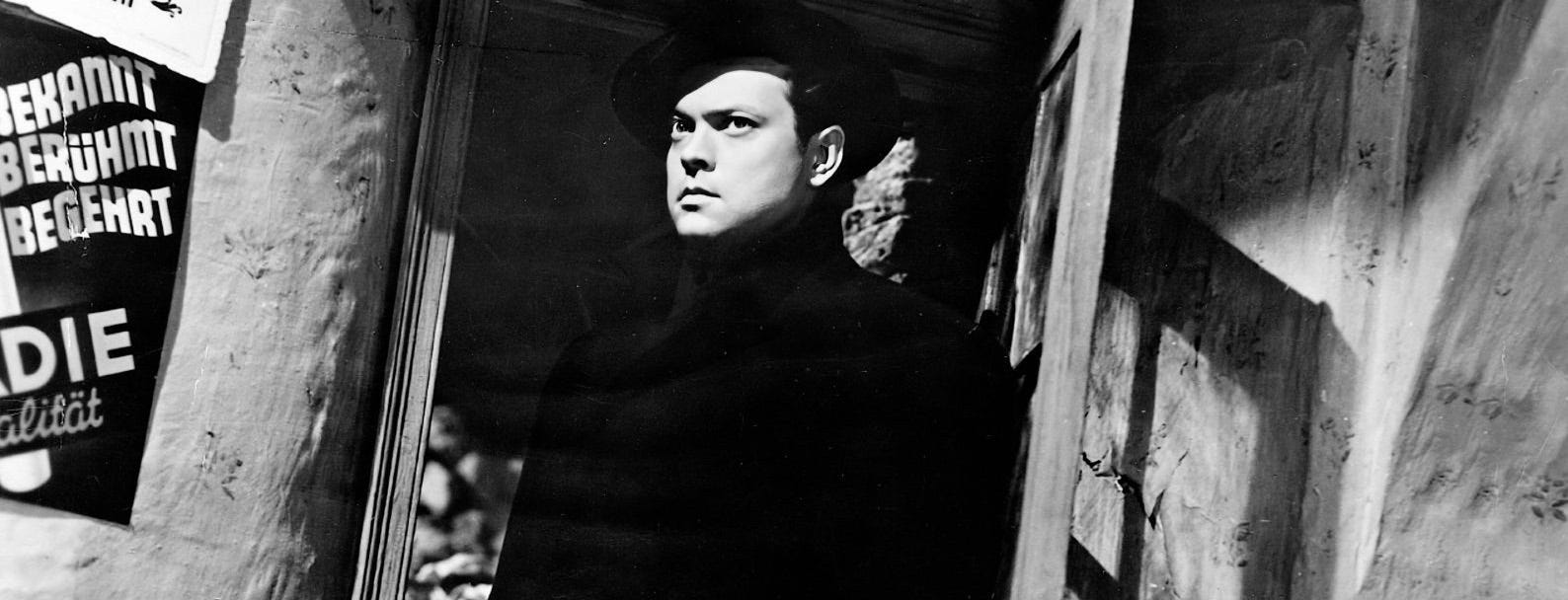
Movies don’t need world-historical villains, of course. One-dimensional brutes are fine. But when a film aspires to importance, when we feel its creators are telling us something about the world - about power, dominion, class, family and so on - we need to believe that our villains have historical stature, even when they are not real. Kurtz, Lime, Corleone5: all convince us that they sit at a critical juncture or that they will alter the direction of the larger storyline.
It’s harder with science fiction, because there’s no historical context against which to set this villain and their villainy. But it’s not impossible. Bradbury, Herbert, Le Guin; Tarkovsky, Scott, Kubrick, all give us future villains who aspire to alter their timelines, leave a trace, beyond cruelty and domination. Operators who do more than enforce the plan.
You’re going to have to forgive me for being prissy about this big, trashy, treasured entertainment brand but this is ultimately the weakness of The Empire Strikes Back and of the whole Star Wars franchise: this dumb, unmotivated conflict. This Empire: a vast, galaxy-wide enterprise, presumably built across centuries and at unimaginable cost - to those building it and to those who came up against it - apparently cares only about domination. And its necessary antagonist, its antithesis, the rebels, only care about opposing it. Neither apparently owns a positive vision for their world or for their people6.
My mother worked at the Land Registry too - upstairs somewhere (I imagine she got me this temporary job). She was one of this big group of working class women herself - all of whom held the rank Clerical Assistant or Paper Keeper. A generation of (mostly) women who’d, in several cases, been civil servants since they’d left war service in a factory or in the Women’s Auxiliary. They were a smart, self-confident group. They’d seen everything and wouldn’t have been a pushover. Union members every one and in a more-or-less constant argument with management about conditions down in the basement, working hours, leave arrangements and so on - but also about how the work was done. I remember an improvement to the filing trolleys we used that came about because of pressure from these women. They were invested in what they did, felt themselves to be part of it. Looking back, the contrast with the casualised present, in which junior staff like this are just units of labour, to be swapped in and out (and replaced entirely by robots, I guess) is striking.
The Executor is a ‘Star Destroyer’ and belongs to the Imperial fleet’s Dreadnought class. There’s always a Dreadnought class. In sci-fi, space travel is usually organised like the British navy in the 19th century but in real life it’s all run on air force lines. Why is that? Also, how should I be pronouncing ‘Executor’ - I want to say it like I’d say the legal term for the person who administers a will, but that can’t be right.
Is this in the lore? Was the Death Star a giant money pit for the Imperial military? A strategic nonsense that most people were glad to see the back of (like the Royal Navy’s two famously pointless aircraft carriers)? Or did the rebels actually tear the heart out of the operation and set it back decades? It’s honestly not clear from this movie.
Hegel actually saw Napoléon, riding through Jena on his way to take on the Prussians. It must have been quite a moment and he was mighty impressed: “It is indeed a wonderful sensation to see such an individual, who, concentrated here at a single point, astride a horse, reaches out over the world and masters it.”
In one of my Godfather essays I wondered is The Godfather Shakespearean? and concluded - duh - obviously it’s Shakespearean. Is The Empire Strikes Back Shakespearean? No.
Comments
Nothing yet. Say the first thing.
Sign in to join the conversation.