
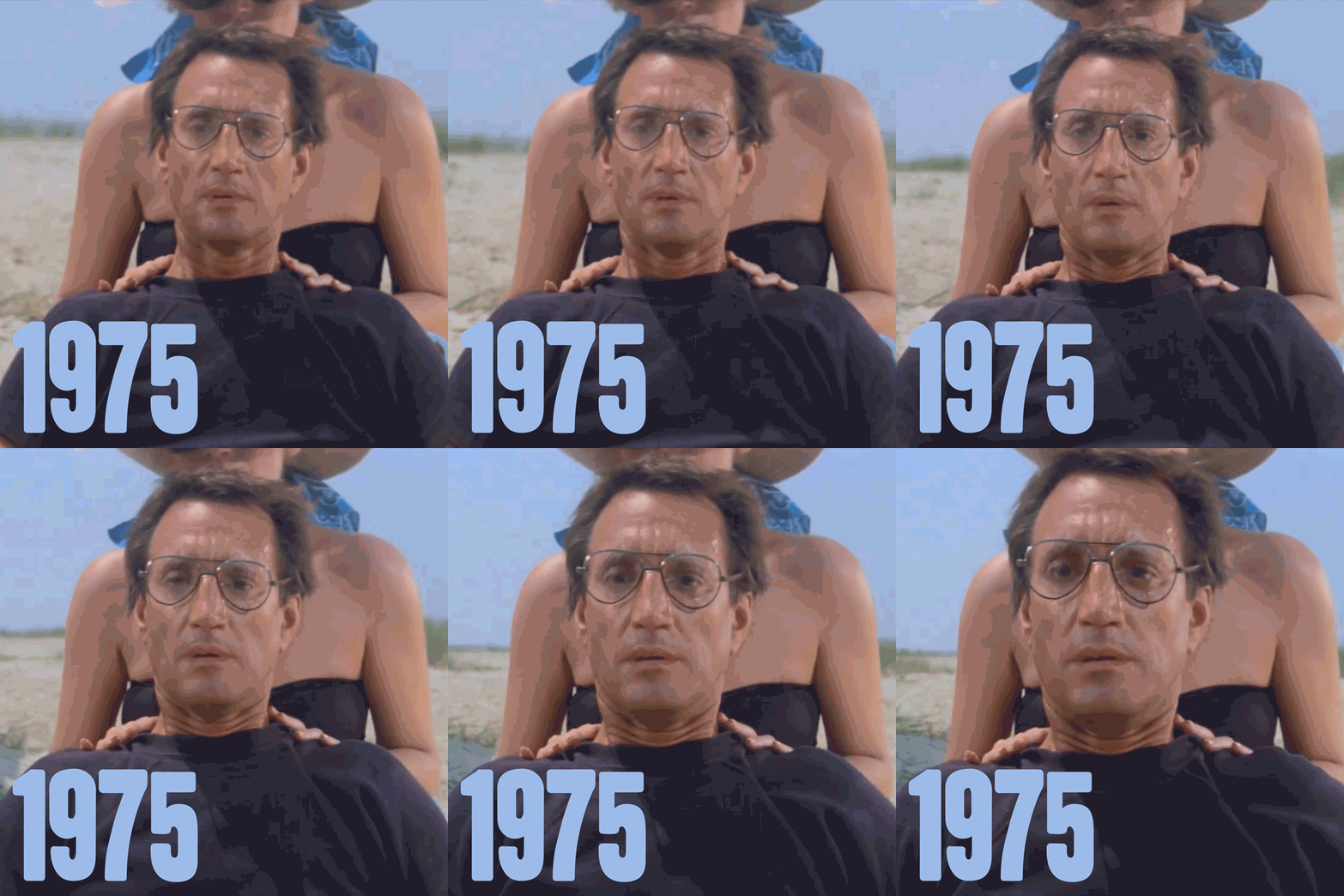
GROSS is every year’s top-grossing movie, since 1913, reviewed.
JAWS; starring ROY SCHEIDER, ROBERT SHAW, RICHARD DREYFUSS, LORRAINE GRAY, MURRAY HAMILTON; directed by STEVEN SPIELBERG; written by PETER BENCHLEY, CARL GOTTLIEB; studio ZANUCK/BROWN COMPANY/UNIVERSAL PICTURES; 124 minutes. Wikipedia, IMDB, Letterboxd.
In part two of this post, available to everyone, I pick up this film’s connection with John Huston’s 1956 Moby Dick. Spielberg’s ending is essentially a shot-by-shot remake of Huston’s movie.
53 minutes into Jaws we encounter the masses. Director Steven Spielberg does something jarring, something that feels out-of-character for this 27 year-old cinéaste-wunderkind. He swings the camera around, away from the tightly-composed, two-, three- and four-person scenes of the first act - small groups of actors acting - and suddenly we meet thousands of strangers, non-performers. People in sunhats and sandals, families, pensioners, a nun - moving purposefully, stopping to chat, milling around - but without the filmmaker’s direction. Holidaymakers are arriving on Amity Island for the first big weekend of the Summer so Spielberg has set up his camera in the real world, in the harbour at Edgartown on Martha’s Vineyard, to capture some realistic scenes for his shark movie.
It’s not critical to the story, of course - it’s classic b-roll, the stuff you’d send an assistant director to shoot - but here it’s a big moment - a pivot. And a momentary victory for the real, the spontaneous and the parochial over the imagined, the deliberate and the weird placelessness of the movies. It’s jarring because there’s a conscious switch from the conventional, enclosed mode of address that we know from this kind of scripted cinema to a bigger, more unruly verité style. A tiny slug of documentary filmmaking has been dropped into Mr Spielberg’s artful confection. It’s like somebody pasted in some footage from a Frederick Wiseman doc that would be called ‘The Island’ or ‘Holiday’ or something.
Of course, Spielberg didn’t send an AD to shoot the footage. He’s a pro, he did it himself, so it’s artfully done. People move in and across the frame, there are close-to-camera, out-of-focus figures, set against mid-shot family groups and, beyond them, the mass of the incomers, undifferentiated, filling the decks of the ferry and the roads out of the harbour. It’s actually kind of delirious, a quite joyful 90-second holiday from the structured stuff. If I was teaching film I might use this scene to illustrate something about narrative versus documentary form.
Comments
Nothing yet. Say the first thing.
Sign in to join the conversation.