
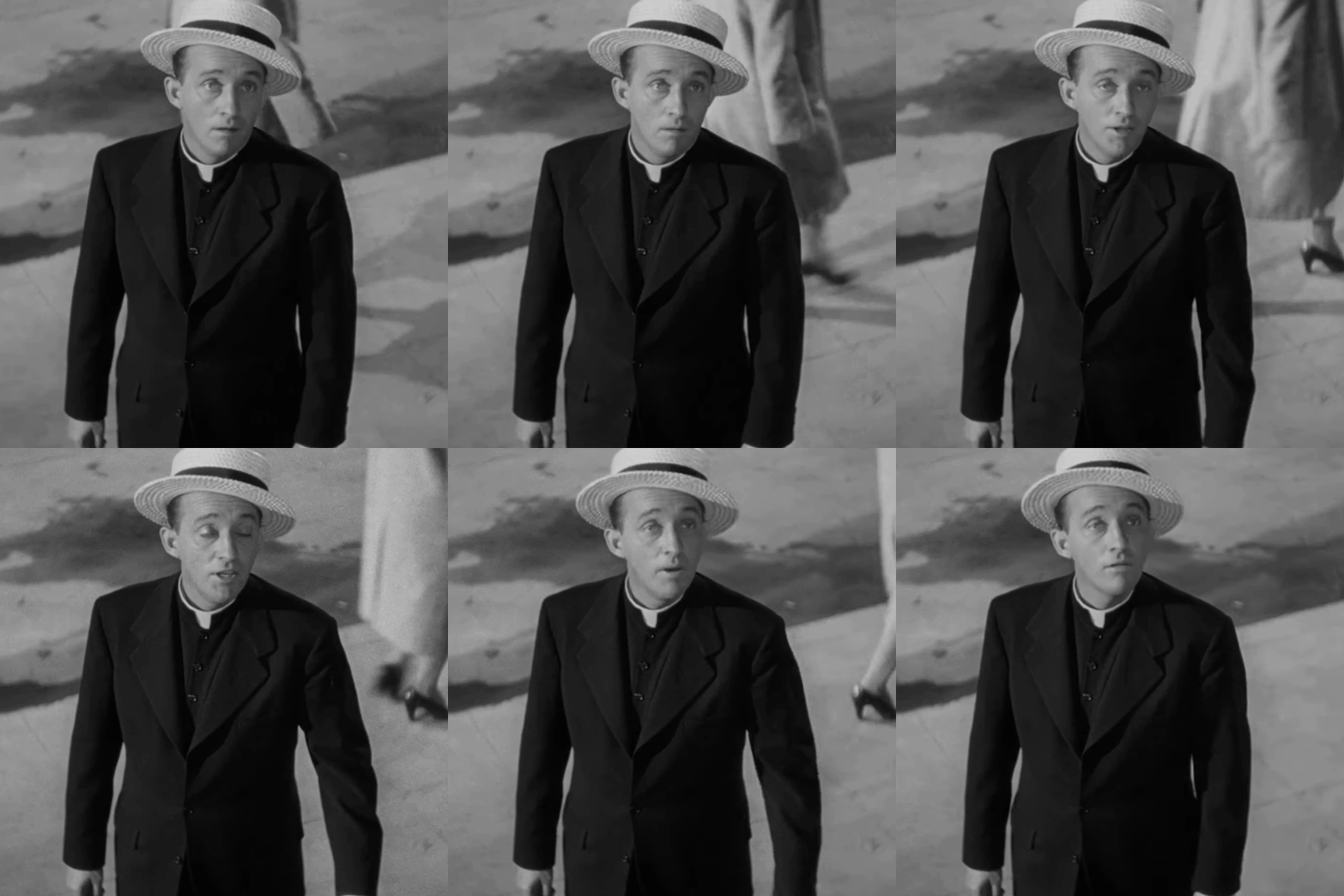
GOING MY WAY, LEO MCCAREY, PARAMOUNT PICTURES, 1944, 126 MINUTES. BING CROSBY, BARRY FITZGERALD, RISË STEVENS
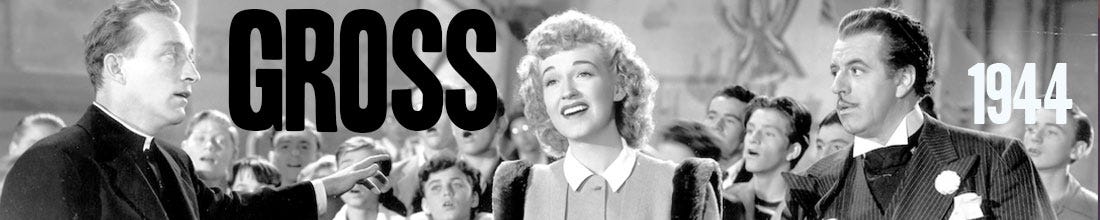
I’ve set myself another ridiculous challenge: I’m trying to shoehorn J.D. Vance and contemporary American Catholic integralism into an essay about The Exorcist… So, in the meantime, while I’m agonising over this Tridentine bullshit, please enjoy this post about 1944’s biggest movie, the best of Bing Crosby’s dog-collar dramas…
New York in 1944 is not yet the capital city of capital (that’s still London) but is definitely the capital city of American labour. The city is packed from end to end with factories big and small. On Manhattan island alone there are 500,000 manufacturing jobs. In the city there are 40,000 factories. Streets that, decades later, will become shopping destinations or hip restaurant clusters are lined with workshops and warehouses. All those famous block-wide downtown lofts are factories, filled with workers and stacked to the eighth and ninth and fifteenth floors. And New York labour is organised too. Unions, even in small and now forgotten industries, are active and militant.
Employers are tough too, workplaces are raw and dangerous. Across the 20th Century strikes have been put down with violence or lock-outs or worse. The war has brought unity, though. Industrial action has almost stopped, but it’s brought working people together too and given them a sense of their power and the potential to improve their lives. As war ends labour feels its strength. The strike wave of 1945 and 1946 has its own Wikipedia page.
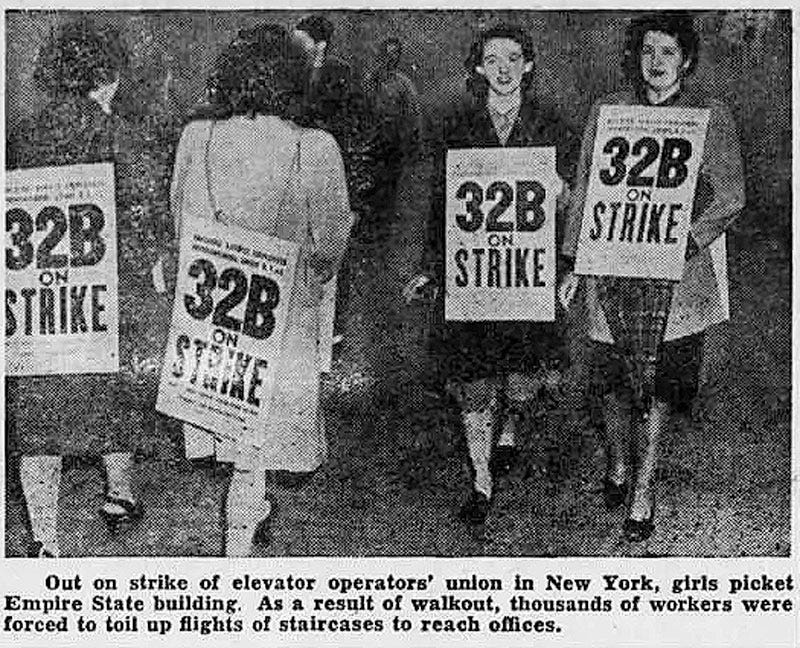
Weeks before the war ended 15,000 New York elevator operators and doormen went on strike - in high-rise new York an enormously effective action. Over a million workers had to stay at home. In the same year New York newspaper and mail deliverers went on strike. Mayor La Guardia was furious and responded by reading out the funnies on his weekly radio show. At this time the port of New York was responsible for a third of US trade. When the tugboat crews walked out in 1946 the city became hysterical, fearing oil and coal shortages which didn’t materialise - the strike was settled. It didn’t always go the workers’ way but often enough for a sense of the potential of organisation to arise. The golden age of union power had begun.
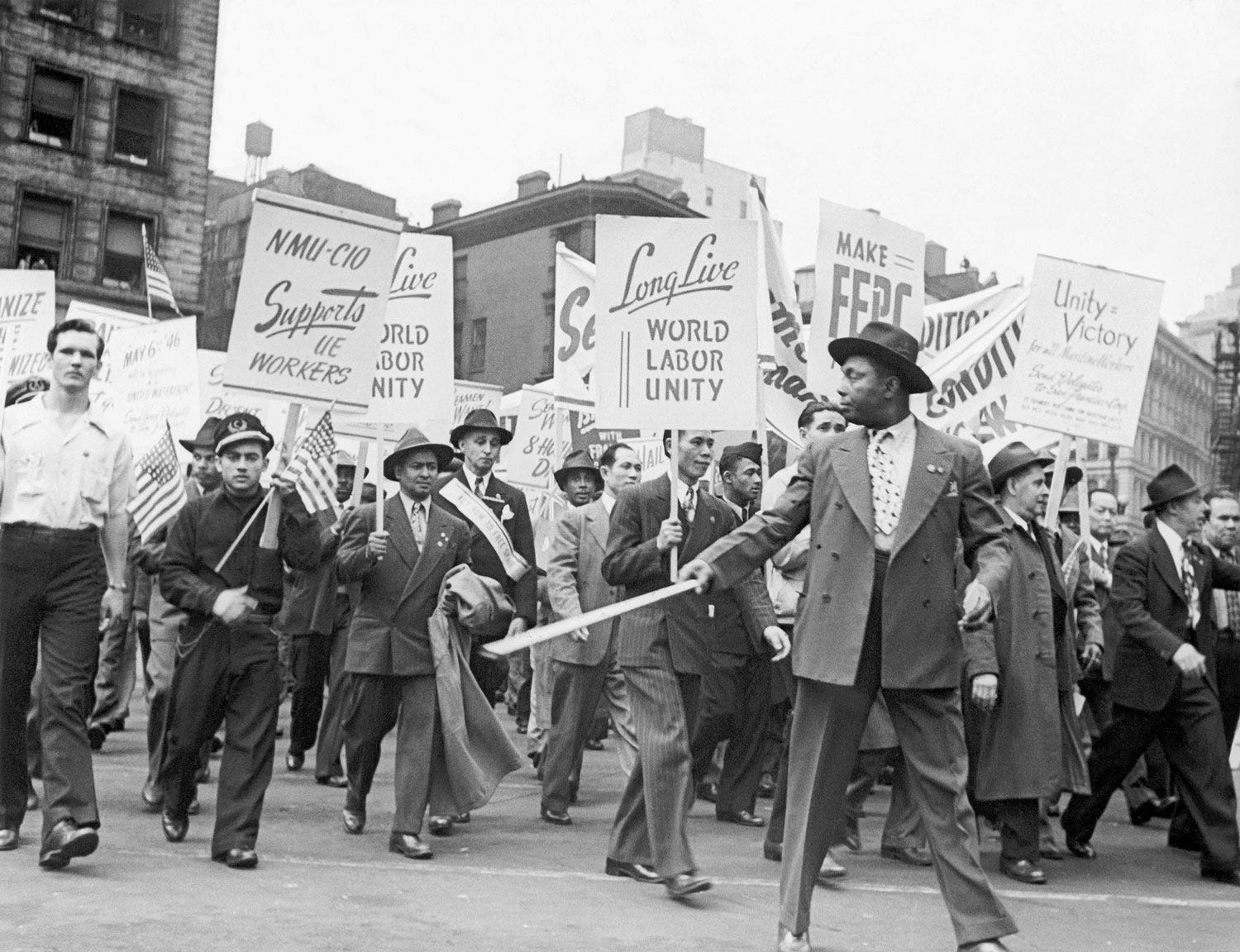
So, in New York in the 1940s, labour is everywhere - the cacophony of production can be heard on almost every street corner. Only the most prosperous neighbourhoods are quiet - and even in the quiet parts of town, every brownstone and mansion is busy with domestic staff. In New York there’s poverty, overcrowding and indigence but there’s also work, lots of it. In the war industries especially but also in the growing market for consumer goods that would define the post-war boom.
There’s work in Going My Way. I mean workers are present. But they’re not working. Here, in 1944’s biggest film, set in working class New York City, it’s as if the labour has been deleted. Removed for fear it’ll cause some kind of revolt.
I keep saying this (I need a new theme). I said it last time too. A lot of the American movies I’ve been watching here celebrate capitalism. But I guess that’s a pretty dumb statement. I mean what else would these big-money Hollywood productions from big-money oligarch-run Hollywood studios celebrate?
But what I’m trying to get at is the intensity, the sheer overwhelming ideological oomph of the Hollywood project in this period. It’s hard not to conclude that the Hollywood system has set itself up in opposition to the expansion of worker power and worker confidence, against the big, abstract ideas - emancipation, autonomy, fulfilment - that characterised the first Hollywood period. Profoundly, also, of course, against the particular model of emancipation offered by the Soviet Union and its satellites.
American movies - and especially the American movies of this critical mid-century period - are responsible to a large degree for the hold capital has over our imaginations and our sense of ourselves practically everywhere. If they don’t advance the virtues of capitalism itself - and a lot of them do, in the most direct way possible - then these Hollywood pictures will sanctify the market, the individual, private property, the merits of hard work, the entrepreneur, the free-trader, the investor, the landlord, the smallholder. Watching these films in sequence - and watching the hits, the ones that made a lot of money - is very clarifying about how we wound up in America’s thrall, in the American orbit.
There are some exceptions on this list. Artists like Charlie Chaplin, Rex Ingram, James Whale, D.W. Griffith (Griffith is promoting something older and nastier than capitalism, of course). But it’s also evident from the sequence, starting in 1913, that, as the form matures, its ideology is hardening. The dreamy, other-worldy charm of the silent cinema has been replaced by the hard-edged characters and scenarios of golden age Hollywood. Graft, cruelty, sacrifice, deception, betrayal, murder. Silent actors couldn’t get work in the talkies because of their thick European accents or their difficulty telegraphing emotion without mugging - but as often they failed because they were too soft-focus or too poetic.
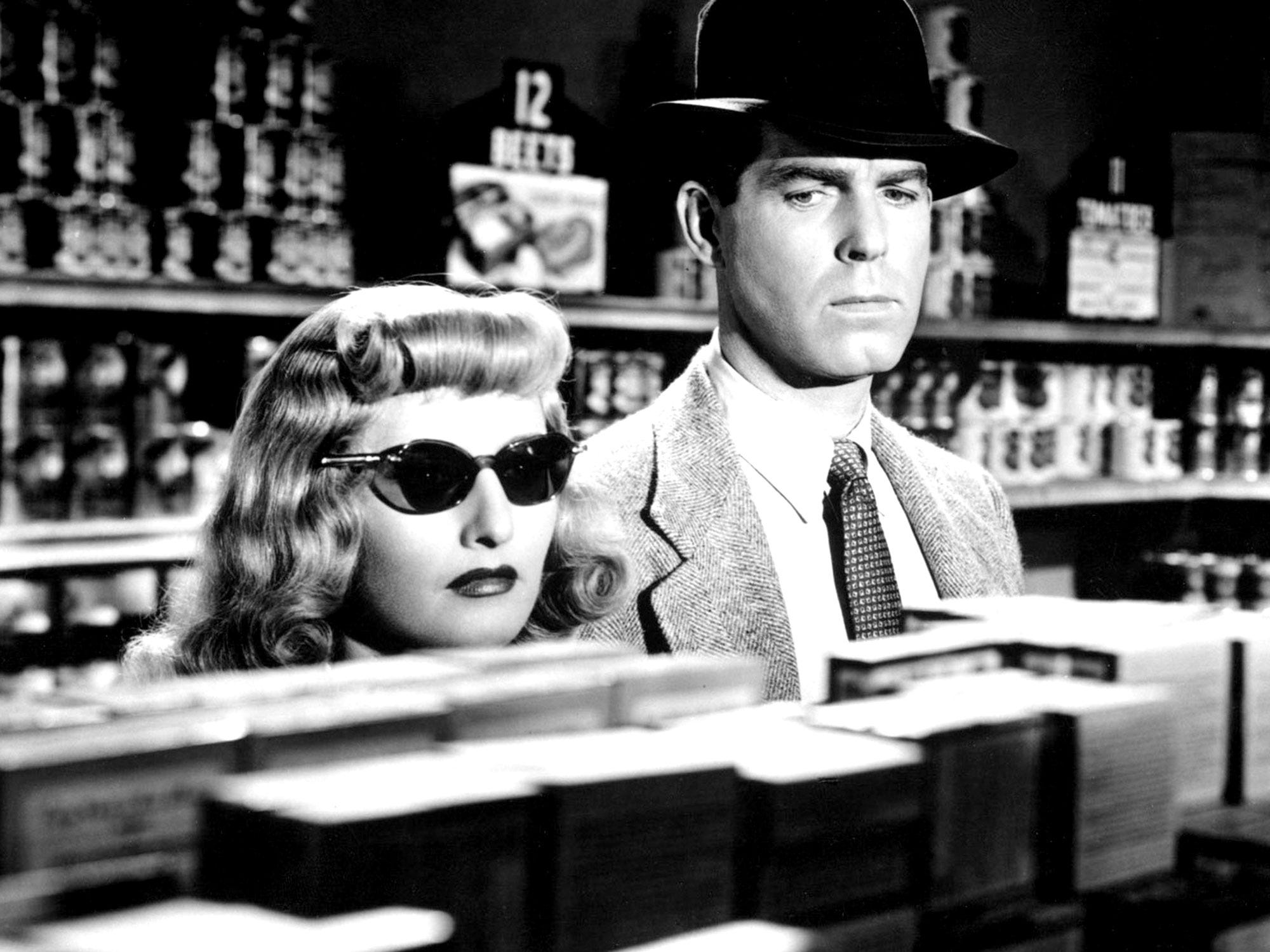
The thirties and forties is the second Hollywood, the Hollywood of the self-possessed hero wearing something sharp or tailored. Bette Davis, Clark Gable, Barbara Stanwyck, Spencer Tracey: simply not possible in the first Hollywood, the Hollywood of poetry, soulful lovers, fairy stories and uncomplicated laffs…
Comments
Nothing yet. Say the first thing.
Sign in to join the conversation.