
(Spiderweb Software has a lot of big discounts for the Steam Winter Sale. If some Holiday Money is burning a hole in your pocket and you want to support the blog …)
When one gets well into middle age, one may start wondering, “What was the point of my life? What have I achieved?”
I have spent my life writing video games and advising those who want to write them. Therefore, I have to ask, “What is the purpose of video games? What are video games FOR?”
It’s an important question for those of us who write them. After all, as I have long said, “Never lose sight of the product you want to sell.” As in, “What exactly is it about your product that makes people want it enough to give $$$, and am I still providing it?”
Well, video games are, at heart, engines for affecting the human brain. When I make a game, I am trying to affect your brain and give you emotions and physical sensations.
So I have listed below what I see as the five main Products that games can sell to pleasurably change how a player’s brain feels, thus attracting dollars. This is not meant to be a comprehensive list. After all, video games are an art form, and art will ALWAYS slip out of your puny efforts to chain it with rules.
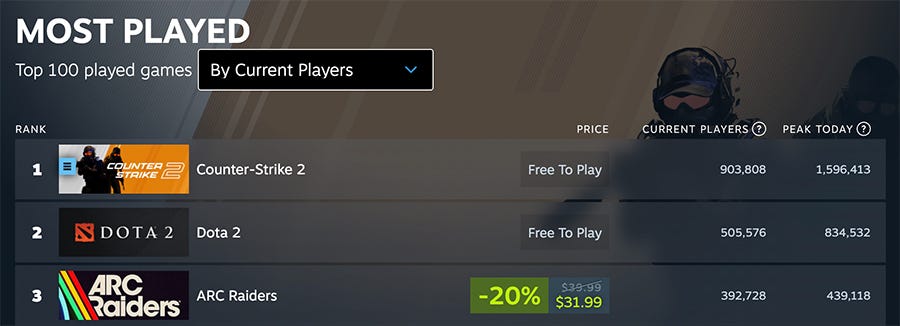
Product 1. Dopamine!
This is the big one. Where the REAL money is.
When you complete a task in a video game (kill a foe, match 3 jewels, fill up an xp bar, pick one of three power-ups after gaining a level, get phat lewtz, etc.) your brain feels it has actually achieved something. It is a real physical feeling of satisfaction and is perhaps the most tangible, powerful, mysterious, exploitable phenomenon in the video game craft.
It’s the twisted little miracle that makes our industry run. I saw “twisted” because this sensation is a trick. It is a lie. When you get an explosion of coins in Vampire Survivors, you haven’t really achieved anything. But you FEEL like you did, and that’s nice! I’m certainly not immune to this sort of pleasure, as the number of hours I’ve spent playing Vampire Survivors will attest.
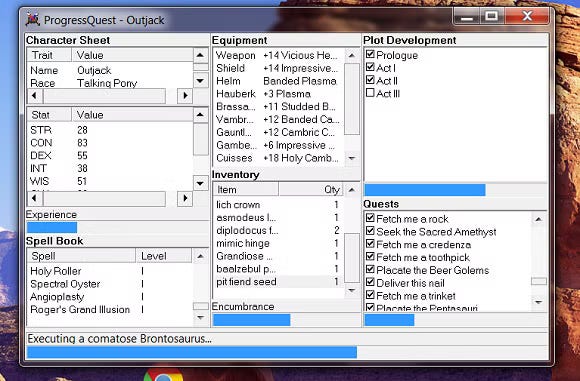
Consider “idle games.” Games that you just launch and let run, without your actions, while your numbers go up. The dopamine effect is so insanely powerful that you can feel you are achieving something just watching a game play itself!
Calling this dopamine is, of course, a shorthand way of describing this fairly complicated flow of brain chemicals. It’s a simplification, but it will do for now.
Enormous amounts of research goes into the best ways to stimulate a constant, addicting dopamine flow. Fortunes beyond the dreams of avarice have been won by inventing a newer, craftier dopamine stimulation engine. Role-playing games are extremely good at generating this response, which is how I was able to buy a house.
I’m not judging. I play games! Dopamine feels good, and I like feeling good. I’d only make two observations ...
First, if you overstimulate a brain receptor too much, its response fades. (Sometimes called The Hedonic Treadmill, or, if you want to be retro, Chasing the Dragon.) The games industry needs to continuously find new ways to stimulate this response. Playing Vampire Survivors gives me no sensations beside boredom and irritation now. For reasons I can’t explain, at some point playing Hades started to make me feel physically ill.
Second, there are also fortunes being made mixing dopamine farming, real-money gambling, and your phone. I really do not feel good about this.
If you want your dopamine game to have lasting appeal, it’s best if you also mix in some (or all) of the next four products ...
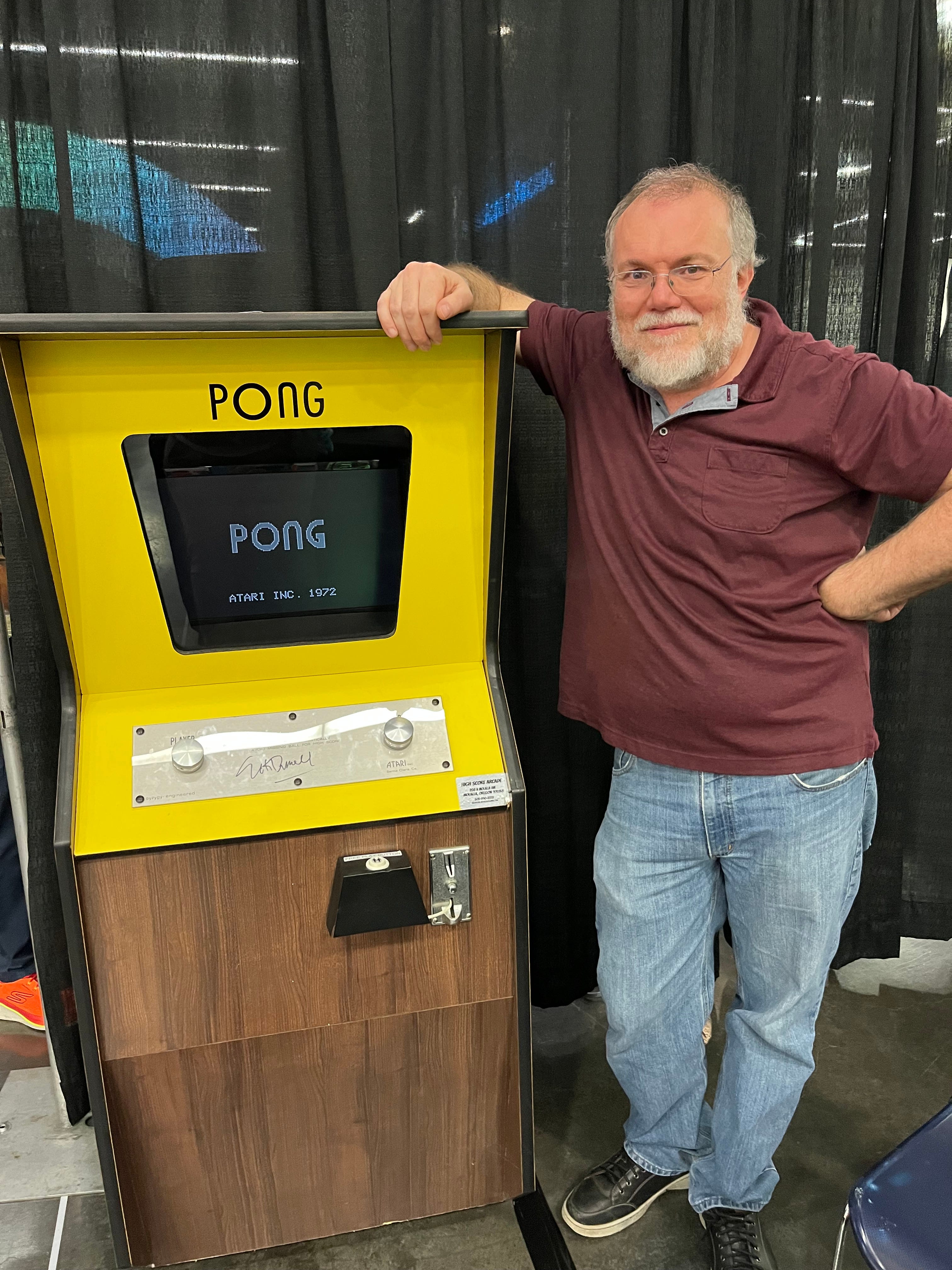
Product 2. Stimulation, Reflex/Adrenaline Version
This is the very first product video games sold, and it is evergreen.
Playing a game that requires lots of dexterity and good reflexes has a powerful effect. The player’s attention is completely consumed. The body floods with adrenaline, reacting almost as if you are in battle. This feeling of anxiety compounds as you struggle, and lose and fail.
Until, at last, you win. Your adrenaline-flooded brain suddenly feels a powerful sensation of triumph and elation. Sure, you failed a bunch of times, but that is all washed away in an instant. One win pays for all.
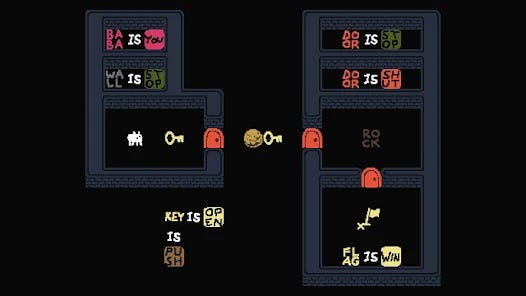
Product 3. Stimulation, Thinky Version
Instead of focusing on reflexes and dexterity, a game can engage the intellect more directly. A brain can get pleasure from engaging with and solving puzzles. The body doesn’t need to move. The main action happens as the brain works. It’s a far calmer sort of pleasure. Less sweaty.
Concentrated thought is its own distinct pleasure.
(Yes, there is also a nice dopamine surge from solving a puzzle or winning a deathmatch. However, I believe these two sensations are distinct and appeal to different parts of the brain, so I’m breaking them into their own categories.)
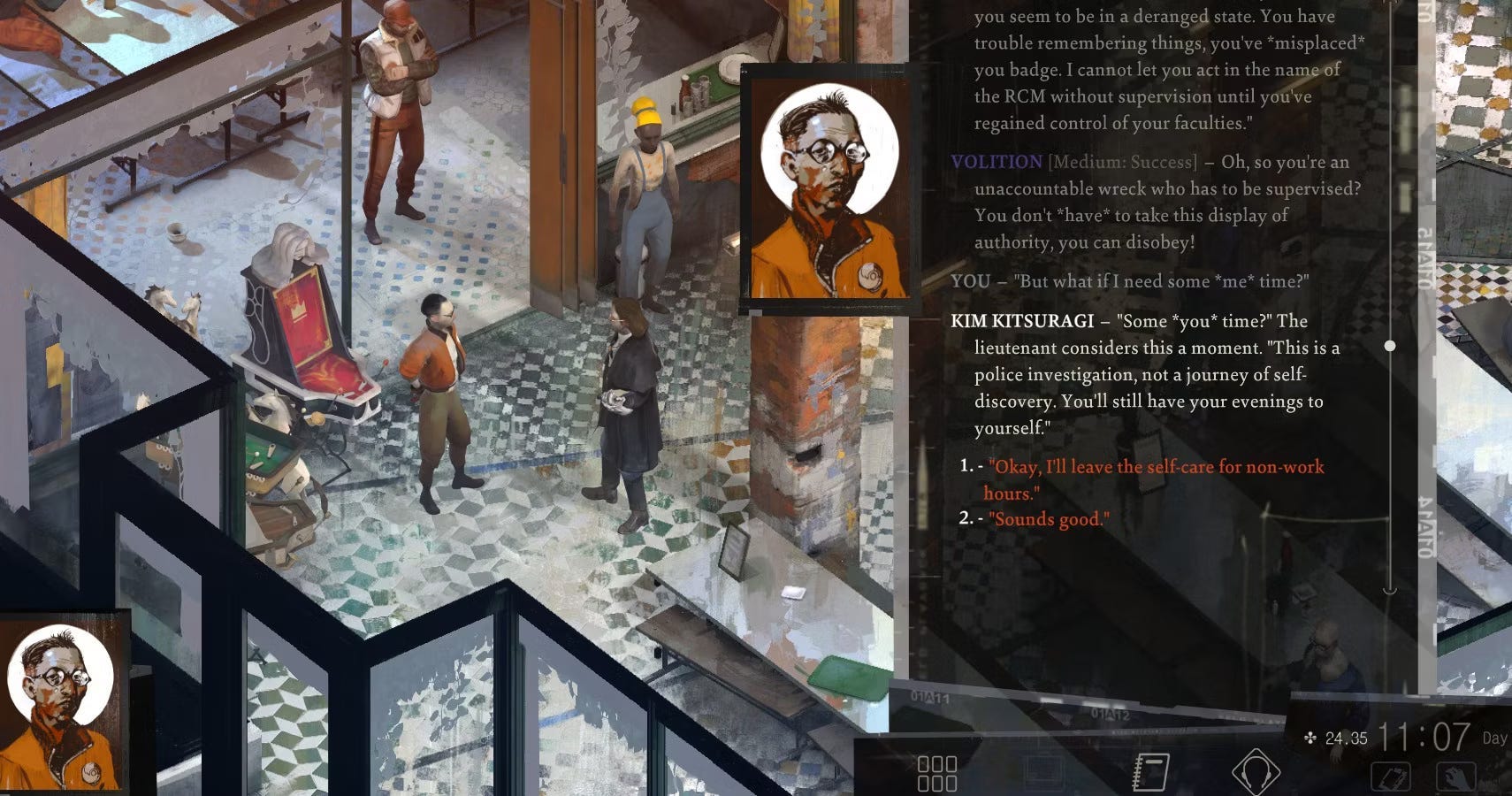
Product 4. Art (tm)
Some ambitious games actually try to be Art. Art in the old classic art sense, as in using one’s skill and life experience to communicate in some medium (story, visual, musical) and convey an idea about the human experience or make the recipient feel certain emotions.
Art is really difficult.
Games like this tend two have two approaches. One is that the game is all art with no gamer filler, with the cost that it is short. (eg Mouthwashing. Stanley Parable. Disco Elysium.) The other is that they stretch the art out by mixing it with more standard game-type content. (eg The Last of Us, Spec Ops: The Line.)
Since games like this are relatively rare and Art is difficult, this is the easiest category to ignore. All I would add is that, when going this route, the easiest path to success is to be funny. Good humor is rare and almost always sells.
Product 5. Devouring Time
This one is super important and underappreciated. In my view, it reflects the main change in how we relate to video games since I started our business in 1994.
Sometimes, in life, we find ourselves with far more time on our hands then we have useful activities to fill it. (This is itself a product of the great prosperity in which we live, but this is a huge topic so I’ll try to focus.)
If you have too much time, it is very hard to escape boredom, and boredom is extremely unpleasant. Happily, video games are an incredibly powerful anaesthetic for preventing boredom. If you need chunks of your life devoured, hours by the thousands, games will get you from point A to point B painlessly. Cheaply. No drugs. No side effects.
Games have to be “fun,” of course, and the four categories above are different sorts of “fun.” However, sometimes all a game needs to do is eat time. Grinding. Boss farming. Waiting in match queues. Boss runbacks. Sitting in a room in VRChat. Are these things “fun?” Who cares? The important thing is the time passes with enough distraction.
But most people don’t want this. Some people are busy and fit games into cracks in a crowded schedule. Time-wasting like this will, understandably, repulse people like this.
I am very protective of my limited gaming time, and the moment a game starts to feel grindy I drop it in an instant. I can spend months chipping away at a game I love (Baldur’s Gate 3 or Elden Ring, say), but only if it keeps feeling fully engaging. I require all killer, no filler. After all, I have a pile of new, short, cool, indie games waiting in my Steam library at any moment.
My games are long. Overlong, honestly. But they END. My 1990s development style has no interest in providing an infinite timesink. That’s ok. Not everyone wants that.
I think, when someone is bored, video games can address this problem very effectively. It is not my place to say whether this is good or bad. However, when fans of a game place different values on their time, friction and confusion can exist.
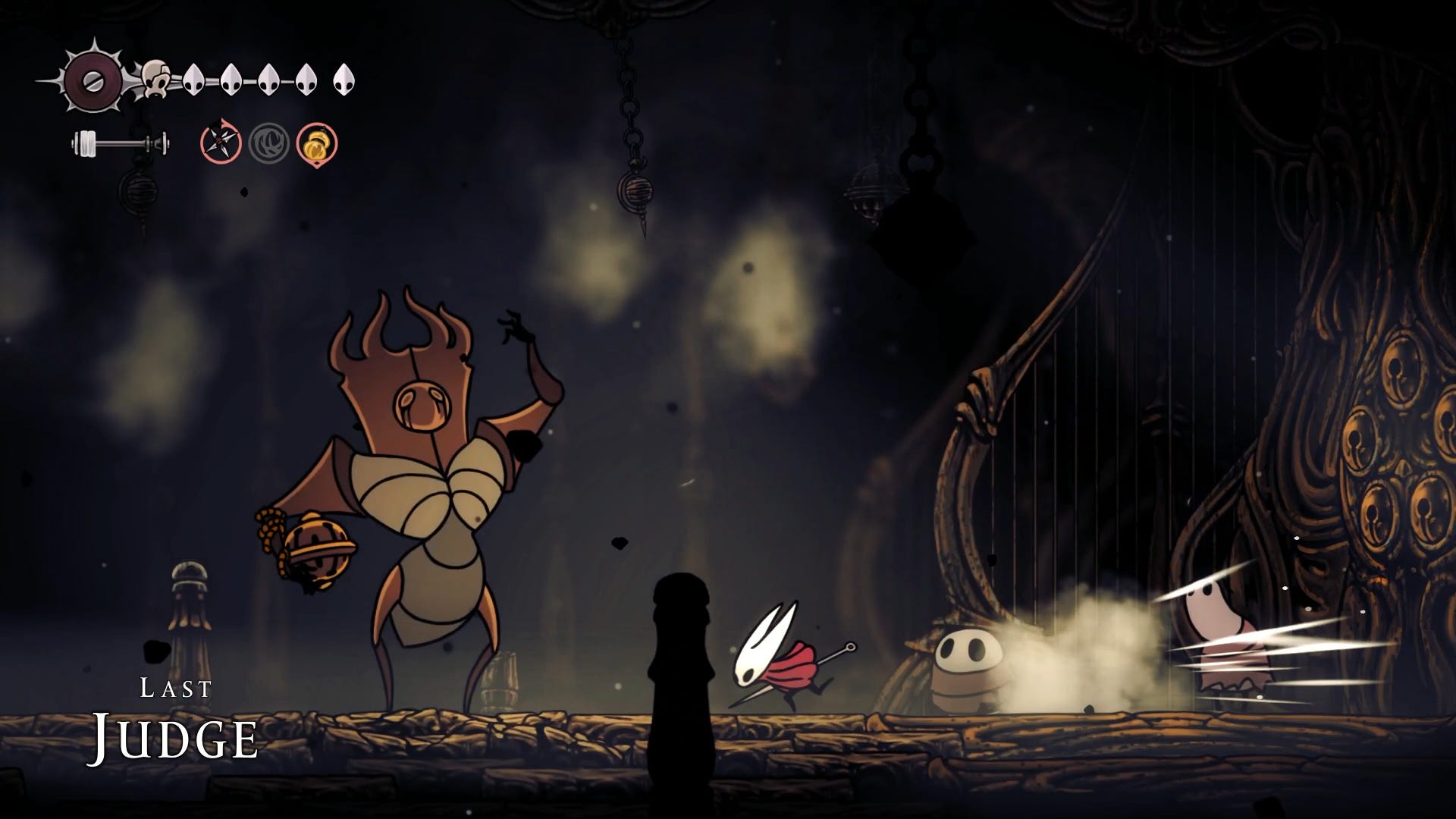
You get two factions: People who want a game to absorb more boredom versus people who want the game to wrap things up so they can get back to their lives. Fan factions who want a game to eat more or less time are in a zero sum contest with each other.
I’m a Practical Person
People who have read me for a long time know I have a very hard-nosed, mercenary viewpoint about these games. I’m not interested in artsy-fartsy analysis or making a perfect taxonomy of ways games can be fun. I’m interested in selling games, as I need money to live.
If you want to sell things, it helps to know what you are selling. When you get confused and lost in the weeds, it always helps to remember your overall goal. What, exactly, am I trying to do to the customer’s brain?
I find this framework makes life a little less confusing and helps me to concentrate on what I want (and don’t want) to offer. I have a few examples for how this approach helps clarify what a game is doing and why it sells well, but this is already very long so it can wait until next time.
Spiderweb Software has been creating turn-based, indie, old-school fantasy role-playing games since 1994. They are low-budget, but they’re full of good stories and fun. All of our games are on deep discount on Steam right now!
This newsletter is free, but paying me to subscribe guilts me into writing more. If you would like to support us, you could also buy our newest game, Avernum 4: Greed and Glory, and leaving us a nice review.
No posts
Comments
Nothing yet. Say the first thing.
Sign in to join the conversation.