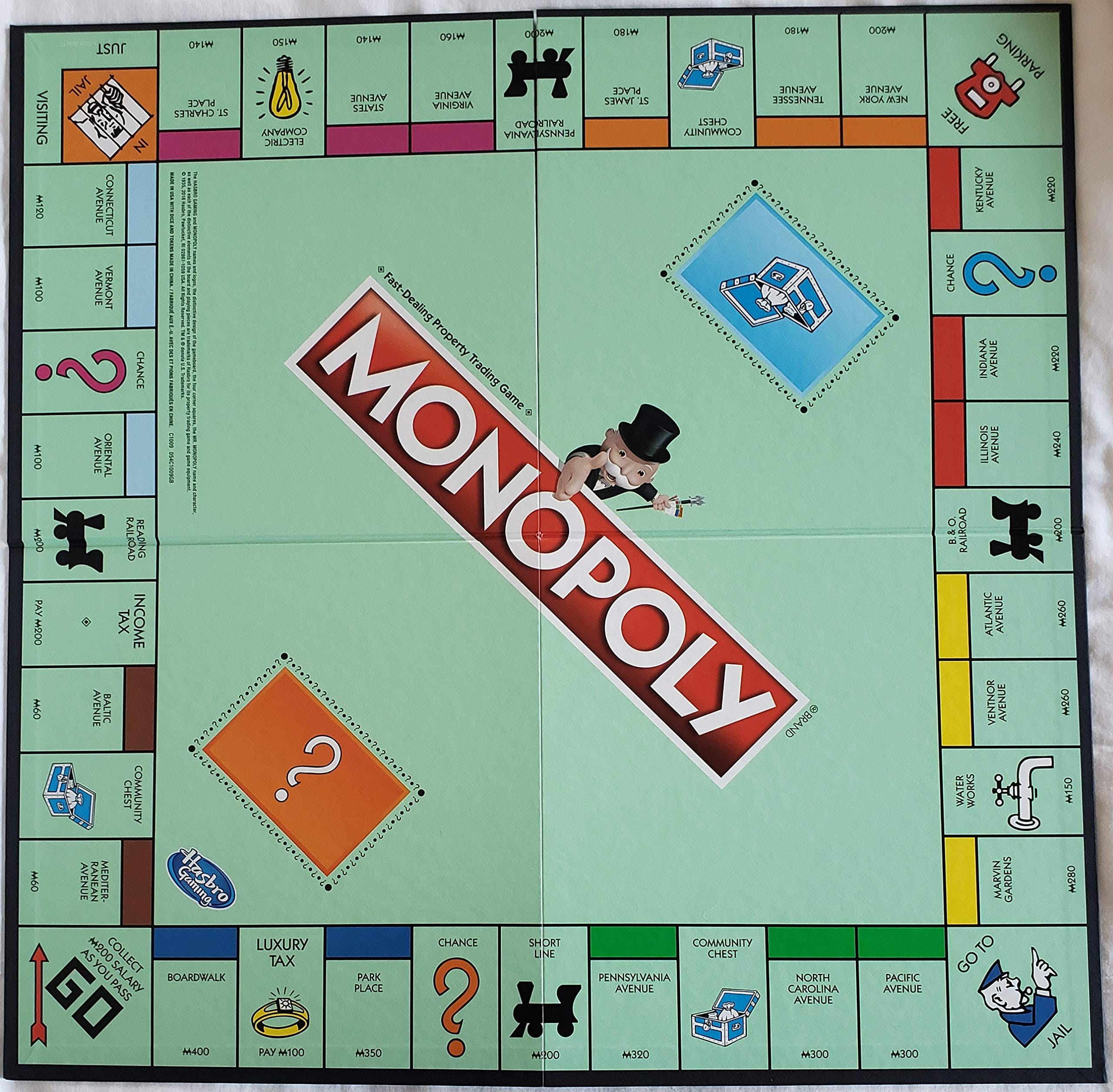
I have always loved Monopoly. As a kid. As an adult. It’s a flawed game, but, when played according to the actual rules, it can work really well.
It’s also a massively influential classic and one of the foundations of modern board gaming, and that’s nice too.
So when the online discourse circled back around to discussing it, I finally got my long-delayed chance to blog about it. (The huge discovery from the Slate article I linked? Games work better when you read the rules. OMG! What a discovery!)
So some thoughts about Monopoly, the good and the bad.
(But first: Our Kickstarter for Geneforge 3 - Infestation is over half done and doing great. If you want to take part in creating a cool new indie RPG, take a look!)
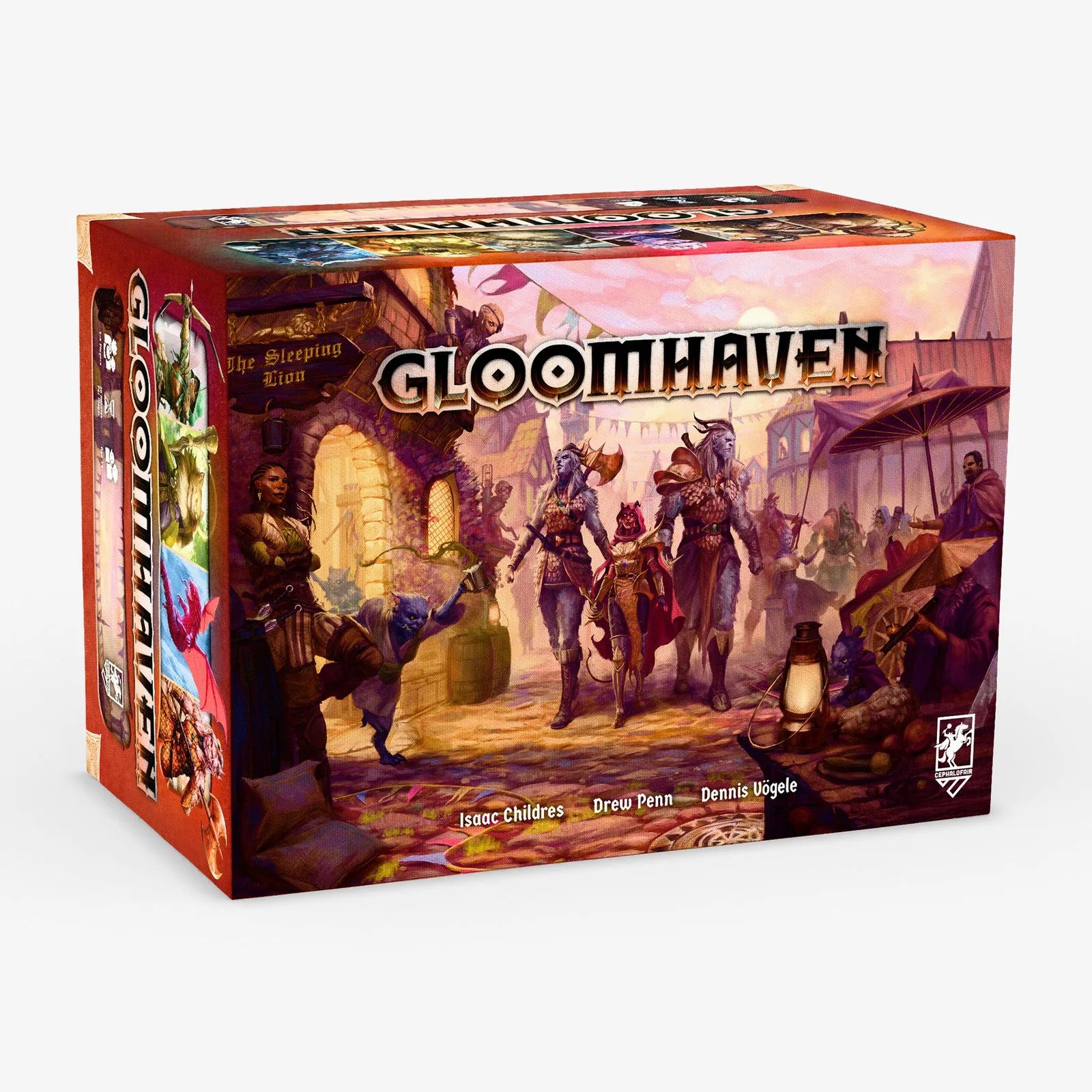
What Works About Monopoly. And Doesn’t.
Ideally a board game will “trend toward conclusion.” That is, every move brings the players inexorably closer to the game being finished and them getting their lives back.
What makes Monopoly end? When people get monopolies, build on them, and murder the other players.
To get a monopoly, unless you are super lucky about the properties you land on, you will need to trade with other players. If the other players don’t know they can trade or refuse to trade, monopolies will not form and the game will go on eternally.
This is a HUGE problem in the design and the source of everything about Monopoly’s bad reputation. Its enormously popular spiritual successor, Catan, trends mercilessly toward an ending. Since Monopoly didn’t push you toward the end, players came up with their own rules to “fix” the problem (like free money when you land on Free Parking) that only made the problem worse!
Monopoly works great if people play it as intended, but the game doesn’t force you to play it as intended. I won’t pretend this isn’t a real flaw.
Once monopolies exist and people start getting unlucky, players will take enormous hits and eventually luck will determine a winner. The person with the best property set up has to get a lot less lucky.
(I also love Catan and think that people who dump on it are posers. If you’re tired of Catan, that’s cool, whatevs, but it’s still an awesome game.)
Board Games Are Prime Educational Tools. It Helps If They’re Cruel.
I think playing board games with your children is a vastly important educational tool. It teaches them two things:
1. That it is possible for them to lose.
2. That they need to deal with losing gracefully.
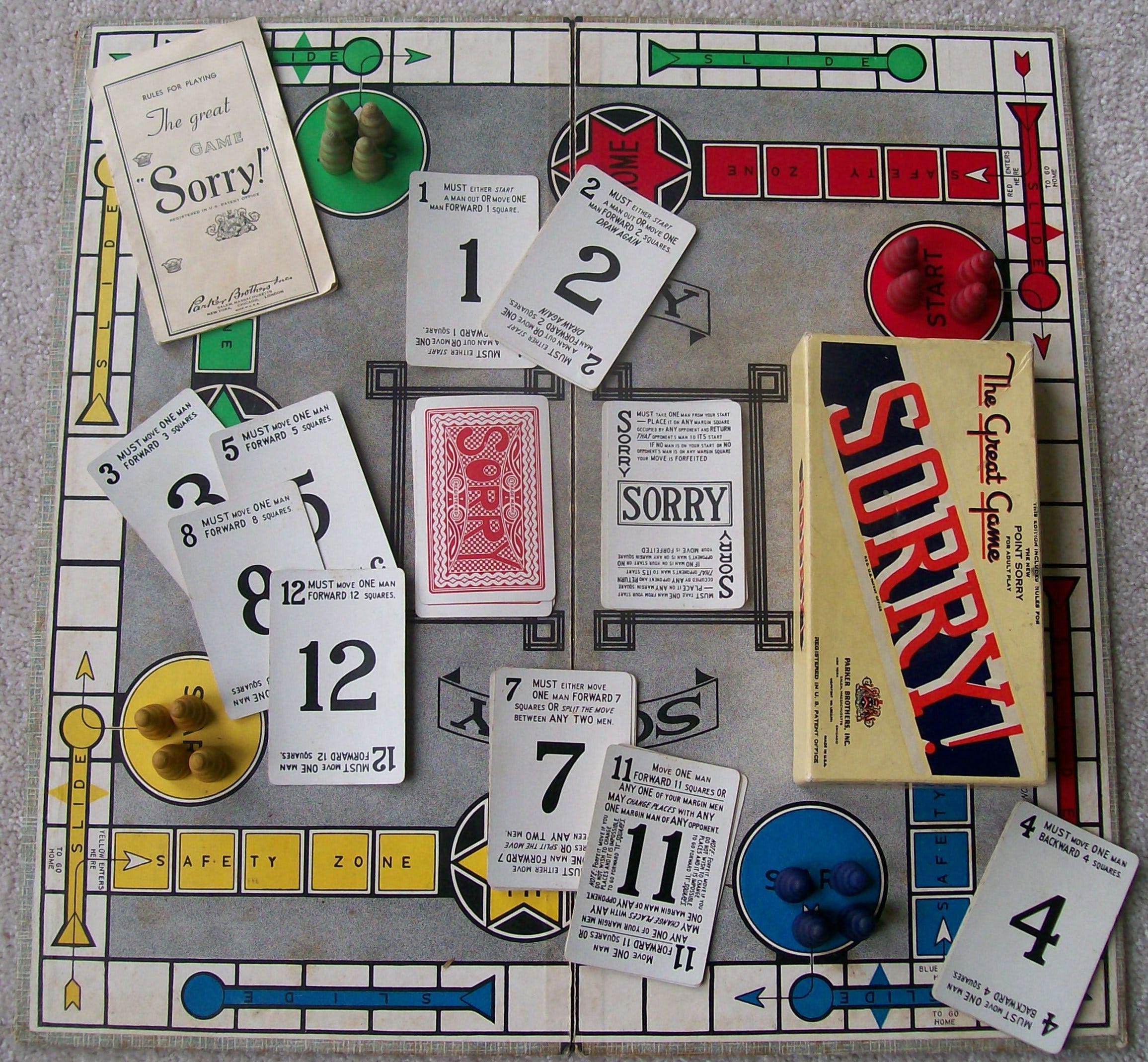
I’ve had childless friends who were appalled by the idea that my children sometimes cried when playing board games. Of course they did! The game Sorry! is a perfectly engineered machine for extracting tears from children.
Then there is Risk. I feel every child should experience having their empire destroyed, territory by territory, in a long, slow, grinding assault. If you can’t handle that without breaking down, you are not prepared for the cruelty of Actual Life.
(Actually, original Candyland was the cruelest boardgame ever made. You could get stuck and lose every turn until you drew, say, a yellow card. That could take an average of six turns! Brutal! They changed those spaces to Lose One Turn, and I’m cool with that for a game for 3 year olds.)
About the History Of Monopoly
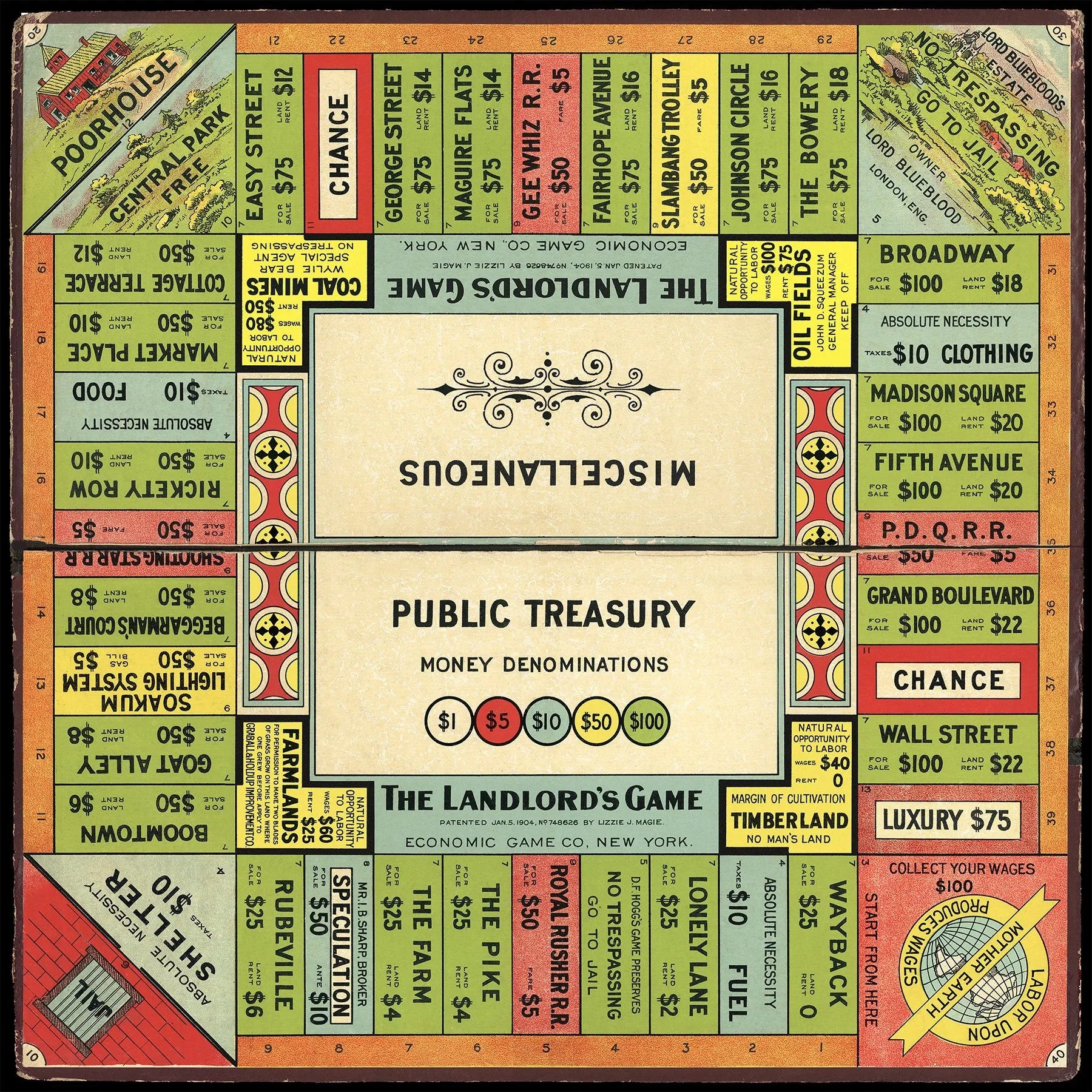
The history of Monopoly is a tangled tale. It doesn’t help that, for many years, Parker Brothers’ official story of how it came about is a lie.
Monopoly is based on an earlier game called The Landlord’s Game. The Landlord’s Game was a dry, rather unfun intellectual exercise is explaining the economical ideology of Georgism. I will not be explaining Georgism in this or any other blog post. It is a very interesting set of ideas, but thinking about them makes me sleepy.
The Landlord’s Game was not a financial success, due to the aforementioned lack of fun. However, the creator, Elizabeth Magie, stumbled upon what was at the time a bunch of really unique and ground-breaking design ideas for board games. (For example, that play travels in a loop over the same terrain, which is developed as you go. A HUGE invention. If you ever look at other board games from the time, you’ll be amazed at how linear and simple they are.)
Elizabeth Magie was smart enough to patent these ideas, which she later sold to Parker Brothers for not enough money.
Other designers took the basic framework of The Landlord’s Game and build Monopoly on top of that, adding all the actual fun in the process.
I mention all this because I think it’s a really cool story and a reminder that so often great advancements are team efforts and we all stand on the shoulders of giants.
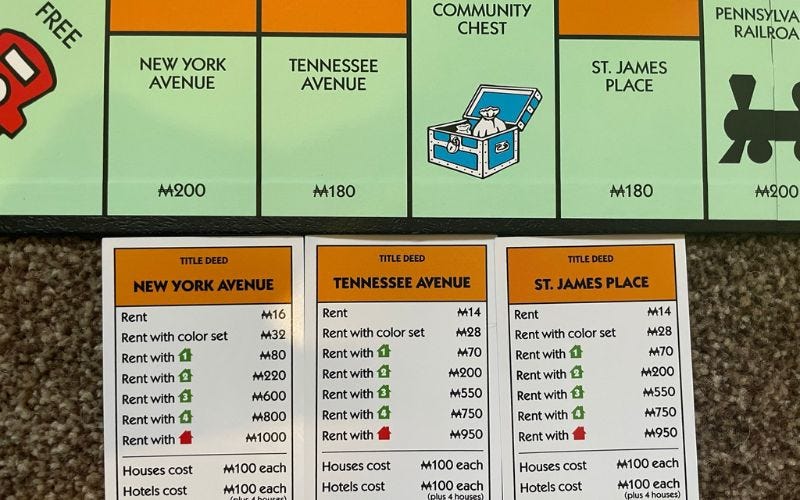
Monopoly Strategy ...
... is a thing that exists.
I’m not going to dive too deep into this. There are plenty of web sites about it. Here’s a good start.
The best way to cure the idea that this is a dumb, unfun, or eternal game is to see that, yes, it does actually have strategy. Good players will, over time, utterly devastate weaker players the vast majority of the time.
Respect Your Elders
I have known a lot of board game designers in physical reality and read many more online. It has been my perception (perhaps wrong) that they really like to dump on older games. Monopoly. Risk. Even Catan. Game designers will almost never say a kind word about Monopoly if they can help it.
This blog post comes from my writing on Xwitter, and multiple game designers came forward to proclaim that Monopoly is DUMB and BAD (and even “Boomer”, whatever that word means anymore).
Don’t enjoy playing Monopoly? Don’t play it! I don’t spend a lot of time playing the video games of my childhood, even the ones that most inspired me. Sometimes, games do become obsolete.
Still. If you love board games, you absolutely should revere Monopoly. (And Risk. And Sorry! And even simple, beloved Candyland.) These classics are still the oxygen we game makers breathe.
Plus, come on. I’d rather play a nice, honest game of Risk than some modern, designer-approved, billion-piece, labyrinthine-rules Cones of Dunshire nonsense. Sue me.
Spiderweb Software has been creating turn-based, indie, old-school fantasy role-playing games since 1994. They are low-budget, but they’re full of good stories and fun. And they’re all cheap on Steam right now!
This newsletter is free, but paying me to subscribe guilts me into writing more. If you would like to support us, you could also support our new Geneforge 3 - Detonation Kickstarter. Either way, thank you for your attention!
No posts
Comments
Nothing yet. Say the first thing.
Sign in to join the conversation.