
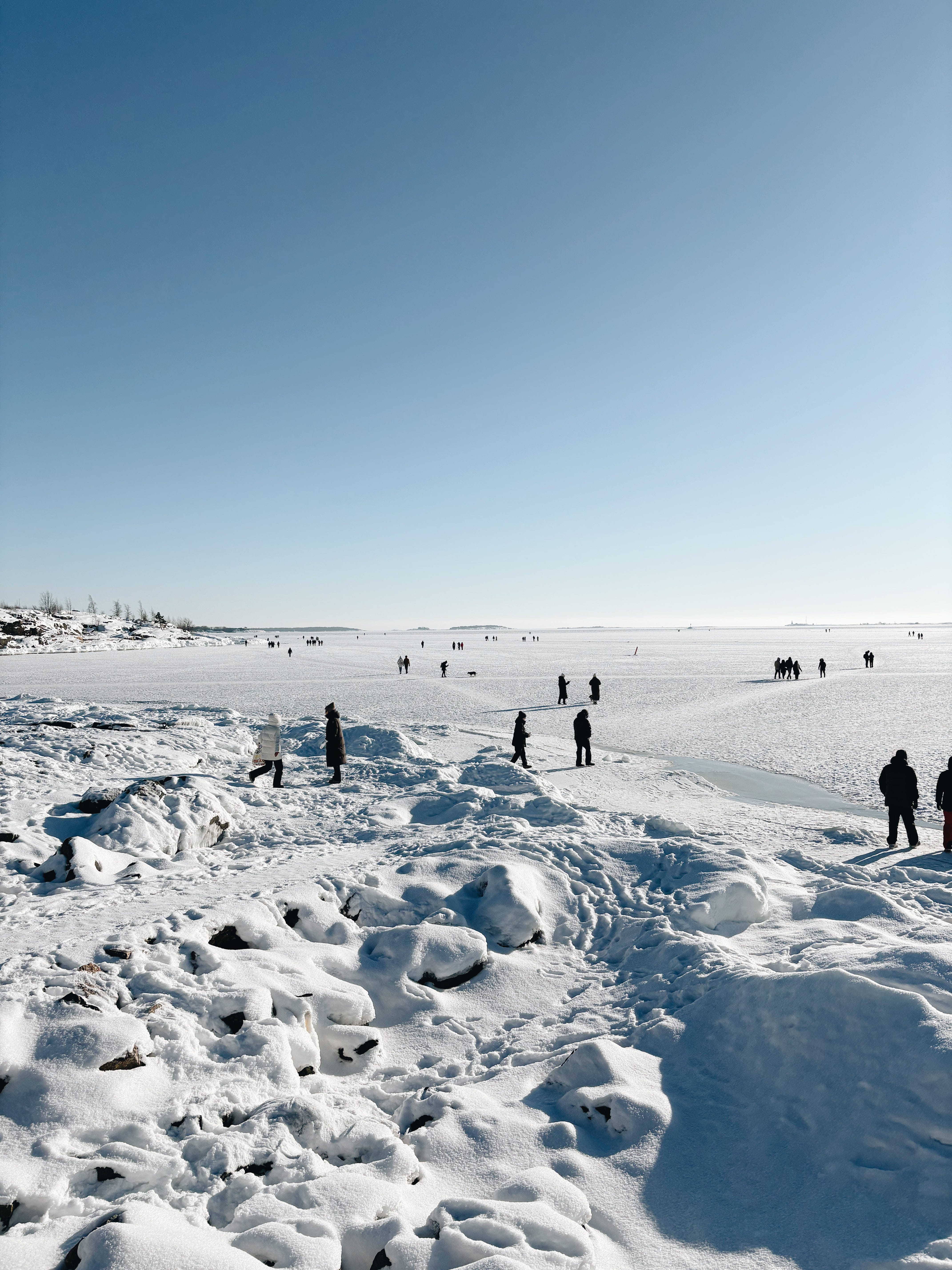
Three weeks ago, I walked on the frozen Baltic sea.
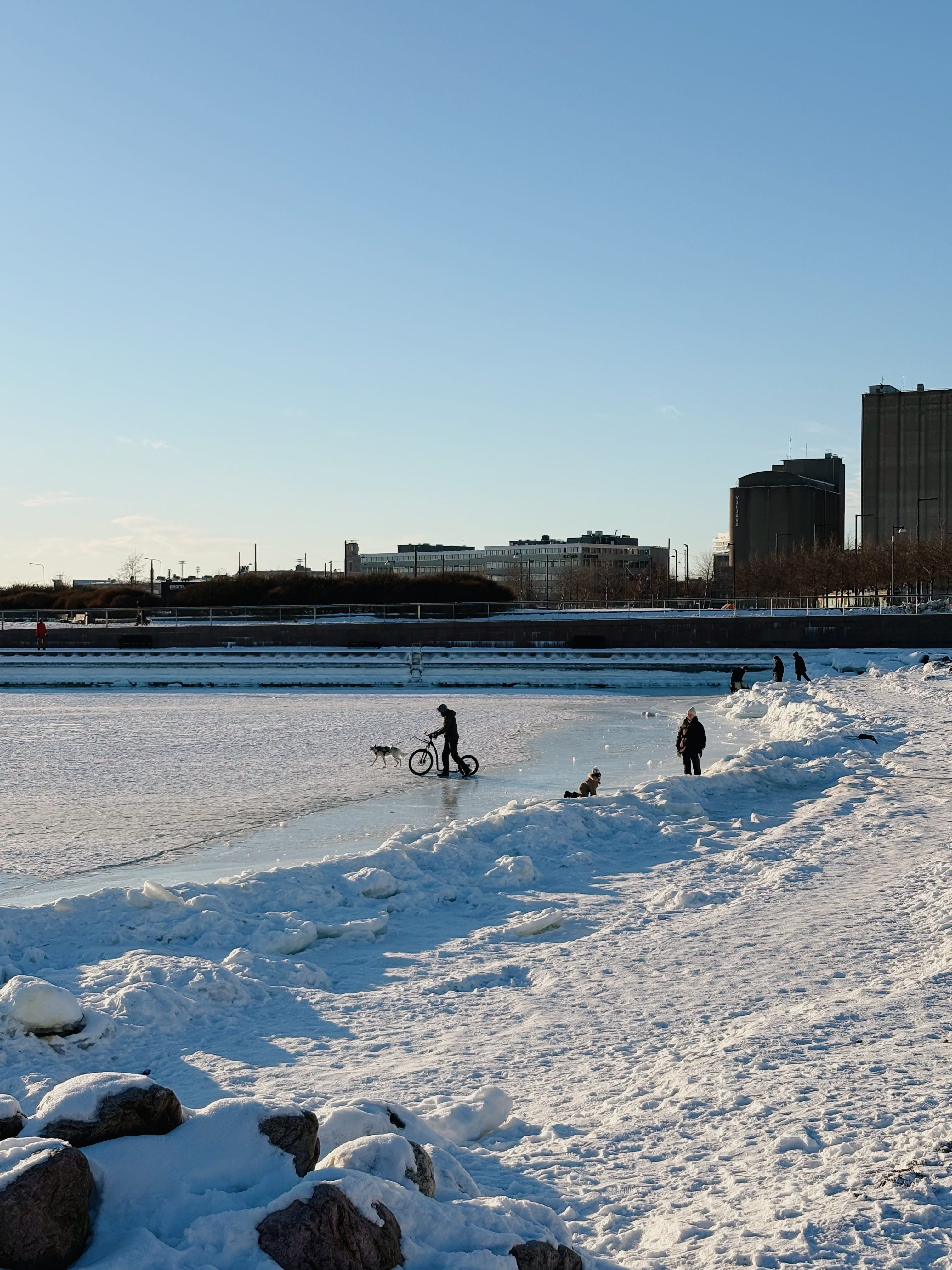
I had been thinking about it since I’d arrived in Helsinki. On the first day, five days earlier, I’d tentatively stepped off a jetty onto the ice below, and had taken two steps with my heart pounding before I decided it wasn’t worth the risk. That had been a weekday, and the city - and the sea - felt quiet. There hadn’t been many people around, and although there were enough walkers confidently striding out onto the ice to reassure me, it felt like something I probably ought to leave to the locals. But now it was Saturday, and the city had spilled out of the offices and apartments into the fresh, bitter air. The ice - the sea - was, it seemed, the place to be. Everyone had ventured off dry land, and nobody seemed to have any specialist gear. I decided to join them.
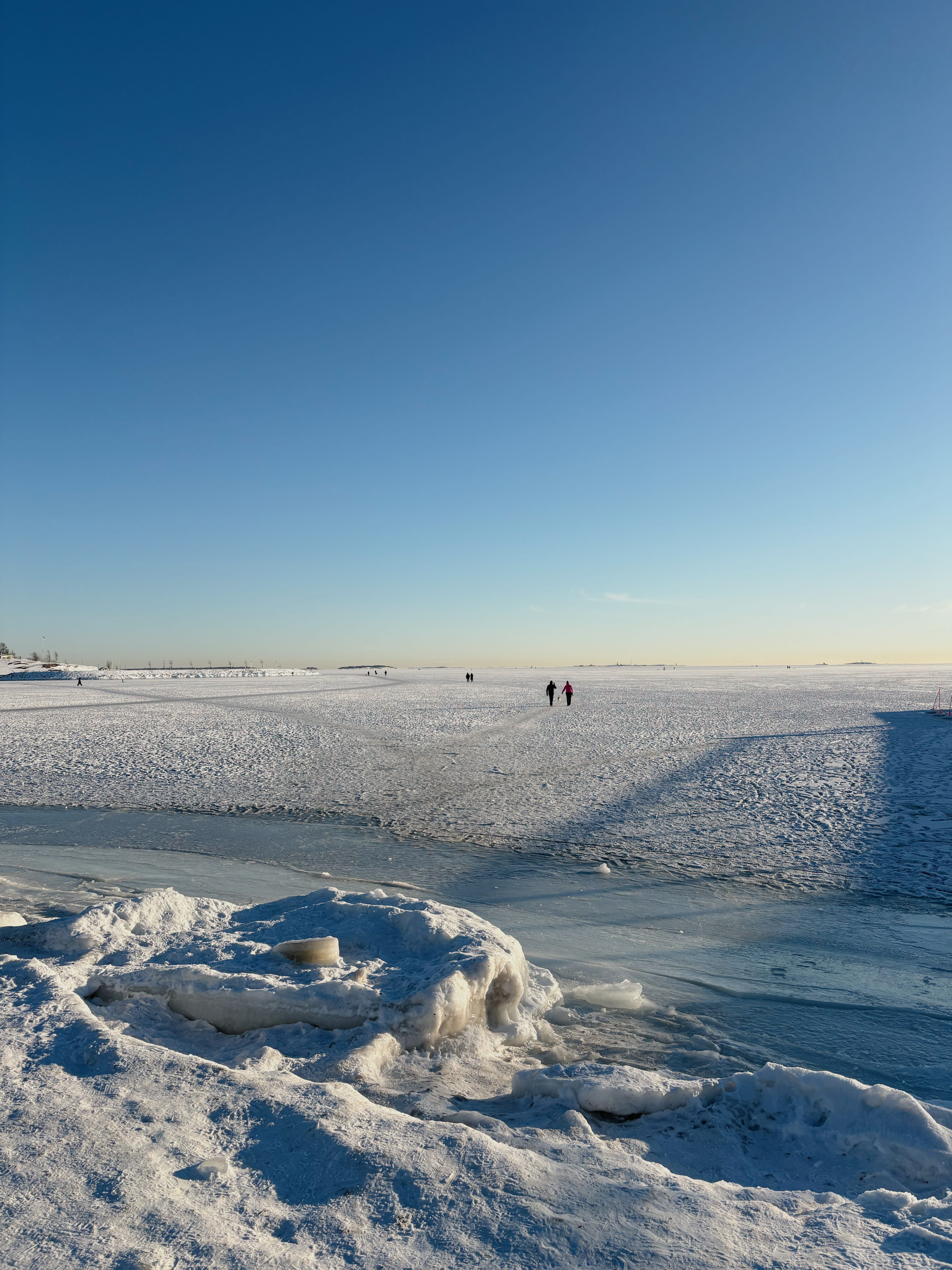
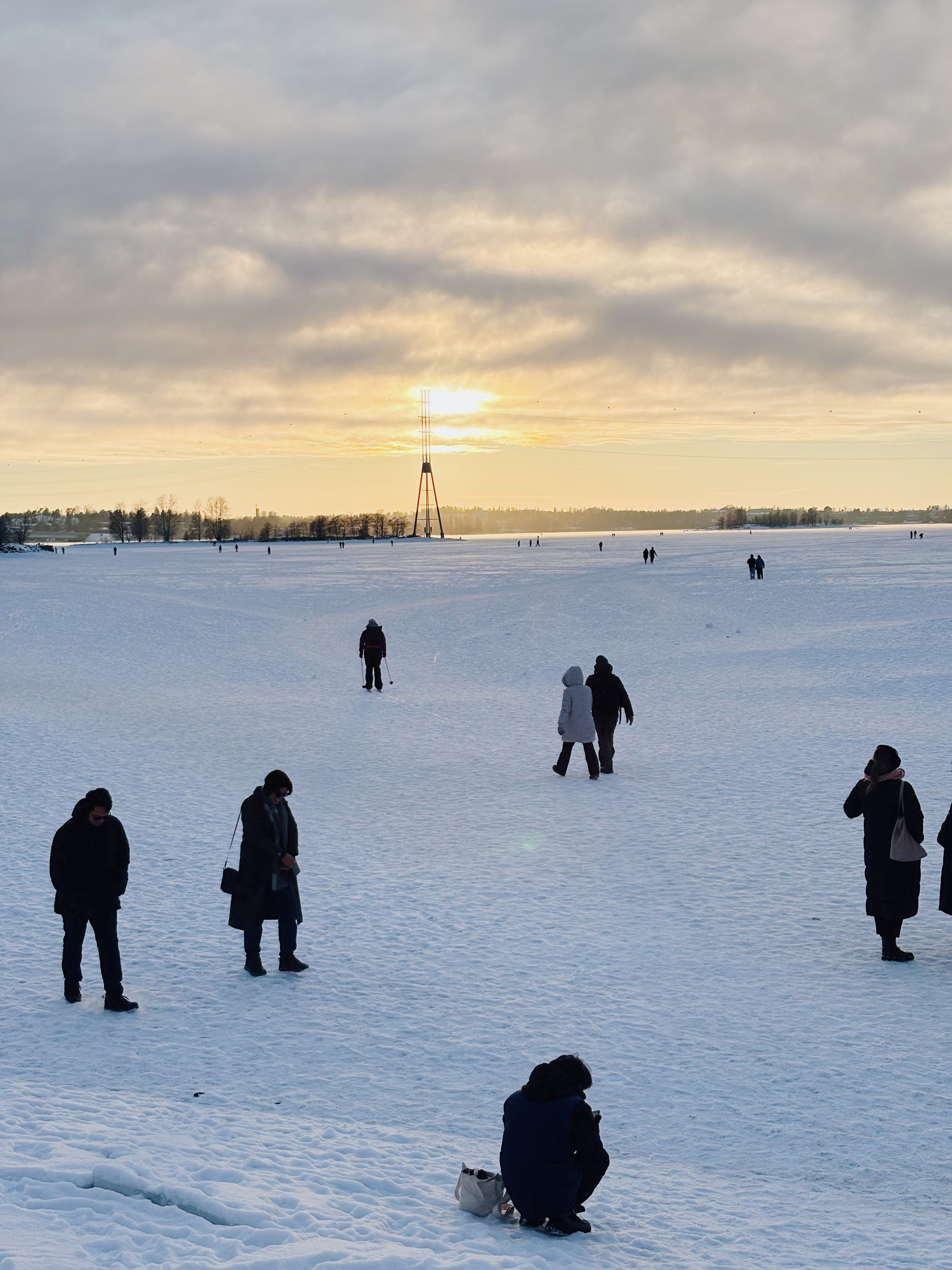
It wasn’t quite what I expected. Ice, I thought, would be slippery, but in this case it had been coated in a fine, powdery snow, which I’d later learn is much drier than the snow we get in the UK so it doesn’t clump in the same way. It also wasn’t flat, but ever so gently undulating. I had to stop to make myself imagine the sea on a calm day, and the way its ripples and currents had been captured under my feet. But what was most surreal about it was this: it felt like walking. It could just have easily been a park. Each time anyone passed me - stylish young women in long padded jackets and colourful scarves, clutching coffees; children on bicycles; brave runners in many layers; the odd cross-country skier - I wondered if I could ever get used to this; whether everyone else was finding it as surreal and exhilarating as I was.
On google maps, I typed in the location of the cafe I wanted to visit that afternoon. I’d been finding the app disconcerting, its clear distinction between green land and blue water having so little bearing on the endless white I could actually see. The walking route that came up was wobbling and circuitous, following a path around the bay. I started following it, until the ridiculous truth of it struck me. I didn’t have to walk around the bay. I could cut straight across it.
I’ll rewind a little. I got to go to Helsinki in the first week of February, and it was a privilege and a treat and a joy. It was a trip that came up through my job. I was invited by a Finnish literary agency to spend four days learning about the Finnish book market, alongside five other editors from the English and Spanish speaking worlds - the idea being that publishing in translation into ‘big’ languages like ours, with millions of speakers spread across the world, can do a lot to raise the profile of a language with fewer native speakers than London has inhabitants. We met agents and publishers in their stylish offices; we had long conversations about formats and endorsements and genres and the particular challenges of finding translators of a language which is totally unrelated to any other language apart from Hungarian and Estonian, and therefore incredibly hard to learn. We visited Helsinki’s frankly utopian public library, Oodi, and tried to imagine living somewhere with such enriching public space. Our wonderful agency hosts made sure we were well-fed and well-looked-after. The work side of the trip was brilliant, is what I’m saying: it was fascinating and friendly and made me feel incredibly excited and lucky to be doing my job.
It’s just not the bit I want to write about.
I knew I was going to love Helsinki. I was deliriously excited to wear - to need to wear - my winter boots and my proper coat; to feel the biting cold on my face; to feel the crunch of the snow under my feet. I had some ideas of what to expect; fuzzy mental images of icicles dangling from rooftops and perhaps a sauna or two. I knew I’d love it, but even I was a bit surprised by just how much I did. In fact, I loved it so much that I changed my flight home and booked myself into a budget hotel for the weekend. I wanted to squeeze every last minute out of it.
The closest I’d ever been to Helsinki was Stockholm, and the two cities have a lot in common. Sweden and Finland are closely intertwined: Swedish is Finland’s second official language, the first language of five percent of the population, and all Finnish children learn it at school. Helsinki looks a lot like Stockholm, with its tall brick buildings and snaking tramways and endless waterfronts, and there were times when I felt almost disorientated, imagining that knowing my way around Södermalm was going to help me in Kallio. (It didn’t). Finland and Sweden are both nordic countries, which felt evident in the vast urns of black coffee in every establishment and the delicious buns in cafe windows. But there were differences too. There was the language, so unlike any languages I know or recognise, and the way that unfamiliar words make familiar things feel different. I kept stopping to look at posters at bus stops and shop windows, trying to sound out the twenty-letter words and wondering whether designers ever wished they were shorter. There was also a lightness in Finland that felt unlike what I know of Sweden. It felt - the people, if I can bear to generalise, felt - less reserved, more open, more friendly. When we asked our hosts whether Finland had its own version of Danish hygge or Swedish mys, they laughed a little before explaining the concept of pants drunk: sitting at home with the heating on, wearing your most comfortable and least showy clothes, drinking your worries away.
It also felt so incredibly safe. I was a woman walking alone at night through a strange city and there wasn’t even a hint of aggression, of ill-will or risk. I have never felt so safe.
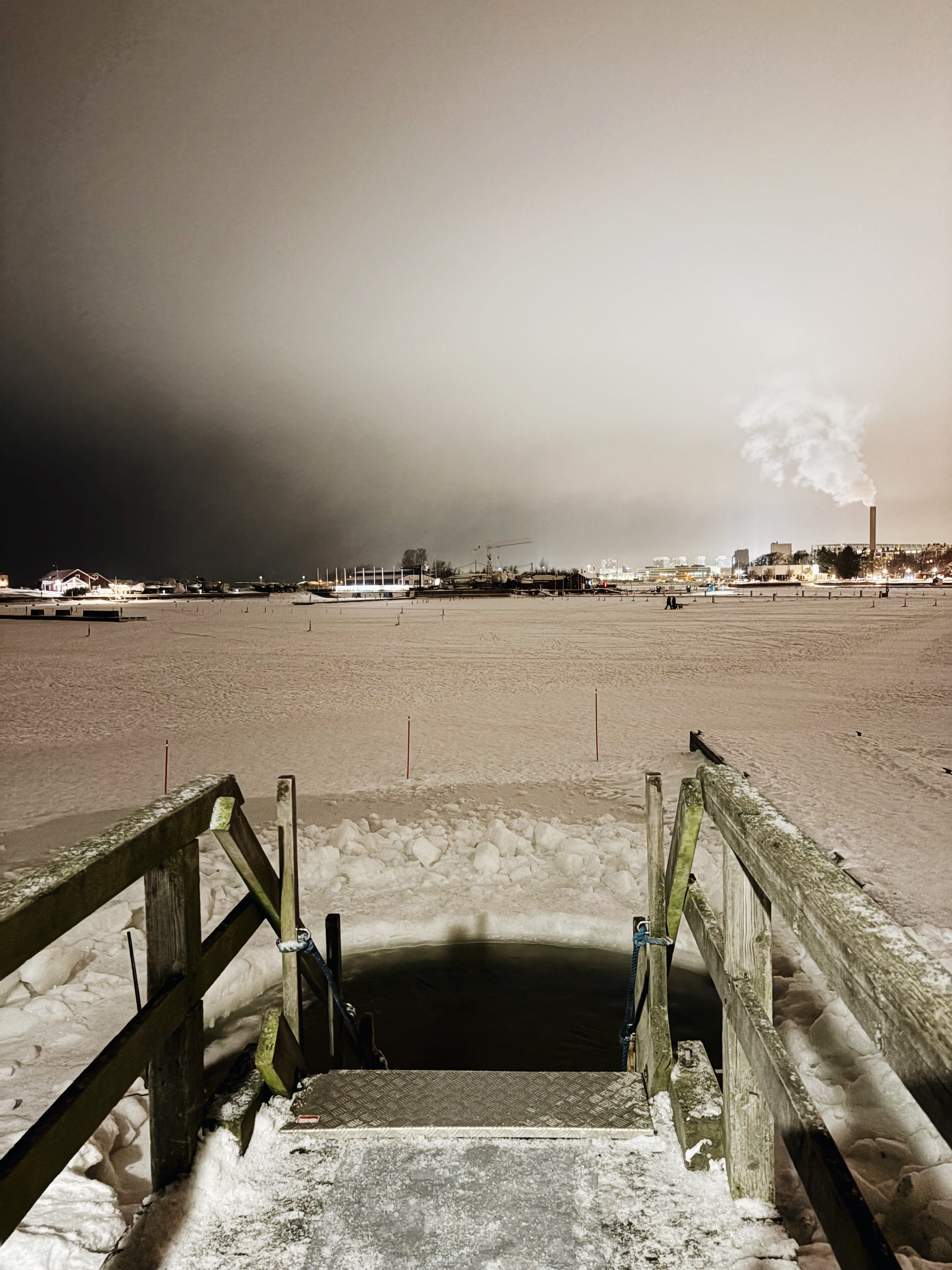
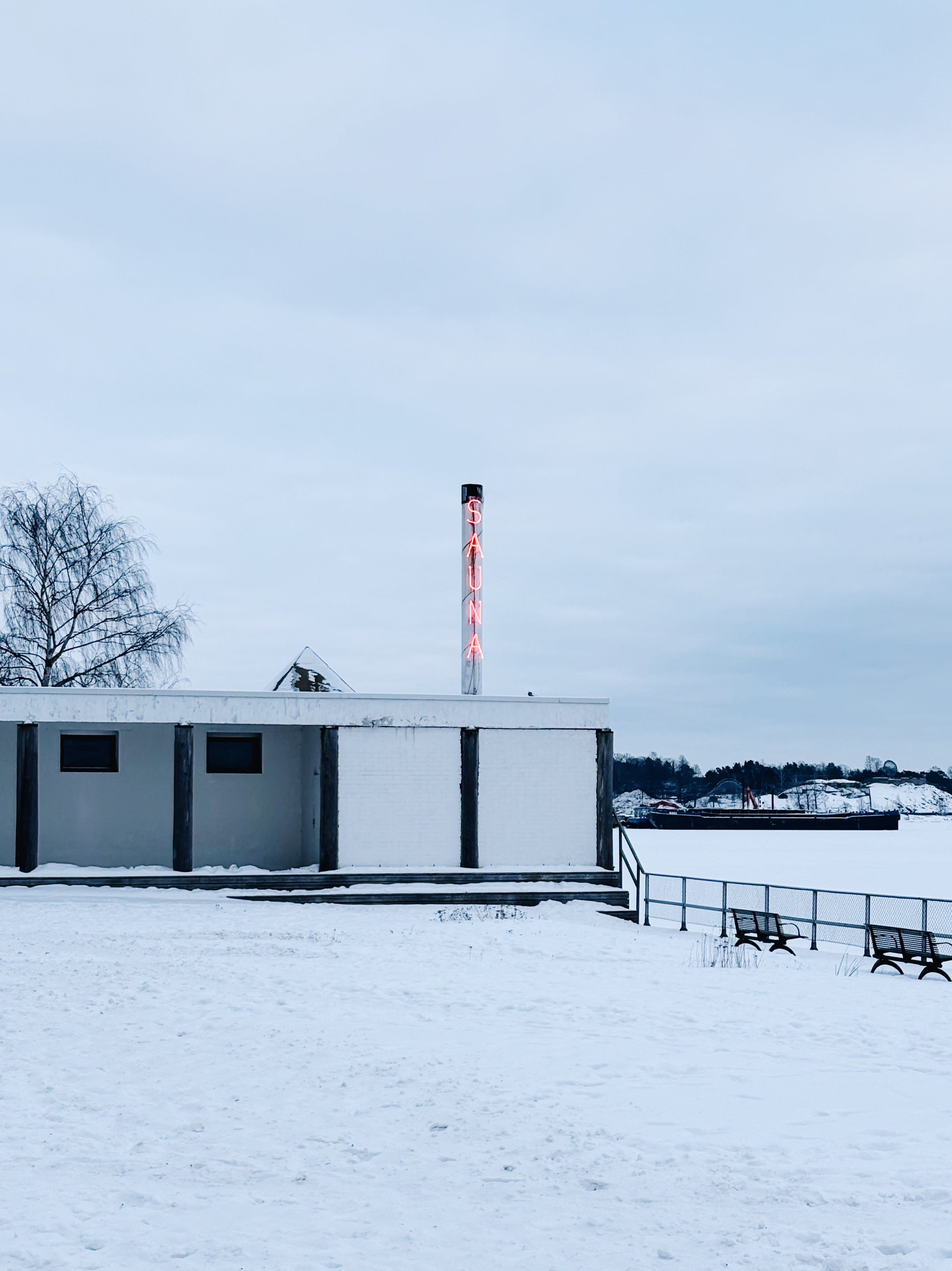
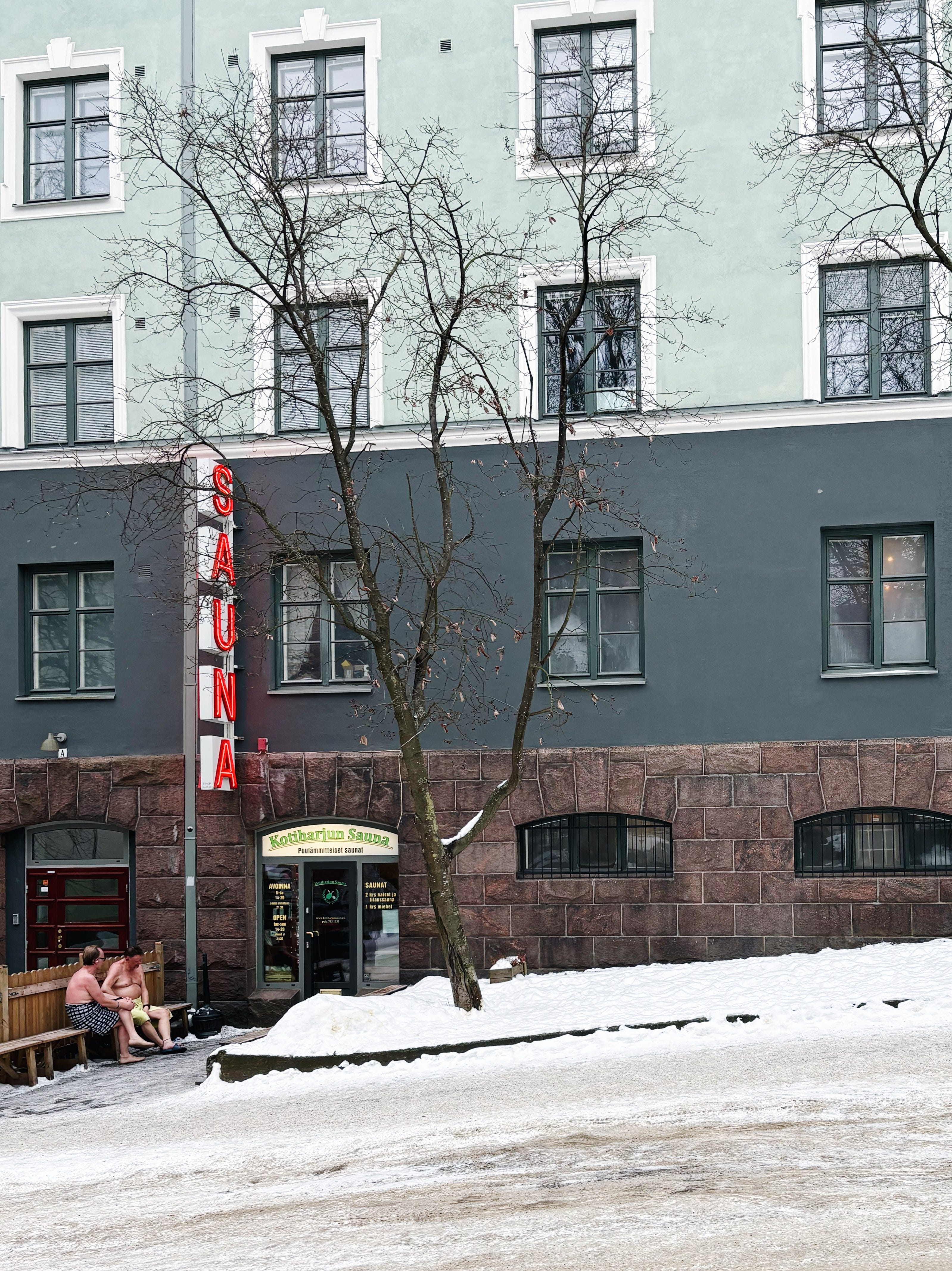
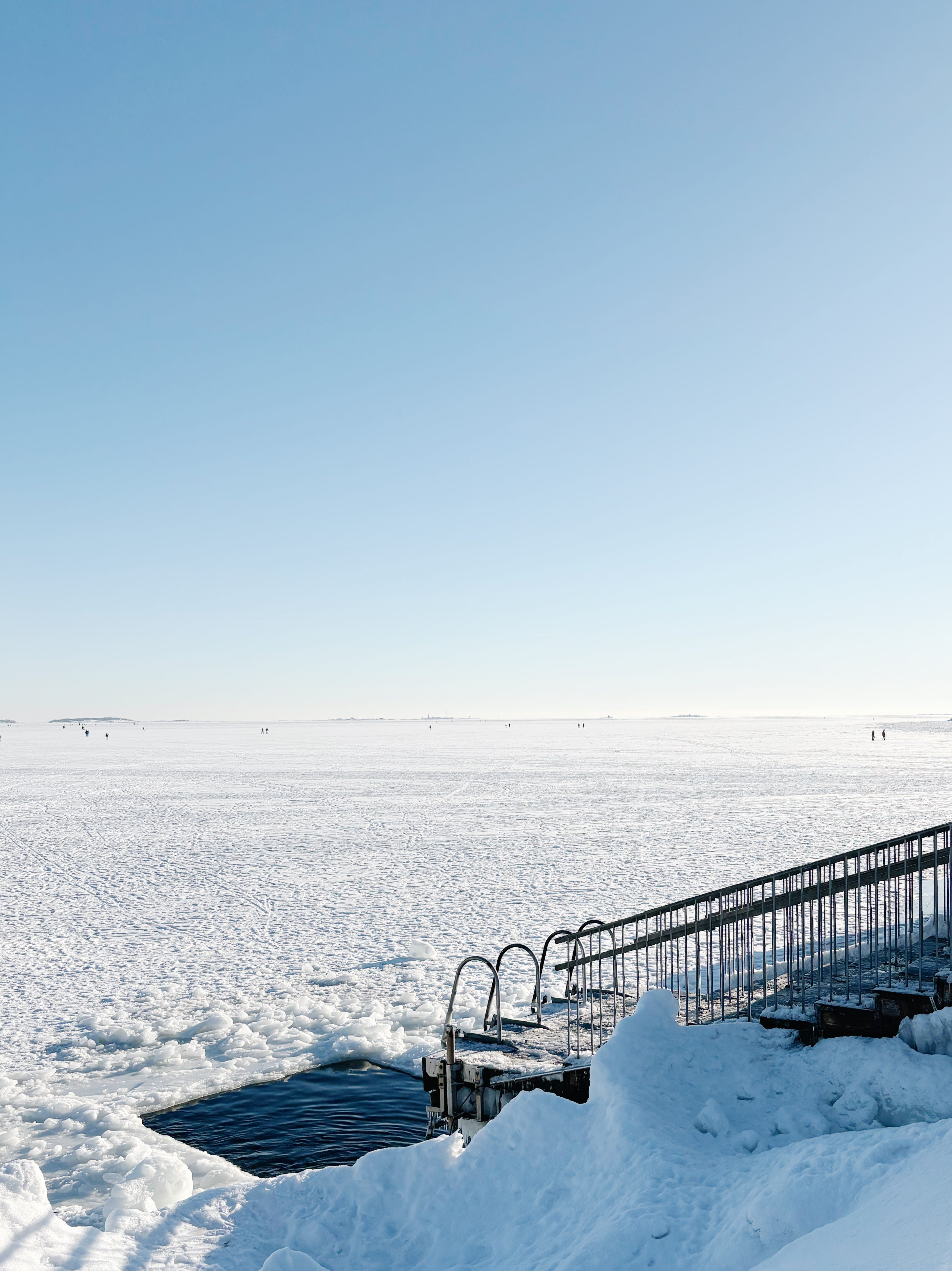
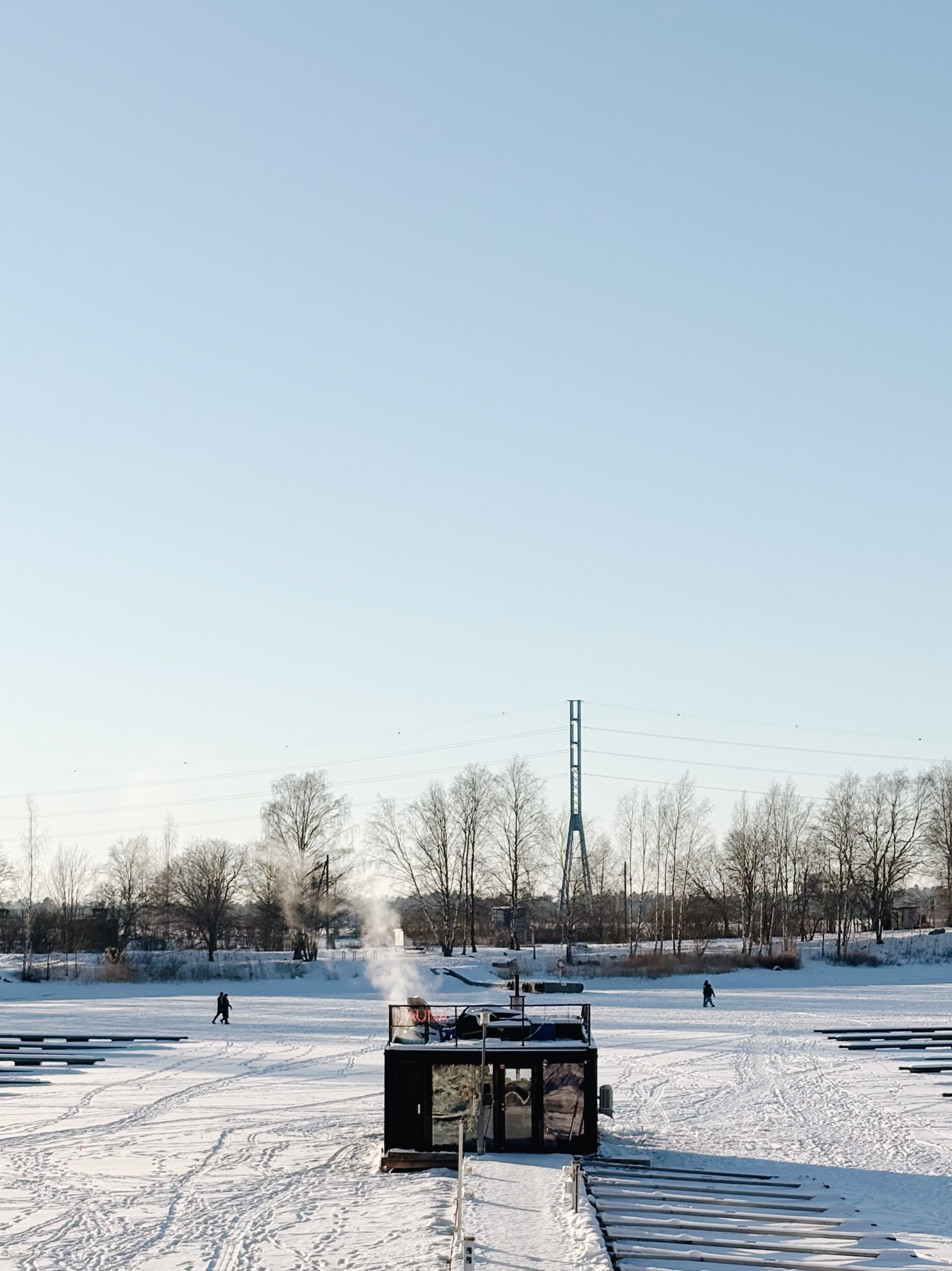
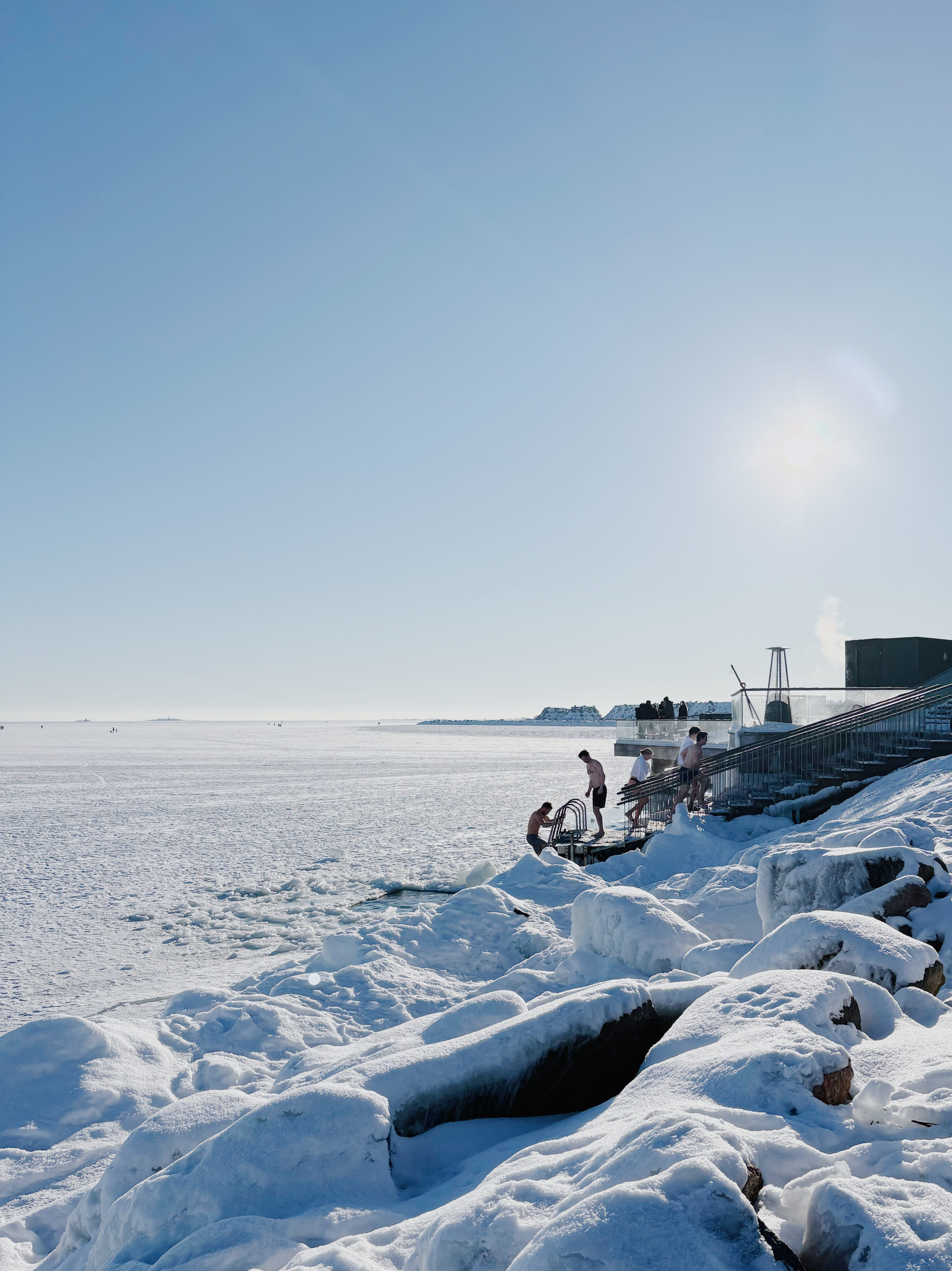
We had to try a sauna. The literary agency booked it and sent us on our way, and we assembled in the entrance in our swimming costumes. It’s an oddly intimate thing, to sit and sweat with people who you met literally yesterday and who you might feasibly do business deals with in the future. This particular sauna sat on a little island just beyond the waterfront, and felt more traditional than stylish. We sat in the almost-dark on wooden benches on a raised platform around three sides of a room, with the oven (is it an oven?) at one end. There was an old man sitting by the fire, a self-appointed custodian of the steam, and I watched him as he diligently spooned water onto the hot coals every few minutes, exhaling at the rush of heat that followed. He was quiet at first, and I got the sense he was trying to figure our group out. I didn’t blame him: we were clearly more than strangers and less than friends, equally new to this. After the first fifteen minutes, we agreed we were ready for a blast of cold, and outside we ran down a snowy path to the plunge pool, a hole carved into the sea ice. I was barefoot: I hadn’t thought to bring flip flops. The air temperature was -12 and the water was less than one degree celsius: as cold as water can be without freezing. Something between adrenaline and peer pressure made me get in, and I felt my legs carry me down the ladder and into the icy water, where I dipped down to my neck for the shortest of split seconds before rushing straight out again, breathless but electric and so very alive.
Back in the sauna, we were exhilarated. The old man struck up a conversation. He was delighted that we’d done the cold plunge, delighted that we were here and that he could steer us through our first Finnish sauna experience. He asked us about our jobs and told us about his, and he told us about his own sauna rituals: several times a week, every week, for decades and decades. He was happy and healthy, he said, and then gently suggested it might be time for us to plunge again. And so continued the cycle, until we said it was our final stint in the heat. He had a suggestion. Did we want to end the sauna in the true Finnish way? We did, we said, and we followed him outside. He led us to a patch of snow, thicker than the path around it, where he lay down and moved his arms and legs up and down. Come on, he said, it’s lovely. I lay down too, and started making a snow angel of my own. He was right: it was lovely. It was euphoric. I was somewhere between frozen delirium and ecstasy, and I couldn’t stop laughing.
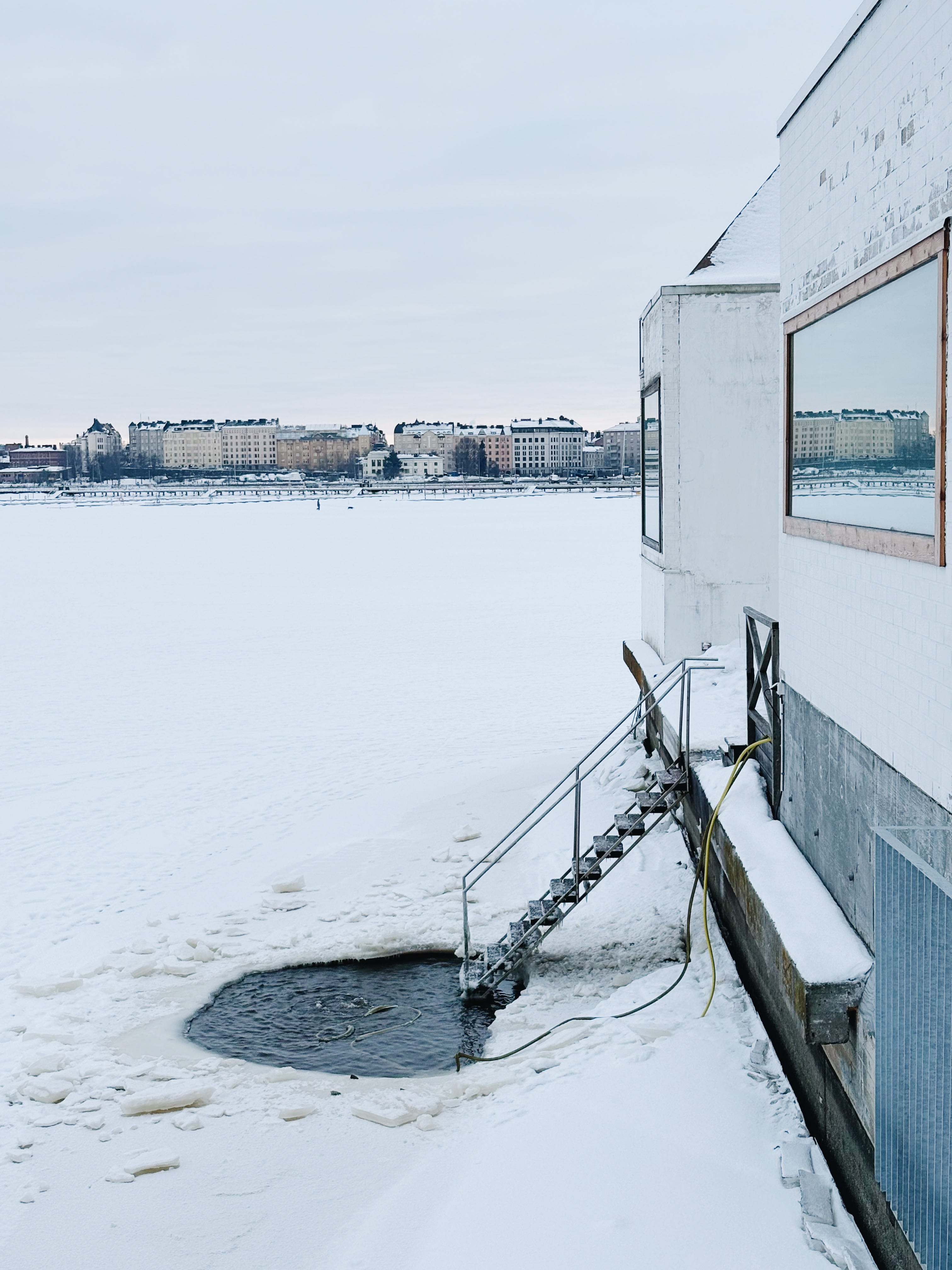
A few days later, once the other editors had gone home and I was exploring Helsinki alone, I booked another sauna. This one combined Finnish and Japanese elements: a simple but incredibly stylish cabin perched on the edge of the city, all white walls and exposed wood and bare concrete. It was a naked sauna, the woman behind the desk explained, and I nodded as if this were something I encountered all the time. Separate saunas for men and women, but no swimwear allowed. No talking allowed either. I wondered for a moment whether I’d changed my mind, and decided I hadn’t. This sauna was hotter than the first one, so hot that your throat prickles when you breathe in. I tried not to think about the climate crisis and reminded myself that I was choosing this: to endure, and to sink into it. It was dusk and the light was dimming quickly, and I realised there was something oddly meditative about the enforced nudity: you close your eyes, because nobody wants to make eye contact with naked strangers. After twelve minutes or so, I found my swimming costume and towel and stepped outside for another cold plunge - only to my waist this time, but just as electric and delicious. And I repeated the cycle, again and again and again.
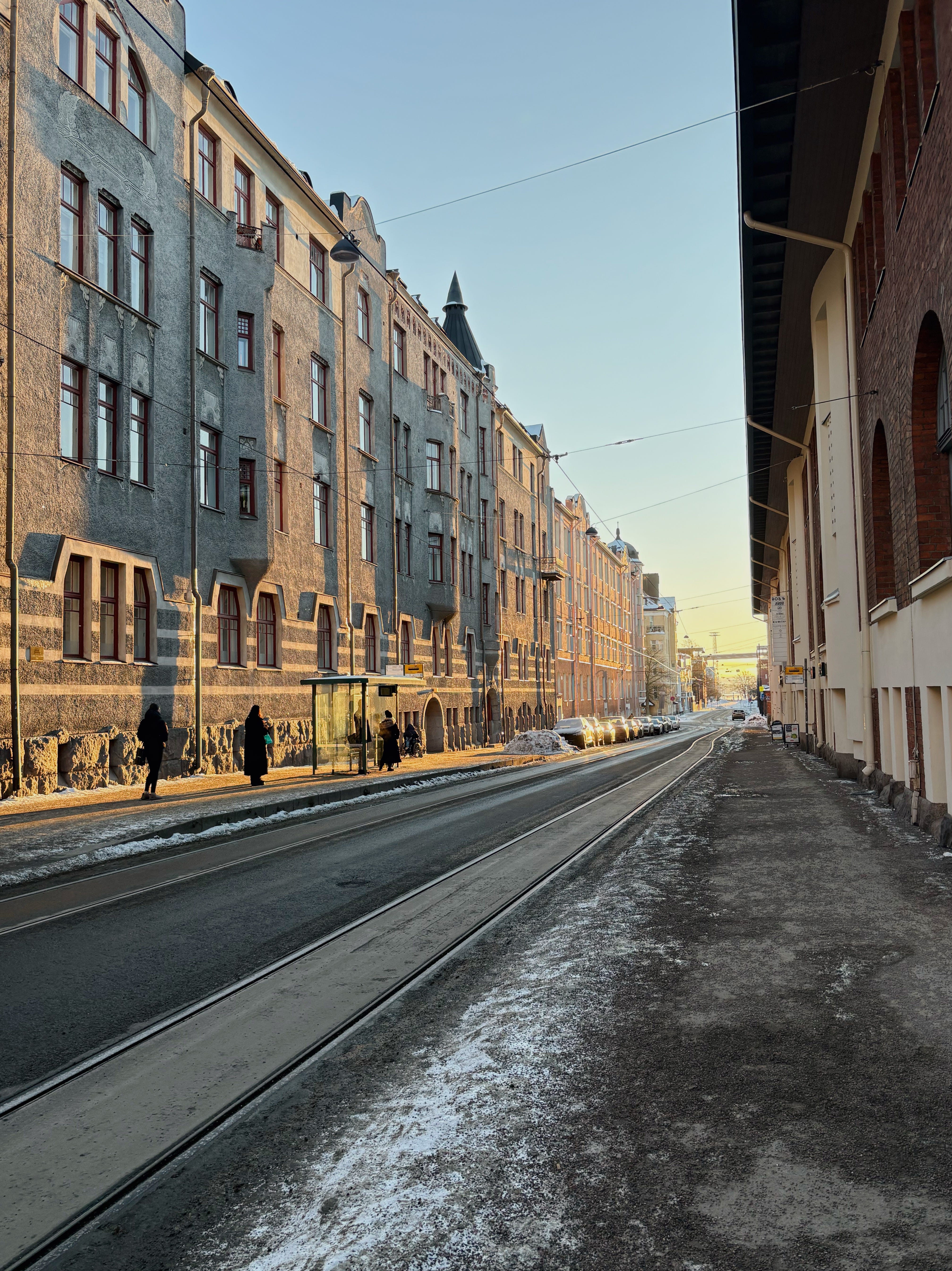
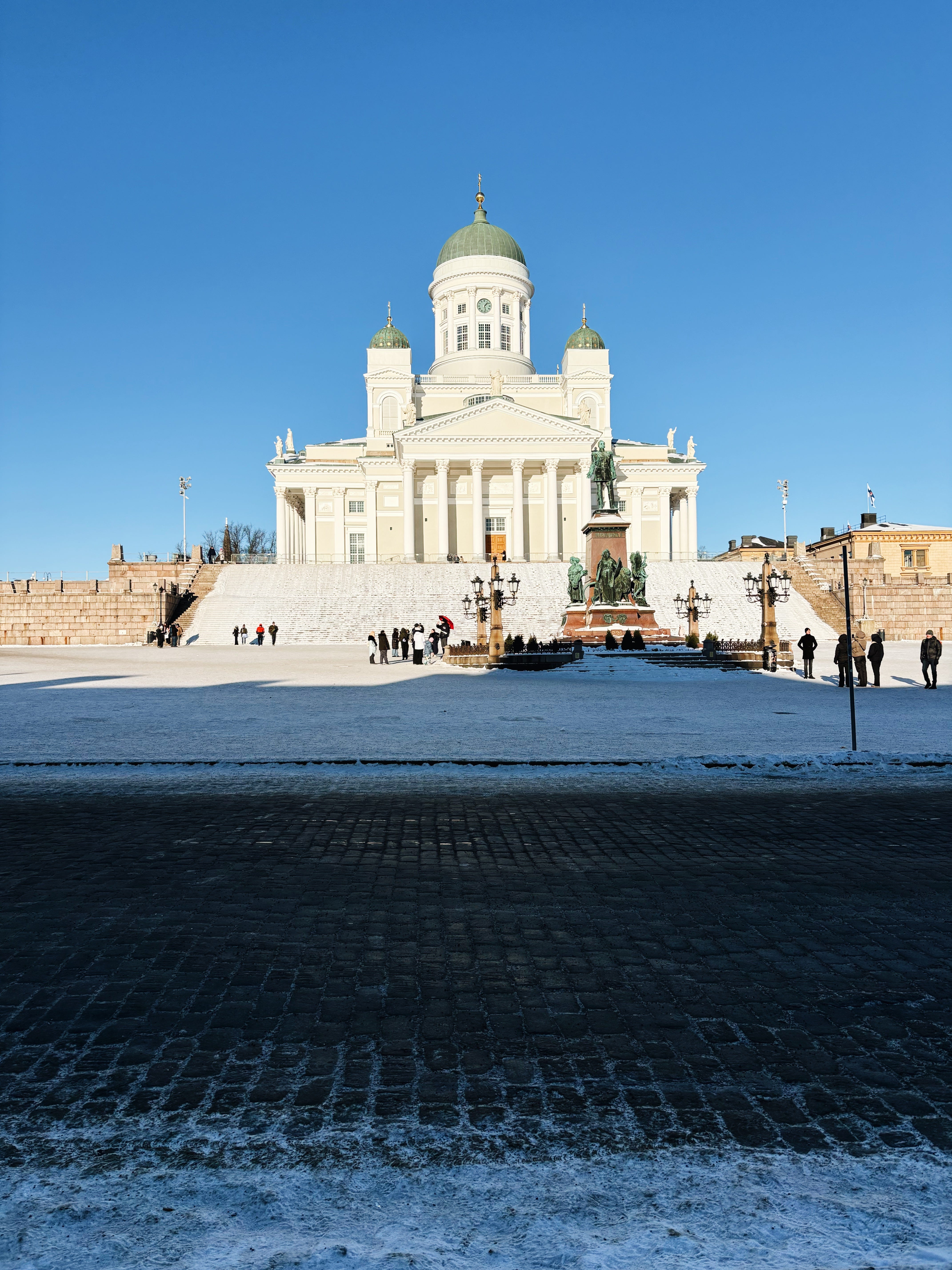
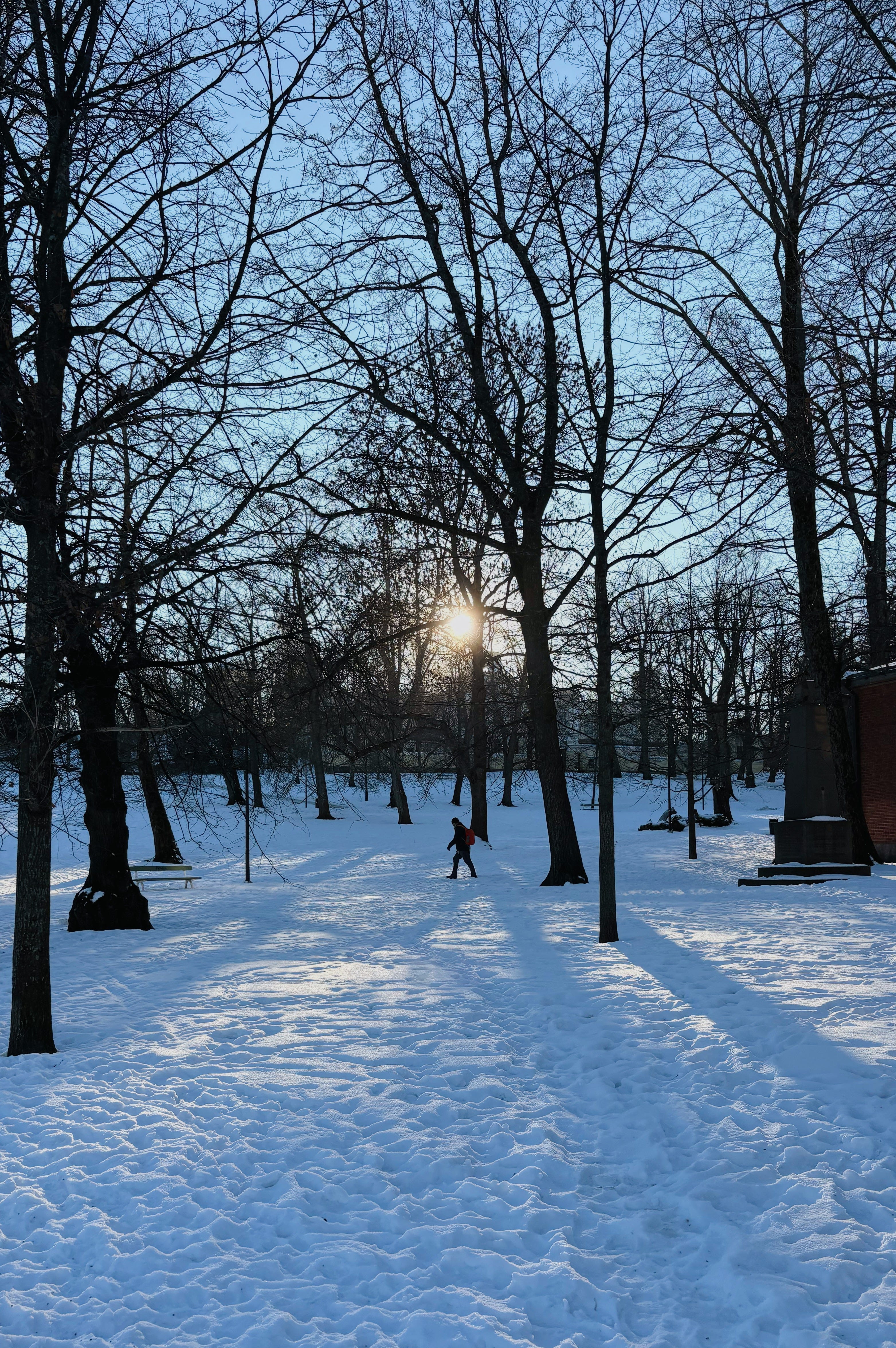
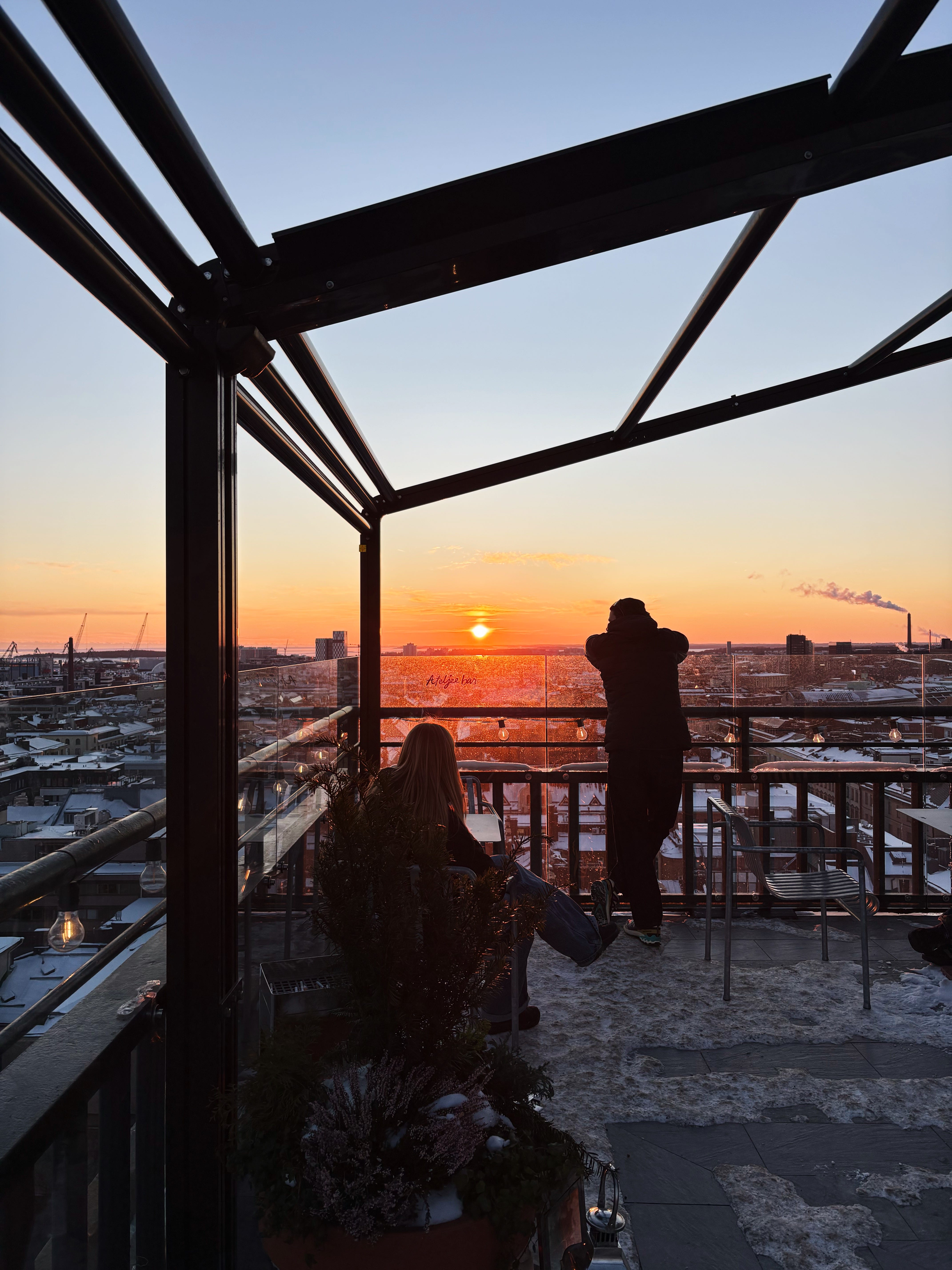
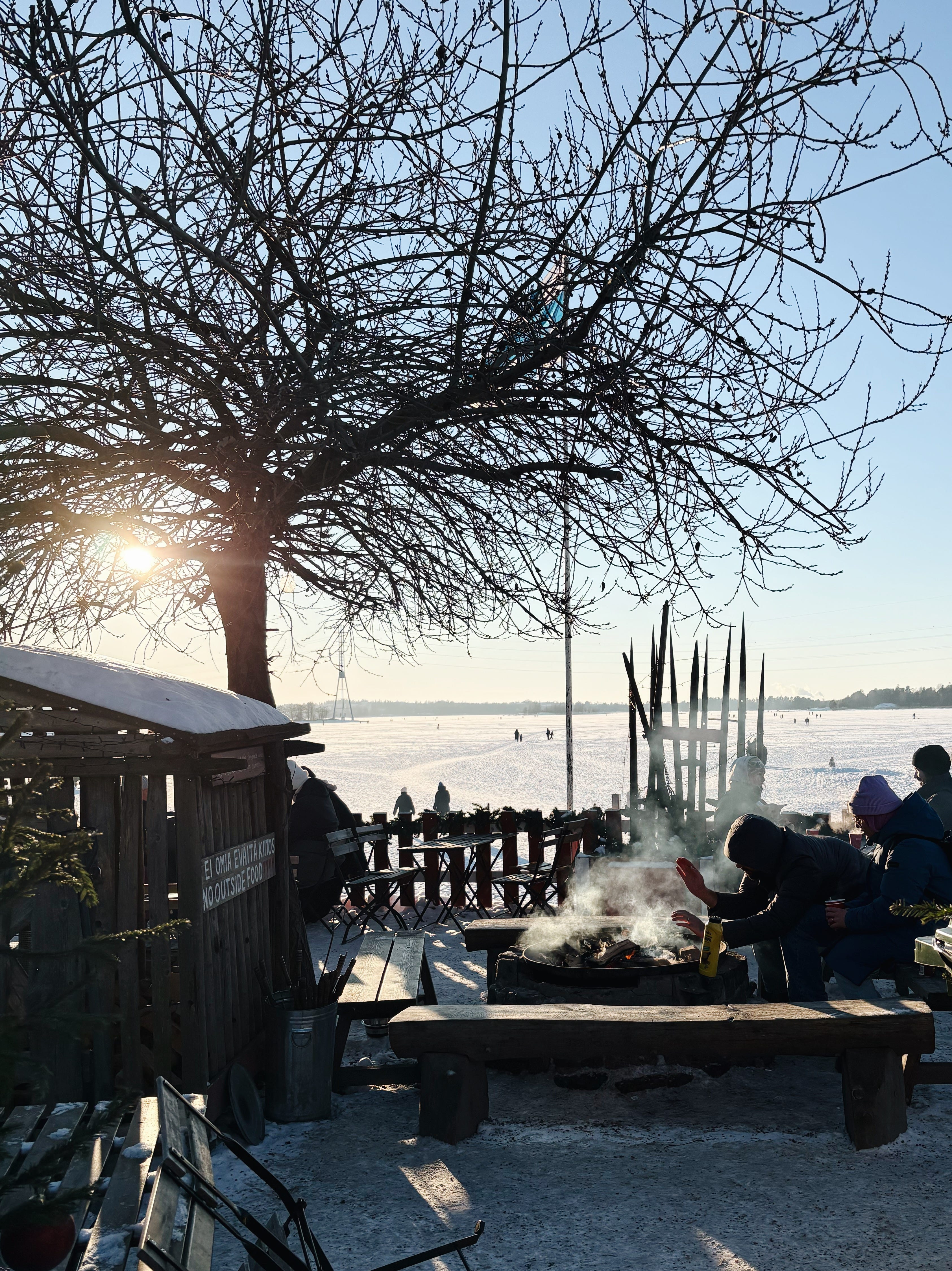
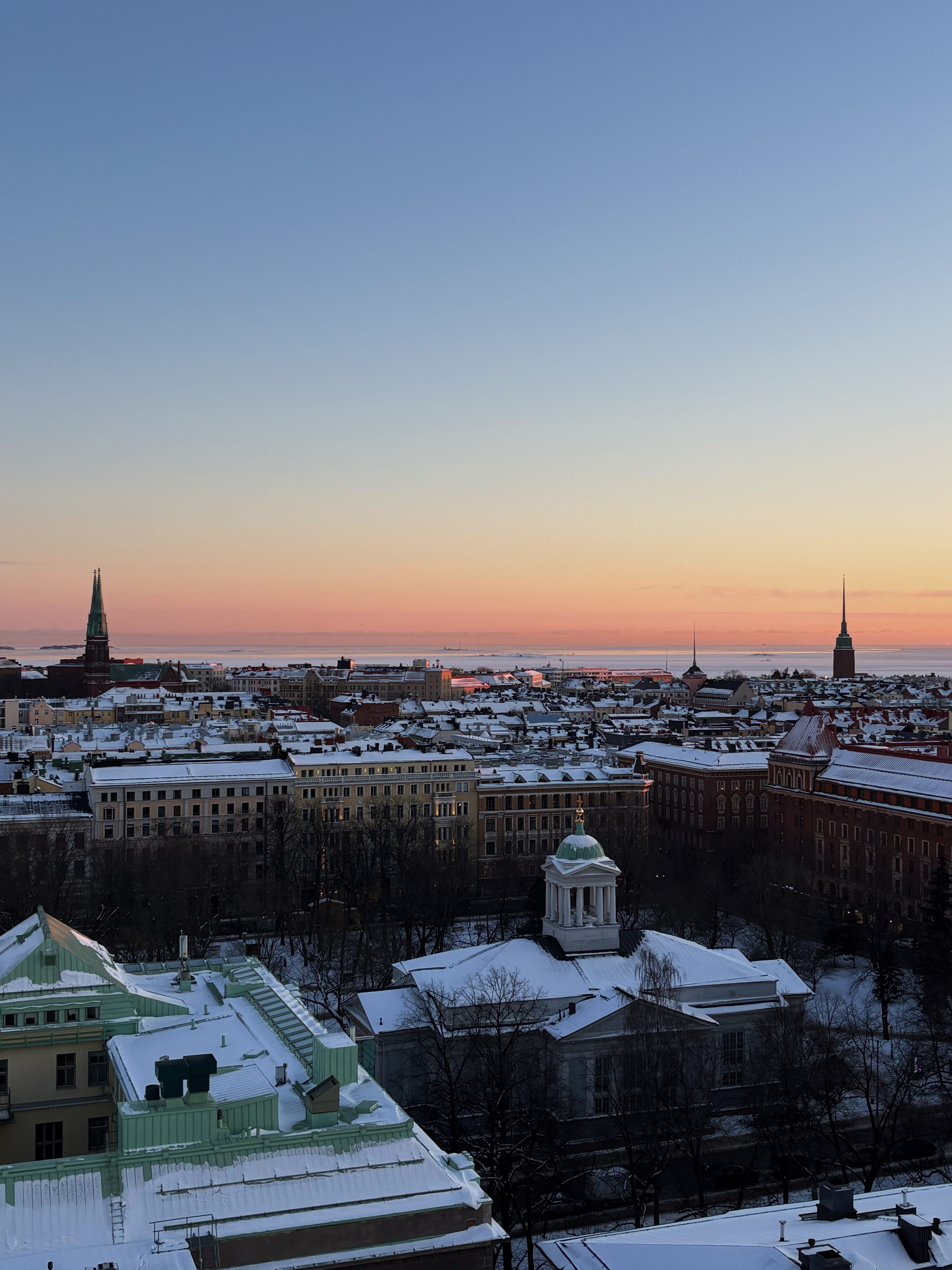
There are so many other things I could tell you about Helsinki. I could tell you how quiet it is: how there are cars but not many of them, and how refreshing it is to walk around a city which isn’t full of aggressive drivers in monstrously oversized four wheel drives. I could tell you about going running in -19c, and how heavy your legs feel with four layers of leggings on, and how you grow icicles in your eyelashes and wonder if your saliva might be freezing. I could tell you how your fingers burn when you take them out of your mittens to take a photo - and how hard it is to resist stopping to take photos of everything. I could tell you about vintage shopping and cafe hopping in trendy Kallio, or the parade of school leavers being driven through the city on trucks in fancy dress, throwing sweets to passers-by, or the way the cathedral dome strikes magnificently against the sky and takes your breath away. I could tell you about the cafe where I spent my final afternoon, where you can buy sausages and marshmallows to grill yourself over an open fire. And I could tell you how sunny it was; how that brilliant blue sky and intense sunlight rejuvenated me after the greyest of English Januarys, how I’d take that kind of brightness and cold over a mild, damp, overcast London without hesitation, how much the sky and snow look like Finland’s blue and white flag. All of this and I’d barely be scratching the surface. I really loved it.
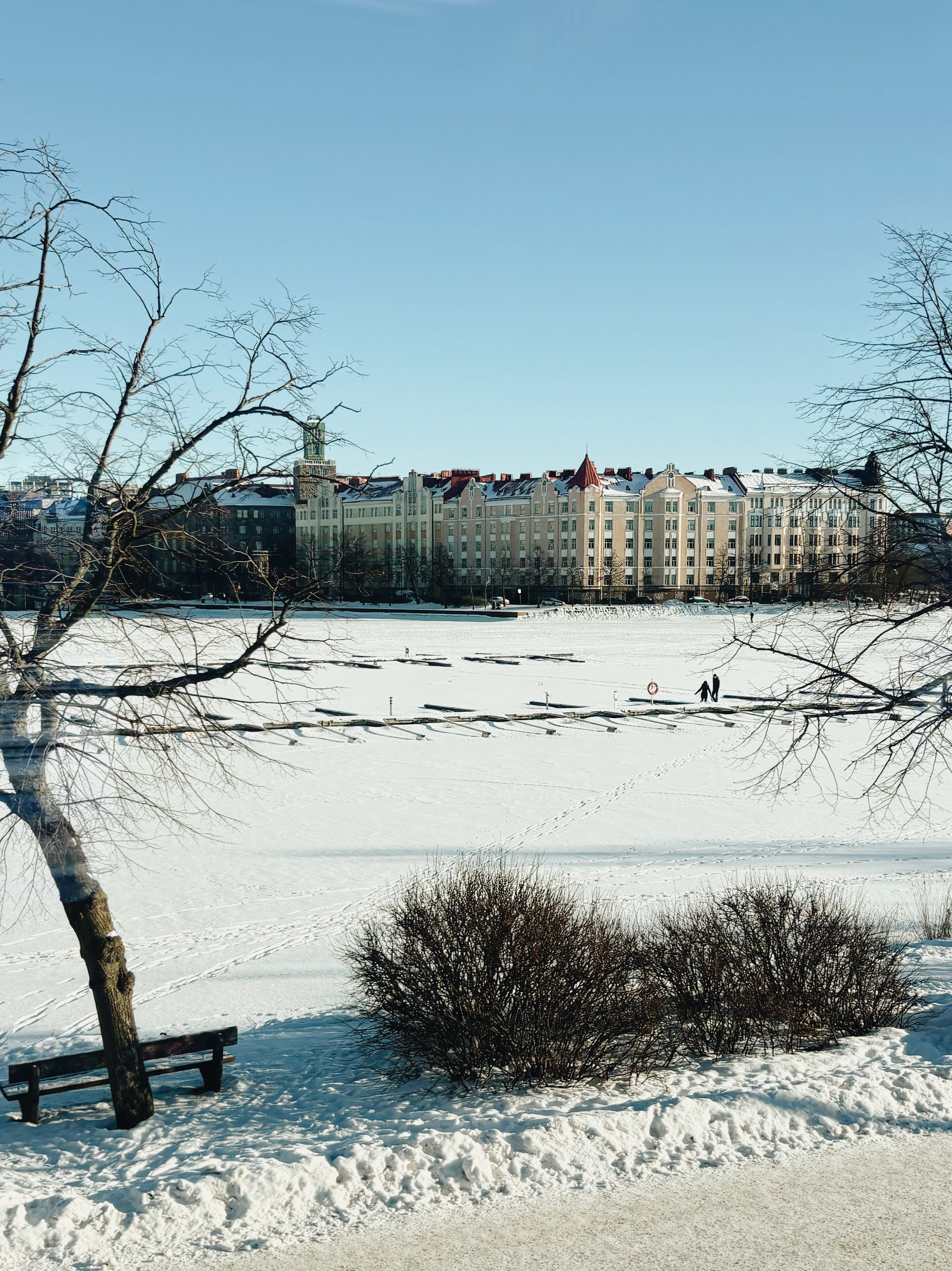
But the thing I kept coming back to - the thing that comes out first, when anyone asks me about my trip - was that frozen sea. I’d later learn that the sea in this part of Europe freezes particularly well because of its low salt content, and that it was an unusually and consistently cold winter even by Finnish standards: you don’t get to walk on water every year. It’s not always like this. Which, I suppose, makes me even luckier.
I saw it first from the train as it pulled into the central station, crossing a bridge over what initially seemed to be a very empty, very flat snow-covered field, until we pulled around a bend that the tell-tale signs - a jetty; a lifebuoy; several boats huddling under covers - revealed themselves. Later that afternoon, I took myself to the central waterfront. The water - the ice - stretched out as far as I could see, brilliant white, glistening in the bright winter sun. I stood, almost breathless, feeling my brain trying to catch up as I took it all in. It really was -15. This really was the frozen Baltic Sea. And there really were people walking on it, far out towards the horizon, as small as ants.
You might also like: Stockholm in January
No posts
Comments
Nothing yet. Say the first thing.
Sign in to join the conversation.