
This week two notable longform features were published that illustrated the cat-and-mouse nature of the media’s relationship with one of its newest categories of celebrity; the tech CEO.
Ronan Farrow’s epic investigation for the New Yorker into OpenAI supremo Sam Altman’s rise and fall and return within the company sought to draw parallels between the man and the obsequious, but ultimately dishonest and maybe even dangerous LLM that made him famous.
The story alleged that Altman had sacrificed safety and morality for money and power as OpenAI grew. Curiously, given it was far more exposé than profile, Altman granted a series of interviews for the piece - although there are probably more flat denials issued by a lawyer or crisis PR (his go-to guy features heavily in the narrative) than there are of his own words.
Altman is part of a new generation of millennial tech CEOs who see celebrity as a necessary tool of the job, which may be why he volunteered to take an active part in a piece that will do nothing for his reputation or that of his company.
Contrast this with John Carreyrou’s equally brilliant NYT feature in which he names Bitcoin’s creator, the pseudonymous ‘Satoshi Nakamoto’ as English crypto entrepreneur-evangelist Adam Back, with an impressive arsenal of evidence.
Back also took part in the piece and is clearly no stranger to the media; being a similar vintage to Elon Musk he’s hardly from a ‘silent generation’ when it comes to CEOs being public figures. Even though his ‘unmasking’ was far less damaging than Altman’s and even flattering in places, Back seemed far more focused on self-preservation than self-promotion. If he is Satoshi, he clearly just wants to be left alone – well known to his crypto tribe where it benefits his interests but anonymous to the masses.
Whoever Satoshi is, Back or not, he is also immutably loyal to the founding principles of his great invention. Altman on the other hand is framed being willing to sell any article of OpenAI’s moral constitution to the highest bidder. One’s an anonymous nerd; the other a flashy, ubiquitous celebrity. Whether there’s a link we might never know.
The Devil Wears Prada is a film that has withstood the test of time for twenty years, its popularity matched only by its somewhat tell-all-esque reputation for exposing the true goings on behind the iron curtain of Vogue.
Based on the novel of the same name by Lauren Weisberger, a former assistant to the titular ‘devil’, Anna Wintour, The Devil Wears Prada has endured as a pop culture staple, with such iconic lines as ‘that’s all’ and Meryl Streep’s infamous monologue about a certain shade of blue (apologies, cerulean) now immortalised through the noble art of memes and short-form content.
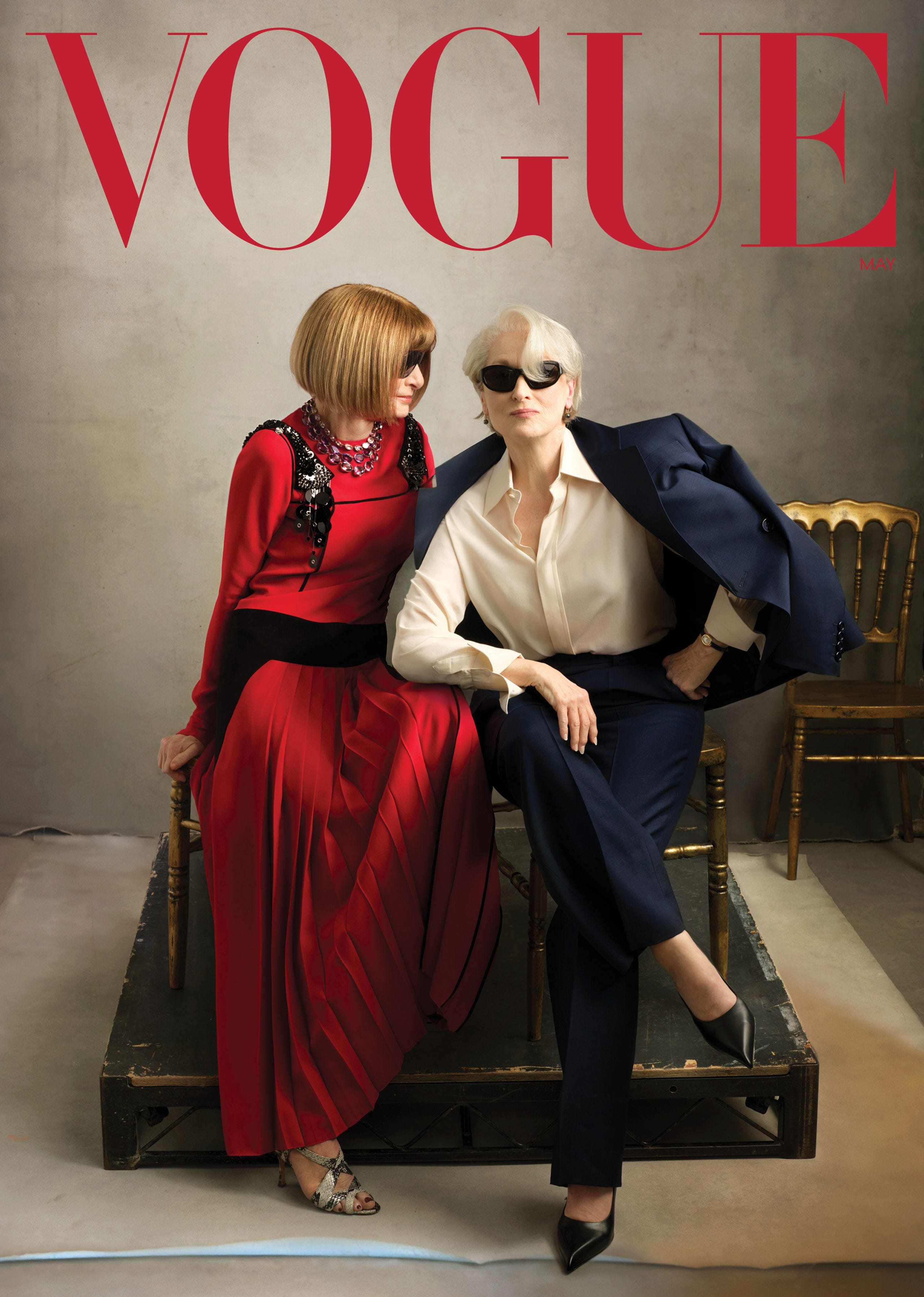
Despite the film’s huge success, Anna Wintour, whom the film caricatures, has rarely given her opinion on it until recent years. In 2025 she gave some rather vague compliments to the cast of the film, remaining ever elusive about how she and Miuccia Prada may have truly felt about the film’s success. It may come as a surprise, then that in light of the film’s highly anticipated sequel, the Devil in Prada herself is taking part in promo with Meryl Streep, even going so far as to grace the cover of Vogue alongside her on-screen counterpart.
Anna Wintour’s Vogue cover is more than a cameo – it’s a power play | Fashion | The Guardian
Anna Wintour has consistently remained a sort of Iron Lady figure in the fashion industry and beyond, just as protective of her own image as that of Vogue’s. But now, to see her lean into a touch of humour and even the faintest hint of vulnerability, it feels like a quietly brilliant pivot. In embracing the meme, Anna has taken the reins of what in 2006 was likely a PR nightmare, but twenty years on is an opportunity to elevate her own personal brand. From the supreme leader of fashion herself, it reads as a master play to diversify and charm new audiences without sacrificing an ounce of dignity or power.
Share Media Trends and Insights by Borkowski
The Iran war has done what years of liberal opposition and the Democratic party could not: break open the MAGA coalition from within. Tucker Carlson delivered a 43-minute monologue calling Trump’s rhetoric “evil.” Alex Jones broke down on air, branding him a “dementia risk.” Candace Owens called him a “genocidal lunatic.” Marjorie Taylor Greene demanded 25th Amendment removal. Trump’s whiplash-inducing policy shifts from threatening to annihilate the Iranian civilisation to announcing a two-week ceasefire, leaving all sides furious. This whiplash approach even has its own name - TACO - ‘Trump Always Chickens Out’, and allegations have been made of deliberate Polymarket manipulation.
Trump’s response to this MAGA backlash was a 482-word Truth Social tirade branding them all “NUT JOBS” with “Low IQs.” Candace fired back, “It may be time to put Grandpa up in a home”, and Alex Jones branded Trump’s actions as signs of ‘dementia’. Democrats sharing the carnage has become the focus of its own set of articles.
Trump built his power by winning coverage in a decentralised media ecosystem, where his MAGA cronies defend his nonsensical rants, even in the face of blatant lies. His approval now sits at 39%. Unable to retain support for his latest despotism from his usual backers, his security blanket of lies and insults has begun to unravel.
The challenge for Trump, whose external comms strategy relies on many a public rant, is that the louder he shouts to disavow his critics, the more he amplifies them. For most leaders, such public sparring and dissent from one’s base would signal a possible leadership challenge (see Keir Starmer). Trump, however, has built his reputation through normalising vitriolic diatribes and petty verbiage; it is likely this latest fight will only cause him to double down stronger, the mechanisms for his removal having already been slyly dismantled.
Comments
Nothing yet. Say the first thing.
Sign in to join the conversation.