
Farage’s Wheelie Bad Idea
When Nigel Farage took the surprising decision to step down as MP for Clacton, he sought a “people versus the establishment” campaign. Instead, he got Count Binface, who is now causing him a serious headache.
For those unfamiliar with Britain’s political quirks, satirical characters like Binface are part of a proud tradition of joke candidates taking a stand against prominent politicians and stuffy politics. It’s a bit of a laugh, and never has one had any genuine significance beyond the odd funny picture or viral interview. But this week, he became Farage’s principal opponent.
Rewind 72 hours, and the picture was very different. Farage led national polls, so his decision to resign was a confusing gambit, especially when he announced he’d be running in the very same seat. However, Farage is at his most potent on a campaign trail. He’s also facing a major investigation by the parliamentary standards commissioner over an undeclared £5m donation from crypto billionaire Christopher Harborne (which could lead to criminal proceedings), an investigation his resignation conveniently suspends.
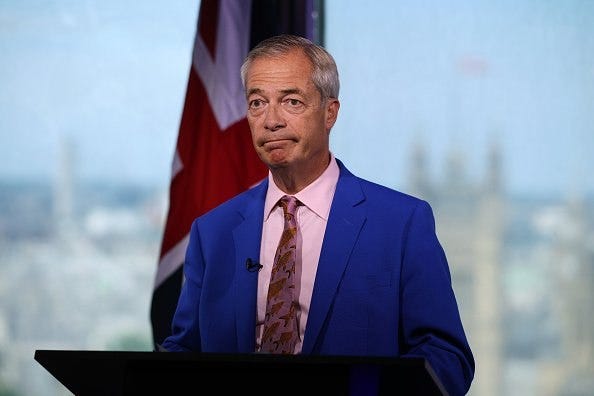
It was a risky move, and all a bit too transparent, prompting critics, including Keir Starmer, to immediately dismiss it as a “desperate stunt”.
While Farage and his team likely accounted for a backlash, what they didn’t account for was all the major parties declining to participate. Labour, the Conservatives, the Lib Dems, the Greens and even Restore refused to field candidates, denying Farage his establishment showdown and handing the spotlight to Binface.
And to no one’s surprise, Binface has run with it - sharp, funny commentary on the national stage, prime TV interviews, batting away the circus with the kind of comic deflation Farage usually deploys on others.
While Farage will almost certainly win, the stunt has demonstrably backfired. The donation questions haven’t gone anywhere, the establishment fight never materialised, and Britain’s most effective political showman has been out-performed by a man with a bin on his head.
There’s a reason it’s not called @garyscommunications
Gary Stevenson has evolved from niche content creator to fixture in UK public political discourse by filling a void longing to be occupied by a left-leaning voice who really understands the big economic forces governing our society.
Gary’s rise to old-school, mainstream fame has coincided with the crystallisation of his economic vision into a campaign to introduce a 2% tax on wealth over £10m, which was the subject of this week’s Channel 4 documentary, ‘How to get filthy rich’.
In terms of building a personal brand and a platform for his views, there’s no denying Stevenson’s flair for self-promotion – driven by an unusual biography (elements of which are contested). And it’s often hard to determine the subjective merits of a political campaign that sits on one side or another of the tribal fissures bifurcating the flow of information in our society.
But even taking into account the self-evident success of getting to this point and the impossibility of getting anywhere close to pleasing everyone, the documentary appears at this stage to have failed in its bid to build momentum, or even serious conversation around the issue.
The right-leaning media has naturally been vociferous in its criticism of Stevenson’s ideas: merging ad hominem attacks with the tried-and-tested arguments against the tax (rich people will leave the country, people who are asset-rich but cash-poor will be desolate etc).
This is predictable and could even be a badge of honour for a left-wing populist, but what’s really damaging is the apathy, even antagonism from the left (and centre).
Neither the Guardian nor FT review – the Graun’s a viral two-star - focussed in detail on the wealth tax itself, but both commented at length on what they saw as (to paraphrase) Stevenson’s off-putting screen presence. Dan Niedle, a contributor to the doc, expanded on previous criticism of Stevenson with some behind-the-scenes detail that may have added to this impression.
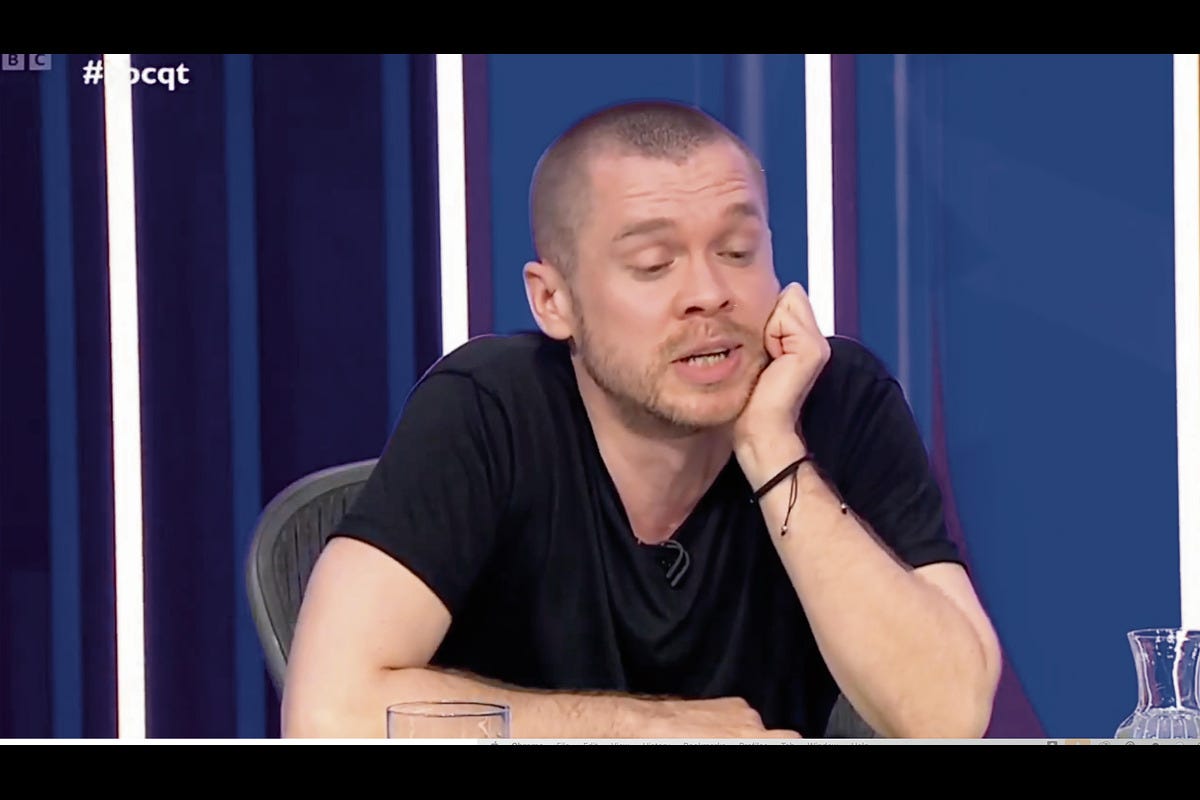
Nor have any significant political figures really thrown their weight behind the idea; pre-Burnham Labour have kept shtum, and even Zack Polanski – a vocal supporter of both Stevenson’s credibility and the tax - has been more focused on Gaza in the past 48 hours.
Perhaps the most damning response to the documentary is that no significant political figures from the right have felt the need to criticise it. If it were a realistic enough prospect or had inspired enough popular support, then its enemies would feel the need to fight it.
Their silence speaks a thousand words about the difficulty of building an idea (and the person who delivers it) from a tantalising glance on social media to something that can survive the full glare of the public.
Get Out of Red Free
Football has never expected its governing bodies to be popular – shouting “REF!” at the TV screen is a worldwide pastime – but it does expect them to be consistent.
Last Wednesday, USA’s Folarin Balogun stepped on the right ankle of Bosnian centre-back Tarik Muharemović. Balogun was shown a red card and handed a one-match suspension.
Normal.
On July 5, FIFA’s Disciplinary Committee announced that Balogun’s one-match suspension would itself be suspended under Article 27, making him eligible to play in the USA’s next match against Belgium. It was the first time this had happened since the automatic one-match suspension for red cards was introduced in 1970.
Not normal.
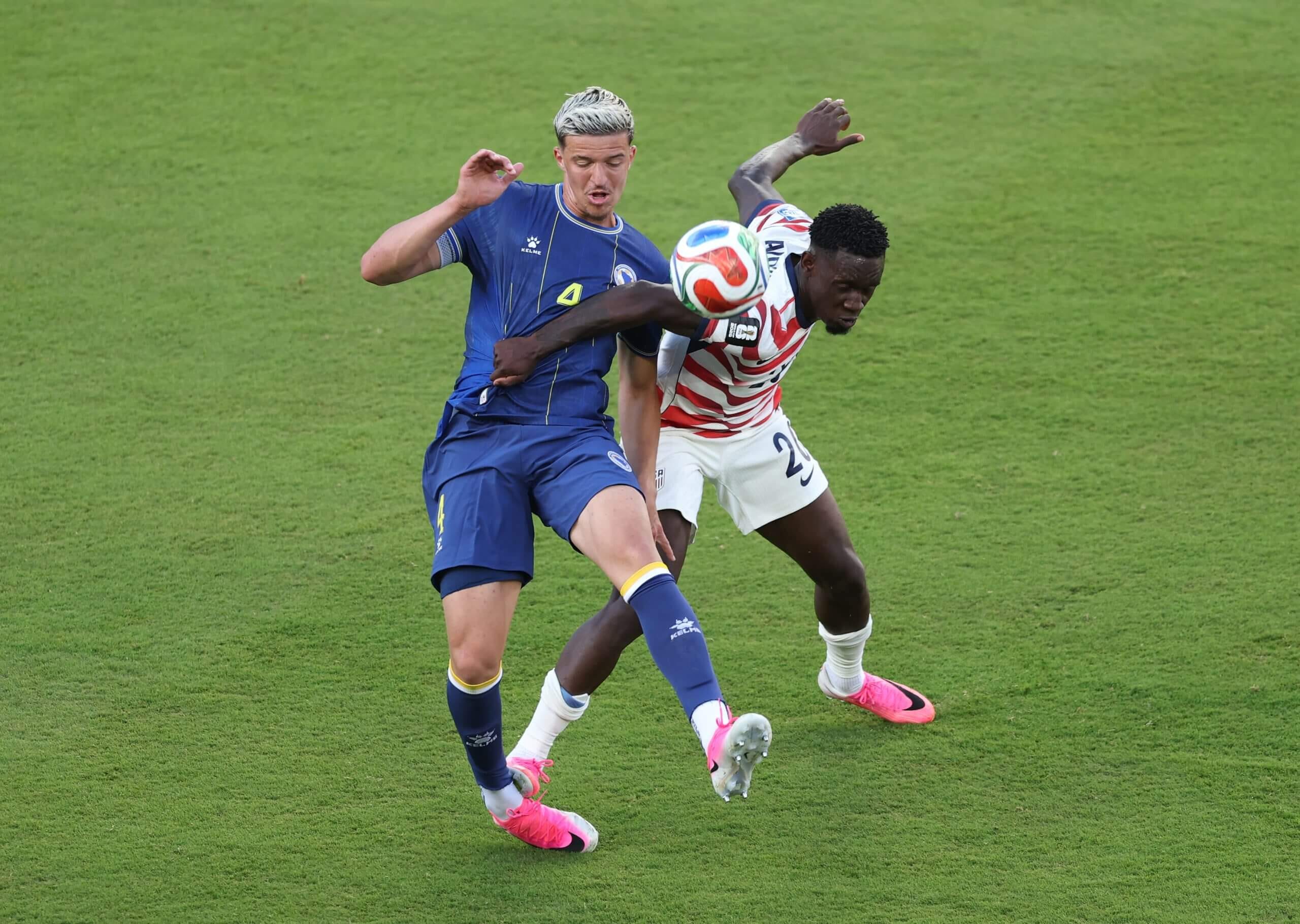
Unsurprisingly, the football world reacted with disbelief, trying to understand the bizarre deployment of Article 27 that FIFA was being so cryptic about.
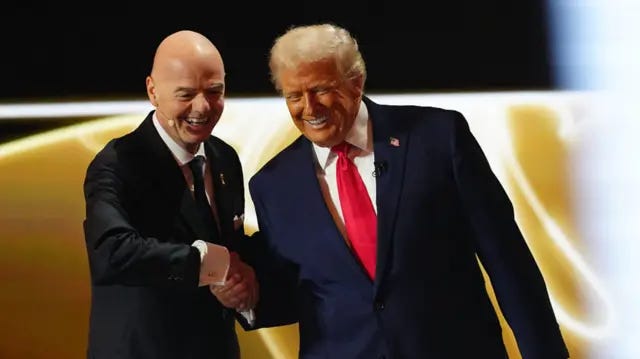
The mystery soon became far less mysterious when Trump spoke from the Oval Office and filled in the blanks. On 2 July, Trump had made a phone call to FIFA president Gianni Infantino. In the President’s words: “All I did was ask for a review because I didn’t think it was a foul. I didn’t tell him what to do. I can’t tell him what to do.” These remarks came in the same statement that saw Trump claim he was “good with this kind of stuff” when deciphering football fouls, despite joking just days earlier that he didn’t know what a red card was.
Meanwhile, England defender Jarell Quansah is serving a two-match suspension after also being shown a red card, with the Football Association accepting there was effectively no avenue for appeal.
The optics of two footballers committing comparable offences, both shown red cards, yet receiving completely different outcomes, have rarely illustrated so starkly the perception that influence can outweigh consistency.
The football world quickly rallied behind Belgium, who duly defeated the USA 4-1. UEFA described FIFA’s decision as “unprecedented, incomprehensible and unjustifiable”.
And yet, for such an extraordinarily visible act of perceived interference, there remains a question mark over whether this will meaningfully damage Trump’s reputation. The consequences of his actions forever seem to receive the same suspension Balogun’s red card did.
How long that perceived influence can continue without meaningful consequence remains an open question. But if this World Cup has proved anything, it’s that Trump will always have his Phone-a-Friend lifeline.
Haaland Crazy
Ahead of Saturday’s England vs Norway quarterfinal, and the aforementioned politics around it all, a well-known figure in English football is taking America by storm. Win or lose, Norwegian superstar Erling Haaland has almost single-handedly carried Norway to an unprecedented World Cup quarterfinal and shown that genuine authenticity, even when it sides on the goofy, is a huge winner stateside, converting an entirely new set of fans in the process.
At a striking 6’5”, with long blond hair and a laid-back, unserious manner, Haaland is a difficult man to dislike - even disgruntled Arsenal fans are having to concede the guy’s alright. With seven goals in only four games, his ability on the pitch is translating into a wave of viral Haaland fever off it. There’s the meme content - dressing up as Santa, posting selfies with “his twin” (a photo of Shrek), and his very public love of Ibiza DJ Solomun’s historic Boiler Room set. He’s even won over the fashion world, sporting a lavish collection of Hermès Birkin bags.
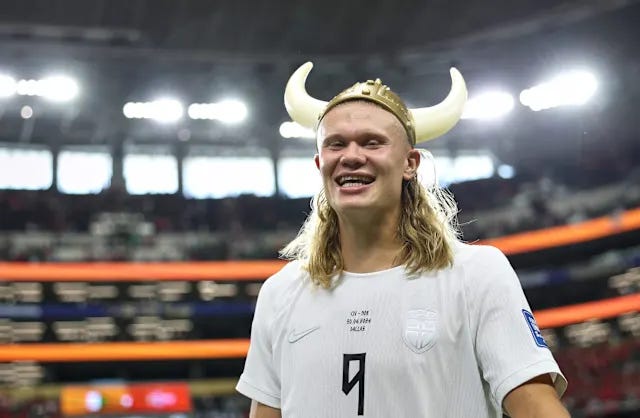
Whether this is a well-structured PR strategy or simply Haaland being Haaland while the world’s media takes notice is hard to gauge. Either way, host-nation fans have fallen for it - the team’s now-famous “Viking Row” celebration, with Haaland at the helm of an imaginary longboat, has become one of the tournament’s defining images, and all eyes inevitably turn to the man rowing at the front.
Comments
Nothing yet. Say the first thing.
Sign in to join the conversation.