
In this issue:
AI: Ass Un-Painer
SAP GUI 8.1 Arrived!
ABAP is Still Not Dead
SAP UX: Another Round
From Truth to Fairy Tale
Thanks for reading The Boring Enterprise Nerdletter! Subscribe for free to receive new posts and support our work.
AI: Ass Un-Painer
The estimable Marian Zeis dropped a neat idea out to the SAP nerds: an open-source SAP RFC library for Node.js with no SAP binary dependencies. I’ve used the non-Zeis RFC library a few times over the years, and through my extensive experience can present this handy reference table:
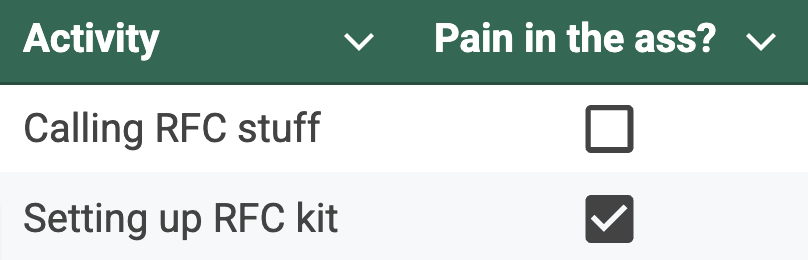
I recommend reading the linked writeup. If it surprises you that AI can play a hefty role in this undertaking, I urge you to catch up on what’s possible these days. Marian calls out that “even with AI, it is hard” - but I would bet my next paycheck that it is at least three times as much effort to do without AI.
Sherlock Holmes this out a bit with me. Marian says that Code Connect 2026 is where he got the bug to do this, and began his first coding session that night. Since Code Connect was July 14-16, let’s be generous and say that July 14 is when he started. The announcement blog went up on zeis.de on August 10. That is 28 days, inclusive of the 10th itself.
Let’s say that, as a dedicated nerd on a side project, Marian spent an average of 2 hours a day on this. I am not sure how much to estimate for this; complete blind guess. That’s 56 hours of effort. Just for fun let’s say he burns $50 in tokens every day. I speculate that this is a high estimate.
That would mean, in this estimate, that Marian spent $1400 and about 7 full 9:00 to 5:00 working days on this re-implementation. Unless step 1 was instructing his coding assistants to hack into SAP repos, he did not refer to the source of the original, nor did he do any kind of de-compilation of binaries. It was all spec docs and iteration. You have to be on some pretty good drugs to not see how game-changing this technology has been and will be.
There’s got to be some non-technical reason(s) that SAP doesn’t remove the pain-in-the-ass of this. Imagine you’re Christian Klein, or some sub-lieutenant 8 layers down in the org. You can point one nerd at this problem for two weeks and a few hundred bucks in tokens, with the source of the old thing handy, and you’ve got the technical implementation of an RFC connector that makes life easier for partners and customers. Why don’t you do this?
The comments on Marian’s post include several of the type “This is awesome but where does this sit with licensing?”. There are a multitude of other possible reasons. Not least of which is that my cost estimate above is only for the source code smashing part of the problem - to make a change like this, you would have to spend way way more time on updating legal things, rewriting documents, and all that. Clearly “one nerd for 2 weeks and a few hundred bucks in tokens” is not the full cost. Probably not even within an order of magnitude.
But another reason I keep coming back to: from SAP’s perspective, supposing there were no other hurdles, it would be a big ol’ case of “so what?” It’s unfortunate to think, but it seems to me that unburdening developers from this pain in the ass would have no impact whatsoever on sales of SAP’s products. Nothing in their brand depends on an idea that developers love to use SAP platforms and tools.
So the benefit of this exercise is that developers’ tasks with RFC don’t suck so much. Ass pain reduced? I’ll take it. PM
SAP GUI 8.1 Arrived!
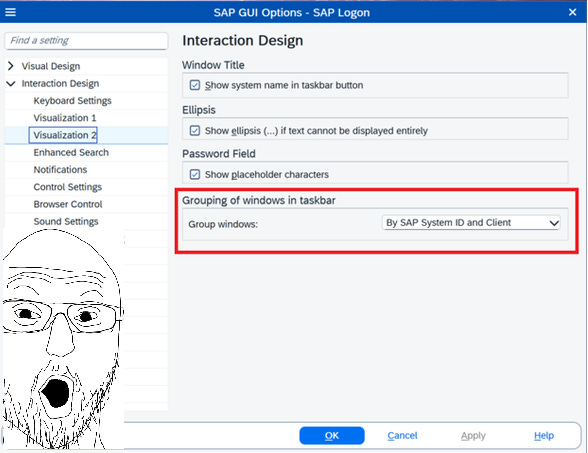
We interrupt our regular programming with a breaking announcement: SAP has released a new version of SAP GUI for Windows.
Version 8.1 quietly adds a truly game-changing feature: you can now group windows by system and client. This works much like Microsoft’s revolutionary taskbar grouping technology, introduced in Windows XP.
LinkedIn influencers were left speechless by this unexpected turn of events. What does it mean? Is SAP pivoting away from cloud and AI and returning to its roots? The stock market received the news favorably, with SAP’s share price soaring in the aftermath of the announcement.
There are unconfirmed reports of early SAP GUI 8.1 adopters taking to the streets in celebration, while riots are reportedly breaking out at Fortune 500 headquarters as employees demand an immediate upgrade. We are currently working to verify these reports.
No doubt about it: this is a glorious day for SAP ERP users worldwide. JP
Enjoying The Nerdletter? Share this issue with a friend, why dontcha?
ABAP is Still Not Dead
ABAP Renaissance continues, and not a day goes by without another post from someone doing something interesting, usually with AI. (There haven’t been any new keywords added lately, which is all well. Seriously, I think we’re good in that department, thanks SAP.)
The best stories are the ones sharing all the challenges and, even better, community members showing up to help. SCN might be dead, but considering quite a few people jumped in with helpful advice on my humble post about outbound delivery functionality, I’d say the real community is alive and well. The only challenge is the platform.
Highlights of the month:
Alok Mehta shares his story of a “good AI” that refused to provide a “confidently incorrect” answer.
Philipp Dölker provides a practical example of off-stack ABAP development.
ABAPConf speaker George Drakos also uses off-stack ABAP in his ABAP Form Translator.
SAP suddenly takes community feedback to heart and delivers some of the ABAP in VS Code improvements mentioned at ABAPConf. Free CVA next, eh? JP
SAP UX: Another Round
We’ve heard a lot from conference stages and SAP C-suite social media posts that “AI is the next UX.” SAP Developer Advocate Nico Schoenteich ventured to explore the subject in his well-written personal blog post. On the question of what this new UX is going to look like, Nico’s conclusion was: we don’t quite know yet. Which is totally valid. And if you read between the lines, the official SAP posts (Exhibits A and B) are also dancing around that conclusion, just with many more words.
The UX disruption is not new in the SAP world. I’m sure many readers remember the Fiori debacle of the 2010s. Fiori was supposed to be the modern UI to end the long reign of SAP GUI. That hasn’t quite materialized, and my theory is that it’s because SAP GUI is based on the GOATed late-’90s design and tech, while Fiori is more painful to use than it should be.
Has SAP learned anything from that experience? The prototypes shown in the posts above raise the same old question: has anyone talked to the real customers? When I zoom in on the flagship example (Return Order), for example, I wonder who needs to see the volume of returns by Plant when deciding whether to accept a return of some bicycles? You would probably want to see what a return policy says or if serial numbers match with what was purchased, none of which needs a graph. And correlating returns with parts used in manufacturing and their vendors would be very useful. But I digress.
And this type of UI is not even relevant for many people who enter data into SAP, such as warehouse or shop-floor workers. That is still largely the RF screen territory. Because it turns out that cheap, rugged devices are better at this job than iPads or VR glasses.
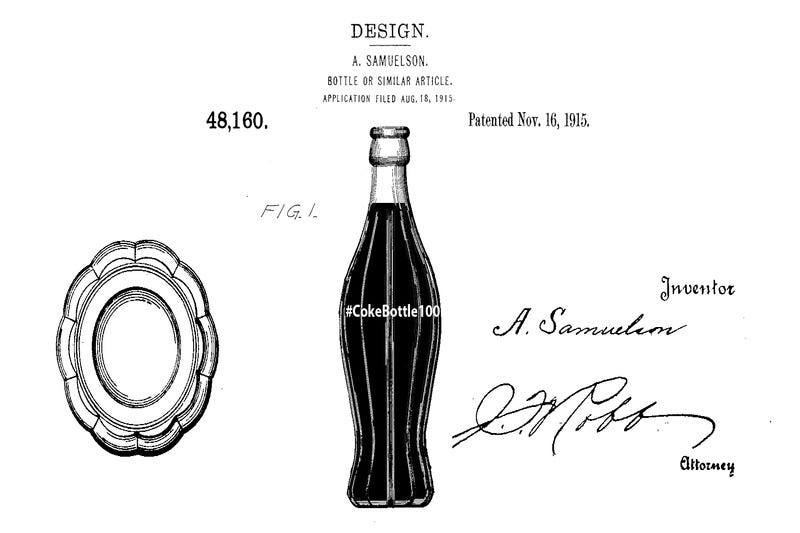
If you look at the iconic Coca-Cola bottle design, you’ll notice that it’s not just visually appealing but also functional: the shape makes it easy to hold a bottle that could be slippery from condensation.
This is the important part that I feel tends to be overlooked by the SAP Design department: utility. Because we seem to be heading into another round of UI that’s neither here nor there, but now with 25% more AI. JP
From Truth to Fairy Tale
Here’s a case where the customer tells basic truths in his words, and the vendor adds some spin that obscures those truths in the story. Alan Jensen, CIO of Salling Group, made a video and gave some quotes to SAP for a story on their news site, “How Salling Group Uses SAP and AI to Improve Everyday Retail”.
Read the print and watch the little video in there. In contrast to the title of the piece, it’s quite clear there is no AI happening yet for Salling, at least not for the cases Jensen describes. But the title says AI is improving everyday retail! No - he clearly indicates they want to use AI for this.
I gotta stop reading these useless things. PM

Watch our Nerdletter Talk 104 for bonus content and a fun chat about these subjects and more. Also, learn something about Russian literature.
Are you interested in sponsoring the Nerdletter and featuring your amazing product? Have a story to share or feedback to give? Get in touch!
This newsletter is always free and proudly written by humans and for humans. Show your support before it’s too late!
Comments
Nothing yet. Say the first thing.
Sign in to join the conversation.