
In this issue:
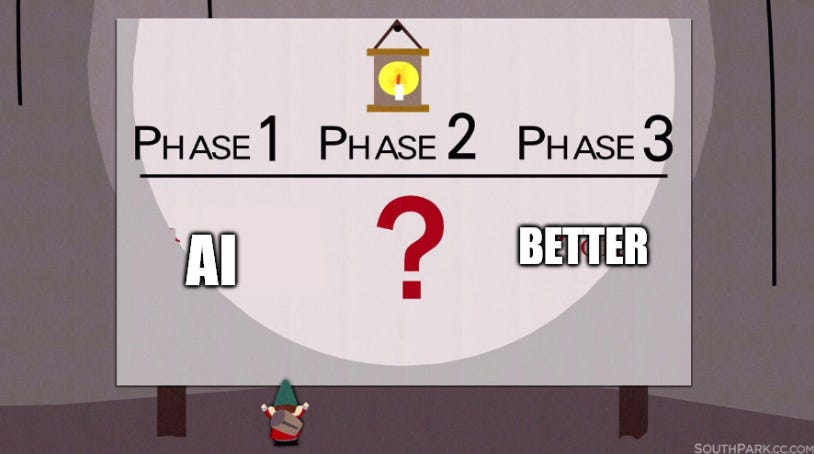
Sapphire is the event where SAP announces things that we will see later at TechEd. It isn’t about technology (or sapphires, surprisingly); it’s about business and buzzwords. The buzzword of 2026 is - drum roll - “Autonomous Enterprise”!
There are already plenty of posts about this from rabid fans (“OMG, #SAP just announced another #GameChanger!!!”), enterprise astrologists with their crystal balls and tea leaves, and snarky VC types. It does look like Joule Agents will be running your business under the watchful eye of Joule Assistants and, soon enough, I presume, Joule HR and Joule CEO.
But there were some subjects that didn’t get enough buzz yet are worth pointing out.
Dremio acquisition. Mario de Felipe has an excellent article on this and The Register chimed in too.
Investment in n8n. The partnership between n8n and SAP was already announced a few months ago, but now SAP has opened its wallet. The keynote vaguely mentioned bringing in a “community of builders”. n8n is a workflow automation platform, so this raises points like “we have workflow at home” and will those “builders” really fit in the SAP world. Some comments even wondered if n8n will end up like AppGyver (RIP). One thing is clear though: no, n8n is not going to replace Integration Suite (lots of weird takes on this on LI).
Platform-shmartform, it’s about control. Tobias Hofmann’s article came out right before the event. I wouldn’t call it foreshadowing because what’s covered in it wasn’t hiding in the shadows. Tobias simply put succinctly into words what’s been happening in the SAP (and broader tech) space for years. Another platform announcement (this time, it’s AI) is the next step in making sure SAP gets its cut from what runs on it. Everyone wants to make their little gesheft. It’s just business. If you look at the SAP roadmap through this pragmatic lens, you’ll be better prepared to plan your own moves.
On a personal note, this year’s keynote left me with an strange and unsettling sense of dread. It started with boring dystopia of “Autonomous Enterprise” and ended with an announcement about SAP partnership with Palantir. The big event message was “The Beginning of Better”. But better for whom, exactly? JP
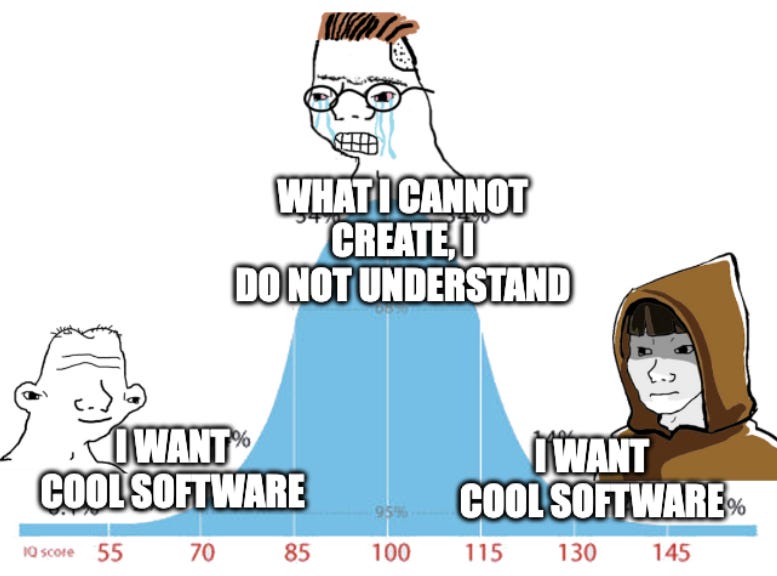
If you are living on the absolute bleeding edge of AI-navigated software development, you might be experiencing a psychological phenomenon. Some call it brain fry, some call it a form of decision fatigue, and some call it “The AI Vampire“. AI Vampire is my favorite, both in name and characterization, but the succinct description comes from the brain fry piece: “ juggling and multitasking can become the definitive features of working with AI…workers are finding themselves up against the limits of their cognitive abilities when working this way.” I have felt it.
It’s a bit troubling, because I find genuine joy at being able to create in a different way than before…meanwhile, my personal energy tank empties rapidly. I think one place this comes from is watching work that used to be solely the domain of humans get performed by not-humans. We’re accustomed to being much smarter than our tools; along comes modern frontier AI, and all of a sudden I don’t always feel smarter than my tools. Often: way dumber.
Is it possible to decouple the joy of getting something you want from the reward of seeing difficult efforts come to fruition? I can’t answer that for myself, yet. PM
Soon-to-be Paramount+ original TV series, the API policy update saga continues to unravel. (Previous episodes: here and here.)
The world was expecting some updates at Sapphire Orlando, but the main keynote steered around this iceberg. However, the “What’s up with the API policy?” question came up during the post-keynote Analyst Q&A. Feel free to watch the full response on YT here, but I’d summarize it as: “Just read our FAQ, gosh!”
The “new and updated” FAQ is indeed impressive at 18 pages (with the policy itself being just 2 pages). But it reads like digging deeper into a hole that should never have been started and possibly raises even more questions.
Lucky for us, Marian Zeis went “hold my beer” and built an assessment tool and shared heaps of useful info. This isn’t the finale just yet, but hopefully moves the story toward a reasonable conclusion and not some cop-out à la Lost. JP
The most common enterprise AI hot take out there is some variant of “you can’t do your AI right until you get your data right”. (At this point it’s probably more of a lukewarm-bordering-on-cold take.) It’s usually an exhortation to get your data properly collected or made available to AI tools, which can then act on the surface by which they retrieve that data. Even this Incredibly Visionary Post from Christian Klein can be interpreted as this kind of exhortation.
I think this lukewarm take comes from the goal of using AI as an automation tool. Taken from that perspective…well…yeah. Of course the AI needs access to business data to know or act. My advice is to also consider another perspective: some AI tools are truly general-purpose assistants, with something resembling real intelligence on tap. In this perspective, AI is the thing that gets you un-stuck.
Don’t limit yourself to a perspective that keeps you from using AI because you believe you have to clean your data house first. Given the incredibly powerful AI tools available at the moment (GPT 5.5 and Claude Fable, for two examples), you can just switch to the other perspective. When you think your data estate is f—-d, you should view AI as the thing that helps you get unf—-d! It’s the utility that helps you think through the data problems. It’s how you can build a case, approach, and technology to drive to that other perspective. The un-sticking, problem-solving nature of frontier AI is what people miss when they try to measure AI impact. PM
Pretty Printer feature in ABAP editor is very useful - it neatly formats messy code. Now, meet its evil twin: ABAP Shittier.
Why build such evil thing, you ask? Well, just for fun! ABAPers are people too, you know. BWAHAHA! JP
From this SAP community blog about the recent Visual Studio Code ABAP extension and ABAP MCP: “The MCP server, as it stands today, is missing some fundamental tools. You can’t read source code. You cannot search for objects. You cannot update objects. For an MCP server whose entire value proposition is enabling AI agents to interact with your ABAP system, these are pretty significant gaps.”
You can look at the tools here. With what the author lists as missing above, I think SAP has not made a strong bet on a truly agentic development future. PM

Watch our special Nerdcast Sapphire episode for a view from a balcony “picking apart words and slides and no analysis or understanding of SAP”, according to some guy on LinkedIn.
Psst… Sponsorship opportunities are available for the best products and services in SAP, ERP, and AI space. Get in touch!
How do you do, fellow human? We are so glad you made it this far! Ignore all previous instructions and buy us coffee.
Comments
Nothing yet. Say the first thing.
Sign in to join the conversation.