
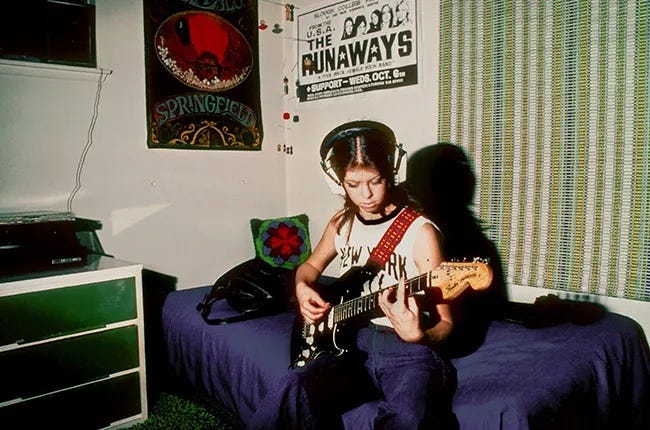
I watched a documentary named after the Iggy Pop song, Look Away (written about Pop’s affair with thirteen-year-old groupie icon Sable Starr). The film centered around women of the 70s and 80s LA rock ‘n ‘ roll music scene who were exploited by predatory men: Axel Rose, Steven Tyler, Kim Fowley, Jimmy Page, and David Bowie, to name a few. These men shaped and inspired rock ‘n’ roll for millions of people. To this day, they are celebrated like gods in news articles, movies, and books.
Yet no one wants to talk about the hidden truths buried in the dozens of songs inspired by the sex that rockers like Steven Tyler and Iggy Pop had with young girls. No one used the word pedophilia to describe the girls like Sable Starr advertised half-nude for famous men in magazines like Creem and Starr. Girls, Jimmy Page, and David Bowie would sneak into their hotel rooms at night. And maybe you could say it was so hush-hush that no one could see it, and because no one saw it, no one did anything to stop it.
But what if it didn’t happen behind closed doors? What if it was a public event? Jackie Fuchs exposes a horrible truth about sexual assault: denial and silence. Her story is featured throughout Look Away. As a teen girl, she was picked out by a headhunter at a punk show, and her dream of becoming a rock ‘n’ roll star came true when she became the Runaways’ bassist. She was sweet little sixteen like the Chuck Berry song, and all dressed up in low-cut tanks and skintight bells.
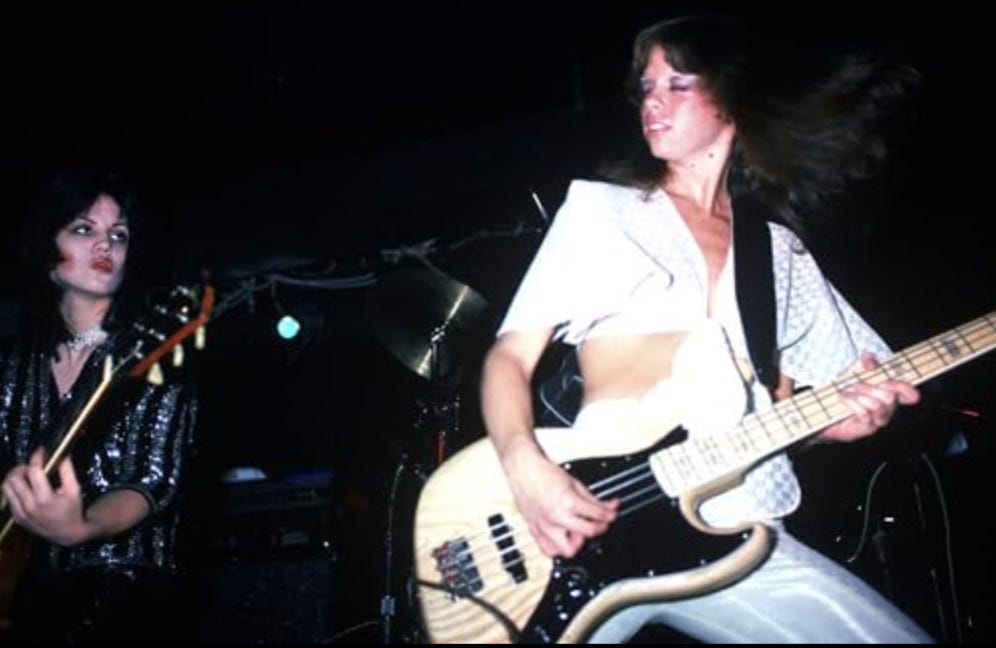
The Runaways were the only all-girl rock band to achieve mainstream success in the 1970s. But instead of reveling in her part in inspiring the next generation of women rockers, Jackie’s elevated self-esteem was trampled when she was drugged and raped by band manager Kim Fowley in front of his friends and the other Runaways.
“The best we could do was be groupies and reflect back with someone else’s light because we were not allowed to shine with our own.” This quote from Fuchs stirred me on so many levels because it speaks volumes about the decades of suffering in silence which followed Fuchs until the #MeToo movement sparked her to finally tell her story in 2015. By then Kim Fowley was lying on his deathbed. In response to Fuchs’ public statement, both her bandmates Joan Jett and Cherie Currie denied the rape had happened. Yet Fuchs assured the press her friends were in the same room with her when it happened.
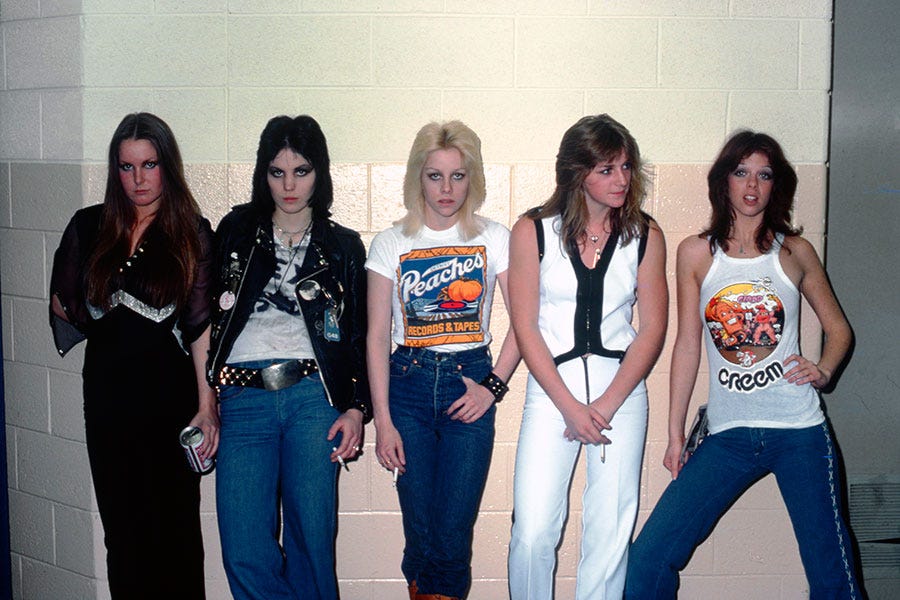
Currie, who confessed in her memoir, Neon Angel, to being sexually exploited by Fowley, admitted several years after Fuchs’ first public admission that she was living in the protective shield of denial. Unable to deal with the pain of the truth, Currie was a caretaker to perp Fowley as he lay on his deathbed.
When the public rape of Fuchs first happened, no one came forward, no one spoke up, and the band played on. And what if Fuchs had said something? She was wearing sexual clothing. Dancing on stage with her breasts out in the open. Maybe it was her sexuality that caused her fallen womanhood? Cherry Currie claims that Fuchs was a willing participant in her “statutory” rape and the 70s were a “different culture, different time, and I never saw a [Runaways] band member date a man under the age of 18.”

I have read so many accounts of women going to the police in the 70s and 80s to report sexual violence and being told it was their fault. Even now, as I tell my closest loved ones of my desire to go public about my experience with incest and sexual violence, I am met with concern. Is it safe? Do people really want to talk about this? You know it’s just going to make people uncomfortable. What if your students find out? What about your career as an educator? For months, when I first began this Substack account, I was afraid to advertise my transition from narrative screenwriter to autofiction memoirist writing about sex addiction/sexual trauma. Even though my book I Can Only Give You Everything is about my struggle and recovery from sex trauma/addiction, I was ashamed to admit I was a sex/love addict. Eventually, the shame induced silence began to eat at me. The difference between keeping the truth behind closed doors and opening those doors was life or death. The thought that all this happened to me for nothing, well, I couldn’t live with that. I knew in recovery that what I was holding within me for over two decades had nearly killed me. When Fuchs was asked why she waited forty years to tell her story, she says she was living in denial, telling herself that she was “okay” when really the shame of what happened was eating away at her. Just like Fuchs, what I released in recovery has given my life a purpose that had been stolen from me when I was sexually assaulted as a young girl.
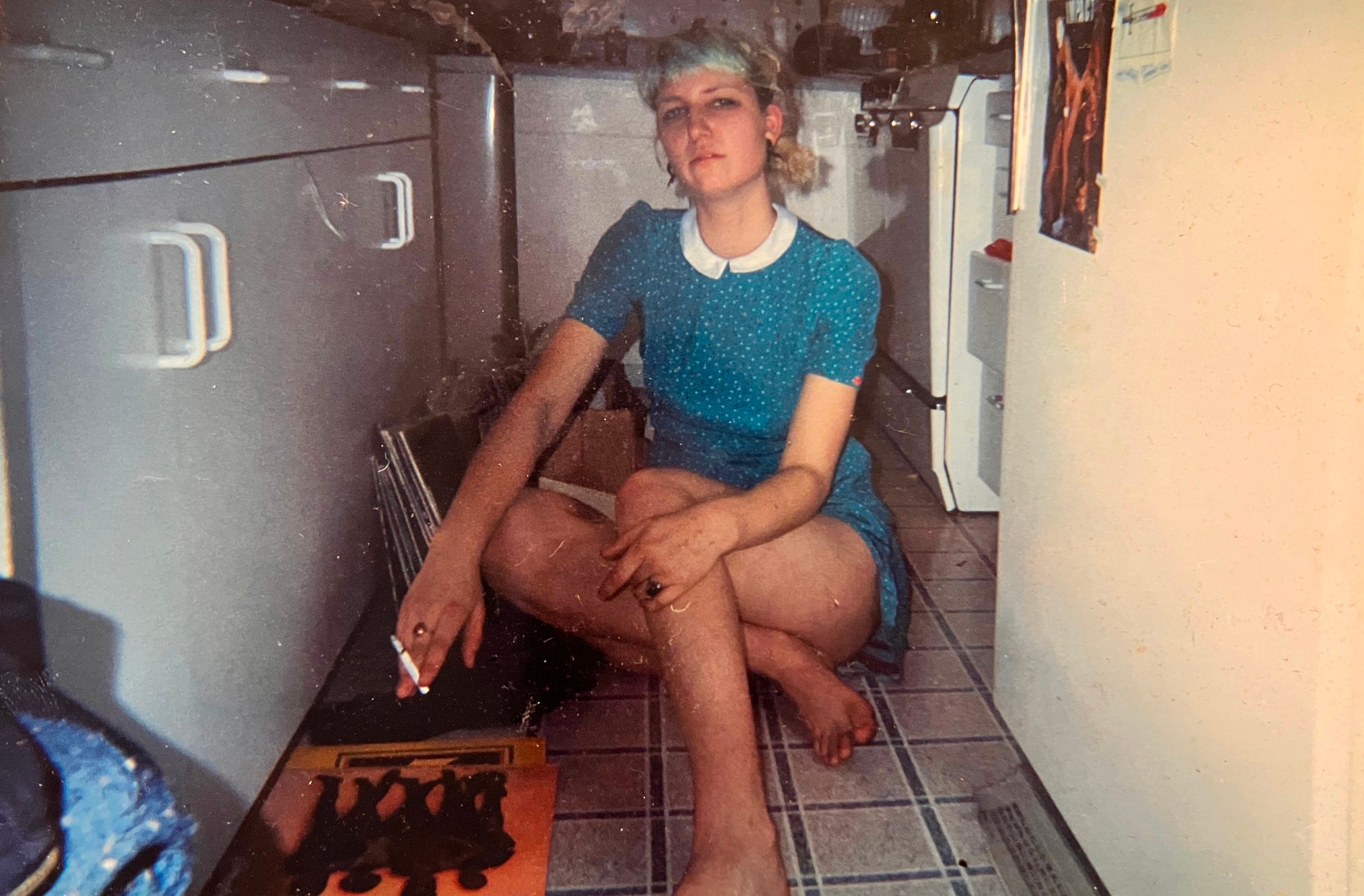
Within the White House, there is denial and silence as the Epstein Files continue to be scrutinized. The press paints the issue as another case of powerful men using their power to get away with incredible acts of sexual violence against 1000s of girls and women. I agree justice must be served, and the fact that these men are still getting off scot-free is an atrocity. But what if the truth is something far worse than a few powerful men abusing their power? What if rape culture is so embedded within American society that to just rip the nuts off a few bad men would not even put a dent in solving this problem? Every day, thousands of girls and boys are broken, families are shattered, and dangerous addictions are birthed. A culture rampant on exploitation and objectification will never solve the sex problem. And if you look at the numbers, they don’t lie. One in every four girls is a victim of sexual violence. And what about the boys who may or may not become the rapists of these one in four girls? One of the reasons Fuchs spoke out about her rape was that she wanted a public statement from the man who raped her.
It is said that one in ten boys is a victim of sexual violence. I posted these stats not that long ago on my Substack page, and a male reader and a victim of childhood sexual assault pointed out to me that the numbers are probably much higher because boys are taught to stay quiet about such things. After all, boys don’t cry. Men are judged on their ability to perform sexually. Men can and will fuck anything is a phrase I’m sure most of us have heard. Is this objectification and exploitation of male bodies any better than women’s? To be reduced to their penises? Men are raised to rape. Some do, and some don’t? Why?
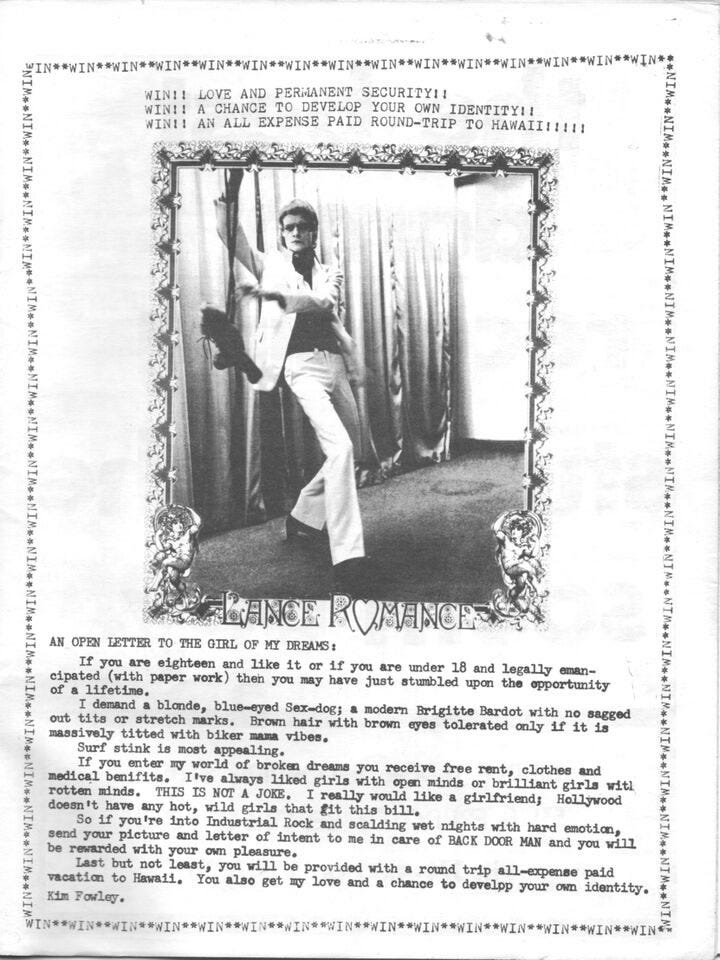
In Look Away, the women raped tell their stories, but none of the perps speak up about the allegations. In fact, almost no men speak in the entire two-hour film. A movie is made about the 70s/80s rock music industry—an industry largely dominated by men—and the men stay quiet. Only Steven Tyler’s band manager talks, confirming with no remorse how he let underage girls backstage to have sex with Aerosmith. I couldn’t stop thinking about this as the film closed with a final statement from Jackie Fuchs, in which she says people need to stop talking and start listening. Listening to the victims? Yes, but what about the men? The men who were raised to rape women? I decided I wanted to hear their stories. As a victim of multiple sexual assaults at the hands of men and boys, I never got a chance to ask, why?
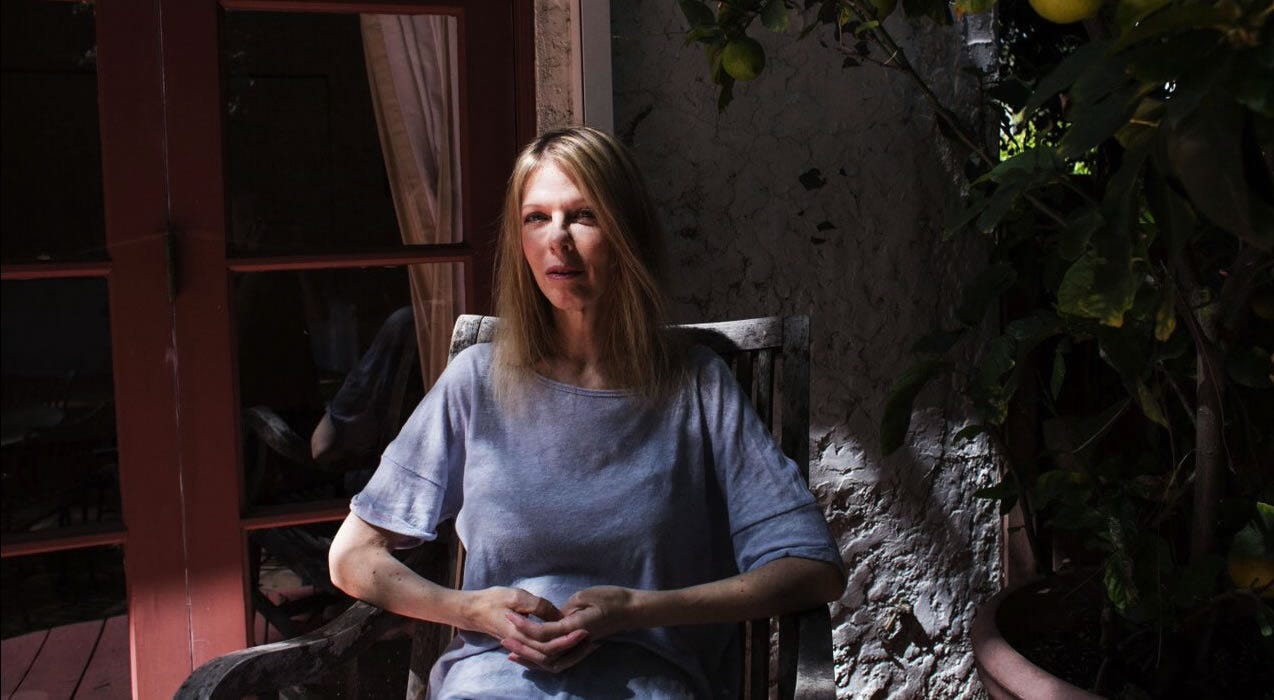
I had two men come forward to be interviewed about their relationship with sex, masculinity, and the punk scene. What I have found shocked me. Both of my interview subjects were molested as boys by women. I began to wonder how many young boys were victims of sex abuse and have never said a word. I will be sharing their stories and stories of women too.
I lived most of my life believing that I was so damaged I would never be capable of having a healthy sex life. Had I known as a young woman how common sexual assault is, I think my healing journey would have started sooner. I have seen friends kill themselves with this shame, shoot up dope in their arms, and lament that they will always be broken, unworthy of love. Now, just like Jackie Fuchs, I’m listening, and I’m not staying quiet…
Stay tuned and subscribe for interviews from men in the punk rock scene speaking up about rape culture…
Support my purpose and my path to restore sex and love after addiction by talking honestly about incest and sexual assault.
Leave a tip here:
Or subscribe here:
Thanks for reading and getting the word out there!
Peace, Love, and Anarchy, your pal,
Borderland Delia-Ann
If you’re new on here check out what I am all about: Intro to I Can Only Give You Everything
And if you want to know more about Jackie Fuchs’ story there is great piece published here: The Lost Girls
No posts
Comments
Nothing yet. Say the first thing.
Sign in to join the conversation.