
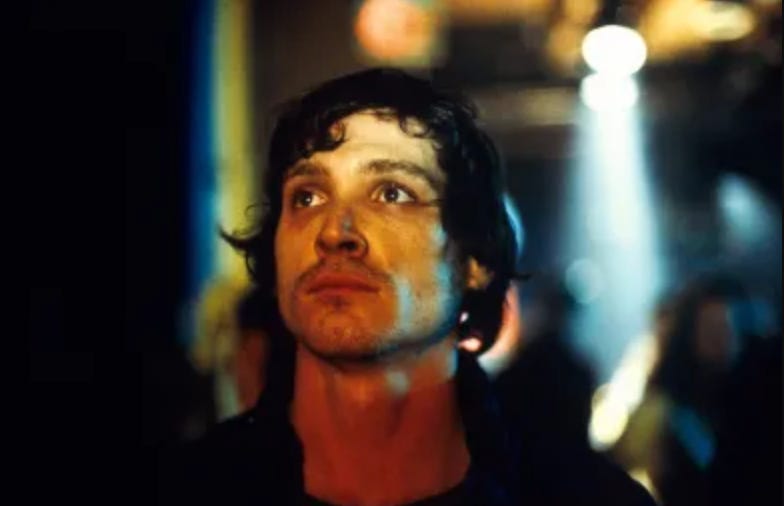
The following is an essay about the holy as fuck experience I had after finding the book Jesus’ Son on the ground while I was in early recovering from alcohol and sex addiction.
If you liked this essay please hit the “like” button and feel free to say “hi” and discuss your own experience with this book in the chat. Live free and prosper!
Not long after I hit bottom and began attending 12-step meetings for alcohol and later sex addiction, I began receiving messages of the angelic kind. Mostly in the form of words. Words coming out of the mouths of people far healthier than me in 12-step meetings, and words coming off the pages of books I would find on my journey to recovery.
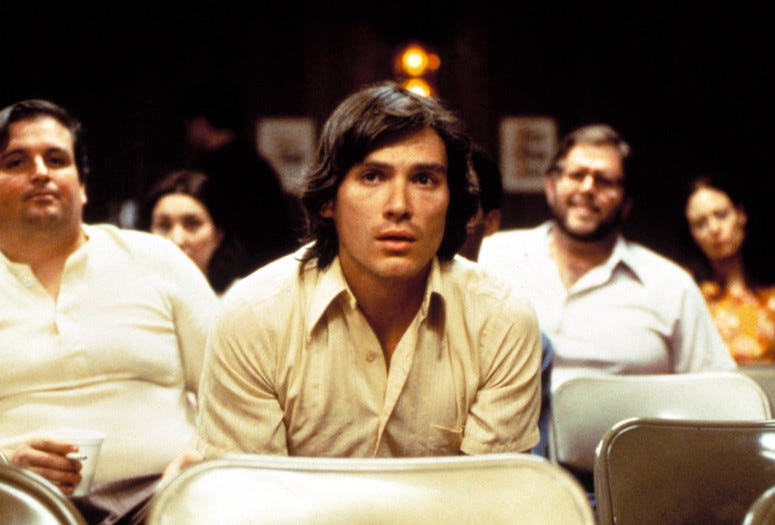
The most significant of these books was Jesus’ Son. Here was a collection of fragmented stories about a heroin addict, so close to death that the spiritual world was always tapping at his back door. It was a book that I found on the ground while walking in 100-degree heat, chain-smoking American Spirits so that I would not go to the corner store and buy a bottle of wine. It was a book that described addiction as the path to redemption. For within the tales of abortions, heroin overdoses, and car wrecks on speed, there was the recognition of the non-dualistic world. The spiritual world, which never shamed the addict but instead gave just as much grace to a shirtless junkie hitting his girlfriend as it did an innocent baby dead in an instant in a head-on collision.
It was through this book that I learned to forgive the most terrible offenders in my life. It was lines like, “I’ll never forget you. Your husband will beat you with an extension cord and the bus will pull away leaving you standing there in tears, but you were my mother” (66), that showed me how to forgive my own mother for letting her men abuse her and me. It was the raw, untethered violence and the crackling, unapologetic humor of Jesus’ Son that gave me the courage to write my own fucked up life story, I Can Only Give You Everything.
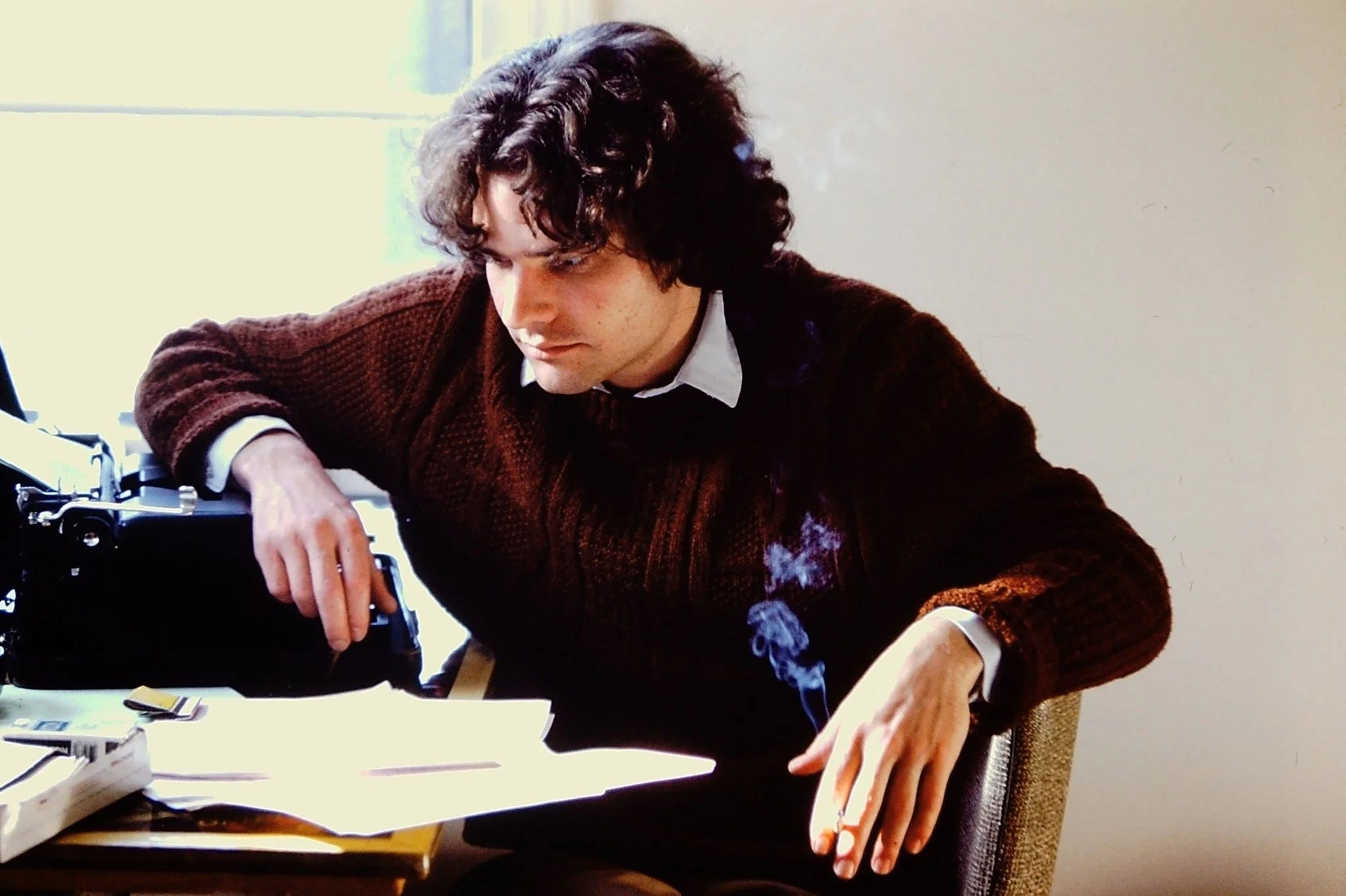
I have read Jesus’ Son over twenty times, and I will never figure out Denis Johnson’s formula. Because maybe there never was one. I once talked to a friend of Johnson’s who told me that Jesus’ Son was a collection of half-assed stories that Johnson never intended to make into a book. One day, his publisher asked him if he had something for them. Having nothing new, he pulled some old drug stories out of a desk drawer and handed them over to Harper Perennial. Johnson never meant to publish this book. In fact, after Angels, he stopped writing about addiction altogether. It was as if he wanted to keep the world of his writing and his life as a recovering alcoholic and addict separate. I can see why. There is plenty of shame in admitting to the world that you purposely gave away your one precious life for the false security of addiction. No one ever says, I want to be a junkie when I grow up. Or someday I’ll wreck my car after exposing my privates to strangers in a bar.
All March sign up for a monthly membership for only $2.50 and support a writer you love while getting full access to some of the most provocative writing on Substack
In a day when half the population is self-medicating on something for one condition or another, it is no wonder that this accidental book became one of the most celebrated shit shows in the American literary canon. And I do mean shit show is the most praiseful way possible.
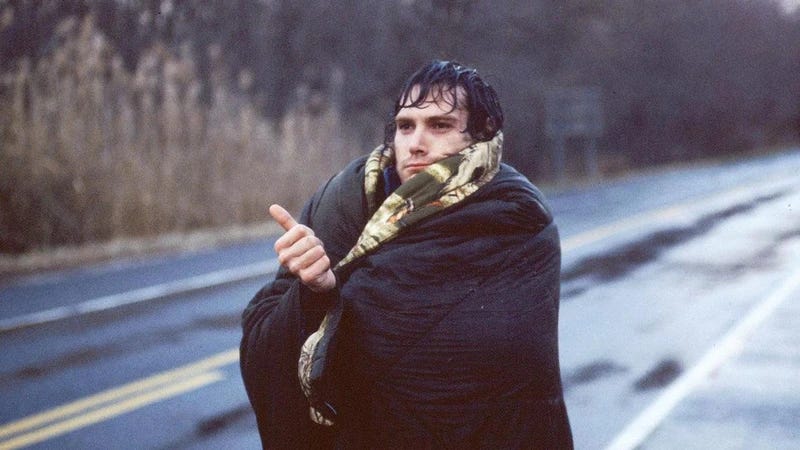
For there is nothing in the world like Jesus’ Son. The utter violence and poverty and deviance within these pages is written in a way that makes the narrator—sarcastically named Fuck Head— into a sort of apocalyptic saint in training. Fuck Head’s world is bleeding and singing and melting like a Sufi dervish spinning round and round on this beautiful, horrible wheel of death and rebirth. Except in Fuck Head’s world, he gets to the Holy of Holies by driving around with stolen pills and dead rabbits in a blizzard, “We bumped softly down the hill toward an open field that seemed to be a military graveyard, filled with rows and rows of austere, identical markers over soldiers’ graves.” In a state of deranged ecstasy with dead baby rabbits in his coat pocket Fuck Head has a vision of heaven. “I’d never before come across this cemetery. On the farther side of the field just beyond the curtains of snow, the angels were descending out of a brilliant blue summer, their huge faces streaked with light and full of pity” (81). Moments later Fuck Head’s drug buddy, Georgie, informs him that he is not seeing angels at all. He is mistaking drive-in movie speaker posts for grave markers and actors projected across the screen for angels of mercy. Yet, even when reality comes back from the fantastical to the mundane, things still appear otherworldly.
‘ “There showing movies in a fucking blizzard!” Georgie screamed.’ (81).
Georgie is right. What kind of lunatic would operate a drive-in in the middle of a snowstorm? This scene and many others made me feel as if I was experiencing the drug-addled ascent of a young, desperate man climbing up Jacob’s ladder from purgatory to heaven.
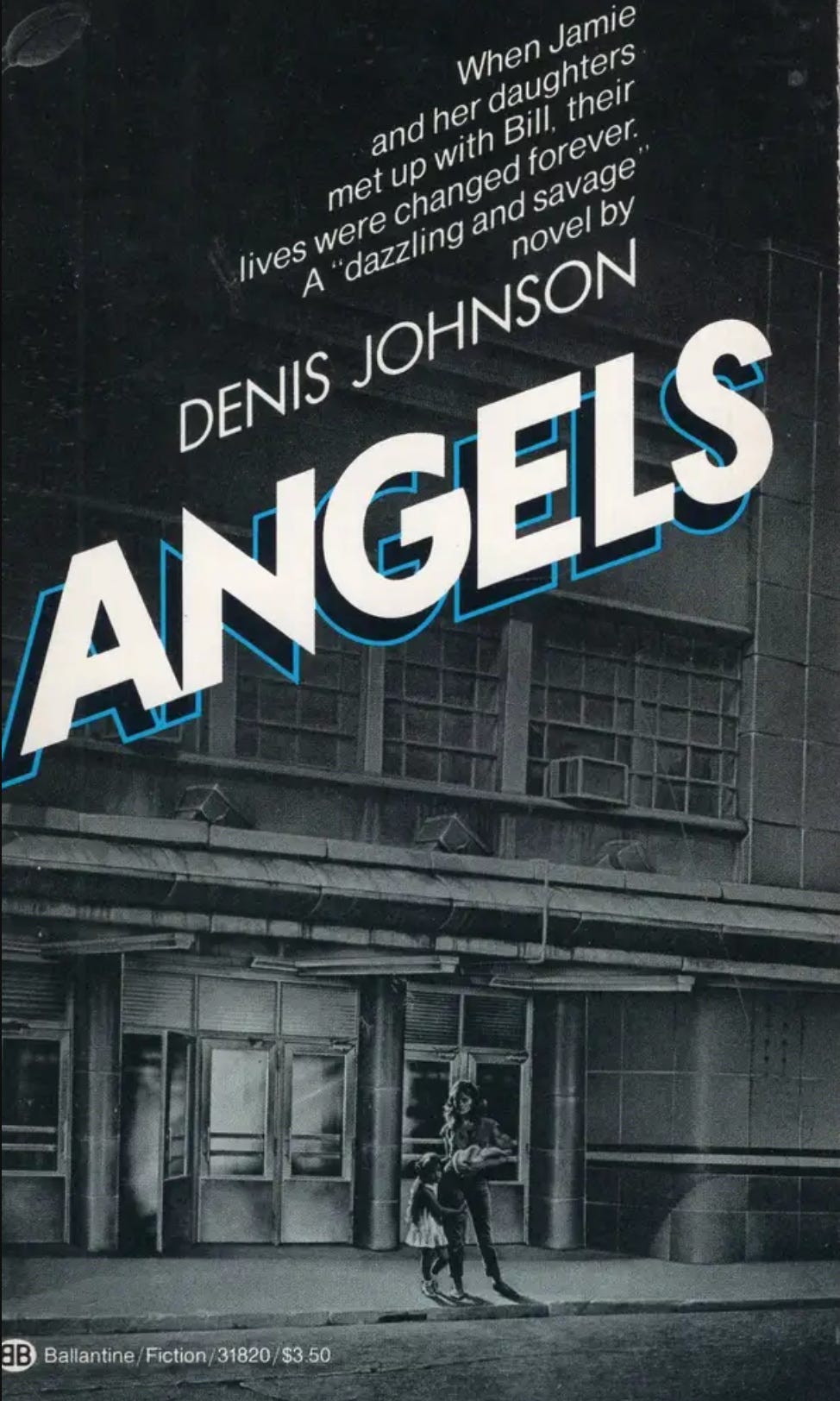
Most reviews of this book don’t touch upon the deeply spiritual connotations of many of the first-person narrators’ bizarre revelations about the inner workings of a world inhabited by drug dealers, convicts, cheating women, and petty thieves. I know from speaking to a friend of Johnson’s that Johnson was deeply spiritual. He dedicated his first masterpiece, Angels, to his H.P., which is A.A. program speak for a G-D of one’s own understanding.
Reading Jesus’ Son, I wondered what the difference was between a Catholic nun flagellating themselves to get closer to G-D and Fuck Head’s friend, Wayne starting a bar fight when he accuses “the biggest, blackest man in Iowa of cheating…for no other reason than that he, Wayne was a bit irked by the run of cards” (63). And how does Wayne end up in such a befuddle? What gives him the stupid courage to accuse a man double his size of cheating? To sacrifice his body, to toss himself away in this way? The bottle, of course. And why do people drink, but to feel good, and forget about how most alcoholics and addicts, as Fuck Head puts it, “felt guilty and frightened, because there was something wrong with us and we didn’t know what it was…” (66).
There is a strange parallel that occurs in the world of an addict. On the one hand, we hate ourselves more than our worst enemy, and on the other hand, we want love more than a caged bird wants to fly. Many of us come from abuse. Homes where our parents were too fucked up on drugs to notice our existence or too poor to offer us physical nourishment. I never met a heroin addict who wasn’t beaten or molested as a child.
In Jesus’ Son, Johnson shows the reader through the trials and tribulations of Fuck Head, that the hopeless search for love and belonging in cheap sex and hard drugs is an unholy pilgrimage to either the biggest spiritual trip of all, death, or the rebirth of hitting bottom and getting sober.
Yet, how does Fuck Head get sober and stop focusing on feeling “guilty and frightened”? He finds G-D, of course. But not in the way one would think. For this holy light that is guiding him throughout the book, in brief drug-addled glimpses, is eventually found in the rooms of other recovering alcoholics and addicts. Because after all, G-D for the alcoholic and addict can never be punishing or condemning. No, G-D for Fuck Head is not shame, it is connection and brotherly/sisterly love for the addict/alcoholic that is still suffering.
I told you before that I have read this book more than I have read any other book. What I did not tell you was why I read this book over twenty times. This book changed my life because it gave me a new outlook on the horrible things I did to myself and others when I was in active addiction. It taught me how to forgive myself, and it taught me how to tell my own Fuck Head story with dignity and wholehearted redemption. It showed me that the way from shame to grace is paved with realizing that even the most despicable and broken of people are redeemable. It showed me there was a place for me, a place in the rooms of other recovering addicts and alcoholics.
“All these weirdos, and me getting a little better every day right in the midst of them. I had never known, never even imagined for a heartbeat, that there might be a place for people like us” (160).
If you enjoyed this essay and want to read more stories and essays about addiction recovery, punk rock and mysticism, “like”, subscribe, re-stack, etc.
You can also support my work buy “buying me a coffee” or becoming a paid subscriber. Paid subscribers have exclusive access to the most deviant and honest stories and essays from the archive.
If you think someone might like this publication you can share with them here:
Peace, Love and Gnosis,
Border Land Delia-Ann
No posts
Comments
Nothing yet. Say the first thing.
Sign in to join the conversation.