

I still remember reading The Old Man And The Sea. I was sitting on a tiny island in a lake somewhere in the Northern Sierra Nevada mountains, my decrepit aluminum boat rocking on its bowline tied to the decomposed granite beach. Hours passed, the sun moved, and the pages turned. The struggle of the marlin and the man ceased, and I lay there on the granite and thought about it, with the sun going down and the water losing its transparent gold tinge and turning a darker blue-black. When the sun sank low, I got back in my boat, fired up the Johnson outboard, and followed the path of the setting sun back across the lake to the ramp. I’ll never forget the book, or that day.
That experience, the rush of completely living through the story, in one sitting, is one of my favorite things about the short novel or novella.
Don’t get me wrong, I like big books. You’ll never find me complaining about the length of War and Peace, David Copperfield, or even Infinite Jest. But at least in my experience, some of the books that have stayed with me the longest barely cleared 150 pages.
That’s the beauty of a small book. It can change your life in a single afternoon.
But, as the premise of Books Worth Reading holds, not all (small) books are created equal. That’s where this list comes in. I’ve created some criteria to narrow down the list; I’m only including fiction (perhaps there will be a non-fiction list next), I’m only including books I have read, and 150 pages is the upper limit, although there’s obviously some variance by edition.
With those guidelines established, here are 10 of the most impactful small fiction books under 150 pages by authors like Virginia Woolf, James Hilton, H.G. Wells and Ernest Hemingway. At the end, I’ll list 7 additional honorable mentions, and I hope you’ll comment your favorites too!
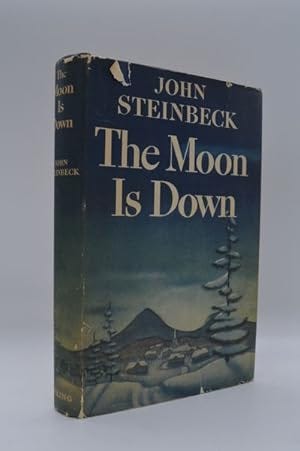
This 1942 novel about a Nazi-occupied town in Norway is a powerful demonstration of Steinbeck’s talent. It takes a master to write about a world-shaking event like WWII while it was happening, and Steinbeck not only writes, he writes with that greatest rarity of wartime values: nuance.
The book opens with the town falling, but the invaders are not cartoons of wartime propaganda. They are tired, nervous men, on edge, but human. A major turning point comes when a miner named Alex Morden kills a German officer after being provoked. The occupiers execute him publicly, hoping to terrify the town into obedience. Instead, his death transforms him into a martyr and strengthens resistance. Steinbeck understood much about the human soul.
“In marching, in mobs, in football games, and in war, outlines become vague; real things become unreal and a fog creeps over the mind. Tension and excitement, weariness, movement--all merge in one great gray dream, so that when it is over, it is hard to remember how it was when you killed men or ordered them to be killed. Then other people who were not there tell you what it was like and you say vaguely, "yes, I guess that's how it was.”
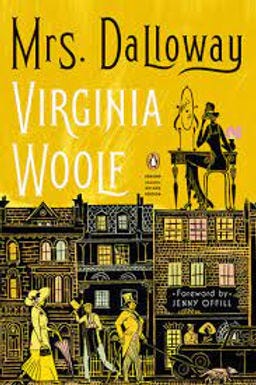
Virginia Woolf lost her mother early at age 13, and there is a theory that her great female characters - Mrs. Ramsay in To The Lighthouse and Mrs. Dalloway - are representations of her mother. If so, what a tribute. Clarissa Dalloway is one of the rare genuinely beautiful older women in literature, beautiful not merely in appearance but in spirit, composure, and taste. Art so often pretends such women do not exist, even though our lives are full of them.
The writing in this short book is perhaps the best in modern literature - limpid, sparkling prose that takes the best of Proust and elevates it even further. There are scenes or vignettes from Mrs. Dalloway that I think of frequently in life; for instance, every time I see a flower shop, I think of Clarissa Dalloway on Bond Street.
“Up in the sky swallows, swooping, swerving, flinging themselves in and out, round and round, yet always with perfect control as if elastics held them; and the sun spotting now this leaf, now that, in mockery, dazzling it with soft gold in pure good temper; and now and again some chime (it might be a motor horn) tinkling divinely on the grass stalks - all of this, calm and reasonable as it was made out of ordinary things as it was, was the truth now; beauty, that was the truth now; beauty, that was the truth now. Beauty was everywhere.”
The next book on the list is about as different from Mrs. Dalloway as you can imagine:
Comments
Nothing yet. Say the first thing.
Sign in to join the conversation.