
There’s something about a river that makes me want to read.
Whether it’s the deep green northwestern rivers like the Rogue or the Klamath, the sparkling gold Rocky Mountain streams, or the turbulent muddy swirl of the Mississippi, the river is the most literary of geographical features. Rivers are beautiful and fickle. They are inviting and menacing. Rivers give life; they take life. They are purposeful in their purposelessness. They are an endless source of metaphor and simile, but are indelibly rooted in earthiness and physicality.
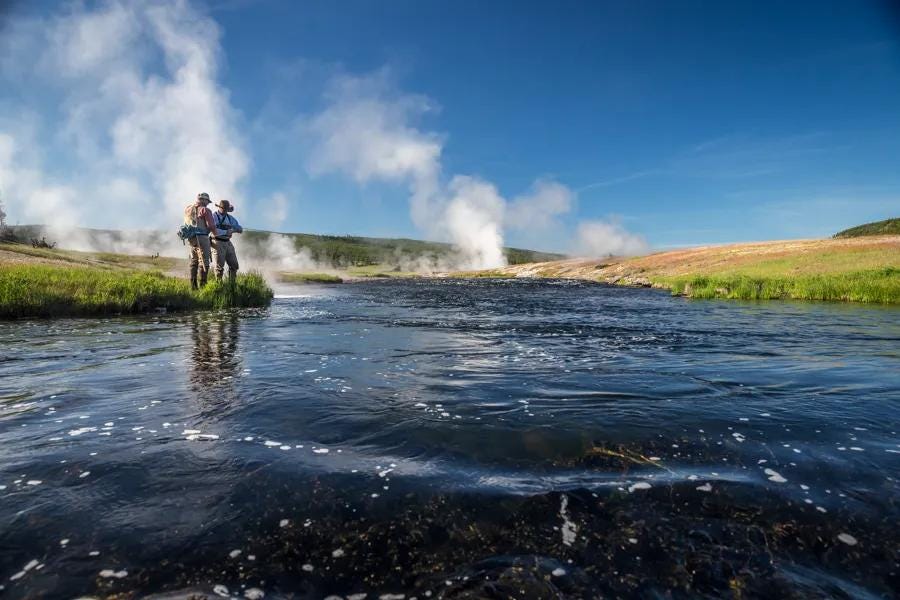
“The headlong stream is termed violent
But the river bed hemming it in
Is termed violent by no one.”
- Bertolt Brecht
It’s summertime, and I refuse to be hemmed in by the cruel mandates of hydrological science. While it is objectively difficult to enjoy books and brooks at the same time, as the water-stained pages of my current read illustrate, I, like Brecht, plan to continue headlong in my pursuit of the perfect river read. And I want to bring you with me.
The following list contains 10 of my favorite river books, as well as some honorable mentions. Some are fiction, some non-fiction, some would be classified as youth literature but are classic and enjoyable for all ages. We have Twain, Hesse, and Hemingway, as well as lesser-known writers like Arthur Ransome, Henry Williamson, Kevin Fedarko, and Norman McLean.
Some of these books are about rivers; some have the river as a character; some merely have a strong “river presence.”
I love rivers; I cannot remain unbiased when it comes to riparian discussions. Thus, this list has no darkly portrayed rivers; no Deliverance, no Heart of Darkness, no The Willows. This list contains no haunted rivers.
Here are my 10 favorite river books.
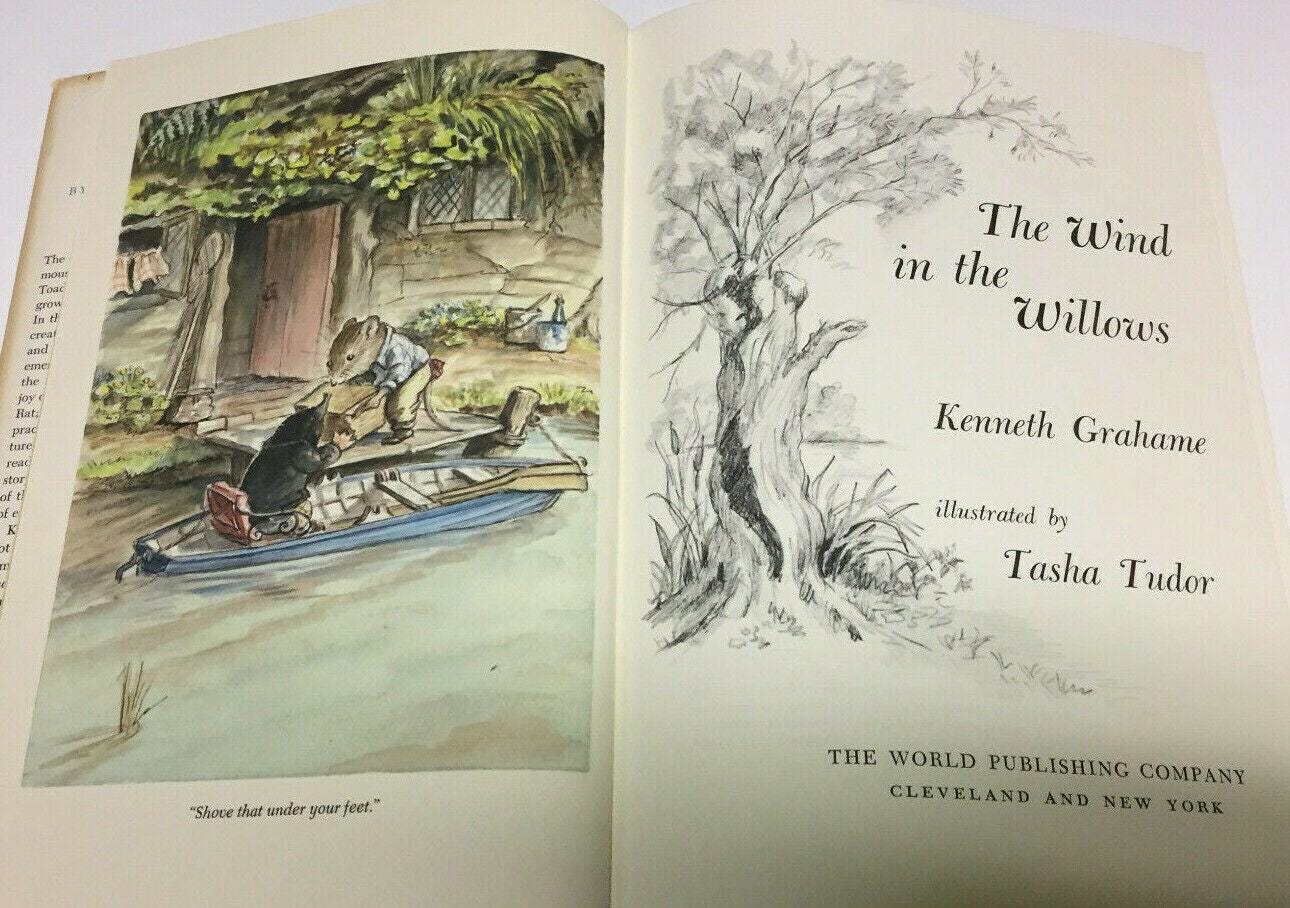
I first read The Wind in the Willows as a 6-year-old. I should say, The Wind in the Willows was first read to me, (by my mom). I loved the story of the Mole, the Rat, the Badger and of course Mr. Toad of Toad Hall.
But re-reading it as an adult, what stood out to me most was the beauty of the prose. Take, for instance, this description of a river early in the first chapter:
He thought his happiness was complete when, as he meandered aimlessly along, suddenly he stood by the edge of a full-fed river. Never in his life had he seen a river before—this sleek, sinuous, full-bodied animal, chasing and chuckling, gripping things with a gurgle and leaving them with a laugh, to fling itself on fresh playmates that shook themselves free, and were caught and held again. All was a-shake and a-shiver—glints and gleams and sparkles, rustle and swirl, chatter and bubble. The Mole was bewitched, entranced, fascinated. By the side of the river he trotted as one trots, when very small, by the side of a man who holds one spell-bound by exciting stories; and when tired at last, he sat on the bank, while the river still chattered on to him, a babbling procession of the best stories in the world, sent from the heart of the earth to be told at last to the insatiable sea.
The story is filled with the magic of the river, and there’s no truer guide for life than the Water Rat’s words: “Believe me, my young friend, there is nothing - absolutely nothing - half so much worth doing as simply messing about in boats.”
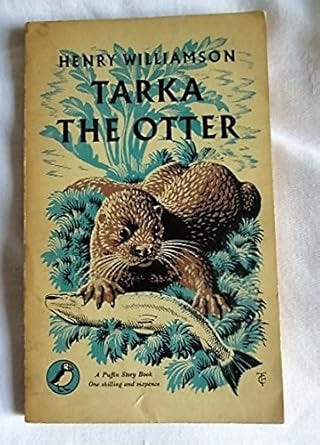
Tarka the Otter is a 1927 novel by Henry Williamson, one of the great nature novels in English literature. Tarka is an otter born in the rivers and estuaries of North Devon, and the novel traces his struggle for survival against predators, hunters, floods, disease, and the changing seasons.
What makes it remarkable is the level of natural observation. Williamson spent years studying the rivers and waterways of Devon, and the book reads almost like a fusion of novel, field journal, and prose poem. There is very little sentimentality. Nature in the book is beautiful, but also violent and indifferent. Animals kill constantly. Winter starves creatures. Men hunt otters with hounds. Tarka survives through instinct, cunning, and endurance. Tarka is much more Call of the Wild than it is Beatrix Potter.
Williamson writes rivers with extraordinary sensory precision. The water itself almost becomes a character. Much of the novel’s atmosphere comes from drifting through dark pools at dusk, flooded winter banks, moonlit estuaries, and hidden otter holts beneath tree roots. Williamson was a great nature writer and his other great river work, Salar the Salmon, is also worth reading.
“The first otter to go into deep water had felt the same fear that Tarka felt that night; for his ancestors, thousands of years ago, had been hunters in woods and along the banks of rivers, running the scent of blooded creatures on the earth, like all the members of the weasel race to which they belonged.”
You’re going to want to buckle up for this next book - it’s my first non-fiction recommendation for the list, but it’s wilder than any fictional story could ever be.
Comments
Nothing yet. Say the first thing.
Sign in to join the conversation.