
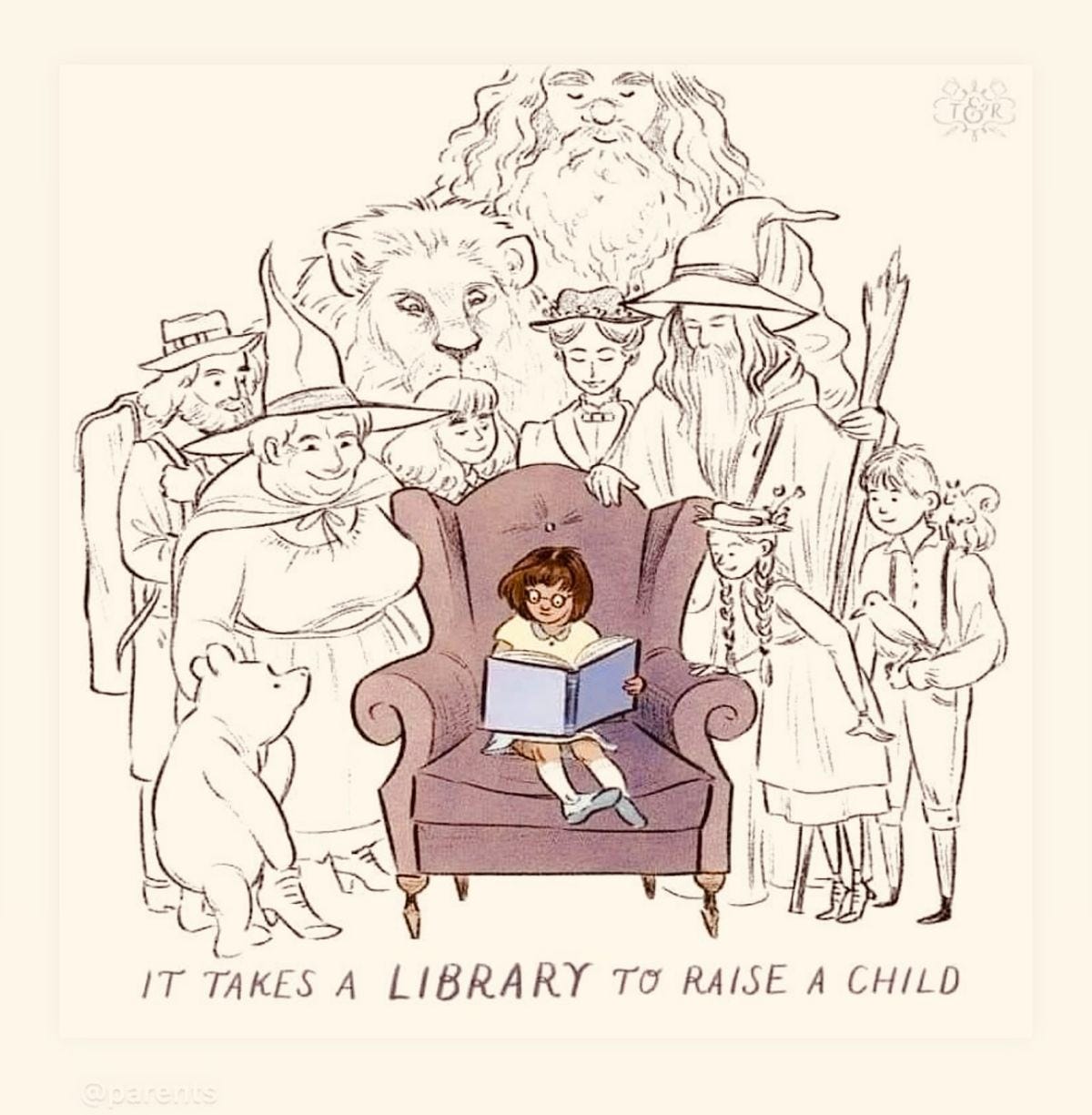
When I put this image by the artist at trindlesandread.com on a note recently, I asked which books made people who they are and what books they were giving to children to guide them. It was a joy to see all of the excited answers and discussion in the comments. That response inspired this week’s article.
What I was most struck by is the personal connection that people obviously made with the books that they read in their most formational years. These books truly helped people to see themselves in particular ways and even imagine their futures differently. It solidified for me again the idea that books offer us encouragement that we are powerful and capable which is such a needed counterbalance to the consumerism in this world which creates an image of people as broken and needy.
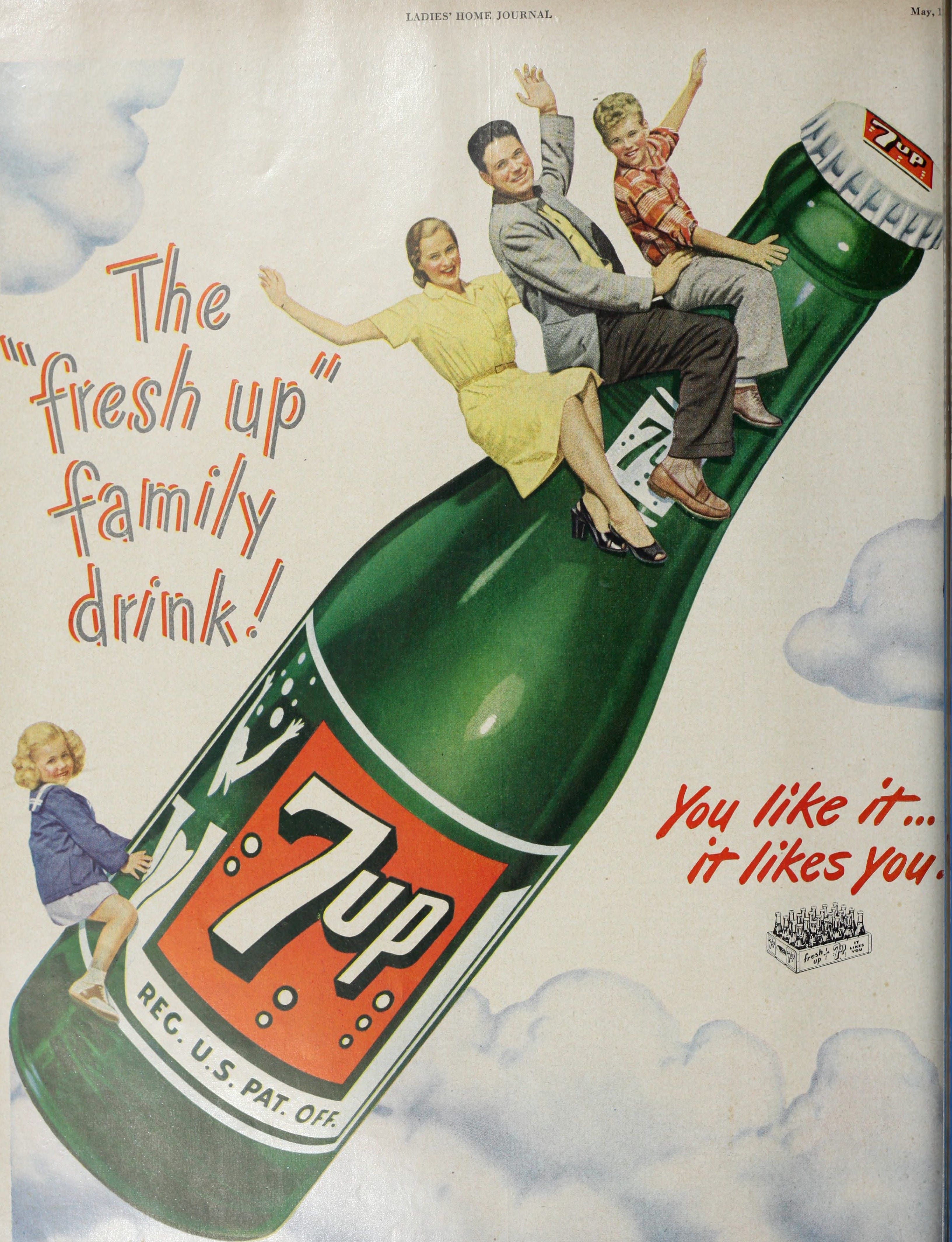
The effect of commercials and advertisements on children has been studied for decades, and in response to the findings of these studies many countries have banned or strictly restricted commercial advertising to children on television. America has instead made billions of dollars off of advertising to children on kid’s TV programing over the decades. And, now with smartphones sending us advertisements for products we might like and social media being filled with influencers telling people of all ages what they need, it has become increasingly difficult to monitor the messages sent to our children or ourselves, for that matter.
According to an article from PBS News written in 2023, “Social media companies collectively made over $11 billion in U.S. advertising revenue from minors last year, according to a study from the Harvard T.H. Chan School of Public Health published on Wednesday.”
Why is this a problem? With respect to my friends in advertising who are doing good, creative, and interesting work, the idea behind advertising in a broad and generalized way, is that the consumers (us) don’t possess what they need to be good enough and thus to deserve a good life. For instance, a toothpaste commercial doesn’t just talk about having fresher breath or whiter teeth, it shows a person without love, success, or happiness who gains all of these things because they start using a “life-changing” toothpaste. Kids are especially susceptible to these messages because they haven’t formed much of a sense of self yet. Their brains’ frontal lobes (by which people make good decisions and judgements) aren’t fully developed until the age of 25.
So many of us are walking around with low grade self-hatred because we are bombarded with advertising, often offered now from influencers that we have come to think of as friends, that remind us that we are not yet the person we should be and only purchasing external items will redeem what is lacking internally.
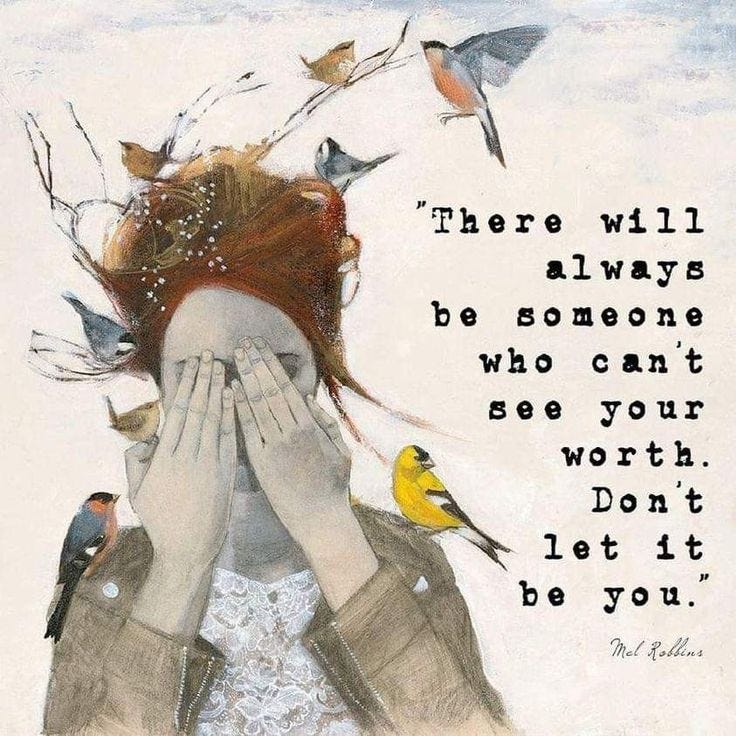
And, here’s where books may save us. Books make us feel the opposite from these advertisements by welcoming us into stories where we get to imagine ourselves as beautiful, strong, and smart without needing anything but what we already have inside of us. For instance, it is me and my imagination that goes on the dangerous journey with Frodo to destroy the ring in Mordor. I imagine myself alongside him as he feels too weak, too scared, and too lost to succeed. And, then, like him, I feel myself succeeding alongside him. I am as brave and kind as every member of the fellowship described, because I am the one imagining them and when I imagine them, I become a character in their story. They never talk directly to me, but I am sitting by the fire with them because I can hear everything they say.
I can defeat the Hunger Games like Katniss Everdeen, I’m a wizard like Harry Potter, I solve mysteries with Nancy Drew, I can be an entrepreneur like the members of the Babysitter’s Club, and I’m even capable of courage under brutality like Anne Frank.
This is why I love the expression, “Don’t be an influencer, be an encourager.” We don’t need to be influenced by people who own the right stuff in order to be the right person, we need to be encouraged that we already possess all the God-given potential to be who we are meant to be.
There has been a lot of backlash against the “Self-esteem Movement” that so many of us grew up with in the 80’s and 90’s. The idea was that if you just gave kids medals, they would feel good about themselves. It didn’t matter if they lost every game in a soccer season, they would get the same trophy and pizza party as everyone else. I got a participation ribbon from the Science Fair for a project I started the night before it was due. Again, the idea is that external validation like external ownership of products, would give kids internal validation.
It actually just made us all feel anxious, entitled, and helpless in the face of challenges we couldn’t actually face. It turns out that self-esteem is built and internalized when you overcome something hard. This is what you do when you read. You put together clues, figure out how to fix a broken relationship, literally or figuratively fight a dragon.
As Rory Gilmore explains in her high school graduation speech on the beloved show Gilmore Girls, “I’ve been a resident of Faulkner’s Yoknapatawpha County, hunted the white whale aboard the Pequod, fought alongside Napoleon, sailed a raft with Huck and Jim, committed absurdities with Ignatius J. Reilly, rode a sad train with Anna Karenina and strolled down Swann’s Way.”
When you see yourself in the pages of a book, it becomes much less necessary to look for yourself in the products for sale. And, now with AI, many of the “people” showing us what our bodies, faces, hair, homes, and lives should look like are not people at all.
Many people say that reading books is also a way to escape reality, and there’s some truth in that. But, I would still argue that what books primarily do is help you to live in reality in a better, healthier, and happier way.
Like the hero returning home from the Hero’s Journey, you have an elixir that makes you wiser and stronger and is meant to help others and not just yourself. When we come back to our reality after going on the journey of a book, we also have an elixir. We know we don’t need anything but what we already have, and we can heroically help others to know that too.
If you feel encouraged by this newsletter, I hope you’ll consider becoming a subscriber or even a paid subscriber to help to support my work and help me to grow and expand the Books May Save Us community. Thank you all so much!
No posts
Comments
Nothing yet. Say the first thing.
Sign in to join the conversation.