
In reflecting on Banned Books Week—and, more specifically, Prison Banned Books Week—it is easy to get caught up in a tally of which books “can” and “cannot” be read in which states, and by the sense of indignation that comes from reading about how a perfectly innocuous title can be deemed a security threat. Through keeping in touch with other books-to-prisons programs, BBB is acutely aware of how fortunate we are to be dealing only with New York State’s restrictions, which feel minor in comparison with states where books from outside organizations like ours are routinely rejected, and where groups have to parse long lists of highly specific but inconsistent limitations. Our group is fortunate that rejection letters are rare and that the books we send are, for the most part, widely tolerated across state prisons.
That being said, when we read letters from incarcerated people who benefit from our program, we are constantly reminded of other, invisible barriers to reading that must be overcome in order to obtain the kinds of books and information that we take for granted outside prison walls. Such hurdles include library closures and limited hours, disciplinary infractions resulting in solitary confinement and/or loss of package privileges, libraries’ failure to reflect the diversity of the incarcerated population’s needs and interests, loss of property or resources due to facility transfers or other reasons, and language and literacy barriers.
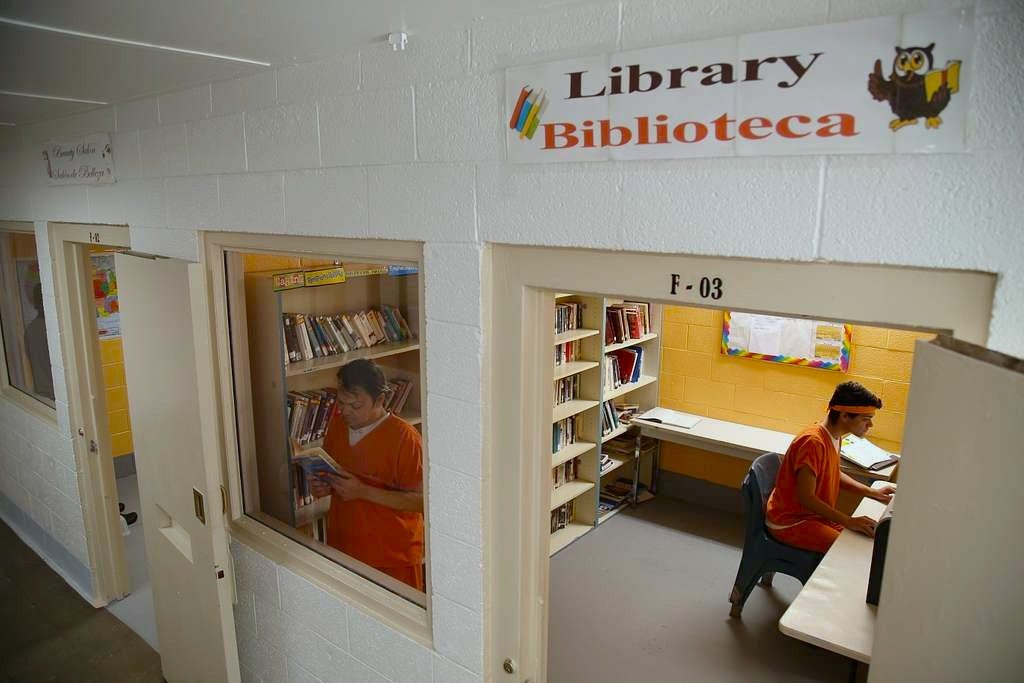
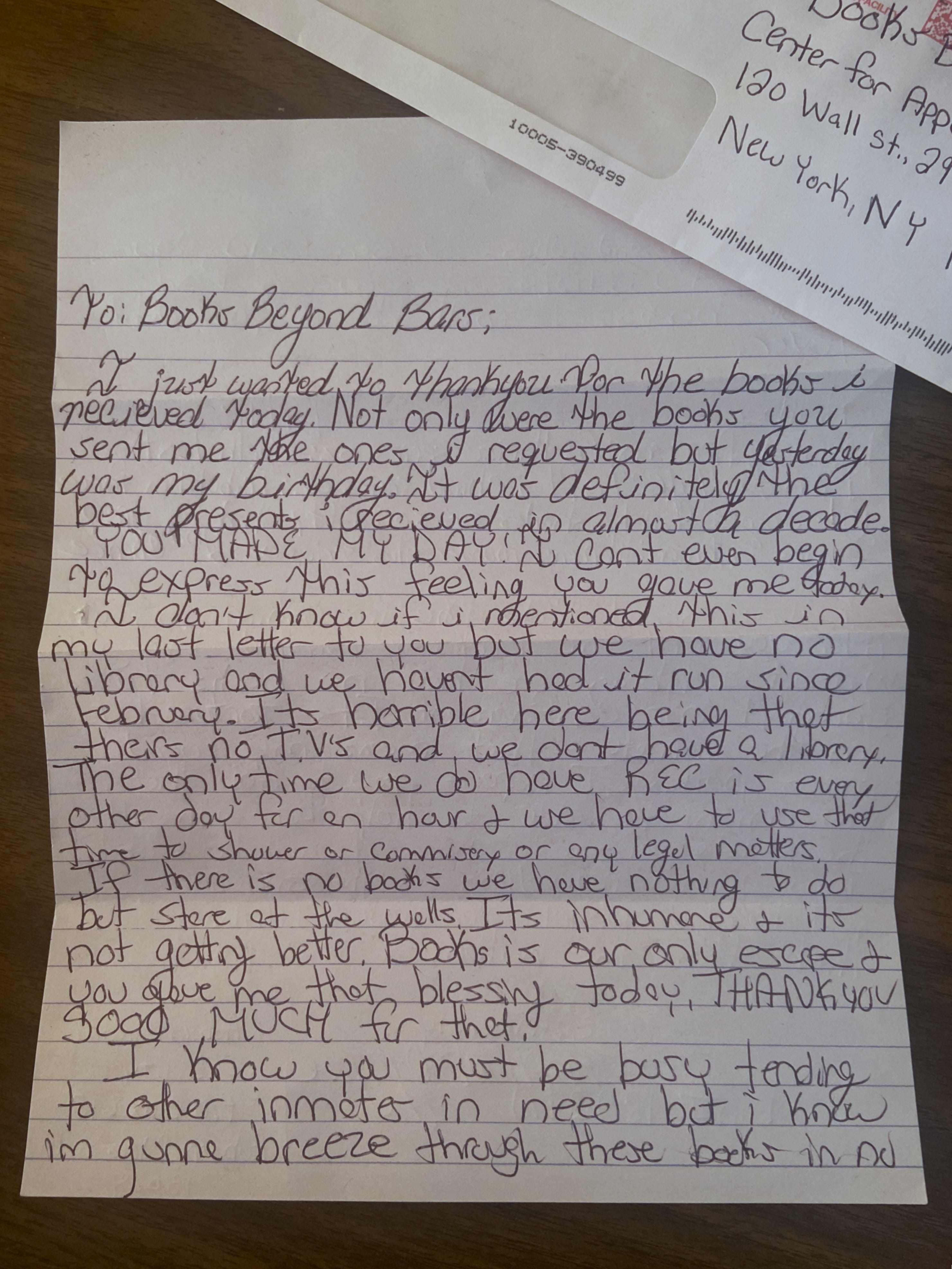
Although most New York state prisons have library services (and access to a law library is legally required), understaffing often makes access to their services unreliable at best. The letters we have received lately cite ongoing repercussions from the corrections officers strike earlier this year, with one facility’s library being closed for several months. The correspondence we receive also highlights the importance of books in a facility where the time that incarcerated people are allowed to spend outside their cells is extremely limited: “The only time we do have rec is every other day for an hour and we have to use that time to shower or commissary or any legal matters. If there is no books we have nothing to do but stare at the walls. It’s inhumane and it’s not getting any better. Books is our only escape…” Library access may be offered at most facilities, but in reality, libraries and programming are the first to go when staffing shortages persist.
Another factor that limits access to books and information is being placed into solitary confinement, usually given other names such as SHU (Segregated Housing Unit). Being placed into solitary confinement or other forms of segregation makes library access far more restricted, with law library access restricted to a limited number of books upon request and general library access confined to a cart whose offerings usually consist of dated books in poor condition. When an incarcerated individual incurs a disciplinary infraction (the system by which these are incurred itself being problematic), ‘loss of packages’ is often one of their punishments, meaning we cannot send them packages and, if we do, they will get returned (this is by far the most common reason that packages are returned to us).
When incarcerated people do have access to library facilities, the resources available to them often fail to reflect their needs. A man requesting LBGTQ books wrote “Please send two gay male books if you can. Such books are non-existent here.” We also receive numerous requests for sign language books, with one requestor writing “I’m deaf. I really need a sign language book to help me communicate with people.” And when incarcerated people attempt to prepare for reentry, engage with their interests, or deepen their knowledge related to facility training programs, they are often unable to find appropriate books. A recent letter reads “I’m interested in electrical engineering, but [the facility doesn’t] have any books about that.”
It is important to keep in mind that in a carceral setting, access to books and information can be threatened by various factors at the facility level. Many of our clients tell us that their books were stolen or that they were unable to keep them after being transferred between prisons—a frequent occurrence in New York State. Recently, we received a letter from a student specifying his need for research materials in order to finish his degree, resources which would usually have been provided by the college program, but which he no longer had access to due to a transfer. If incarcerated individuals have friends and family with the means to ship books, they are limited to two packages per year.
Literacy levels, intellectual disabilities, vision problems and language barriers can also make it difficult for incarcerated people to access books. 60% of the U.S. prison population is functionally illiterate, so many incarcerated people rely on self-teaching to improve their literacy. The fact that dictionaries are the most requested book speaks volumes about this barrier. We often receive requests on behalf of clients with intellectual disabilities that make it difficult or impossible for them to engage with text-heavy books, so we provide magazines, image-based books, and text-free graphic novels. Large print books are also a common request for clients with vision problems. Language barriers also mean that not every incarcerated person can find reading material in their facility’s library. We frequently send Spanish-language reading materials and occasionally we have received requests for books in Russian and Chinese, languages which are likely unrepresented in prison libraries.
In exploring the numerous barriers to library access in carceral facilities, it soon becomes apparent that banned books lists are far from the only obstacle that incarcerated people face to reading and accessing information—there are many other reasons why access to books may be limited or impossible. We need to push back on banned books, but even when these more visible barriers area absent or limited, there are numerous reasons why access to information and books in prison is not always what it seems.
Comments
Nothing yet. Say the first thing.
Sign in to join the conversation.