
Tl;dr - Great book covering a wide range of angles to understand wildfires out west, including frontline firefighting experience, indigenous fire management, modern fire management, and environmental policy.
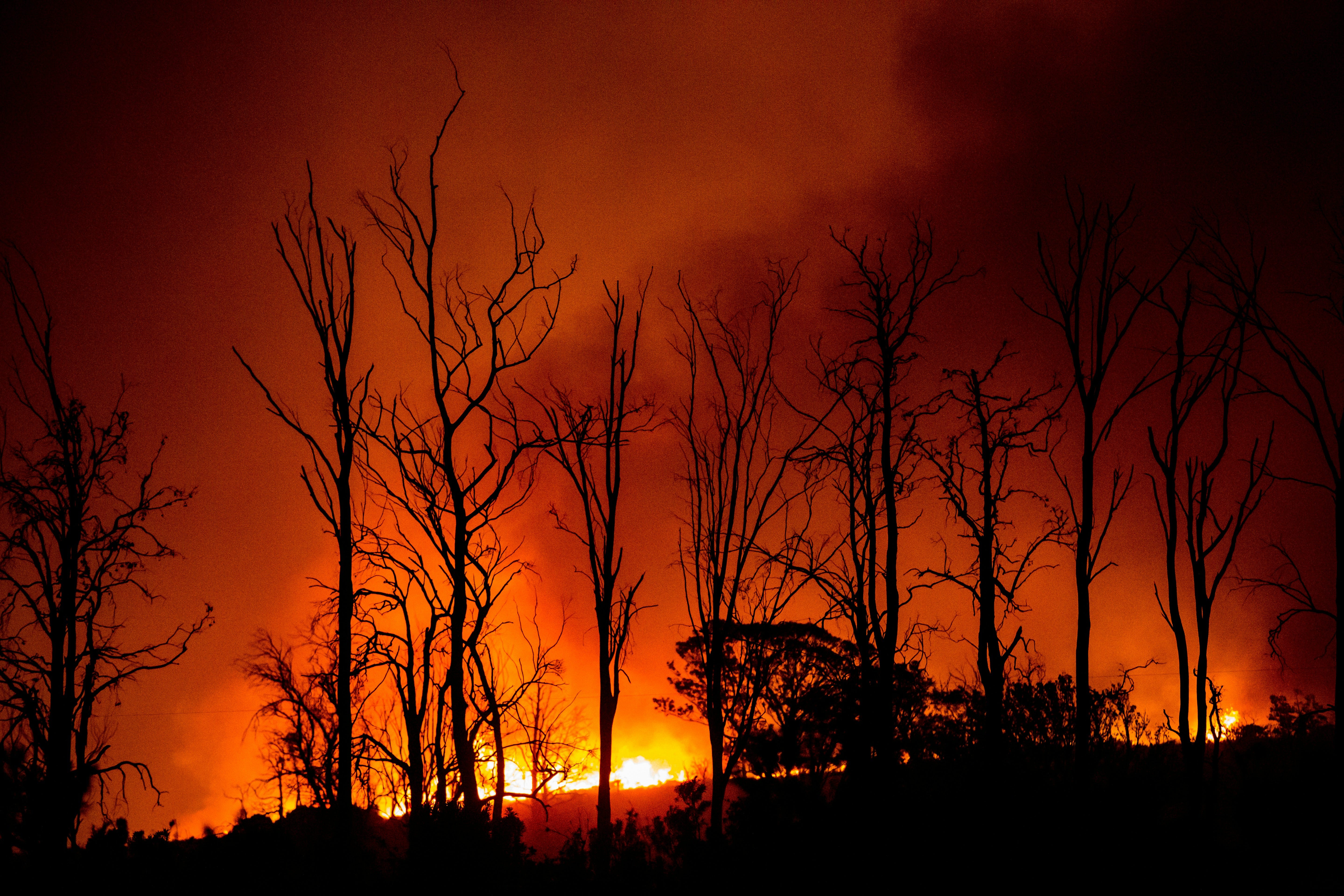
When you grow up east of the Mississippi, wild fires don’t take up much space in your day. It’s rainy, snowy and icy (if you’re north enough) — and wet. It rains. It’s humid. But then I moved to Salt Lake City where it’s literally a desert. A very dry desert. Out west, fires burn. Smoke fills the air. And wildfires are part of the weather. Smoke forecasts are looked at with the same regularity as the precipitation and temperature when making outdoor plans.
Despite living out west for the last six years, I’ve yet to read much about wildfires until now. So, I picked up When It All Burns: Fighting Fire in a Transformed World by Jordan Thomas who takes field research to the next level to better understand how people shape fires and how fires have shaped the land.
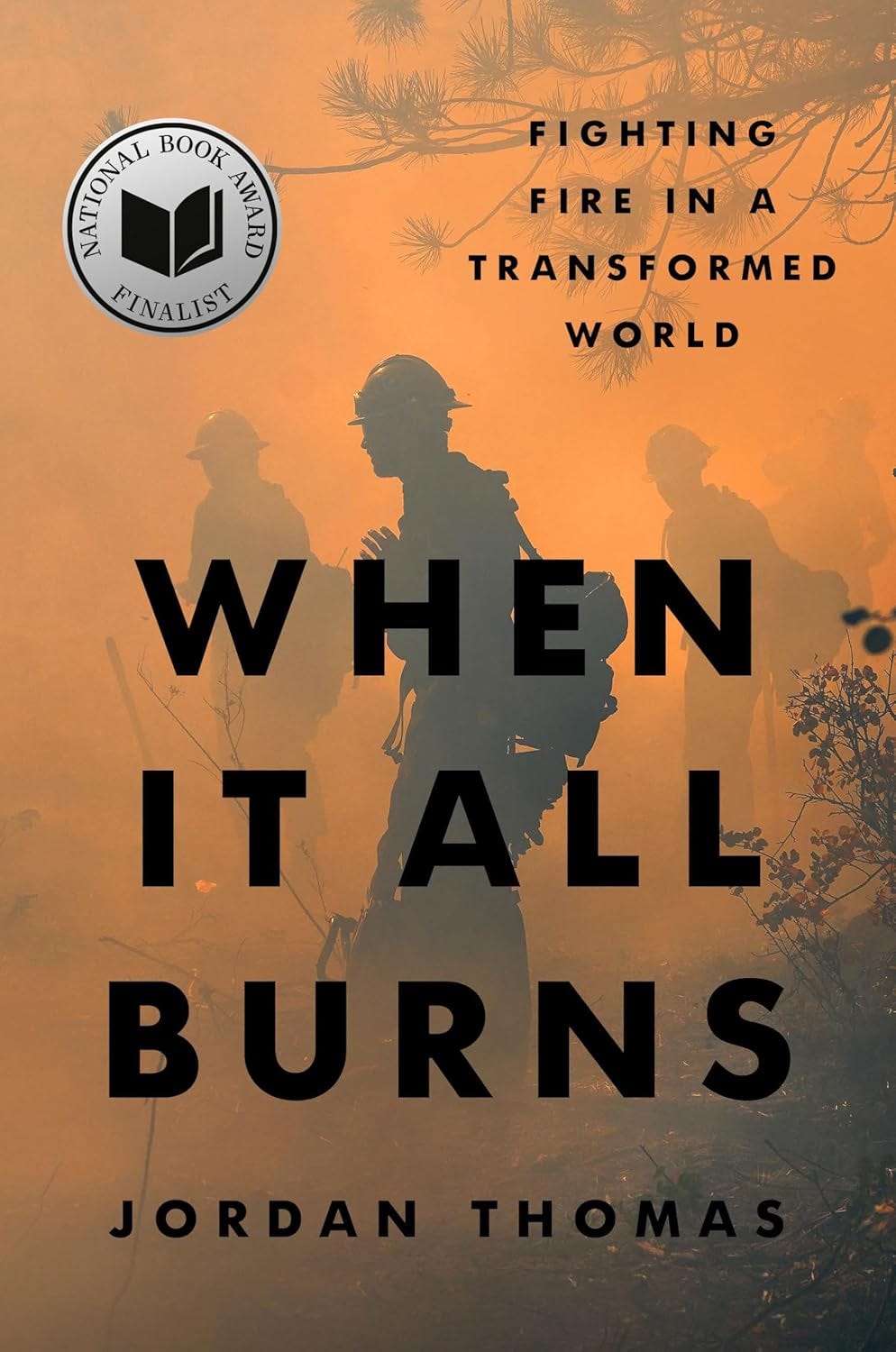
Thomas is a PhD student in anthropology at UC Santa Barbara and joined the Los Padres Hotshots for a six-month stint during a record-breaking fire season. Thomas ties together memoir, anthropology, and policy to explain how indigenous populations used fire to shape the land, how the relationship with fire changed in a post-colonial America, and how today’s climate changes and policies have served as a catalyst for the mega fires we’re experiencing out west today.
He organizes his book into four parts, covering training, firefighting, consequences, and next steps (but with more interesting names). As the book progresses, a mostly memoir gives way to mostly anthropology and policy about wildfires. The memoir aspects of the book were fascinating. I didn’t know there were “hotshots” — about 100 crews across the U.S., 25 of them in California. These are the front line firefighters, working two weeks straight at at time, as close to the fire’s edge as possible, sleeping on the dirt overnight, and doing the brutal and dangerous work of trying to contain wildfires.
I learned a lot from these parts of the book, understanding how wildfires are contained, what that even means, and some of the spectacle and politics involved. For example, fires aren’t extinguished. The planes that drop retardant and water are apparently doing very little on megafires — they are a very expensive show for the public so they feel like something is happening because they can see it. But with big fires, the flames are too big and too hot for it to do anything. What the hotshots do is dig a line — manually — removing fuel and then burning from the line inward to meet the wild fire. If there is no fuel, the fire stops and it burns out. Problem is, when you have 100+ foot flames, the fire can “jump” the lines. It’s why these mega fires can take weeks to burn out.
The fire management parts were fascinating but in a different way. He’s trying to do a lot with it: describe indigenous fire practices, explain how colonialism changed fire practices out west, explain how the logging industry has changed the landscape, how private companies profit from fire, and how all of those things, in combination with climate change, has resulted in the fire emergency we now see out west.
On the one hand, he treats indigenous fire practices and the state of the landscape during those periods as a natural and good way for the western landscape to have been or be. It’s clear to me that the way forests were managed under indigenous practices is better than the clear cutting from logging and fire suppression goals of the modern U.S. both for forest health and safety; but I also don’t understand why it’s assumed that management is needed at all. Forests managed themselves for hundreds of millions of years. Indigenous intervention is seen as an inherent good, while colonial intervention is seen as an inherent bad. Something that seems to get overlooked in these conversations.
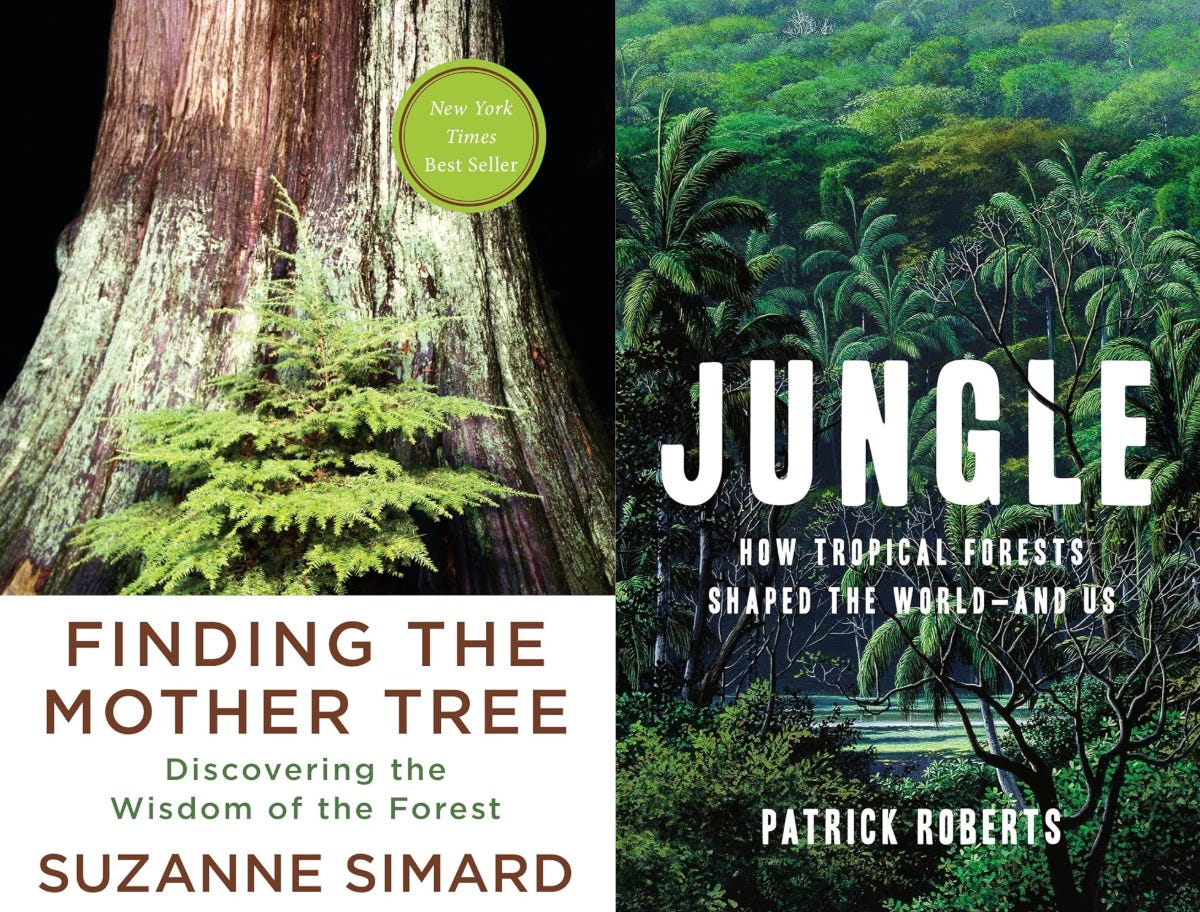
That said, I do agree with Thomas that the current state of play is not good, especially in light of climate change. Much of that can be attributed to not only the climate realities we’re facing out west — drier land and hotter temperatures — but also the commercial logging industry that has decimated the health of forests. This is also argued persuasively in Suzanne Simard’s Finding the Mother Tree where she too explains how logging has exacerbated these problems in British Columbia, Canada.
Overall this is a highly enjoyable read. I learned a lot, both on the fire fighting side and on the anthropological and policy side. It does fit into the bigger genre of memoirs I’m noticing whereby a white collar worker finds some spark during the pandemic to do manual labor and then write about it, but even a cliche can make for a great book.
Published: May 2025
Publisher: Riverhead Books
Format: Kindle
If you think this sounds interesting, bookmark these other great reads:
Finding the Mother Tree: Discovering the Wisdom of the Forest (2021) by Suzanne Simard
Jungle: How Tropical Forests Shaped the World―and Us (2021) by Patrick Roberts
Comments
Nothing yet. Say the first thing.
Sign in to join the conversation.