
I’ve been on a big kick of reading more history and civics-related books since Trump’s second inauguration and his assault on our institutions, norms, and constitution. I’ll be honest: I simply wasn’t paying close attention during his first term when I was deep in grad school. But I’m catching up and reading widely. This month, in the spirit of 250 years (plus a few weeks) of the U.S., I bring you a reading list of some of my favorite books I’ve read on the topic of democracy. I welcome additional recommendations in the comments.
Happy reading!
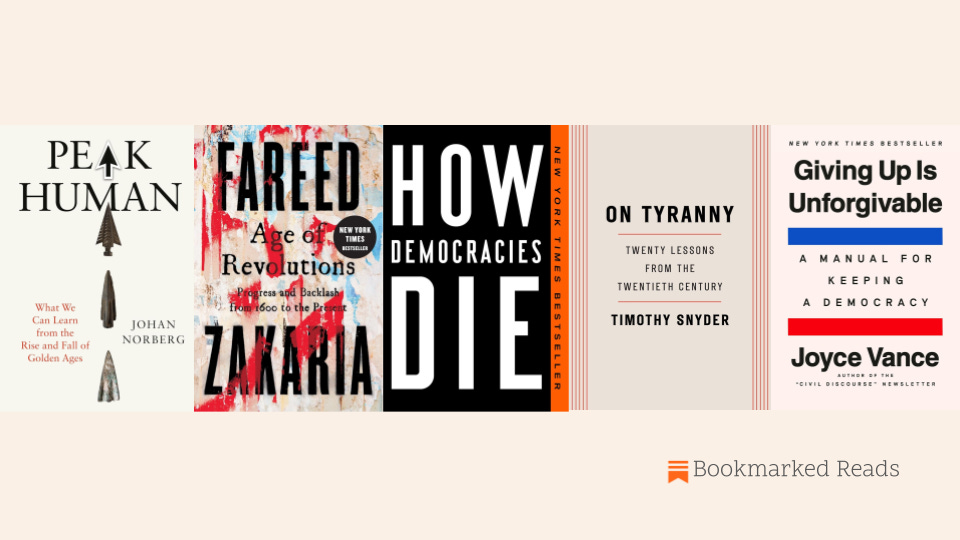
By Johan Norberg | Published 2025 from Atlantic Books
This is an enjoyable read that spans the great civilizations from Athens to the present “anglosphere.” The goal of this book is not so much the decline of civilizations — which it does cover — but what allowed great civilizations to thrive. The primary thread across these civilizations’ accent is the openness and tolerance of ideas. Also unsurprising that the common thread in their decline is religious imposition by the state and a closing to new ideas. A really engaging read that is a nice compliment to the next book on my list.
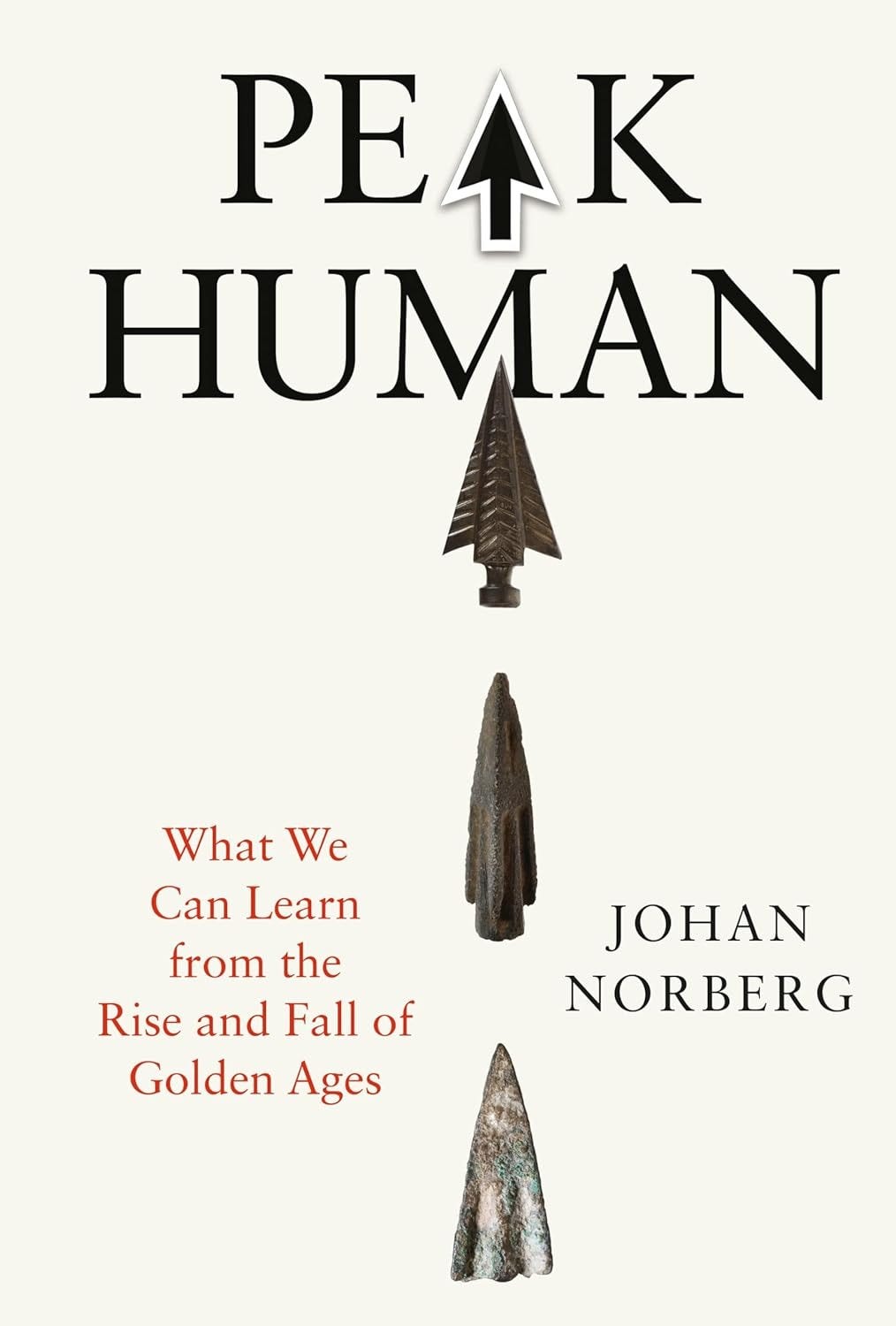
By Fareed Zakaria | Published 2024 from W. W. Norton & Company | Read my review
This is a really great read covering the last few hundred years of revolutions that set the context to understand the modern shifts and populist revolutions we’re now witnessing across the world. I don’t think the arguments of Zakaria are necessarily highly original per se, but I think the book is a wonderful collection of these arguments set in an enlightening historical context. It’s highly detailed and informative. One part I did find particularly insightful was his analysis of the US in a downfall state as the global power. The rapid rise of China, the return of Russia, all pose major shifts in the global order.
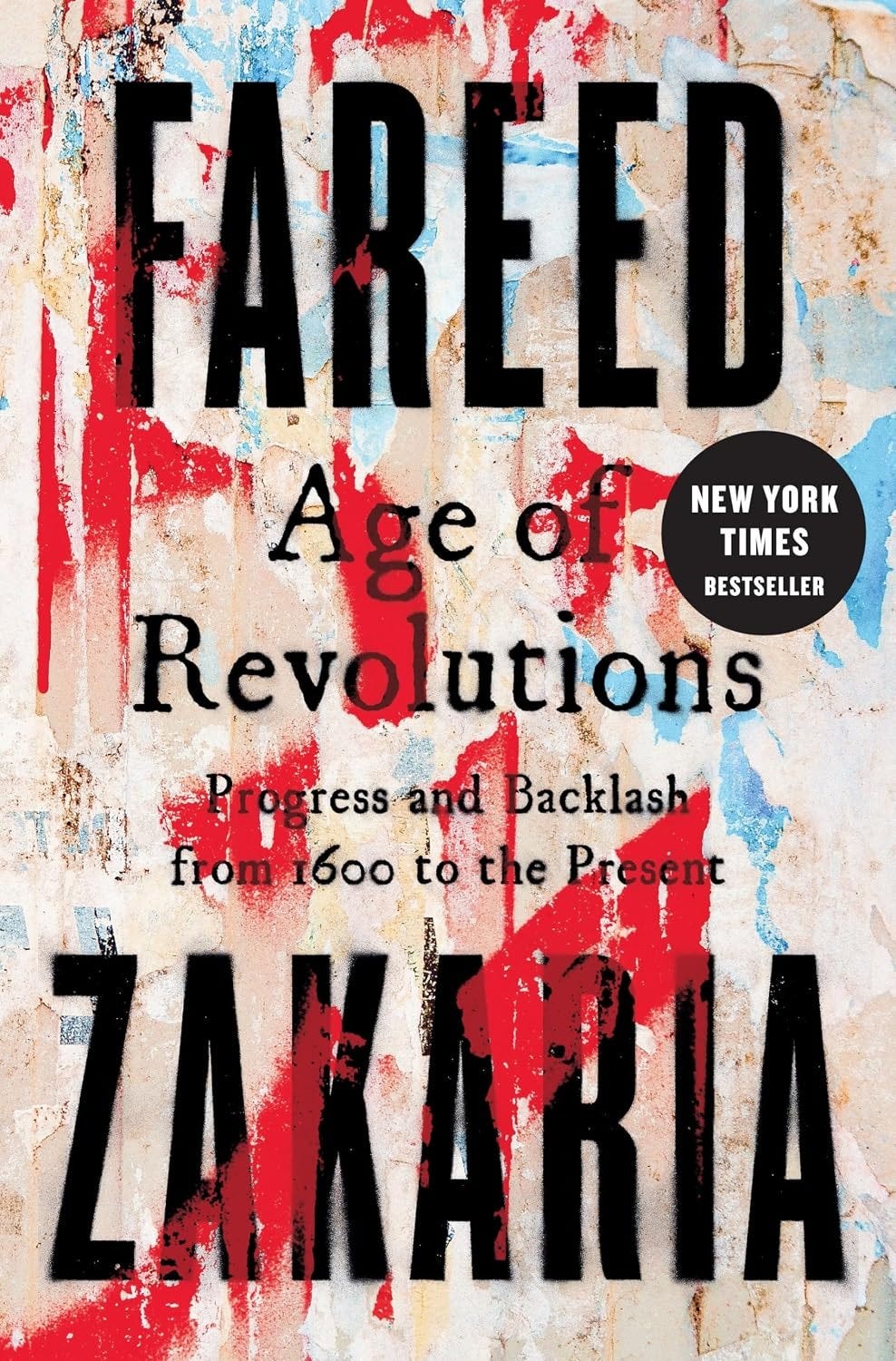
By Steven Levitsky and Daniel Ziblatt | Published 2018 from Crown
I continue to be surprised in a sense when I read books about the red flags of Trump that were published so shortly after his first inauguration to the White House. I was deep in grad school and simply was not paying attention to national politics (because they had previously not needed much paying attention to.) Now I’m playing catch up. This book was fantastic, focusing on how the breakdown of the fundamental norms of tolerance and forbearance break democracies; democracies aren’t sustained by only a constitution. A fantastic book with an original analysis.
By Timothy Snyder | Published 2017 from Crown | Read my review
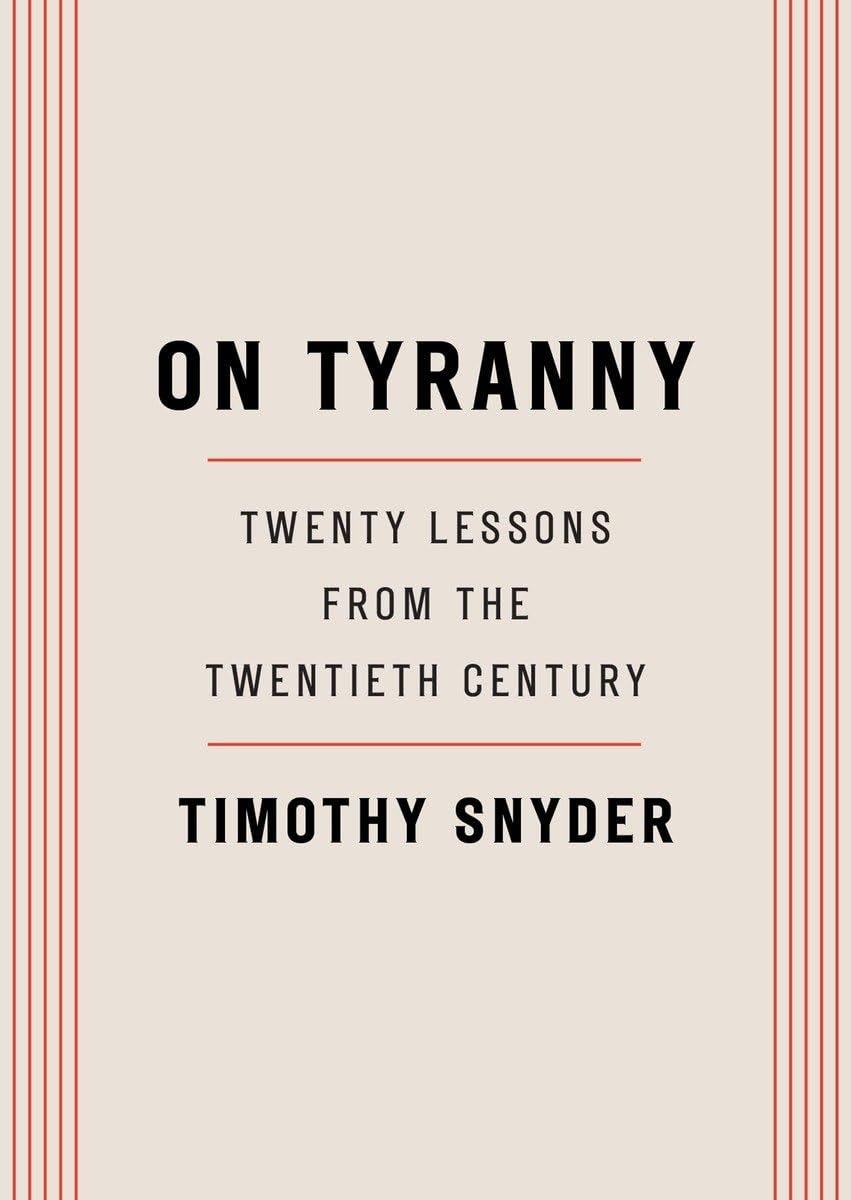
This book has had a second life since Trump’s second accent to the presidency and you’ve surely seen this book around. Snyder uses history — our greatest teacher — to outline 20 ways in which one should act to resist an authoritarian, fascist takeover of our government. It’s crucial to remember that modern authoritarians come into power by democratic means. Democracies die when power is concentrated, conformity is demanded, terror is weaponized for an agenda to slowly strip freedoms, and reality is constantly distorted.
By Joyce Vance | Published 2025 from Dutton | Read my review
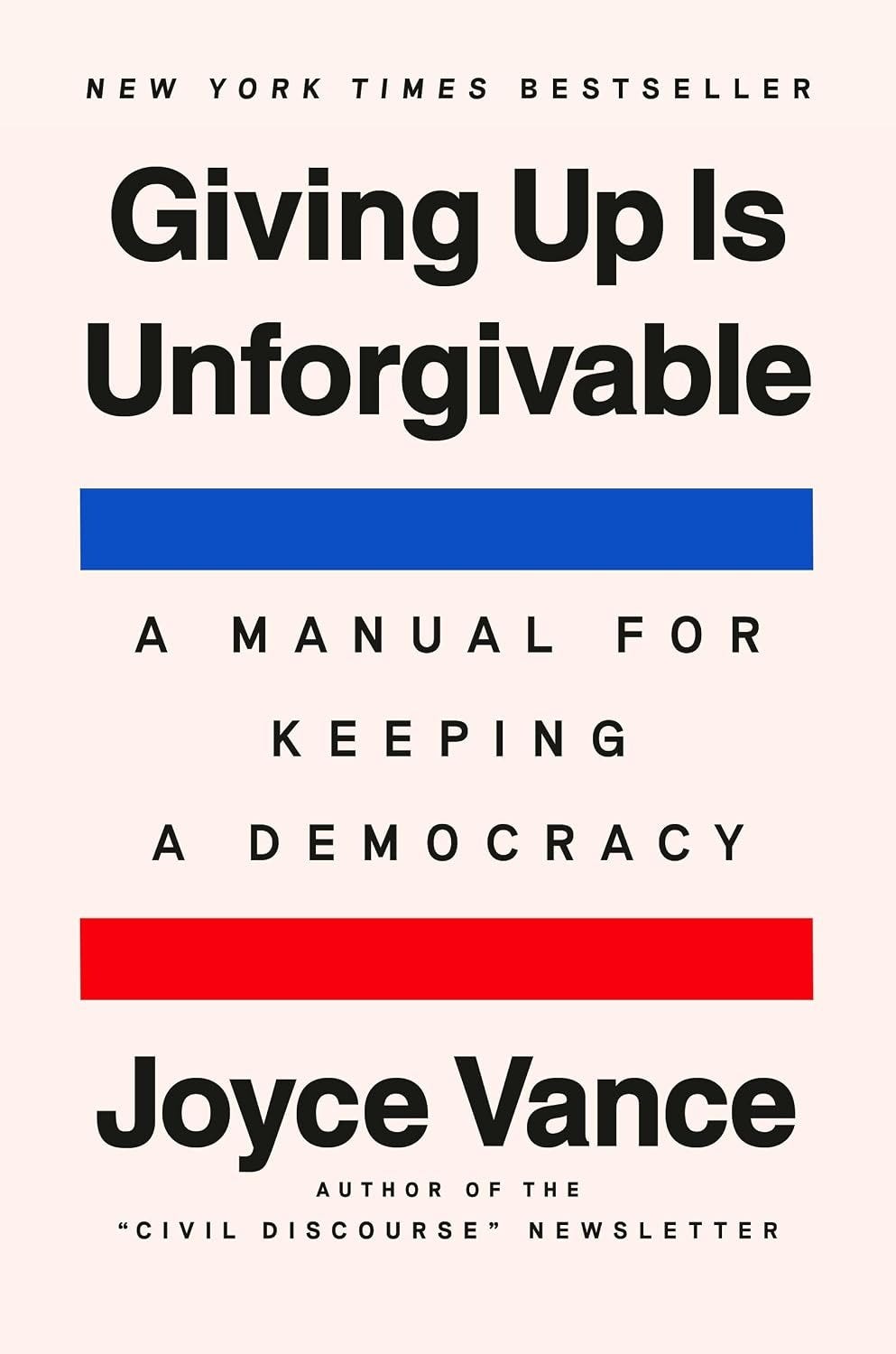
Vance’s book explains the current constitutional crisis at hand, why it is in fact a crisis, and what we should be paying attention to. She also, importantly, explains what we can do as individuals. They come down to quite basic things (similar to Timothy Snyder’s recommendations in his book): community engagement, patriotism and the belief in our government, vote, etc. I found this to be an incredibly clear, concise, and informative book. As a former US attorney, she has deep experience and knowledge about how our government was set up to work, and what Trump is doing to undermine our democracy and its institutions. She calls on the nation to revive civics education so younger generations recognize what is happening — and what is possible — given that they have only known dysfunction in the current century.
Comments
Nothing yet. Say the first thing.
Sign in to join the conversation.