
Hello again, everyone!
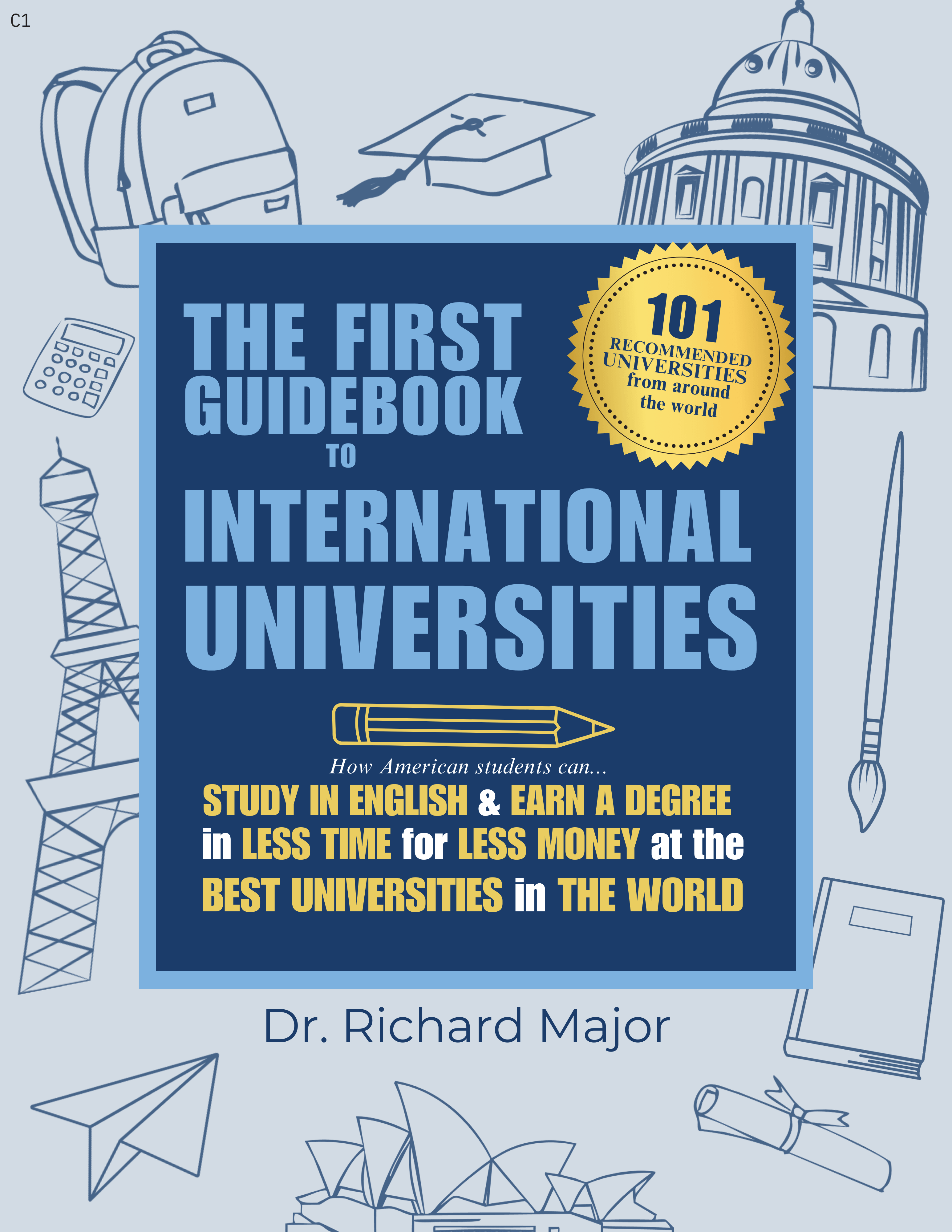
This week we’re really excited to announce the publication of The First Guidebook to International Universities by Dr Richard Major. Bringing together 101 recommended universities from around the world, this guidebook provides detailed recommendations on where and what to study, helping students and parents cast their net wide and navigate the incredibly rich landscape of college education outside the US. Covering top universities in Europe, Asia, Australia, Canada, South America, this incredible guidebook shows students how they can earn a degree in English and save a fortune by studying at the best universities in the world!
What’s not to like!?
First up in this issue, we have an article and an interview with the author of the guidebook himself, Dr Richard Major. Richard introduces the book and describes why we need a guide to studying outside the US now more than ever! Then he answers the BookGo Proust Questionnaire and tells us his views on reading, writing, and the books he can’t live without.
Elsewhere, Nancy describes the journey of how The First Guidebook to International Universities came to be, and Michael reflects on his own time studying abroad.
Our Poem of the Week comes from the opening Canto of Byron’s poem “Childe Harold’s Pilgrim,” the story of a young man who, bored with his native land, bids it farewell and sets out to become a student of the great wide world. No more fitting a work to set sail with alongside Richard Major’s guide to international education.
We hope you love it as much as we do!
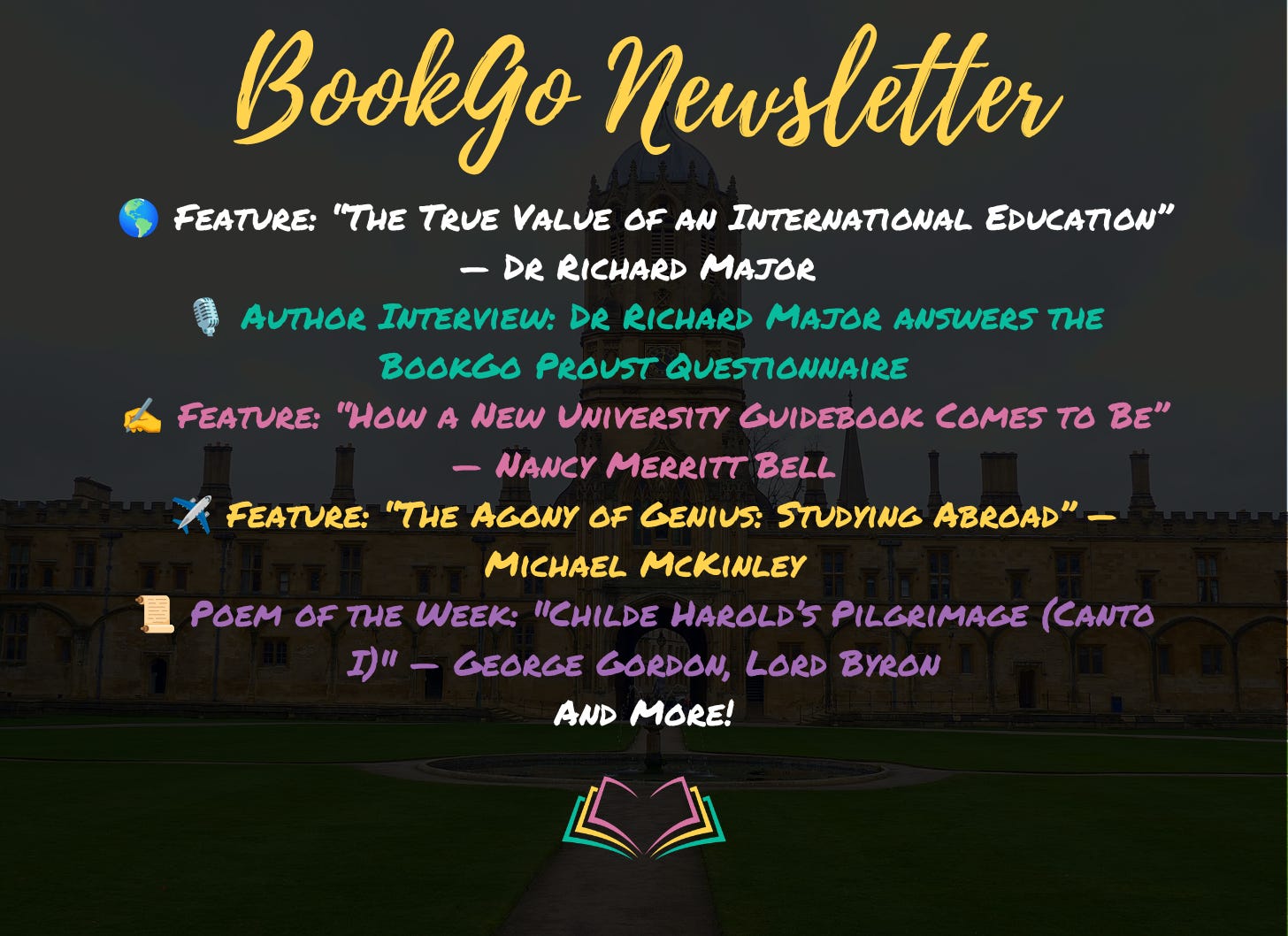
Feature: “The True Value of an International Education” by Dr Richard Major
Author Interview: Dr Richard Major answers the BookGo Proust Questionnaire
Feature: “How a New University Guidebook Comes to Be” by Nancy Merritt Bell
Feature: “The Agony of Genius: Studying Abroad” by Michael McKinley
Poem of the Week: From “Childe Harold’s Pilgrimage (Canto I)” by George Gordon, Lord Byron
Countdown: Less than a month until the Oxford Writers Workshop 2026!
Preview: Read the Introduction to The First Guidebook to International Universities by Dr Richard Major

By Dr Richard Major
So here we are in the midsummer, and the literary world sits agog in its air-conditioned studies. It nervously knots, it yet more nervously unknots its fingers. It glances past its bookcases, out of the window, and watches through the steam of the streets more vigorous persons swarm up ladders to hang bunting. It peers, a little uncertainly, at excited crowds beginning to form on the humid sidewalks, and it shudders.
A great event is at hand. An Important Book is about to be launched. Humanity, which has struggled by for so long without, is about to get its only, its first, kit for global education.
The First Guidebook to International Universities is a complete handbook for any young American considering the idea of getting a degree abroad.
It’s a particular joy to have the thing appear just now. Many people in this country are turning over in their minds the idea of living and studying abroad. They all need this book, after all, there’s no alternative to it. And once they have it, they’re going to be surprised how easy every part of the journey is.
It’s easy, it is perhaps too easy, to see the case against going, or trying to go, to a university in the United States. The fees. The random admission process. The culture wars once you get there.
It’s easy to find out about the thousands of universities in other countries, all eager to take young Americans, all willing to teach them in English and give them a good degree. I mean, it’s easy if you buy this book; if not, not.
And once you’ve read about these places, especially the 101 universities we investigate at length, you’ll be amazed at how easy and transparent it is to apply for a place, and even to be admitted in real time.
I’m also pleased with the last section of the book, which is a frank and comprehensive guide to how to live overseas as a student. It tells you everything, from how to get a passport to how to find a church, from organising student loans to organising your suitcase, from choosing a subject to choosing a continent, from knowing what to do in an emergency to knowing what to do on Saturday evenings.
I defy any seventeen year old to read the book and not be consumed with desire.
I had a wonderful time myself, when I was young, coming to study at Oxford University from far away. Now I’m post-young, it’s been a joy gadding about the world to look at other far-away universities.
Again and again during these research trips, I wished I could have more than one life, and thus more than one youth, and thus more than one foreign university to wanton in. A number of people who have read this book in draft have told me about a painful longing. It all sounds so glorious to be educated in distant lands. What a burden to have been educated already.
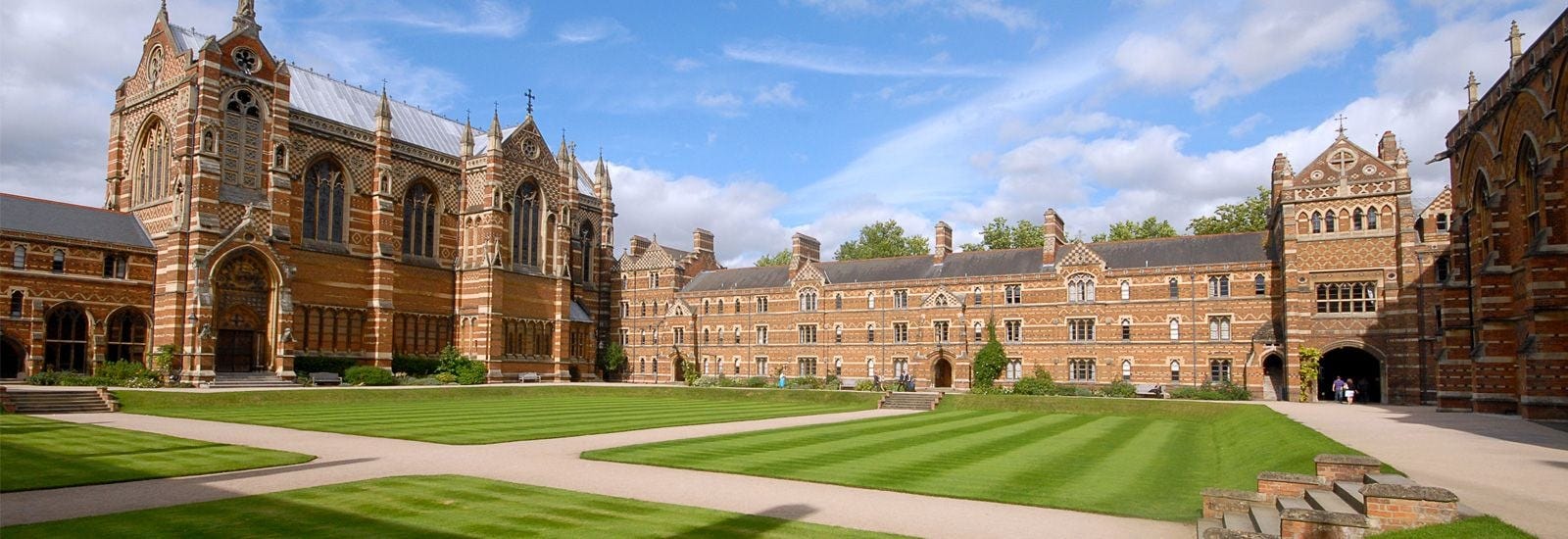
It was, for instance, wonderful to visit Charles University in Prague: over the Vltava River by the most spectacular bridge in the world, through the ancient buildings, under a mediaeval tower, and there it is. Greenwich University is a classical palace on the Thames, and the longitude of all the world is set from a line running through the student cafeteria. Bologna is the oldest university in the world, coming up a thousand years, yet there’s an intensely young charm to being in “la rossa, la grassa, la dotta,” the red, fat, learned city. The University of British Columbia occupies a whole peninsula: a thousand acres on the Pacific.
What matters is not just that these are exciting places to look at, although the magnificent photos that illustrate the book keep making that point. These are also exciting places for the mind. Go there, and you’re folded into an intellectual tradition that has been alive for ages, and links you with all countries as well as all centuries.
The U.S. State Department already urges seventeen year olds to consider the possibility: to start planning a future as a citizen ambassador and global leader, bringing the world closer together and conveying the best of America to its young people.
I think lots of people will consider such a prospect: those fortunate enough to be parent, advisor or teacher to people in their late teens, or those supremely fortunate enough to be in their late teens themselves.
Saving truckloads of money is the least of it. The world can open up, and ah, but here we are, it’s too late to talk about the book, that racket is the book itself bursting on us. It’s published, there are cannons and the literary world is roaring in the street.
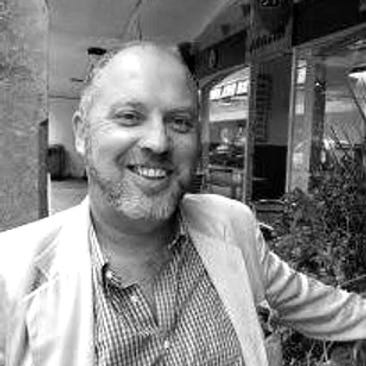
Richard Major is a novelist and journalist with more than a dozen books in print. He holds degrees in history, literature and theology, along with a PhD from Magdalen College, Oxford. He has taught at universities in England, Italy, America, Australia, India, Slovenia and, most recently, Hungary. He spent several years in New York as a journalist and commentator. The First Guidebook to International Universities releases September 15.
What is your favourite book?
A complete Shakespeare. I know that’s an obvious answer, but there it is, he blots out half the sky he’s so enormous. Human beings, especially English speakers, most of all people trying to write in English, simply have to deal with his shadow. Almost anything you try to do he’s tried before, and when you press off in a new direction you find him waiting for you. And the pleasure in him never ends.
What books are on your nightstand?
Jan Morris’s The Venetian Empire, Robert Byron’s Europe Through the Looking-Glass, Patrick Leigh Fermor’s Travels in Northern Greece, all travel books. I’m writing a book turning on Robert Byron’s Europe and am watching how the masters do it. E.M. Forster’s Howards End, a recent gift from my daughter. I’ve read it half a dozen times, and every time it’s a new book. Sebald’s The Rings of Saturn, a strange novel, anguished, curiously translated from German, the jury’s still out on whether I like it. And, perhaps surprisingly, Sir Winston Churchill’s six-volume history of The Second World War, a gift from my wife years ago, a wonderful night-time book. Open it at random, plunge in, the prose is excellent, firm and sprightly and personal; it won him the Nobel prize. You’re entranced, you’re excited, it’s inexhaustible. And he’s sly under cover of being magisterial.
What is your favourite mode of reading?
I can’t manage Kindle. I mean I can’t manage any sort of screen reading for pleasure. I want an actual book, ideally an old hardback, I like second-hand books, they feel lived in and wise, and I want to be lying down.
What is your favourite mode of writing?
I wish I could say with a fountain pen on good paper at my teak desk. That’s sometimes the mode when I’m sketching out a new project. I’m afraid that the nitty-gritty of creating prose happens on my ancient knocked-about iMac.
What book do you regularly give as a gift?
The Debt to Pleasure by John Lanchester, perhaps the most fun to be had in any novel written in the last thirty years. I hand it out the way missionaries hand out tracts. It’s short, audacious, charming. It’s essentially a series of menus. Only halfway through do you realise with a jolt where it’s going.
How do you know what the book or story or project you are writing is actually finished?
I don’t think books get finished. You chip away at the marble until the statue appears, that’s the relatively easy bit, and then you chisel tiny changes here and there, here and there, until you can’t bear it any more, throw down the mallet and groan; then someone wheels the thing away.
What is the best advice anyone ever gave you about writing?
It’s a job, and the only way to do it is to do it. You sit down after breakfast and a swift walk, and you work. You put in a working day. You do not indulge any nonsense about not feeling like it this morning, or waiting to be inspired, or holding off until you’re fresher. You do your job.
What is the best adaptation of book into film you ever saw?
Scorsese’s film of Edith Wharton’s The Age of Innocence; Sir Kenneth Branagh’s Much Ado About Nothing, there are things in it that annoy, but by and large it’s a happy riot, and almost every line is delivered well; Sir Ian McKellen’s Richard III.
If your life was a book, which book would you be?
Alas, something very English and quiet. A country house murder mystery without any murder.
If you were a character in a book, who would you be?
Well, not Felix Culpepper, the anti-hero of my novels. It distresses me that readers like him. He’s a monster.
What is your day job? How did you come to it?
I’m a tutor; I’ve been teaching in one form or another for forty years.
What made you want to be a writer?
Being born.
What is the most fun thing for you about writing?
It is lovely to sketch things out and organise the splendid coming chapters.
What is the hardest thing for you about writing?
Cutting things out. Each paragraph looks up and says don’t kill me daddy, don’t kill me. But I do.
If you could not come back in the next life as a writer, what would you come back as?
As a composer. Or a painter? An artist of another sort anyway. That said, it would also be nice to come back simply rich.
Is there any book you wish you wrote?
Almost all of them. But how wonderful to write, say, a short story as disturbing and vast as the stories of Flannery O’Connor.
You are having a dinner party: what three authors would you invite?
Chesterton, Nabokov and Auden. They would not get on at first, perhaps, but I love them all and owe them a lot: I’d make them enjoy each other.
Text within this block will maintain its original spacing when published
Failed to render LaTeX expression — no expression found
By Nancy Merritt Bell
How does a BookGo book come to be? Sometimes the idea for the book is pitched to us. Sometimes the idea arrives during a chat with old friends over a pint of beer. But sometimes the book’s genesis goes back years, decades even.
The First Guidebook to International Universities comes out September 15, but it may have been inspired by my own years at university, way back in the last century. I was at the outstanding University of Toronto, where learning was under the formidable minds of professors such as Alan Bloom and Northrop Frye, and the cost was about $2,000 a year, in Canadian dollars.
This inspiring time turned sour while recently touring US colleges and universities with our daughter. The price tag for a year at a little ivy started at $75K.
There is not only parental heart failure at college fees but there is student heartbreak over the US college system and its admission process. We saw it become a years-long torture process created by Ivy Tower types, which included pricy counsellors, costly visits to faraway colleges, plus creating fancy portfolios, joining team sports (even if the student was a mathlete with two left feet), while also crafting a soul-bearing personal statement, all while the student’s soul is being destroyed by the process. Let’s not forget the student is also going to classes and keeping up those grades!
Now add to this college marketing madness the fact that Naviance, the college platform high schoolers use to match their grades with entrance requirements, was sued. In fact, the parent company, PowerSchool, paid $17.25 million to settle a class-action lawsuit alleging that the platform illegally tracked and shared student data without consent.
To offer a light in this grim and tortuous admissions tunnel is the college guidebook, the favorite being Fiske Guide to Colleges. The guidebook, by the former New York Times education editor, annually doles out information on the best and most interesting schools in the US. And yet, the worth of these colleges is based on quotes from real students, which at best seems like organized gossip.
Another perennial favorite is the series The Best Colleges Guidebook by The Princeton Review. They rank colleges based on student questionnaires (possibly a more thoughtful approach than using chatty undergrad quotes). Yet, the ranking system seems to benefit the most expensive schools.
When the opportunity came along for BookGo to help create a whole new guidebook, the first of its kind, we grabbed at the chance with both hands.
At the time, Michael McKinley and I actually had our hands around a few cold beers as we sat in our favorite local in Bay Ridge. We were catching up with Michael’s old college pal from Oxford, Dr. Richard Major. A hearty fellow with a quick smile, an operatic baritone voice and the soul of a 21st century Jonathan Swift, Richard is also a serious novelist and tutor. He explained to us that his tutorial work helped get his students into universities all around the world.
Richard knows the world well. Born in the South Seas, Richard went to Oxford as a Rhodes Scholar. He has since then dedicated his life to international education, tutoring and lecturing at universities in America, as well as England, Italy, Australia, Slovenia, India and Hungary. As a consular officer in U.S. embassies, Richard also facilitated visas for students across the globe.
“Can you write a book about getting into international universities?” we asked, half begging and half hopeful. We knew there was nothing like it after trawling the guidebook shelves. We also knew the lifelong value of attending university abroad, having gone to the University of Toronto and also the University of British Columbia, as well as the Sorbonne and Oxford.
The answer was yes. And the proof of Richard’s very positive reply comes out in print September 15, 2026.
The First Guidebook to International Universities shares with American college hopefuls why, where, and how to earn a degree abroad, in English. To write it, Richard drew on his own decades of experience in higher education and also in foreign affairs, and years of travel adventures. And of course the book carries Richard’s wit and wisdom, making it wonderfully readable, unlike most dryly encyclopaedic guidebooks.
The guidebook covers 101 recommended institutions around the world in Dublin, Berlin, Singapore and beyond. Each entry includes details about the city, the university admissions process, and the cost. Many of the universities cost less than $10,000 a year. Also, degree programs in Europe and elsewhere are three years long, so they take less time. Many of the universities are world famous, and a US graduate from abroad would return home with a well-respected degree.
This guidebook also highlights the virtue of being a small indie press: we at BookGo are a nimble enterprise, and can quickly seize on and respond to the public’s changing needs when it comes to college.
We aim for this guidebook to be a groundbreaking addition to the college guidebook shelf, offering a world of options. And with so many affordable, accessible university options, it can also be a gamechanger for high schoolers who are the first in their families to attend university.
And so for every student who dreams of going to college, this guidebook can make that dream come true.

By Michael McKinley
The publication of The First Guidebook to International Universities recently got me thinking about my own time going to college abroad, and how that truly was a life-changing experience.
I did not go to Oxford as an undergraduate, but as a graduate student, and yet the experience, in so many ways, was like being an undergraduate. By that I mean that not only did I hang out with the undergrads, I had to learn to manage a new academic world as did they, but I also had to navigate a new—well, a very old—country.
I learned that going to college abroad made the world accessible to me in ways I had not imagined. Before that, I saw the world through a pretty provincial lens, namely the province of British Columbia. And I did not look that far beyond its borders. However, when I had the chance to go to Oxford, I took it, and my time there changed my life. Indeed, it is the thing that turned me into a writer.
It did this by making me realize that I had stories I wanted to tell, but that I had to do more than that. I was surrounded by people who had their own stories, and wrote them, so I knew that the only way to make my wish come true was to get them down on paper.
I started with journalism, both for Oxford publications and international ones, and then I sold a screenplay I wrote with a friend there, and next, I graduated. I knew that Oxford had given me the perspective where I could see the world as a thing to travel with pleasure, and not as a thing to fear. It opened me up to telling stories bigger than I had imagined.
Going to college abroad had given me the chance to meet myself all over again, and to learn that there were others in the world who were very different, and very similar to me. If I had not left for this academic adventure, I never would have met them.
The experience of living in a foreign country transformed the experience of living at home into living in the world. That’s what studying abroad does for you, as it opens up your mind about how to go forward as your best self. You have already managed to get out of the land of your birth, and now you are in a brave new world. How will you respond to it? How will it respond to you?
Those are questions I thought about as I flew to London the first time, to make my way to Oxford. And when I flew home from Oxford for the last time, for a while, I knew the answers. I loved it, and it loved me. And because of it, I did what I had only dreamed of doing. I wrote down what I thought, and I had imagined, and put it out into the wider world. That’s what going to college abroad taught me how to do.
By George Gordon, Lord Byron (1812–1818)
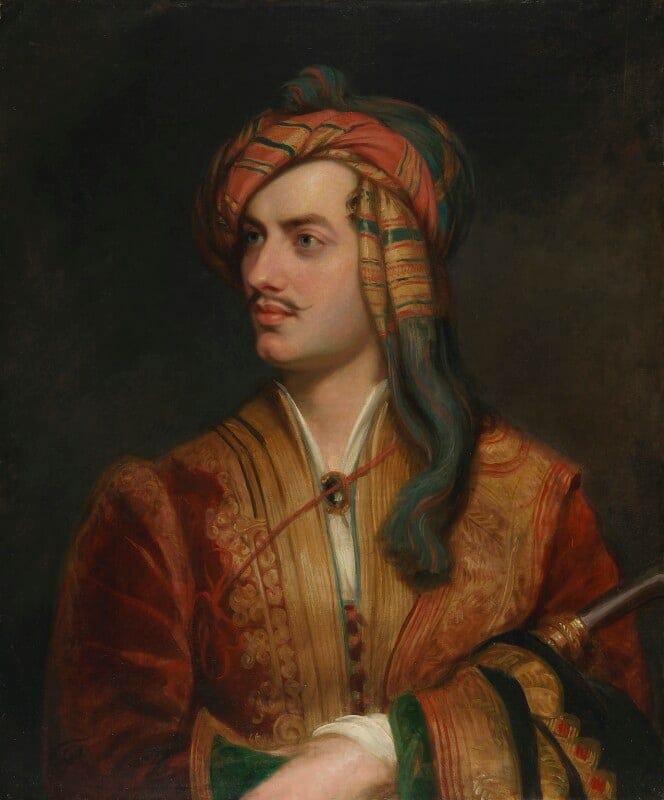
This week’s theme of leaving home for an education abroad put us in mind of Byron, who set out from England as a young man and turned the journey into a long narrative poem: Childe Harold’s Pilgrimage. In this excerpt from Canto I, as the sun sets over the ocean horizon, the young protagonist Harold bids farewell to his native land. He deck of a ship that will carrying him toward Portugal, Spain, and eventually Greece. It is one of the great departure passages in English poetry, restless and a little melancholy, written by a young man setting off to see the wider world for himself.
Text within this block will maintain its original spacing when published
Adieu, adieu! my native shore
   Fades o'er the waters blue;
The night-winds sigh, the breakers roar,
   And shrieks the wild sea-mew.
Yon sun that sets upon the sea
   We follow in his flight;
Farewell awhile to him and thee,
   My Native Land—Good Night!
A few short hours, and he will rise
   To give the morrow birth;
And I shall hail the main and skies,
   But not my mother earth.
Deserted is my own good hall,
   Its hearth is desolate;
Wild weeds are gathering on the wall,
   My dog howls at the gate.
'Come hither, hither, my little page:
   Why dost thou weep and wail?
Or dost thou dread the billow's rage,
   Or tremble at the gale?
But dash the tear-drop from thine eye,
   Our ship is swift and strong;
Our fleetest falcon scarce can fly
   More merrily along.'
'Let winds be shrill, let waves roll high,
   I fear not wave nor wind;
Yet marvel not, Sir Childe, that I
   Am sorrowful in mind;
For I have from my father gone,
   A mother whom I love,
And have no friend, save these alone,
   But thee—and One above.
'My father blessed me fervently,
   Yet did not much complain;
But sorely will my mother sigh
   Till I come back again.'—
'Enough, enough, my little lad!
   Such tears become thine eye;
If I thy guileless bosom had,
   Mine own would not be dry.
'Come hither, hither, my staunch yeoman,
   Why dost thou look so pale?
Or dost thou dread a French foeman,
   Or shiver at the gale?'—
'Deem'st thou I tremble for my life?
   Sir Childe, I'm not so weak;
But thinking on an absent wife
   Will blanch a faithful cheek.
'My spouse and boys dwell near thy hall,
   Along the bordering lake;
And when they on their father call,
   What answer shall she make?'—
'Enough, enough, my yeoman good,
   Thy grief let none gainsay;
But I, who am of lighter mood,
   Will laugh to flee away.'
For who would trust the seeming sighs
   Of wife or paramour?
Fresh feeres will dry the bright blue eyes
   We late saw streaming o'er.
For pleasures past I do not grieve,
   Nor perils gathering near;
My greatest grief is that I leave
   No thing that claims a tear.
And now I'm in the world alone,
   Upon the wide, wide sea;
But why should I for others groan,
   When none will sigh for me?
Perchance my dog will whine in vain
   Till fed by stranger hands;
But long ere I come back again
   He'd tear me where he stands.
With thee, my bark, I'll swiftly go
   Athwart the foaming brine;
Nor care what land thou bear'st me to,
   So not again to mine.
Welcome, welcome, ye dark blue waves!
   And when you fail my sight,
Welcome, ye deserts, and ye caves!
   My Native Land—Good Night!
Speaking of setting sail on new educational adventures overseas, we are so excited that the inaugural Oxford Writers Workshop kicks off in less than a month! We can’t wait to meet our writers, joining us from all around the world. If you weren’t able to make it this year, then stay tuned for updates on the ground and for opportunities in future years.
Exclusively for BookGo subscribers, read the opening to The First Guidebook to International Universities here:

Like what you see? Then why not pre-order the book now! There’s a 10% discount for all pre-orders before September 15.

Comments
Nothing yet. Say the first thing.
Sign in to join the conversation.