
To view these books on Amazon, click the book titles.” Are you new here? Here’s the explainer. As an Amazon Associate, I earn from qualifying purchases.
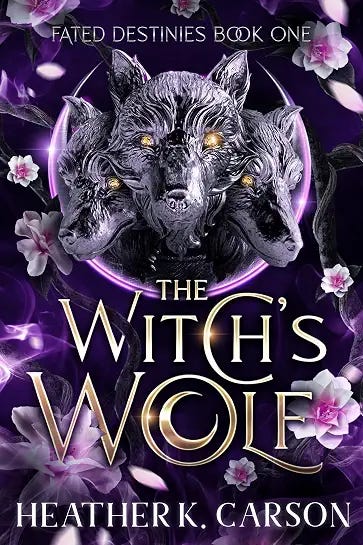
Author: Heather K. Carson
Paranormal Romance
FREE
Heather K. Carson pairs two supernatural traditions that don’t always get along—witchcraft and shifter packs—and lets the friction generate the plot. Witches operate through study, preparation, and intent; wolves operate through instinct and hierarchy. Putting a mate bond between them means neither party gets to keep their assumptions.
The fated-mate structure removes the will-they question early, which is the right call here, because the interesting conflict is elsewhere. A witch with her own power base has considerably more leverage than the usual shifter-romance heroine, and Carson lets her use it rather than dissolving her into the pack’s expectations.
The series opener does the necessary establishing work—the magical rules, the pack politics, the threat that will carry across books—without stalling the romance to do it. Heat runs steamy with the possessive intensity shifter readers expect, and the ensemble is clearly built for future installments.
Why this hooks: it’s a satisfying blend of witch and shifter romance with a heroine who holds her ground, and it costs nothing to start.
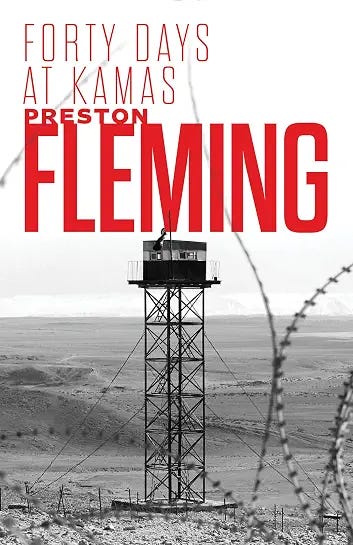
Author: Preston Fleming
Dystopian Fiction
FREE
Preston Fleming spent years as a CIA case officer in the Middle East, and that background shapes everything he writes about institutions and how they treat the people inside them. Forty Days at Kamas imagines a near-future America with a labor camp system, told from inside one of them.
The debts are explicit and earned. Fleming has clearly read Solzhenitsyn closely, and the novel’s interest is the same: not the politics that produced the camp so much as the daily arithmetic of survival within it, the informer economy, and the specific moral compromises that keep a person alive another week.
The forty-day structure gives it real momentum, building toward a confrontation the reader can see approaching. Fleming writes with a clear political perspective on state power that some readers will share and others won’t, but the camp itself is rendered with unsentimental specificity. Content involves imprisonment, violence, and coercion throughout.
Why this unsettles: it’s a serious, well-researched dystopian novel from an author drawing on real intelligence-world experience, at no cost.
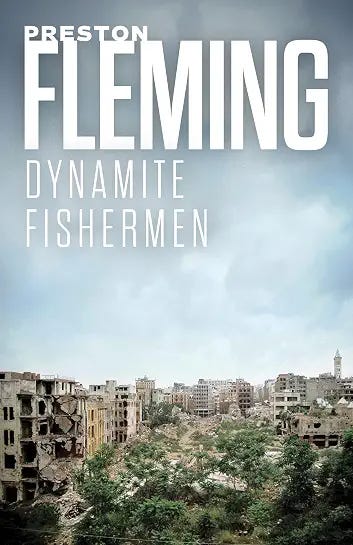
Author: Preston Fleming
Espionage Thriller
FREE
This is where Preston Fleming’s CIA background pays off most directly. Dynamite Fishermen is set in Beirut in 1983, on the eve of the embassy and Marine barracks bombings, and follows a case officer running agents in a city where every faction has its own militia and the American position is deteriorating by the week.
The tradecraft is the draw. Fleming writes agent handling as it actually works—the recruitment, the meetings, the endless management of people whose motives are mixed and whose safety is never assured. There are no gadgets and very little gunplay. The tension comes from a source who might be doubled and a meeting that might be surveilled.
The setting is rendered by someone who was there for that era of the region’s history, and the political geometry of Lebanon’s civil war is drawn with more precision than thrillers usually attempt. Readers who value le Carré’s institutional realism over Bourne-style action will find the register familiar and the period detail exceptional.
Why this stands out: it’s an unusually authentic espionage novel set at a genuine historical turning point, available at no cost.
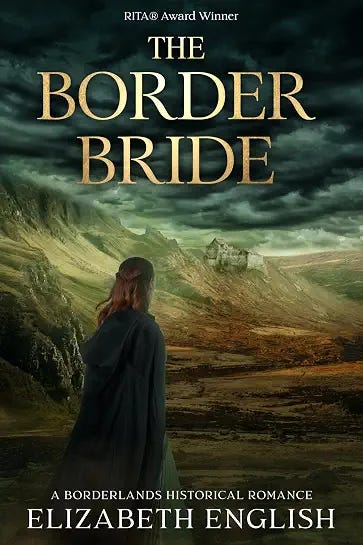
Author: Elizabeth English
Scottish Historical Romance
FREE
Elizabeth English set her Borderlands books along the Anglo-Scottish frontier, which is the most interesting piece of ground in medieval romance: a lawless strip where raiding was a career, allegiance shifted by season, and a marriage between families was a treaty that both sides expected to break.
The arranged-marriage plot has teeth in that setting. Neither party can trust the other’s kin, and the heroine arrives knowing she’s a hostage as much as a wife. English lets that suspicion persist properly rather than dissolving it in the first hundred pages, which makes the eventual alliance between them feel like something achieved. ⚔️
English writes with genuine attention to the period’s texture—the raiding economy, the border laws, the practical business of running a keep. The romance is emotionally rich, the heat moderate, and the series continues along the same frontier. Readers of Julie Garwood’s medievals will recognize the appeal.
Why this satisfies: it’s medieval romance in an underused and genuinely dangerous setting, and the series opener costs nothing.
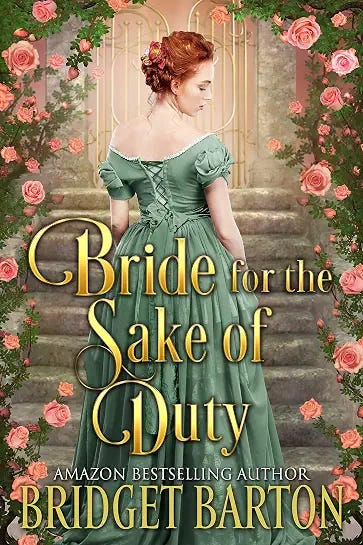
Author: Bridget Barton
Historical Romance
FREE
Bridget Barton writes for the enormous audience that treats Regency romance as dependable comfort reading, and this one runs on obligation: a marriage contracted for reasons that have nothing to do with affection, and two people discovering that duty and desire are not as separable as they assumed.
The marriage-of-convenience plot works because it reverses the usual order. Intimacy arrives before understanding, which produces the small domestic moments that make traditional Regency so satisfying—awkward breakfasts, misread silences, the slow discovery that the stranger you married is actually good company.
Barton keeps the heat gentle and the period detail light enough not to slow the pace. Her catalog in this lane is substantial, so readers who enjoy the voice have a long shelf waiting rather than a single book and a wait. The chapters are short and the plotting is clean.
Why this comforts: it’s a warm, well-mannered Regency built on the genre’s most reliable setup, and it costs nothing at all.
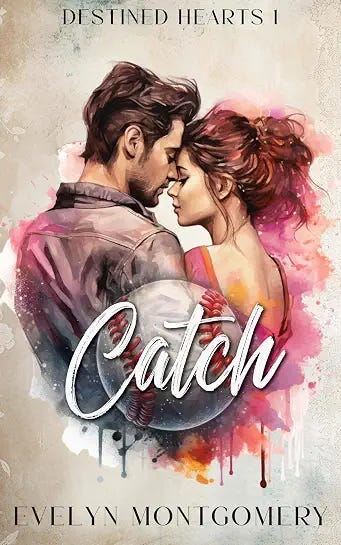
Author: Evelyn Montgomery
Contemporary Romance
FREE
Evelyn Montgomery opens Destined Hearts with a title that reads as both a verb and a noun, and the ambiguity fits—this is romance about the moment someone becomes impossible to walk away from, and about what it costs to hold on afterward.
Montgomery works in the emotionally grounded end of contemporary romance, where the obstacles come from people’s histories rather than from contrived misunderstandings. Her characters arrive carrying things they haven’t dealt with, and the relationship has to accommodate that rather than magically resolving it. That patience is what makes the payoff land. ❤️
As a series opener it establishes the world and the connections that will carry across future installments, with secondary characters clearly positioned for their own books. Heat sits at a comfortable steamy level, the chapters move quickly, and the emotional register stays warm throughout. ☕
Why this works: it’s a heartfelt series opener from an author who takes her characters’ baggage seriously, and there’s no cost to trying it.
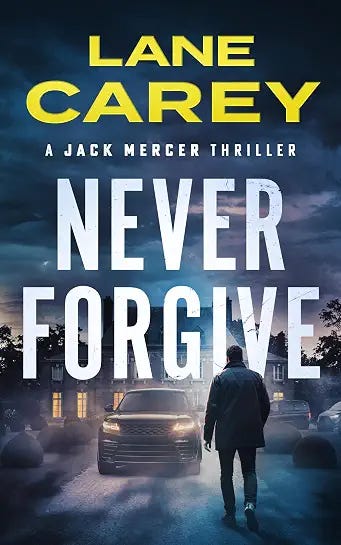
Author: Lane Carey
Thriller
FREE
Lane Carey launches the Jack Mercer series with a title that tells you the engine: this is a revenge thriller, and the protagonist has no intention of letting anything go. That clarity of motive is an advantage in the subgenre, since the reader never has to wonder why anyone is still pushing forward.
Carey writes lean and fast, with short chapters and steady escalation. Mercer is competent without being invulnerable, and the damage accumulates across the book in a way that keeps the stakes credible. The plotting favors momentum over intricacy, which suits readers who want a thriller that doesn’t slow down to admire its own complexity.
The series structure is established cleanly here, with the recurring elements and unresolved threads that give later installments somewhere to go. Readers who follow Lee Child, Mark Greaney, or the leaner end of the action thriller shelf will find the pacing familiar and comfortable.
Why this grips: it’s a fast, focused revenge thriller launching a new series, and there’s no cost to seeing whether Mercer is your kind of protagonist.
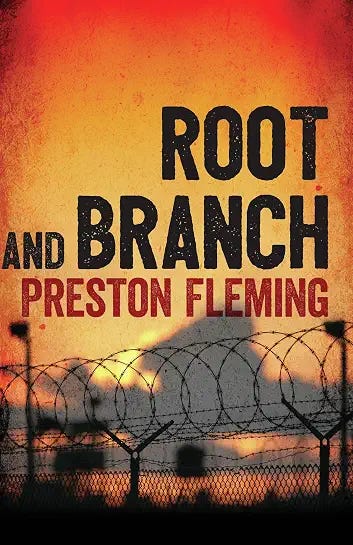
Author: Preston Fleming
Political Thriller
FREE
The third Preston Fleming title in this batch, and the one that sits closest to present-day political argument. Root and Branch applies his intelligence-officer’s eye to domestic questions rather than foreign postings, and the result is a novel with an explicit position rather than a neutral one.
Fleming’s strength across his catalog is the same: institutional mechanics. He understands how agencies actually function, how information moves, and how people inside large organizations make decisions that look inexplicable from outside. That knowledge grounds the plotting even when the scenario is deliberately provocative.
Readers should know this is politically pointed fiction, written from a clear perspective on immigration and state authority that will land differently depending on where the reader stands. Approached as an argument in narrative form—which is what it is—it’s a well-constructed one. Readers wanting the counterarguments will need to look elsewhere.
Why this provokes: it’s a technically assured political thriller from a former case officer with a definite point of view, at no cost.
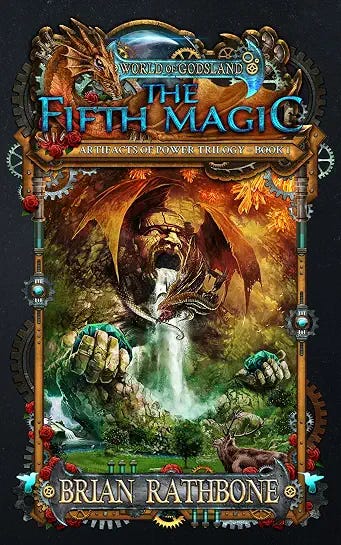
Author: Brian Rathbone
Epic Fantasy
FREE
Brian Rathbone was one of the earlier indie fantasy authors to build a genuine readership, and the Godsland world has now stretched across multiple trilogies. Artifacts of Power continues that setting, where magic is dangerous, unevenly distributed, and generally regarded by authorities as a problem to be managed. ⚡
Rathbone’s approach is traditional epic fantasy in the best sense—ordinary people discovering capabilities that put them in the path of powers far larger than themselves. The scope expands steadily, and he’s patient about revealing how the magical system connects to the world’s history.
The prose is clean and accessible rather than ornate, which makes the books move quickly despite their scope. Readers who enjoy Terry Brooks or the more approachable end of epic fantasy will find the register comfortable, and the sheer volume of connected material means anyone who takes to Godsland has years of reading available. ⚔️
Why this delivers: it’s the entry point to a large, well-established indie fantasy world, and the first volume costs nothing.
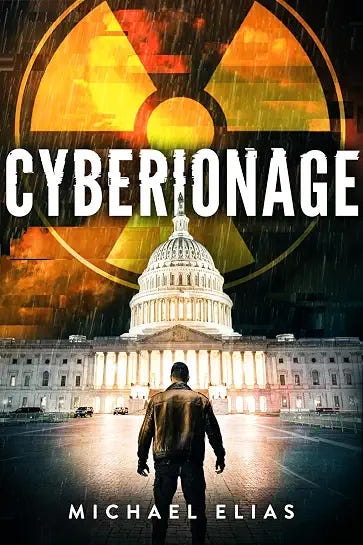
Author: Michael Elias
Techno-Thriller
FREE
The title is a portmanteau, and it names the actual subject: espionage conducted through networks rather than through people in rooms. Michael Elias writes about a form of conflict that has largely replaced the classic version, where the operators may never leave their own countries and the damage arrives without a shot.
What makes the subgenre work is plausibility, and the interesting material is always the human layer—the insider who gets compromised, the contractor with poor security hygiene, the executive who clicks the wrong link. Elias keeps the technical detail digestible while the consequences escalate. ⚡
The stakes in cyber thrillers have the advantage of being genuinely current: infrastructure, financial systems, and the uncomfortable question of what constitutes an act of war when nobody crosses a border. Readers who follow the modern security-focused thriller will find this squarely in that lane, with pacing built for quick reading.
Why this grips: it’s a contemporary espionage thriller about the form of conflict actually happening now, and there’s no cost to reading it.
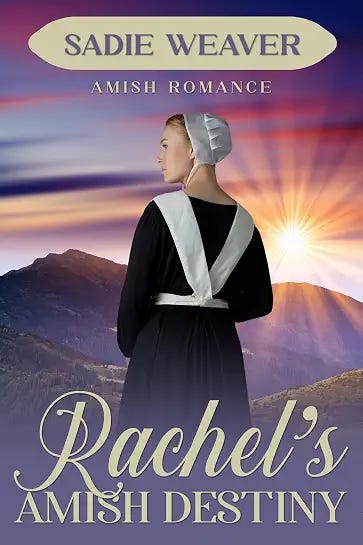
Author: Sadie Weaver
Amish Romance
FREE
Amish romance has a large and remarkably steady readership, and Sadie Weaver’s Cedar Creek books deliver what that audience reaches for: a community bound by shared faith and shared work, and a heroine whose choices carry weight because the community is watching and because she believes what it believes.
The genre’s appeal runs deeper than the bonnets. These are stories about belonging, and about the cost of a decision when leaving isn’t a casual option. Weaver treats the faith element as genuine conviction rather than set dressing, which is what separates the well-regarded books in this lane from the imitations. ️
The romance is entirely clean, the pacing gentle, and the emphasis falls on family, forgiveness, and daily life—quilting frolics, harvest, the small kindnesses that hold a settlement together. Readers who follow Beverly Lewis or Wanda Brunstetter will find the register immediately familiar.
Why this comforts: it’s warm, wholesome inspirational romance in a beloved tradition, and it costs nothing at all.
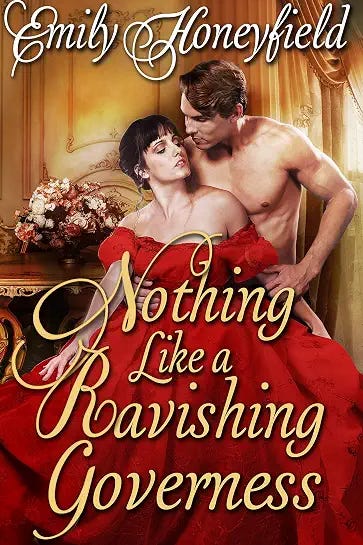
Author: Emily Honeyfield
Historical Romance
FREE
The governess plot has been a Regency staple since Jane Eyre, and for good reason: it places a gentlewoman inside a great house with none of the protections her birth should have secured. Emily Honeyfield uses that precariousness properly—the heroine’s position depends entirely on the goodwill of people who could dismiss her without explanation.
The class gap is what generates the tension. A governess occupied a genuinely strange rung, too educated for the servants’ hall and too poor for the drawing room, and any attachment across that line risked her livelihood far more than his reputation. Honeyfield keeps those stakes visible rather than waving them away.
The children in the household give the romance a natural setting to develop in, and the heroine’s competence with them does more persuading than any declaration could. Heat stays gentle, the pacing is brisk, and Honeyfield’s catalog offers plenty of follow-up for anyone who takes to the voice.
Why this charms: it’s a warm, traditional Regency built on the genre’s most enduring imbalance, and it costs nothing to try.
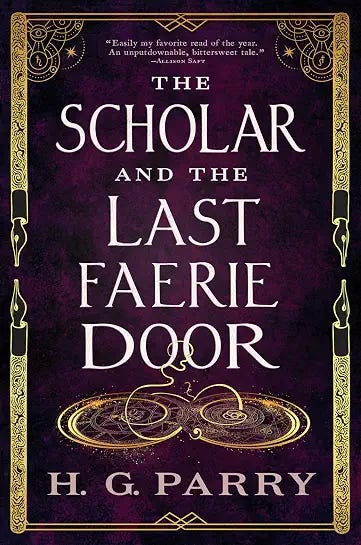
Author: H. G. Parry
Fantasy
Regularly $3.99, Today $1.99
H. G. Parry has built a reputation for fantasy that takes both magic and scholarship seriously, and this one is set in a 1920s Britain where the faerie doors are closing one by one. A young woman from a working-class Welsh background arrives at Camford, a hidden magical university, and finds that access is not the same as belonging.
The class material is what lifts it above the standard magical-academy fare. Parry is genuinely interested in who gets educated and on whose terms, and her heroine’s scholarship is inseparable from the world that grudgingly permitted it. The post-war setting adds a generation of loss sitting underneath every conversation.
Parry’s earlier novels—The Unlikely Escape of Uriah Heep and A Declaration of the Rights of Magicians—earned strong critical notice for exactly this combination of literary sensibility and real narrative propulsion. The friendships here carry as much weight as the magic, and the prose rewards slower reading than most fantasy asks for. ✨
Why this stands out: it’s intelligent, beautifully written fantasy from an author critics keep pointing to, and two dollars is remarkable for it.
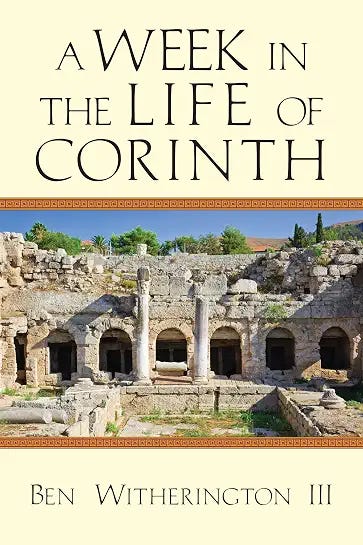
Author: Ben Witherington III
Biblical Studies
Regularly $20.99, Today $4.99
Ben Witherington III is one of the more widely cited New Testament scholars working today, and this book takes an unusual approach to teaching first-century context: he wraps the scholarship in a narrative, following characters through a week in Roman Corinth as Paul’s letters would have been received there.
The structure alternates fiction with short explanatory sidebars on the actual history—patronage networks, household slavery, the meat market’s connection to temple sacrifice, the social geography that made Paul’s instructions about meals and status genuinely difficult. The narrative makes the scholarship stick in a way a straight commentary rarely manages. ️
The payoff is reading Corinthians afterward and recognizing why the church there fought about the things it fought about. Witherington’s academic credentials mean the historical reconstruction is careful rather than speculative, and the series has become a staple in seminary and small-group settings alike.
Why this illuminates: it’s rigorous first-century scholarship delivered as story, from a major New Testament scholar, at five dollars against a twenty-one-dollar list.
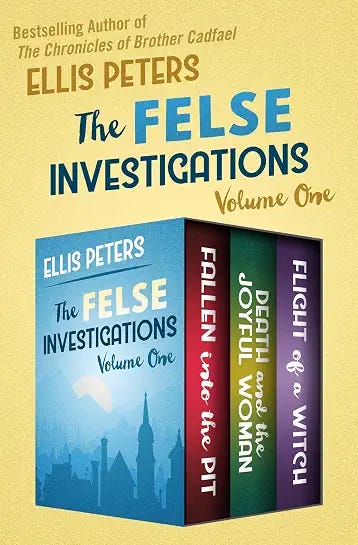
Author: Ellis Peters
Mystery
Regularly $25.99, Today $3.99
Ellis Peters is best known for Brother Cadfael, but the Felse Investigations came first and are arguably more interesting as a series—a police inspector, his wife, and their son Dominic, with the family growing up in real time across the books rather than being frozen in place.
Fallen into the Pit is set in the immediate aftermath of the Second World War in a Shropshire mining village, and it’s a genuinely unusual book: the murder victim is a former German prisoner of war, and the investigation exposes exactly how much of the war the village has not finished fighting. Death and the Joyful Woman won the Edgar Award in 1963. ️
Peters writes English village life with an insider’s precision and a novelist’s interest in character over puzzle mechanics. Dominic’s presence gives the series its warmth, since Peters is willing to let a teenager be genuinely useful and genuinely frightened. Three complete novels here for anyone who has read Cadfael dry. ️
Why this rewards you: it’s three novels by a Golden Age-adjacent master, including an Edgar winner, at four dollars against a twenty-six-dollar list.
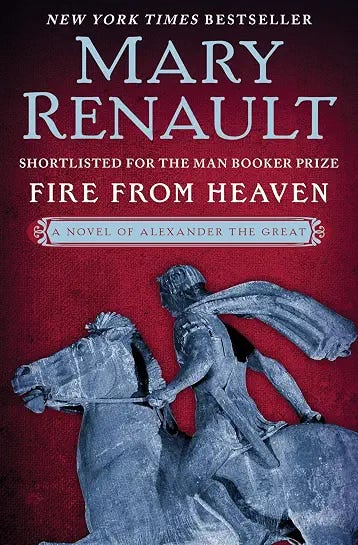
Author: Mary Renault
Historical Fiction
Regularly $17.99, Today $2.99
Mary Renault’s Alexander trilogy is widely considered the finest historical fiction written about the ancient world, and Fire from Heaven covers the years before the conquests: Alexander’s childhood in Macedon, a court poisoned by his parents’ mutual hatred, and an education under Aristotle that shaped everything after. ⚔️
Renault’s achievement is inhabiting a genuinely alien value system without either apologizing for it or exoticizing it. Her Macedonians think about honor, the gods, and love in ways that don’t map onto modern assumptions, and she trusts the reader to follow. The prose is spare and formal in a way that suits the material completely. ️
Her treatment of Alexander’s relationship with Hephaistion was notable for 1969 and remains central to why the trilogy matters to many readers. Renault was writing openly about same-sex love in the ancient world decades before that was commercially safe, and she did it without special pleading. Persian Boy and Funeral Games follow.
Why this endures: it’s a genuine classic of historical fiction, still the standard against which the genre is measured, at three dollars.
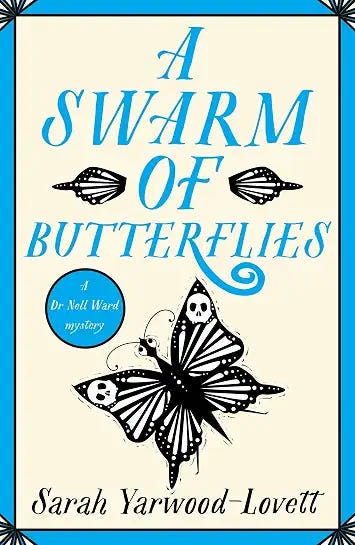
Author: Sarah Yarwood-Lovett
Mystery
Regularly $10.99, Today $1.99
Sarah Yarwood-Lovett worked as an ecologist before turning to crime fiction, and her Dr Nell Ward mysteries put that expertise to genuinely clever use. An ecological surveyor spends her working life observing what most people never notice—habitats, tracks, disturbances in a landscape—which turns out to be an unusual and effective investigative skill set.
The English countryside setting is more than backdrop. Development pressure, protected species, and the money at stake when a survey blocks a project give the books a credible motive engine that most cozy-adjacent mysteries have to manufacture. The science is accurate because the author actually did the job.
Nell herself is a well-built lead, professionally confident and personally more complicated, and the series has drawn comparisons to Richard Osman for its warmth alongside real plotting. This entry works as a standalone, though the recurring cast rewards reading in order.
Why this appeals: it’s a fresh, expertly grounded mystery with an investigator unlike anyone else on the shelf, marked down eighty percent to two dollars.
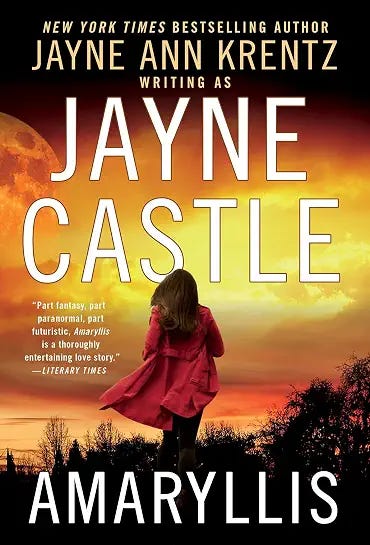
Author: Jayne Castle
Paranormal Romance
Regularly $3.99, Today $1.99
Jayne Castle is one of Jayne Ann Krentz’s pen names, reserved for her futuristic and paranormal work, and Amaryllis opens the St. Helens books on a colony world cut off from Earth where psychic abilities are ordinary enough to be professionalized and regulated.
The premise is characteristically clever: talents need focus specialists to channel their power safely, which creates a working partnership with built-in intimacy and built-in professional friction. Castle uses that structure the way she uses everything—as a frame for competent adults negotiating with each other rather than swooning.
The mystery plot runs alongside the romance with the tidiness Krentz has been delivering for forty years, and the world she built here eventually expanded into the long-running Harmony and Rainshadow books. Readers who like the psychic-partnership subgenre will find this is close to its origin point. Heat stays warm rather than explicit.
Why this delivers: it’s a smart, thoroughly entertaining series opener from a genre architect working under her sci-fi name, at two dollars.
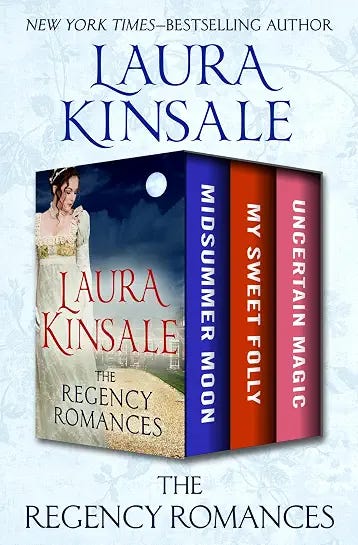
Author: Laura Kinsale
Historical Romance
Regularly $23.99, Today $3.99
Laura Kinsale occupies a particular place in romance history: the author serious readers point to when arguing that the genre produces real literature. Her heroes are damaged in specific, inconvenient ways rather than broodingly, and her prose is denser and stranger than the market usually rewards.
Midsummer Moon features an inventor heroine obsessed with building a flying machine and a hero who has to work out how to love someone whose attention is elsewhere. My Sweet Folly is an epistolary romance that turns considerably darker than its opening suggests, and Uncertain Magic gives its hero genuine mind-reading and treats it as an affliction rather than a gift.
Kinsale wrote relatively few books and stopped fairly early, which is part of why her reputation has grown—there’s a finite body of work, and the devoted readership has read it repeatedly. Flowers from the Storm remains her most famous, but these three show the range. Heat is present and emotionally charged. ✨
Why this rewards you: it’s three novels by the author romance readers cite as the genre’s most literary voice, at four dollars against a twenty-four-dollar list.
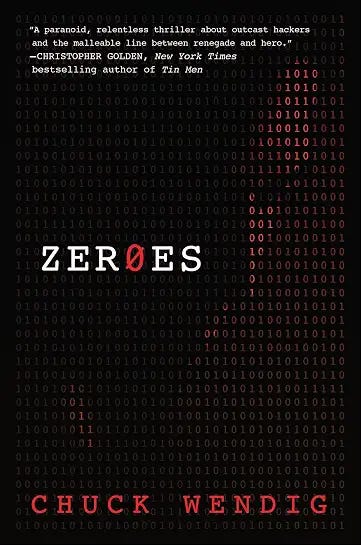
Author: Chuck Wendig
Techno-Thriller
Regularly $14.99, Today $2.99
Five hackers get caught and offered the standard deal: work for the government or go to prison. What they find inside the program is considerably worse than either option, and Chuck Wendig escalates from there with the aggression that characterizes everything he writes.
The ensemble is the draw. Wendig writes distinct, abrasive, frequently unlikeable people—a troll, an activist, a con artist, a paranoid conspiracist—and forces them into cooperation without sanding down what makes each of them difficult. The dialogue is profane and extremely fast, which is Wendig’s signature register. ⚡
The technology holds up better than most thrillers of its vintage because Wendig was writing about social engineering and surveillance rather than magic hacking. It goes somewhere genuinely strange in the back half, further than the setup suggests. Readers who liked Daemon or Mr. Robot’s paranoid energy will find the wavelength familiar. Content is graphic and the language is relentless.
Why this grips: it’s a fast, nasty, inventive hacker thriller from a distinctive voice, marked down eighty percent to three dollars.
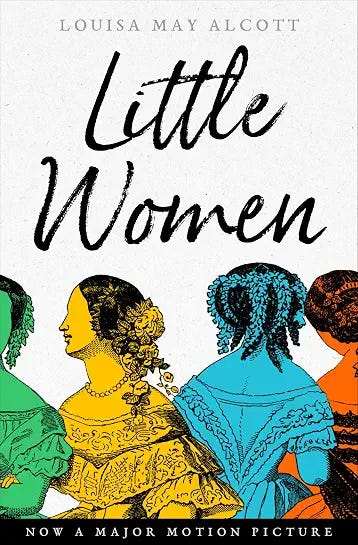
Author: Louisa May Alcott
Classic Literature
Regularly $6.99, Today $1.99
Four sisters in Civil War Massachusetts, a father away at the front, and not enough money—Louisa May Alcott’s 1868 novel has survived a century and a half because she wrote children who behave like actual children, with tempers, vanity, jealousy, and ambition intact. ️
Jo March remains the reason. A girl who wants to write, resents the constraints on her sex, and cuts off her hair for money was a genuinely radical figure, and generations of writers have named her as the character who first showed them the possibility. Alcott herself wrote the book reluctantly, at her publisher’s insistence, and resented Jo’s eventual marriage.
What surprises adult rereaders is how sharp it is about money and class, and how unsentimental about death. Greta Gerwig’s 2019 adaptation drew a fresh wave of readers, particularly to the novel’s ambivalence about what a woman must trade for a career. Beth’s chapters land differently at every age.
Why this endures: it’s one of American literature’s permanent fixtures, and two dollars for a book you’ll return to for decades is nothing.
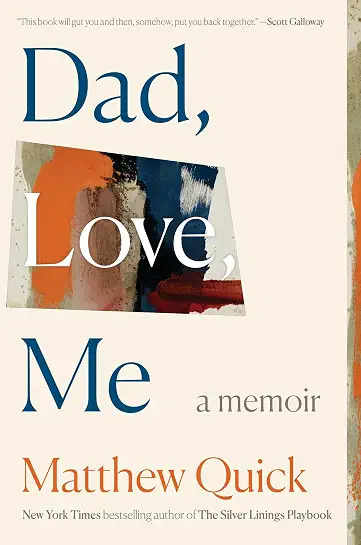
Author: Matthew Quick
Memoir
NEW RELEASE
Matthew Quick wrote The Silver Linings Playbook, a novel about mental illness, family, and the difficulty of being loved that became an Oscar-winning film. Here he turns to nonfiction and to his own father, which for a novelist who has spent a career writing fictional fathers is a considerable step.
The title reads like a signature at the bottom of a letter, and the ambiguity is doing work—an address, a plea, and an instruction all at once. Father-son memoirs live in that gap between what was said and what was meant, and Quick has spent his fiction career mapping exactly that territory.
His novels consistently treat mental health with unusual candor, and readers of Silver Linings or The Good Luck of Right Now will expect the same honesty applied to his own family here. Books like this ask the author to be fair to someone who cannot revise the account, which is the hardest thing the form requires.
Why this matters: it’s a newly released memoir from a novelist whose whole body of work has been circling this subject.

Author: Paul Theroux
Travel Writing
NEW RELEASE
Paul Theroux has been the most reliably curmudgeonly travel writer alive for half a century, from The Great Railway Bazaar onward, and at this stage of his career he turns to Canada—a country Americans generally decline to think about with any specificity.
The Theroux method is unchanged: overland, slowly, talking to whoever is available, and recording what people actually say rather than what a tourist board would prefer. His genius has always been the willingness to be bored, uncomfortable, and unimpressed, which produces observations no itinerary-driven writer ever reaches.
The ancestral thread in the subtitle suggests something more personal than his usual dispatches, and Theroux writing about his own connections rather than someone else’s country is a different proposition. Readers should expect the crankiness that has always divided his audience—he is not a generous companion, but he is an exceptionally sharp one.
Why this compels: it’s a newly released journey from one of the last great practitioners of the form, working close to home for once.
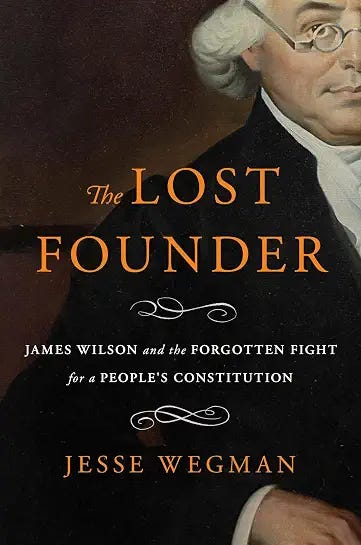
Author: Jesse Wegman
History
NEW RELEASE
James Wilson signed both the Declaration and the Constitution, served on the first Supreme Court, and argued more forcefully than almost anyone at the Convention that sovereignty belonged to the people directly rather than to the states. He then died broke and fleeing creditors, and largely vanished from public memory.
Jesse Wegman writes on the Supreme Court for the New York Times editorial board and previously published a well-received case against the Electoral College, so his interest in Wilson is not incidental. Wilson was the Convention’s leading advocate for popular election of both the president and the Senate, and losing those arguments shaped the system Americans still argue about. ⚖️
Readers should know Wegman writes with a clear position on constitutional structure, and this is history in service of a contemporary argument about majority rule and democratic legitimacy. Wilson’s own record is genuinely complicated, including his land speculation and his views on slavery, and readers wanting the fuller picture will want other accounts alongside it.
Why this engages: it’s a newly released recovery of a founder whose losing arguments explain a great deal about the present.
Comments
Nothing yet. Say the first thing.
Sign in to join the conversation.