
This is my monthly wrap up where I talk about some of my favourite things from the last month. What I’m reading, enjoying, looking forward to—sort of anything floating my boat.



Below is a rundown of every book I read last month. I’ll be adding a star next to my standouts, like a starred review where a star isn’t a 1 to 5 scale, it just means good!
Before the written ramblings, here is a video version of my monthly wrap up if you’re more of a visual person:
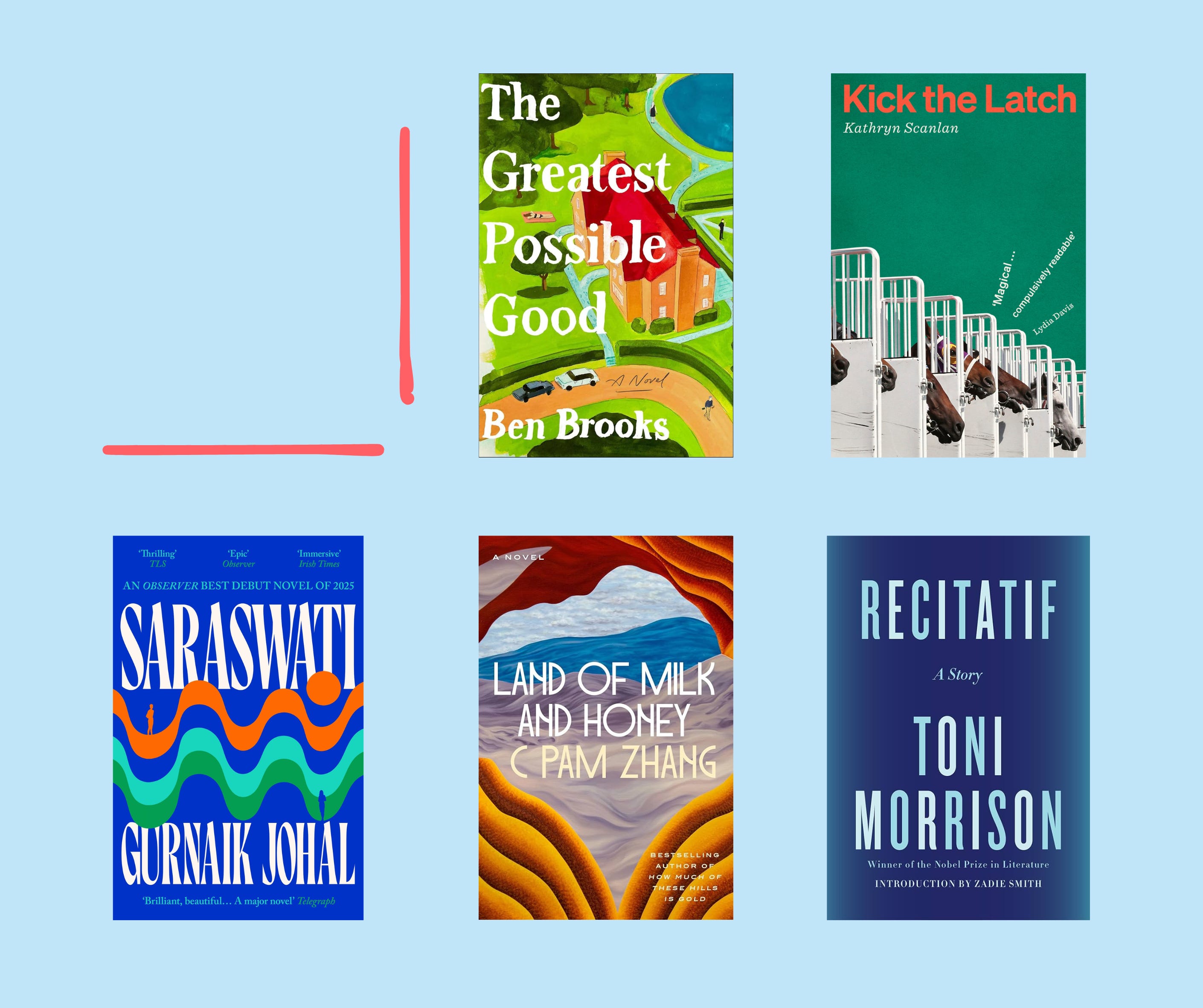
The Greatest Possible Good by Ben Brooks
This is the third book I read for the Sunday Times Young Writer of the Year Award! I also interviewed Ben for the prize, and you can read our chat here.
The Greatest Possible Good is an in-depth look at the four members of a wealthy English family over the course of many decades. It begins with the patriarch getting stuck in a hole for three days. During this time, all he does is read a book about effective altruism. When he is rescued, he decides to donate all of his money.
All four of these characters deal with the repercussions of that decision for the rest of their lives. Privilege, class, wealth, how do these people’s identities change when these things are stripped away?
It was very interesting to follow them as they struggled with the concept of goodness. Sometimes being good is easy, sometimes it’s very hard. We get to look through the window of a stately manor as this dysfunctional family falls apart because none of them can agree on just how altruistic they should really be.
This was reminiscent of The Bee Sting, where we jump around each character’s head with impressive precision. The writing is cinematic and colourful (not so surprising seeing as Brooks is also a TV writer), I can easily see a limited series in the book’s future.
Kick the Latch by Kathryn Scanlan
This book has stared back at me from the central display of my favourite indie bookstore in Montreal for years. I didn’t know what to expect going into it, and I think that only helped the book land more.
Kick the Latch is a series of vignettes that are strung together to paint the portrait of one woman’s life. It’s based on a series of interviews with a horse trainer and it fictionalizes her story. The narrator’s strength was impressive throughout—from working in a male-dominated field and the abuse that comes with that, to the brutality she is subject to outside of the workplace.
A race track, much like life, has an expected course, but in this book even a turn you know is coming felt surprising.
I’ve come to understand that a vignette novel almost always works for me. The kind of read that feels more like an old quilt with loose stitching you find in an attic. I think some of that has to do with the fact that I don’t write that way, I don’t conceive of stories that way, and so it immediately draws me in with curiosity. Whatever it is, this short punchy book is doing it and I loved it.
Saraswati by Gurnaik Johal
This is the final book I read for the Sunday Times Young Writer of the Year Award! I was convinced this one would take home the prize because of how impressive a debut it was. While it didn’t win, I certainly enjoyed it.
Saraswati is a connections novel. I heard someone describe this kind of novel and their rise in popularity. It’s more tightly woven than a short story collection, but is comprised of what are essentially sections that could stand on their own. Flesh by David Szalay is an example that comes to mind. I’m still not sure how I personally feel about this kind of novel taking over… Only time will tell. Ok, end of sidebar about connections novels.
We follow seven strands, all focused on descendants of one family and all connected to the mythical Saraswati river in India. Each of these people are so distinct—different places, different timelines. It’s so impressive that Johal manages to juggle all of this and still land the plane in the end.
It’s ancient mythology meets the modern world, man vs. nature, capitalism vs. the environment. The fact that it feels so current while being quite wild is alarming.
Again, I am so floored by Gurnaik Johal’s talent. He takes a big swing and doesn’t miss. I’m excited to read whatever he does next!
Land of Milk and Honey by C Pam Zhang
This is another one of those books I’ve seen front and centre in so many indie bookstores, and I finally took the plunge.
Land of Milk and Honey is set in a near-future dystopian version of our world where resources are dwindling. Food is scarce, being a chef is no longer creative, it’s simply a functional role. That is the position the book’s narrator is in until she gets hired to work in a mysterious compound for an elite few.
There’s a hint of mystery to this literary novel where we only get breadcrumbs about what this compound really is. We’re alongside her as she watches power and wealth in the face of global devastation.
The food writing in this book is also beyond. It’s the feeling of rediscovering a common strawberry after years without, and it’s conveyed all the way through.
As I was writing this, I realized her debut novel (How Much of These Hills is Gold) was a smash hit I’ve seen a million times. Booker Prize nominee on a debut? No wonder this had exquisite writing and a premise that actually gets delivered on.
Recitatif by Toni Morrison ★
I love Toni Morrison. I love Toni Morrison, but I can’t read her books often. It’s going to be a lifelong task to read her bibliography because every time I read one of her novels, I get stuck and have to stare out of a window for weeks.
Recitatif is Morrison’s only short story, maybe closer to a novella, which is quite interesting. Often times writers will have short story padding all around their novels, but everything she wrote was intentionally stretched into a entire world of a book.
This story feels perfectly calibrated and I could tell she had a great time writing it.
It follows two girls as they grow up, from sharing a room in a foster shelter to crossing paths and butting heads in adulthood. Through it all, we know that one of them is white and one of them is black, but we never know which is which. In the story, hints are dropped and then flipped the next second.
It plays with expectation, perception, bias, and relies on the reader making assumptions… but then takes on a life of its own as you question your assumptions, the reasons you have assumptions, and so on. It really devolves into a fascinating thought exercise.
While this is super short, I think it delivers quite the blow and a lasting impact. Everyone should read this.
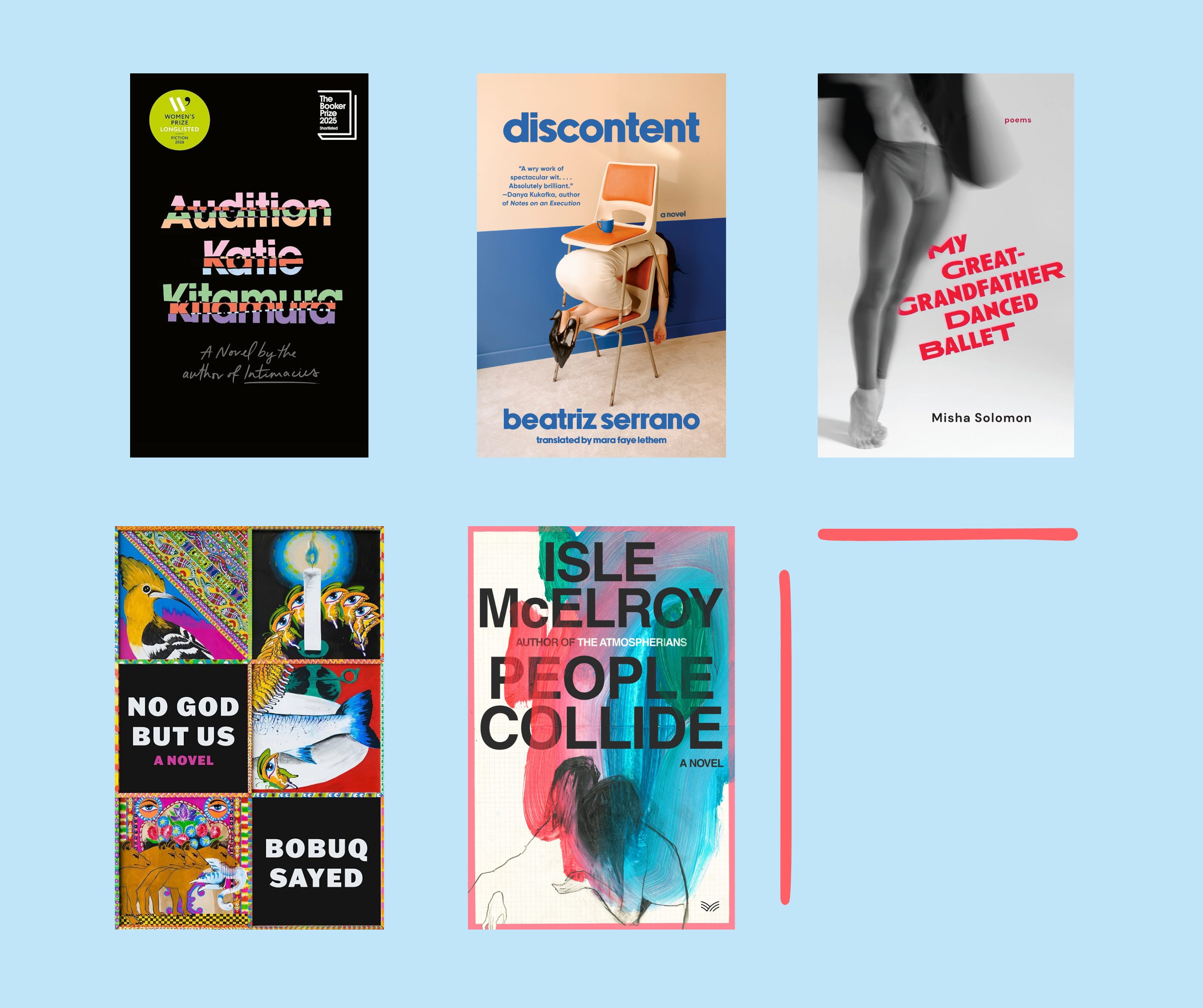
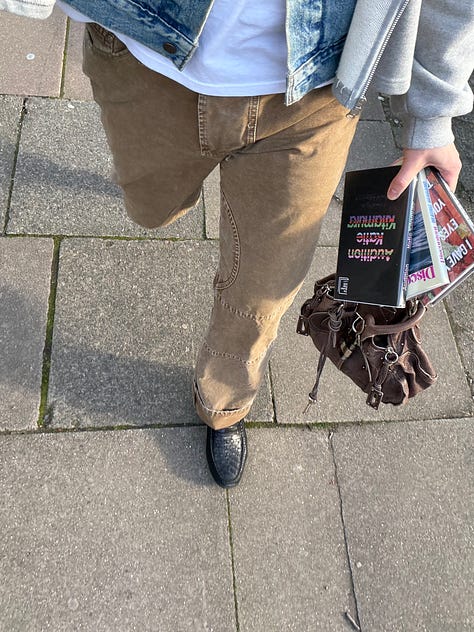
Audition by Katie Kitamura ★
I had my eye on this when it was on the Booker shortlist last year, and it was top of mind for me again after it got longlisted for the Women’s Prize this year. I’m so glad I finally read it.
Everyone I’ve seen talk about this says you should go into it without knowing much, and I have to agree. Because of this, I’ll keep my summary quite short.
It’s about a stage actress of a certain age who examines the different roles on and off stage she plays in her life. There’s a touch of kooky in the way this is constructed, and that really worked for me. I think it will even work for people who don’t love the weird.
The writing was evocative and electric, there was a real sense of something being alive in the novel when I read it. I loved it and I will be reading more Kitamura very very soon.
Discontent by Beatriz Serrano (tr. by Mara Faye Lethem)
I think I’m now able to say that Mara Faye Lethem is my favourite translator working today. Irene Solà, Pol Guasch, Alana S. Portero… I just love her eclectic taste and the books she translates are always in my wheelhouse.
Discontent is a novel about Marisa, a creative strategist in an ad agency, who hates her job. She hates it, and what it means for her to be defined by it, and focuses all of her energy on avoiding doing any actual work. It’s a novel about someone who hates their job but it is entirely about her job.
The millennial ennui of this, the satire, the relatable nature of having existential dread in the face of working in advertising… it’s all there and done very well. Things towards the end of the novel start to devolve, it changes pace and picks up into something strange that still worked for me.
I think this novel is the perfect length and, had it been longer, maybe it would’ve become redundant. Luckily, we don’t have that problem here, we’re in and we’re out before we can even figure out if she’s any good at her job.
Serrano has another novel out, about a young woman dealing with grief in 1993, but it hasn’t been translated yet. I will definitely be picking it up once Mara Faye Lethem is done with it.
My Great-Grandfather Danced Ballet by Misha Solomon ★
I read an early version of this and was so excited to see it come to life. It does everything I want poetry to do when I read it: move me, make me laugh, inspire me, and remind me that ‘hole’ rhymes with ‘pole’.
This is a narrative poetry collection—I think it will hit even if you aren’t a massive poetry fan—that investigates queerness past. A very common experience for queer people is to consider our ancestry and whether there are other queers that came before us.
The central conversation in this collection is between the poet and himself. There’s a modern day gay person in Montreal reckoning with identity, love, sex, belonging, and then his fictionalized account of a queer ancestor. It feels like someone taking stock of who they are and wondering how that all came to be.
Solomon plays with form, with the page, with the reader, it’s such a joy to spend time with his words.
No God but Us by Bobuq Sayed (out May 26th) ★
It’s very interesting to get to a point in the “““literary space””” where I get to read work friends are involved in. In a way, there’s added pressure, but there’s also some insurance because of the trust in their talents.
When Ezra Kupor sent me this book he edited, that’s exactly how I felt. I just knew I was going to love it.
I’ve seen people describe this book as a love story first, touching on the yearning and the romance arc. While that is a piece of this book, I found it much more complex and much more interesting. The two main characters and their pull to each other is the outline of the painting, but the way it is coloured in is just as vibrant.
It’s the story of two Afghan men who, for very different reasons, find themselves in Istanbul. They circle each other as they both find community with a group of queers. They connect over their similarities and clash over their differences. It’s messy, it’s so queer, it’s loud, and it doesn’t pull any punches.
There’s an examination of displacement and diaspora, identity and belonging, love and desire and sex… It’s all packed in here and executed beautifully. I can’t wait for everyone to read this!
People Collide by Isle McElroy ★
This always happens to me. I put off reading a book for ages, only to end up absolutely loving it and being annoyed at myself for taking so long. Isle McElroy is one of those writers I just kept missing, but I won’t anymore.
People Collide is about a married couple who wake up in each other’s bodies. This isn’t so much about the why or the how of the supernatural element, it’s about the what now. We follow the husband, living in his wife’s body, as he adjusts to this new reality and figures out what embodying his wife teaches him about himself.
I loved the magnifying glass held up to the idea that being with someone for so long, your edges can start to blend and you can forget who you are outside of the ‘we’. This person is finding out he’s been in his wife’s shadow and it takes being her to figure that out. So brilliant.
This was divine. I love a novel that has a weird premise and then makes you forget it’s a weird premise. I never once thought about the logistics of their body swap, I was more concerned with the intricate character work. Loved this. Need to read everything Isle McElroy writes.
We’re doing things a little differently this month because this dispatch is sponsored by Book of the Month!
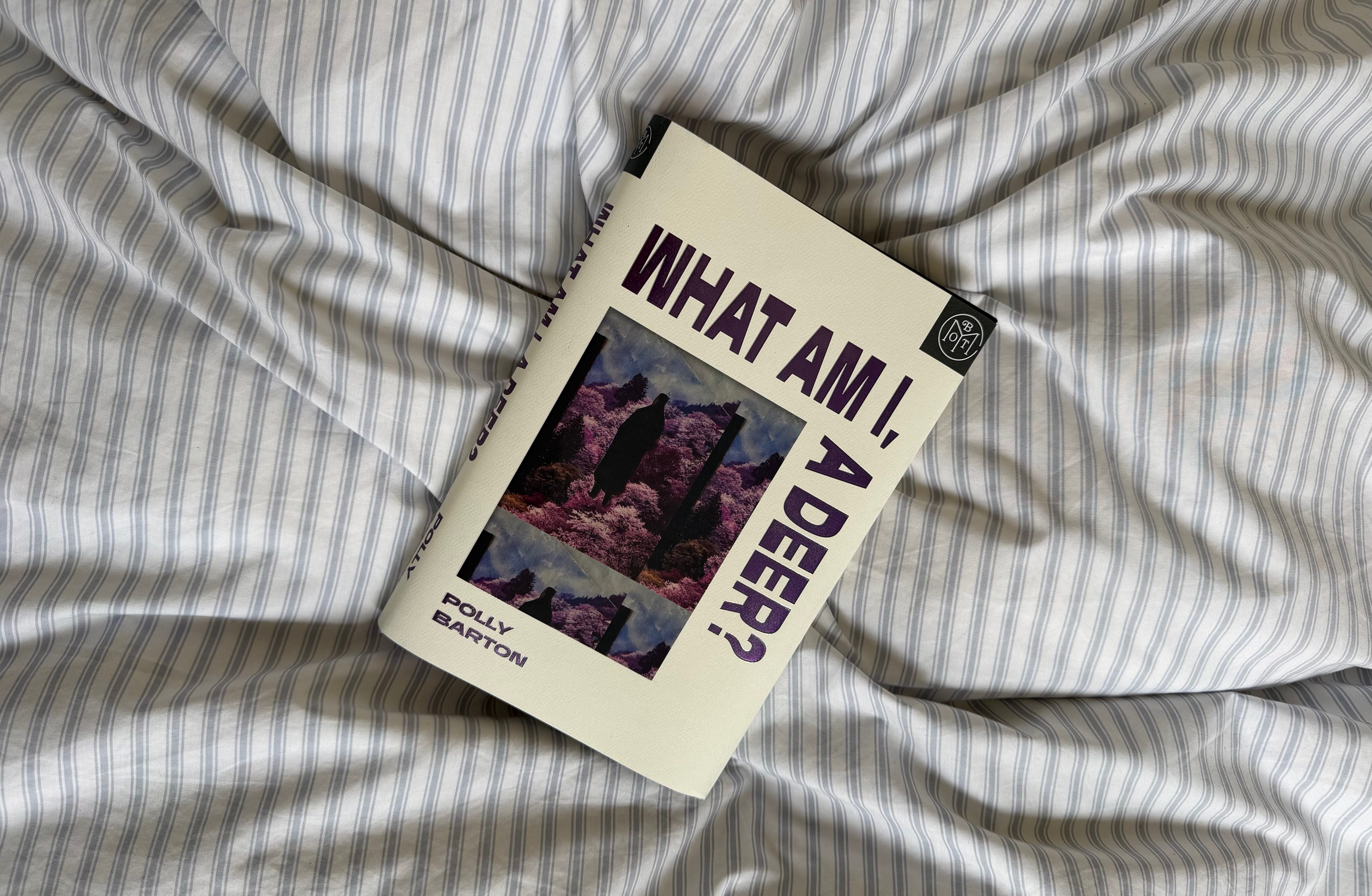
As if I couldn’t be more impressed by Book of the Month’s selection... but then they launch a collection of slightly weird, character-driven literary fiction. The collection is called The Offset and it might not fit everyone’s taste, but it’s definitely up my alley.
What am I, a Deer? by Polly Barton is the latest title from The Offset. Barton is a very prolific translator and non-fiction writer that I’ve had my eye on for a while, and this debut fiction novel of hers sounds incredible.
It’s about a translator from London who takes a job at a video game company in Frankfurt. This move is meant to start a new chapter for her and allow her to self-actualize, but a growing obsession with a man on her daily commute puts a wrench in those plans.
It’s an engrossing look at modern life, the intricacies of self-consciousness, and the weight of societal expectations on women. While it has lots of depth, it’s also supposed to be very funny… My favourite combination!
You can click here to join me and get your first Book of the Month book for just 100 cents to celebrate their centennial! That’s right. It’s their birthday, but they’re giving you a gift!
What did you read and love in March?!
Let me know in the comments!
That’s been my month! Typos (if any) were made on purpose, obviously.
Until next time 🤠
No posts
Comments
Nothing yet. Say the first thing.
Sign in to join the conversation.