
Good morning! It’s Wednesday, and here’s this week’s post. As a reminder, my third book, In Defense of Evangelicalism: A Response to Its Cultured Despisers, releases on September 1. Take a look at its gorgeous cover, and:
Pre-order 'In Defense of Evangelicalism'
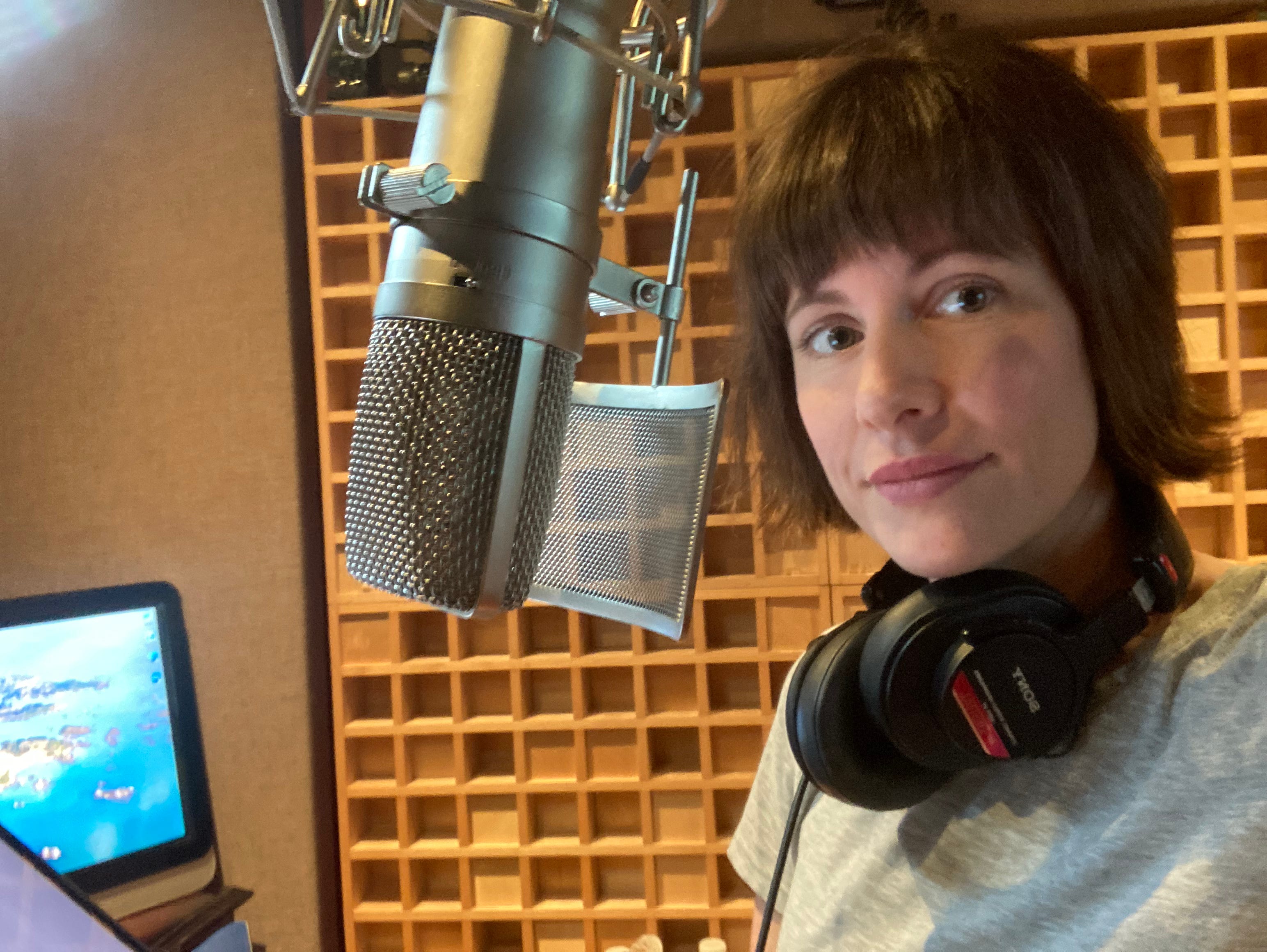
Another weird week for me, not because I’m on a reporting trip, like two weeks ago, but because I’m spending three days straight in a local recording studio, doing the audiobook for In Defense of Evangelicalism.
This is my third book, but it’s the first time I’ve recorded the audiobook myself. Partly that’s because it’s more expensive for the publisher to have the author go to a studio (my understanding is that professional narrators usually do their work in home studios, which makes it cheaper). But partly it’s because I just didn’t know to push for doing it myself the last time around. This time I did, and my great agent (Keely Boeving, highly rec!) was able to help make it happen.
That slow realization is of a piece with my whole situation on book promotion, which is not one of my top skills. Intellectually, I understand why it works the way it does and why it’s important. I read and admire Leigh Stein’s advice to authors regularly, and it all makes a ton of sense in the moment. While reading, I psych myself up: I can make the posts!
But, well, the minute I close the tab, I am “like unto a man beholding his natural face in a glass: For he beholdeth himself, and goeth his way, and straightway forgetteth what manner of man he was.” Or, in my case, straightway forgetteth what manner of posting I’m supposed to do to sell books.
Here, I think, is good for a book link
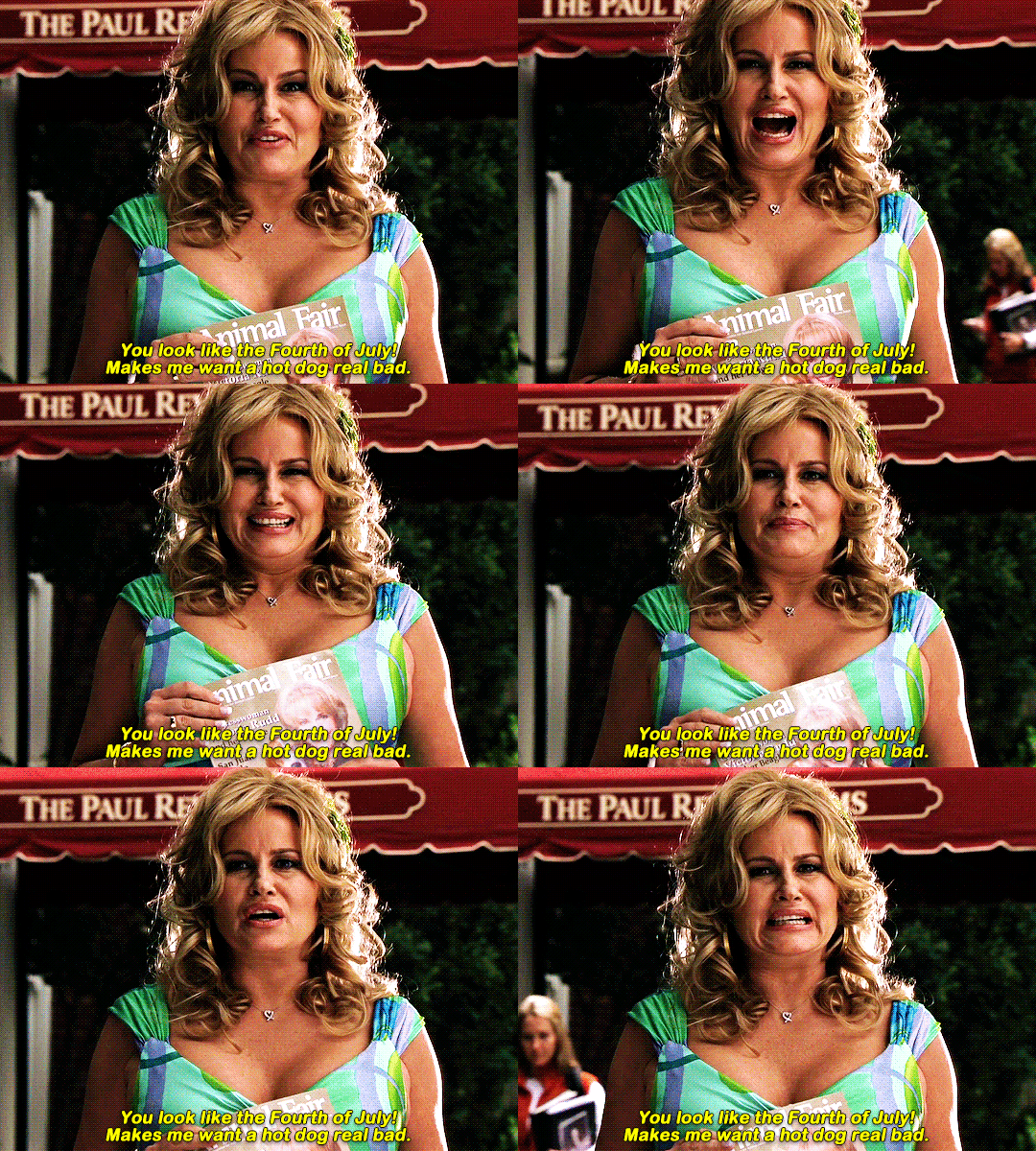
Anyway, doing the audiobook myself is important for two reasons, I think. One is that a friend tells me that the narrator on my second book, Untrustworthy, sounds a lot like Jennifer Coolidge, whom you may recall from Legally Blonde. Coolidge is an adept character actor, but uhhh not exactly my vibe.
Second, my instinct is that—in the podcasting age in particular—people who favor audiobooks won’t feel like they “know” me if my books are narrated by a third party. This seems a little calculated, I realize, like I’m deliberately ginning up a parasocial relationship, but I’m pretty sure it’s true. I’ve noticed that pattern in myself with the two podcasts I follow.1 It’s weird, but it is what it is.
The recording process itself has been pretty fascinating. There’s a sound engineer in the studio with me, and then a director monitors the whole thing remotely over Zoom. Both have been wonderful—competent and helpful throughout. I have learned, tragically, that I am so weak my back is sore from sitting up straight on a stool while recording, but otherwise it’s been a good experience, and hopefully that will show up in the audiobook.
Also, you know how you look better in a professional photo taken with a good camera and the right focal length? It seems like maybe there’s something similar with sound: Like many (most?) people, I don’t like listening to recordings of my own voice, but the playbacks here sound … normal. Good, even! Truly wild stuff.
FYI you can pre-order audiobooks too!
Now, while continuing to give a behind-the-scenes look at my work, I’m going to make a hard pivot here to run through the articles I wrote and edited in the July-August issue of Christianity Today. I don’t normally go over my editing work this way, but I had a lot in this issue, and these pieces were in conversation with one another to a degree my edits usually are not.
All of these will be unlocked links so you can read without a subscription, but by all means subscribe! The September-October issue is going to include the sole adapted excerpt from In Defense of Evangelicalism—and, exclusive to the magazine, it’s going to include original photography for the story I reported in this section. I just got a look at the photos a couple days ago, and they look great, so I do encourage you to get that in your mailbox along with the book.
Ok, on to the articles:
This is my essay, something between a personal reflection, retrospective, and review of Kirk’s final book, which published posthumously in December. The pessimistic side of me worries Kirk’s fans will only see my criticism—and his critics will only see my praise. The truth is, it’s both. This is a good-faith wrestling with the complicated legacy of a maturing young man and a book that, on balance, I’m sincerely glad was a bestseller. But—spoiler alert—it’s also a book I came to suspect was composed with the help of generative AI. Read the whole essay here.
Here Justin accomplished the rare feat of writing a positive Fourth of July essay that felt neither saccharine nor stale. He engages an 1874 speech by the African Methodist Episcopal pastor and U.S. congressman Richard H. Cain, and the whole article is a nice integration of themes Justin has been developing in his work at CT over the last year and a half.
Brad’s negative book reviews are my favorite, and this one—a review of a posthumous volume from Old Testament scholar Walter Brueggemann—is critical but never unkind. That said, here’s the kill shot:
He wants, in a word, for the pulpit to be radically politicized. In the same breath, however, he denounces others for politicizing the pulpit in all the wrong ways—that is, ways that contradict his own firmly held political opinions.
This politicization is omnipresent in the book and at times it makes it difficult to read. There are few passages of Scripture that Brueggemann cannot, in the end, connect to Donald Trump.
This is an excerpt from a 1968 book I read—and adored—while researching for In Defense of Evangelicalism. I probably raved about it here at the time. You absolutely cannot borrow my copy, because it’s out of print and hard to find, and I’m not losing this one. But now you can read almost all of one chapter thanks to the Pannell family’s grant of permission to publish it. Do not miss this one—I mean, the headline alone! In my entire career, I’ve never written a headline as intriguing as “my friend, the enemy.”
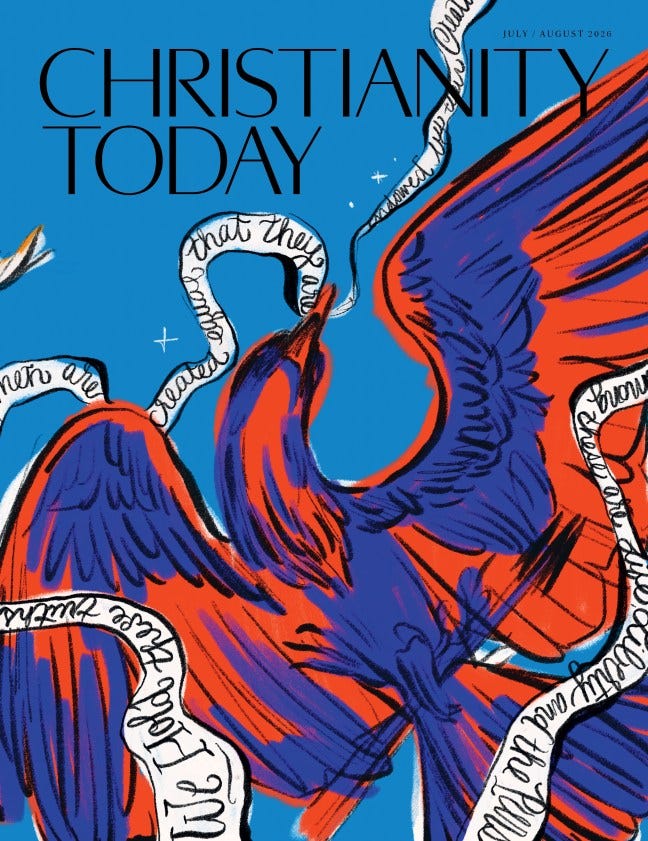
This too is an indirect product of my research. Marsden is a major historian of evangelicalism, and I read a several of his articles while writing my book. He was kind enough to give me an interview, and after that we got to talking about this essay for CT. I especially recommend it to people my age and younger who only have a vague notion of what happened in the decades he covers—it’s about that awkward span too recent to be in your history books but too old for you to personally remember.
This is very classic Carrie: public health, West Texas, a bit of reporting, a bit of theology, a bit of reflection, and nuance, nuance, nuance. This story actually originally ran online last year, but as we were thinking about how to mark America 250, it just felt right to put it in print.
Another good one from Brad, also online first and also something we determined was apt for this issue. This is a case of me editing across a line of disagreement—I’m personally disinclined to believe just war theory can ever succeed. But if we’re going to do just war theory, Brad has sketched the way it must be done.
Kinda cheating to call this my edit as it originally published in 1976 as one piece of a longer, multi-part article from CT’s first editor. But after a colleague made the smart suggestion of running that editorial for the semiquincentennial, I chose the selection and made a few tiny tweaks to ensure contemporary intelligibility. It’s a worthwhile read, especially for the last third and just to notice the level at which Henry was writing—markedly more scholarly and complex than we (both at CT and in general) tend to prefer today.
This is, sadly, the second-to-last installment of Qualms & Proverbs, CT’s first-ever advice column, created and edited by yours truly. We’re winding it down as part of some wider updates to the magazine, and I’m proud to see all our columnists ending on strong notes here and in the September-October issue.
New from me at Christianity Today: “He Gets Us doesn’t want to talk about the money anymore” (unlocked link)
Back at it with Albion’s Seed, by David Hackett Fischer—definitely going to write about this soon
I suspect “my house is too messy” is an obstacle for a lot of people.
Our house is a mess, too! The wonderful thing about hosting every Monday is that we have the motivation to tackle that mess every week. But we don’t aim for perfection. Instead, we try to be reasonably presentable. We live in a small place, so the goal is to get the kitchen, living room and bathroom tidy. Nobody needs to see our bedrooms and they don’t. We’ve got the routine down to a brisk hour-to-90 minutes before everybody shows up. And then we refuse to stress. We choose to believe our friends enjoy the company more than they disdain our housekeeping.
“The female body was never the problem,” by Ann Ledbetter for A Moderate Midwife
“(No) time to rest,” by Jen Pollock Michel for A Habit Called Faith
It’s perplexing to me how credulous we continue to be about technology’s promises of efficiency, as if efficiency itself were a synonym for rest.
“He compared ICE’s chief to a Nazi, so ICE tracked him down on vacation with his daughter,” by Tosin Akintola for Reason

Emma Ashford@EmmaMAshford
A little known fact: the term “ceasefire” comes from the old English “cease” (meaning stop) and “fire” (meaning fire). Though today it clearly means something different, historians believe that originally the term actually meant the ending of hostilities!

U.S. Central Command @CENTCOM
U.S. Central Command forces have begun launching a series of powerful strikes against Iran to impose heavy costs for targeting and attacking commercial shipping crewed by innocent civilians in an international waterway. The U.S. strikes are in response to Iranian attacks on three
11:10 PM · Jul 7, 2026 · 3.39K Views
2 Replies · 8 Reposts · 45 Likes

Comments
Nothing yet. Say the first thing.
Sign in to join the conversation.