
Good morning! It’s Wednesday, and here’s this week’s post. As a reminder, my third book, In Defense of Evangelicalism: A Response to Its Cultured Despisers, releases on September 1. Take a look at its gorgeous cover, and:
Pre-Order 'In Defense of Evangelicalism'
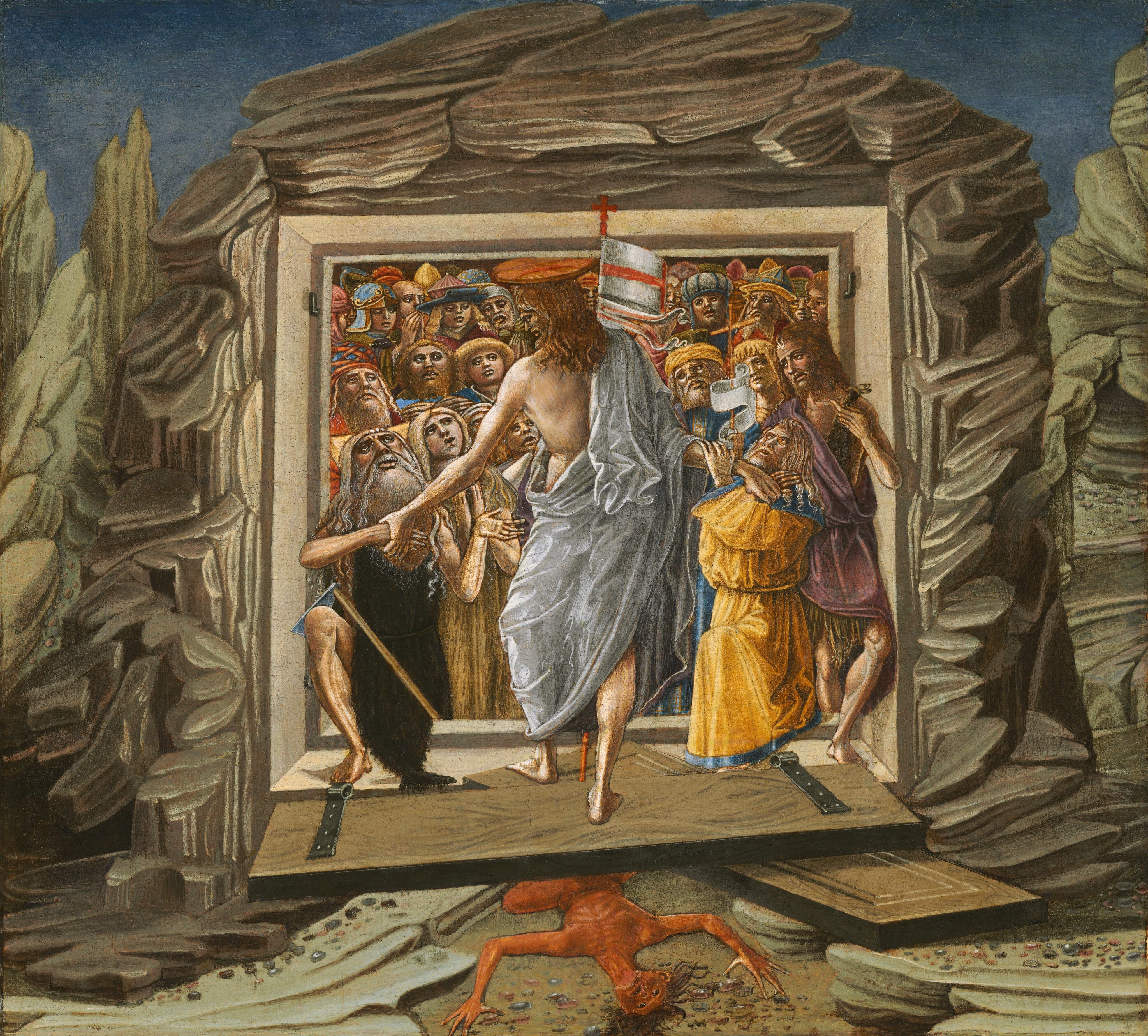
Lately I’ve been thinking about the Resurrection. My small group just finished a study of 1 Corinthians, which ends on a high note with Paul’s argument for the meaning and import of Christ’s Resurrection in chapter 15. This is peak Paul: long chains of reasoning, high enthusiasm, careful argument but also the kind of unstrategic frankness that only makes sense if he’s really sure all this stuff is true.1
And this past week was the Feast of the Ascension, the close of the 40-day period after Easter in which the resurrected Christ went around teaching, eating, and generally surprising folks on a number of fronts before being taken up to heaven while his disciples watched.
At our church, Ascension Sunday is the day each year that the bishop shows up to do confirmations. I got confirmed last year (and wrote about it here), and this year, a friend from that same small group followed suit. It’s a good timing for confirmation our secular and disenchanted world, I think. Hit ‘em with the big supernatural claims of Christianity over the course of a few weeks, and then ask: Are you in?
Pre-order 'In Defense of Evangelicalism'
I mention our secular and disenchanted world, but disbelief in the bodily Resurrection of Jesus is not new. It’s in that chapter of 1 Corinthians, where we learn that one of the (many) problems Paul was confronting in the church at Corinth had to do with someone preaching that there is no resurrection of the dead.
Even by the standards of this letter—which, in the classic typology of Pauline epistles from Clare Coffey falls squarely in the “I am as personal favor begging you sick little freaks to act normal for five minutes” category—Paul here is worked up about the gravity of this error:
But if it is preached that Christ has been raised from the dead, how can some of you say that there is no resurrection of the dead? If there is no resurrection of the dead, then not even Christ has been raised.. And if Christ has not been raised, our preaching is useless and so is your faith. More than that, we are then found to be false witnesses about God, for we have testified about God that he raised Christ from the dead.
But he did not raise him if in fact the dead are not raised. For if the dead are not raised, then Christ has not been raised either. And if Christ has not been raised, your faith is futile; you are still in your sins. Then those also who have fallen asleep in Christ are lost. If only for this life we have hope in Christ, we are of all people most to be pitied.
Yet for all that ancient context, there’s a reason we (or, at least, I) tend to think of dropping the Resurrection as a contemporary phenomenon: We see a choice, as C.S. Lewis put it, between naturalism and supernaturalism—and many take the former.
In another time, I expect the average person would’ve had an easier time crediting the miraculous parts of the story of Jesus and a harder time swallowing the ethics he taught. (Read Nadya Williams on this.) Two millennia in, we’ve realized that the ethics are quite handy if you want a nice life in an orderly society, but that this guidance can be taken and—discarding Paul’s insistence that if Jesus didn’t rise, all of it is worthless—the weird and incredible stuff about an empty tomb left behind.
That may seem plausible, but it doesn’t work that way. As Lewis observed:
The Resurrection is the central theme in every Christian sermon reported in the Acts. … The miracle of the Resurrection, and the theology of that miracle, comes first: the biography comes later as a comment on it. Nothing could be more unhistorical than to pick out selected sayings of Christ from the gospels and to regard those as the datum and the rest of the New Testament as a construction upon it. The first fact in the history of Christendom is a number of people who say they have seen the Resurrection. If they had died without making anyone else believe this “gospel” no gospels would ever have been written.
Still, I understand that if you begin by leaning toward a merely natural world, belief in a bodily Resurrection is a big ask. For me, though, the Resurrection—and the Ascension and the Incarnation and indeed any and every miraculous part of the life of Christ—is the easy part. There are plenty of things about Christianity that I’ve found difficult at one time or another. But not this.
Two reasons here. First, it’s just not hard to buy that the God of Christianity—omnipotent, omniscient, omnipresent, wholly good and just and merciful, his very character identified with love—could heal an illness or walk on water or rise from the dead. Accepting the existence of a God like this: That can be tricky. But once you’re on board with the concept, believing that he would not be bound by death is the simplest thing in the world.
Comments
Nothing yet. Say the first thing.
Sign in to join the conversation.