
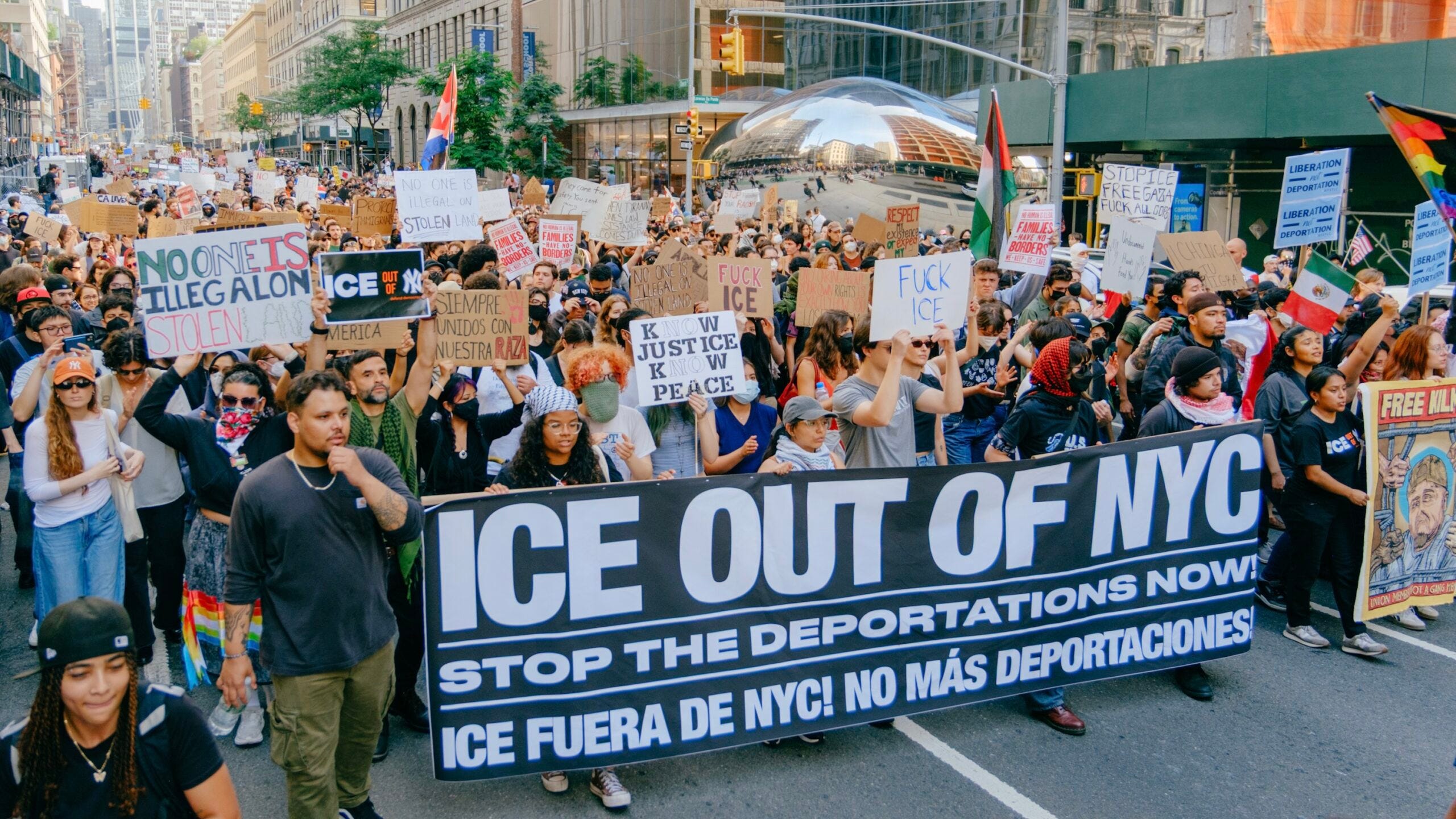
The previous article, “The Architecture of Division” ended on this sentence:
”That is the answer to the wedge. Not agreement. Convergence. We do not have to become one thing.”
Convergence is not naïve hope. It is how change has happened.
During one of the most violent and divided periods in modern American history, movements that did not share a leader, a platform, or even much affection for one another, yet pushed in the same direction. Together, though rarely under one banner, they forced the country toward civil rights, voting rights, environmental protection, workplace safety, and greater equality.
The broader challenge to concentrated power was significant enough to alarm those who possessed it. In 1971, corporate attorney Lewis Powell wrote a confidential memorandum for the U.S. Chamber of Commerce titled “Attack On American Free Enterprise System.” He urged business leaders to mount a coordinated, sustained counteroffensive across universities, the media, the courts, and politics. The document was the grandfather of “Project 2025.”
Ask anyone old enough to remember what the 1960s and early 1970s were like, and you’ll gain insight into the chaos, the violence, and the array of societal divisions.
Medgar Evers, murdered in his driveway in June. Four girls killed in a Birmingham church basement in September. JFK assassinated in November. All of that in 1963.
Then Malcolm X was killed. Then Martin Luther King Jr. in April 1968, Robert Kennedy sixty-three days later. The Democratic National Convention in Chicago. Kent State, where the National Guard fired on students, killing four and wounding nine. Jackson State, eleven days after that, where police fired more than four hundred rounds into a dormitory and killed two more students, and which most Americans cannot name.
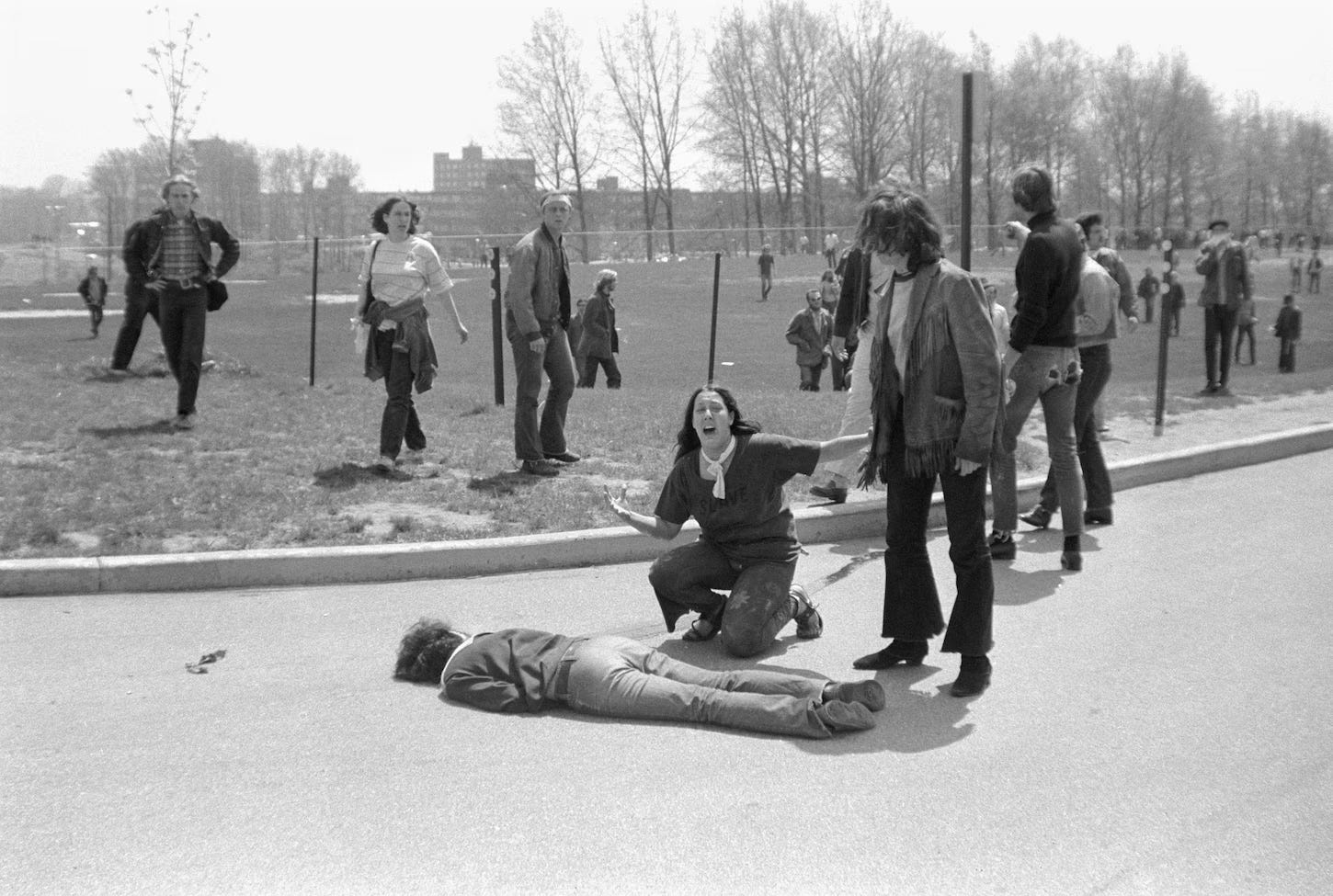
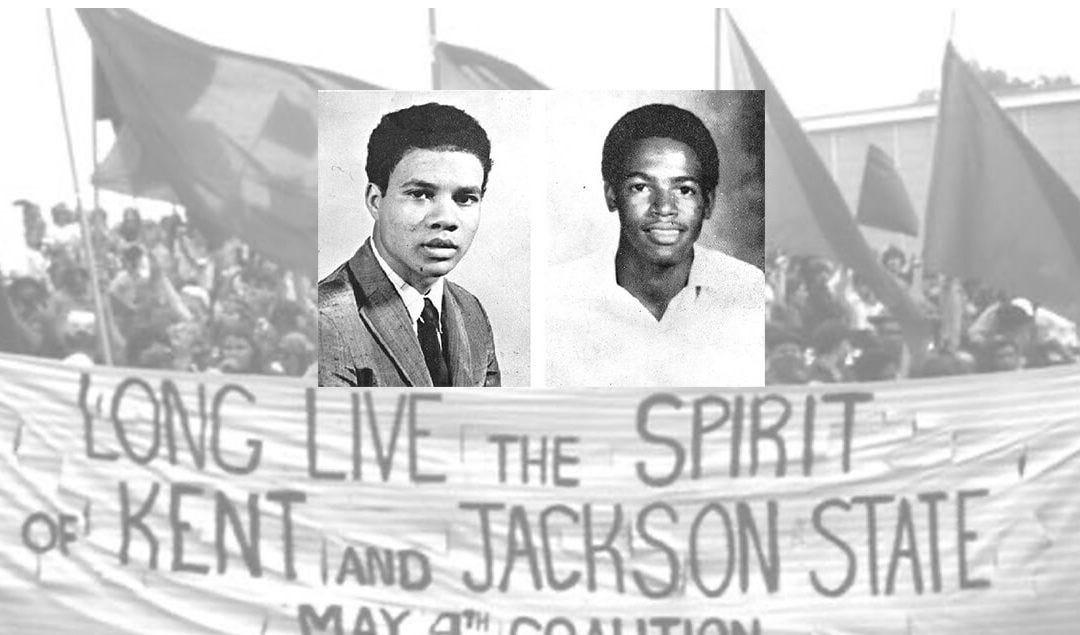
And the part nobody remembers at all: in a single eighteen-month stretch across 1971 and 1972, according to FBI figures cited by historian Bryan Burrough, there were approximately 2,500 domestic bombings on American soil. [1]
Buildings. The Capitol. The Pentagon. Bombings were becoming so routine that newspapers ran it below the fold.
And yet, through the divisions, violence, and chaos, between 1963 and 1974, Americans forced the federal government to deliver:
The Civil Rights Act
The Voting Rights Act
Medicare
Medicaid
The Fair Housing Act
The Clean Air Act
The Clean Water Act
The Endangered Species Act
The Occupational Safety and Health Act
The Consumer Product Safety Commission
The Environmental Protection Agency
Title IX
The expansion of federally funded legal aid
The Freedom of Information Act
The Twenty-fourth Amendment, prohibiting poll taxes in federal elections
The Twenty-sixth Amendment, lowering the voting age to eighteen
Together, these laws, programs, institutions, and constitutional amendments represent one of the most consequential periods of democratic reform in American history.
They did not emerge from national unity. They were won while the country was grieving, fighting, striking, rioting, and sometimes literally exploding.
We remember the assassinations, the violence, the protests, and the division. We forget that ordinary people organized across those fractures and forced the country forward.
That forgetting is useful to power. When history is remembered only as chaos, movements look futile and progress looks accidental, or worse, like a gift handed down by enlightened leaders.
Sources:
1. Bryan Burrough, Days of Rage, citing FBI bombing statistics for 1971–1972; see also Time, “The Bombings Across America That We’ve ‘Forgotten’.” https://time.com/4501670/bombings-of-america-burrough/
Before this history becomes nostalgic, some uncomfortable facts must be remembered.
On May 8, 1970, four days after Kent State, students gathered outside Federal Hall in lower Manhattan to protest the war. Shortly before noon, more than two hundred construction workers and others descended on the demonstration from several directions. They broke through police barricades, beat students and bystanders, and chased protesters through the streets. Some stormed nearby Pace College with crowbars and pipes, smashing windows and attacking students inside. Others forced their way toward City Hall, demanding that the American flag be raised from half-staff. Seventy people were injured. Only six were arrested. Witnesses said police stood by as the attacks unfolded. [2]
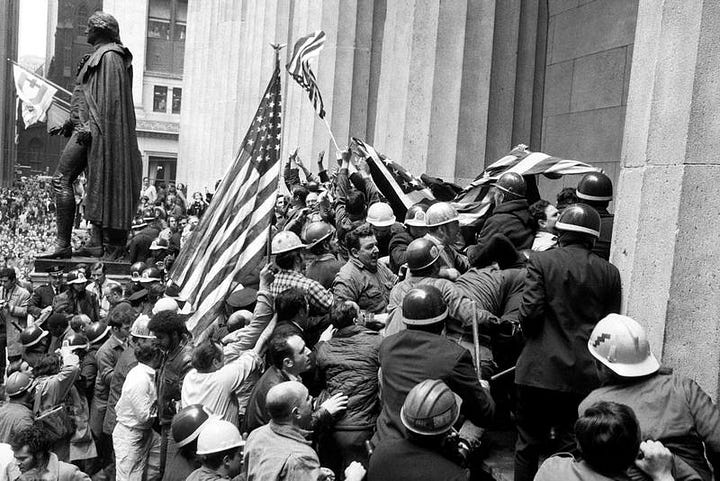
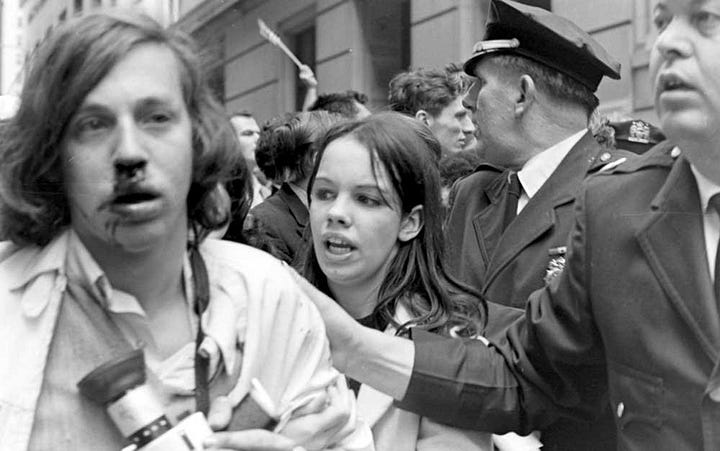
That is labor and the antiwar movement in the same frame, and they were not marching together. They were swinging at each other.
Nor was this the only fracture. George Meany and the national AFL-CIO leadership supported the Vietnam War while antiwar activists condemned it. Workers were warned that environmental protections would destroy their livelihoods, while environmentalists sometimes dismissed those fears. The women’s movement divided over race, class, sexuality, and who was permitted to speak for whom. Students for a Democratic Society tore itself apart at its 1969 national convention, and one of its most militant offshoots became the Weather Underground. Civil rights organizations argued bitterly over nonviolence, armed self-defense, leadership, and Black Power. Even within organized labor, farmworkers had to fight for recognition while unions competed over who would represent them.
These conflicts did not disappear. There was no national reconciliation, no moment when everyone apologized, embraced, and agreed to move forward together.
And still the country moved.
The achievements in the previous section emerged from this same nation, during these same years, amid these fractures.
That is the most important lesson of the era, and perhaps the most useful one for ours.
Convergence does not require friendship. It does not require ideological agreement, organizational unity, or a shared dinner table. It requires people and institutions that remain independent, disagree profoundly, and still recognize that an attack on one community can endanger the rights of all.
The lesson is not that they overcame all their differences. They did not.
The lesson is that they refused to give every difference the power to stop forward momentum.
Sources:
2. NYC Department of Records & Information Services, “The Hard Hat Riots, May 8, 1970.” https://www.archives.nyc/blog/2020/5/8/the-hard-hat-riots
None of these stories is about people who agreed with one another.
They are stories about people who recognized when power was trying to isolate someone, divide a community, or bury a struggle, and chose not to let it.
A. Philip Randolph had less than two months to put a quarter-million people on the National Mall. He handed the job to Bayard Rustin.
Rustin was Black, gay, a Quaker, a pacifist who had gone to federal prison rather than fight in the Second World War, and a former member of the Young Communist League. In 1953, he had been arrested in Pasadena on a morals charge after consensual sex with men.
Every one of those facts was a weapon in 1963, and his own side knew it.
On August 13, two weeks before the march, Strom Thurmond stood on the Senate floor, entered Rustin’s arrest record into the Congressional Record, and denounced him as a pervert, a Communist, and a draft dodger. [3]
Randolph answered publicly that he had complete confidence in Bayard Rustin.
Randolph did not move. King did not move. The coalition, which included Black civil rights organizations, predominantly white labor unions, Catholic clergy, Protestant councils, and Jewish organizations, held.
Fifteen days later, a quarter-million people stood on the National Mall. Randolph would come to call Rustin “Mr. March-on-Washington.” [3]
The attack had been aimed at the person their opponents believed the coalition would find easiest to sacrifice.
The coalition refused the sacrifice.
Michael Schwerner was a twenty-four-year-old New Yorker. James Chaney was a twenty-one-year-old Black Mississippian from Meridian. They had worked together registering voters and organizing a Freedom School at Mount Zion Methodist Church in Neshoba County.
Andrew Goodman was twenty, a Queens College student who had volunteered for Freedom Summer. He arrived in Mississippi on June 20, 1964.
The next day, Goodman joined Schwerner and Chaney on a trip to investigate the burning of Mount Zion Church.
All three were murdered that night.
It took forty-four days to find them, buried beneath an earthen dam.
As federal agents dragged Mississippi’s rivers and searched its woods and swamps for two missing white men and one missing Black man, they discovered other victims of racist violence. Among them were Henry Dee, a nineteen-year-old sawmill worker, and Charles Moore, a twenty-year-old college student, kidnapped and murdered weeks earlier.
No comparable federal search had been mounted for them. [4]
When the bodies of Schwerner, Chaney, and Goodman were found, Rita Schwerner told the national press:
“The slaying of a Negro in Mississippi is not news. It is only because my husband and Andrew Goodman were white that the national alarm has been sounded.” [4]
She had just received the worst news of her life, and she used the attention it brought her to force the country to see the lives it had ignored.
That is what the alliance demanded. Not blindness to difference, but the courage to name it.
Three young men understood precisely how differently their country valued their lives. They placed those lives in the same struggle anyway.
Abraham Joshua Heschel got out of Warsaw six weeks before the German invasion. His mother and three of his sisters were murdered in the Holocaust. He would not return to Poland, ever, and said so. He met Martin Luther King Jr. at a conference on religion in Chicago in January 1963. They became close.
On March 21, 1965, Heschel walked in the front row out of Selma toward Montgomery. White beard, flower lei around his neck, a professor of Jewish mysticism on an Alabama highway with state troopers watching.
Heschel wrote afterward: “Legs are not lips and walking is not kneeling. And yet our legs uttered songs. Even without words, our march was worship. I felt my legs were praying.” [5]
Three years later, the Rabbinical Assembly honored Heschel’s sixtieth birthday and invited King to speak. King called him “one of the truly great men of our day and age” and “a truly great prophet.” Heschel invited King and Coretta to join his family for a Passover seder on April 16, 1968.
Dr. Martin Luther King Jr. was murdered on April 4.
Instead of welcoming him to the seder, Heschel went to Atlanta at Coretta Scott King’s invitation and spoke at his funeral. [5]
They came from different faiths, different histories, and different communities. But each understood that another people’s liberation was not someone else’s responsibility.
Nearly ninety Native people landed on Alcatraz in the middle of the night and began an occupation that would last nineteen months.
They called themselves Indians of All Tribes, which was the entire point. Mohawk. Shoshone-Bannock. Cherokee. Ho-Chunk. Sioux. Students and urban Native families whose communities had been scattered by federal relocation policy, gathering on sixteen acres surrounding an abandoned federal prison.
They offered to buy it.
Richard Oakes read the terms to the press: twenty-four dollars in glass beads and red cloth, the legendary price of Manhattan, adjusted upward because land values had risen.
The Bay Area helped sustain them. Longshoremen ran boats to the island. Creedence Clearwater Revival donated fifteen thousand dollars, allowing the occupiers to purchase a boat they named the Clearwater. [6]
In July 1970, President Nixon sent Congress a special message formally rejecting the federal policy of terminating tribal status and endorsing self-determination instead. Congress returned Blue Lake to Taos Pueblo that December. The Indian Self-Determination and Education Assistance Act followed in 1975. [6]
The occupation did not accomplish those changes alone. But it made Native dispossession visible, gave intertribal resistance a national stage, and helped make the old policy politically indefensible.
The government took back Alcatraz. It never took back the argument.
The arithmetic was the indictment.
According to research by Ralph Guzmán, Mexican Americans constituted roughly ten percent of the Southwest’s population but suffered close to twice that share of the deaths in Vietnam. The government might have treated those lives as statistics. Their families knew their names. [7]
On August 29, 1970, between twenty and thirty thousand people marched through East Los Angeles in one of the largest antiwar demonstrations ever organized by a community of color.
Families. Children in strollers. Students. Brown Berets. Farmworkers. Veterans.
The march was peaceful. It ended at Laguna Park, where speakers had gathered and families were spreading out on the grass. A disturbance at a nearby liquor store brought sheriff’s deputies to the park. They moved in with tear gas and batons and cleared it. The rally broke apart into hours of violence across East Los Angeles. Three people died that day.
Rubén Salazar was forty-two years old. He had covered Vietnam for the Los Angeles Times, had written a column that told Anglo readers what Chicano Los Angeles actually looked like, and had left the paper to become news director at KMEX, the Spanish-language station. He was among the first Mexican American journalists in mainstream American media to report on his own community as a subject rather than a problem. He had recently told friends the sheriff’s department had warned him about his coverage. That afternoon he took shelter from the gas inside the Silver Dollar Café on Whittier Boulevard. A deputy fired a ten-inch tear gas projectile through the doorway. It struck Salazar in the head and killed him where he sat. No one was ever charged. [7] The community that had marched to be counted lost the man who had been counting them. Laguna Park is Salazar Park now.
San Francisco, April 1977
Section 504 of the Rehabilitation Act became law in 1973, barring discrimination against disabled people by any institution taking federal money. Then nothing happened. Officials under three presidents declined to issue the regulations that would make it enforceable. A law nobody enforces is a press release.
On April 5, 1977, disabled activists occupied federal buildings across the country. Most of those occupations ended within days. San Francisco held for twenty-six, the longest occupation of a federal building in American history. People who needed attendants, medication, and wheelchairs slept on a government floor while officials shut off the hot water and cut the phone lines.
They were fed by the Black Panther Party. Brad Lomax was inside, a Panther who had multiple sclerosis and used a wheelchair, and the Panthers were already cooking free breakfasts for children in Oakland. So they cooked for the occupation too.
The regulations were signed on April 28. Section 504 became the foundation of the Americans with Disabilities Act. [8]
Look again at who these people were.
A Black gay Quaker pacifist who had gone to federal prison rather than carry a rifle. A rabbi who escaped Warsaw six weeks ahead of the tanks. Two Jewish students from New York, twenty and twenty-four, and a twenty-one-year-old Black man from Meridian, in the same car toward the same destination. Tribes with old grievances against each other holding sixteen acres of rock, supplied by longshoremen who ran them boats. Mexican American families who walked three miles down Whittier Boulevard to say their sons were dying at twice the country’s rate.
Not one of them had to agree with all the others about anything.
Every one of them knew the power of convergence and had the courage to journey together.
Sources:
John D’Emilio, Lost Prophet: The Life and Times of Bayard Rustin; Congressional Record, August 13, 1963.
Bruce Watson, Freedom Summer; PBS American Experience, “Murder in Mississippi”; SNCC Digital Gateway.
Susannah Heschel, ed., Essential Writings of Abraham Joshua Heschel; Julian Zelizer, Abraham Joshua Heschel: A Life of Radical Amazement.
Troy R. Johnson, The Occupation of Alcatraz Island; Nixon, “Special Message to the Congress on Indian Affairs,” July 8, 1970.
Ralph Guzmán, “Mexican American Casualties in Vietnam,” 1970; Library of Congress, “1970: National Chicano Moratorium.”; Ruben Salazar Project, UCLA.
Corbett O’Toole, Fading Scars: My Queer Disability History; Judith Heumann, Being Heumann; Smithsonian National Museum of American History, “Sitting-in for disability rights.”
I spent much of my working life around large-scale complex computer systems, and there is a term that helps explain what these movements achieved.
Loosely coupled.
In a tightly coupled system, each component depends heavily on the others. Change one part and several more may break. One failure spreads until the entire system stops working. It can look orderly and efficient, right up until it collapses.
In a loosely coupled system, the components remain independent. They are built by different teams, work in different ways, and move on different schedules. What connects them is not common ownership or central control, but a shared interface through which they exchange information, resources, and support.
One or more components can fail and the others keep moving. Now apply that to movements.
A tightly controlled movement has a headquarters, a hierarchy, an approved platform, and a small number of people through whom nearly everything must pass. Those become single points of failure. Capture the leader, discredit the organization, disrupt its communications, or corrupt its funding, and the entire movement can be crippled.
The movements in this history were harder to stop because no one controlled all of them. Churches, unions, student groups, tribal communities, legal organizations, neighborhood associations, religious leaders, journalists, and local organizers retained their own identities and pursued their own priorities.
They did not share a headquarters. They shared a direction.
The machinery described in my previous article, “The Architecture of Division,” developed in much the same way.
Lewis Powell’s 1971 memorandum did not propose a single organization with a single commanding authority. It called for sustained action across universities, scholarship, the media, the courts, politics, and the institutions of American business. Separate organizations. Separate budgets. Separate leadership. Reinforcing work pointed in the same direction. [9]
Powell did not invent the conservative institutional movement, and historians debate how directly his memorandum shaped what followed. But he articulated its architecture with remarkable clarity.
He was not merely writing a manifesto. He was designing a machine.
Over the decades that followed, corporations, wealthy donors, foundations, legal organizations, think tanks, media outlets, and political groups built increasingly durable connections among their independent efforts. No single institution controlled the whole. Each strengthened the others. The architecture worked.
It concentrated wealth. It converted economic power into political power. It weakened labor, regulation, public institutions, tax fairness, and democratic accountability. And because the system was distributed across so many institutions, no single election, scandal, leader, or organizational failure could stop it.
Loose-coupling is not inherently democratic, good, or evil. It amplifies the direction in which it is built. For more than fifty years, its most powerful American form has been used to move wealth and power upward.
The work before us is to build an equally durable architecture pointing the other way: toward democracy, justice, equality, and power shared by the people.
Sources:
9. Lewis F. Powell Jr., “Attack on American Free Enterprise System,” August 23, 1971. https://civ.works/documents/powell-memo.pdf
So if these movements did not share a platform, a party, a headquarters, or even a room, what connected them?
They began to recognize that different injuries often came from the same arrangement of power.
On a Sunday morning in June 1969, oil and industrial debris on the Cuyahoga River caught fire in Cleveland. A flare from a passing train likely supplied the spark. The flames lasted less than half an hour and damaged railroad bridges near the river’s mouth. It was not the first time the Cuyahoga had burned. Industrial waste had set the river on fire at least a dozen times since 1868. One fire killed five dockworkers in 1912. By the 1960s, the lower river was so polluted that almost no aquatic life could survive in it. [10]
Seven months before the 1969 fire, at half past five on the morning of November 20, 1968, an explosion tore through the Consol No. 9 mine near Farmington, West Virginia. Ninety-nine men were underground. Twenty-one escaped. For nine days, fire prevented rescuers from reaching the remaining seventy-eight. Then the mine was sealed with concrete while they were still inside. Most of their bodies were eventually recovered. Nineteen remain entombed there. [11]
Neither event was merely an accident.
They exposed an ordinary arrangement in which companies kept the profits while workers, families, and entire communities absorbed the danger. Place those disasters beside the county registrar empowered to deny a Black citizen the vote. Place them beside a war that drafted eighteen-year-olds who, in most of the country, were still too young to vote.
These are not identical injustices. They share a question: Who makes the decisions, who profits, and who is forced to bear the cost?
Dr. Martin Luther King Jr. was killed in Memphis. Remember why he was there.
Dr. King had come to support thirteen hundred Black sanitation workers who walked off the job after two of their colleagues, Echol Cole and Robert Walker, were crushed inside a malfunctioning garbage truck. The two men had climbed into its compactor to escape the rain because the city provided Black workers nowhere else to take shelter. [12]
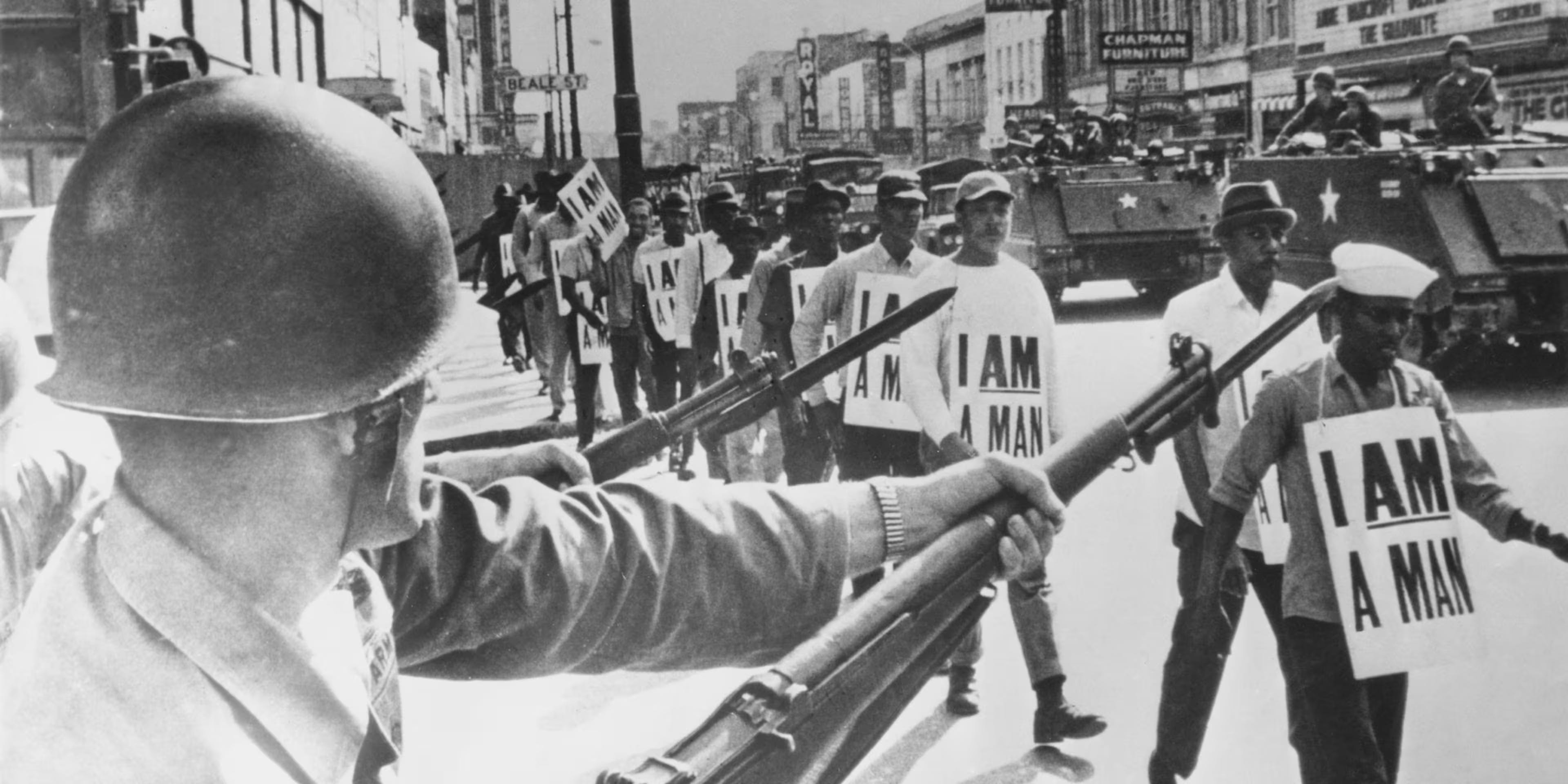
The Poor People’s Campaign Dr. King was building when he died was the thesis made visible. It grew from the Black freedom struggle, but it refused to stop there. King envisioned poor Black people, white Appalachians, Mexican Americans, Puerto Ricans, Native Americans, farmworkers, and others whom the economy had abandoned acting together. That was what made the campaign so threatening. It challenged an order that could tolerate limited reform more easily than it could tolerate poor and working people recognizing one another.
Delano, California, revealed the same pattern through different lives.
On September 8, 1965, roughly fifteen hundred predominantly Filipino farmworkers affiliated with the Agricultural Workers Organizing Committee walked out of the grape fields under the leadership of Larry Itliong and others. [13]
The growers knew how to defeat them. They would bring in Mexican and Mexican American workers to replace them, using one exploited community to break another.
Larry Itliong asked the predominantly Mexican American National Farm Workers Association to join the strike. Its leaders knew the young organization was not ready. Joining could bankrupt it. Refusing could make its members the weapon used against the Filipino workers.
On September 16, the membership voted to join.
The workers refused the role the growers had written for them. They would not become one another’s replacements.
Then they carried the struggle beyond Delano. Churches, students, civil rights organizations, labor unions, and consumers joined the boycott. A confrontation in California’s vineyards became a moral decision in grocery stores across America. People who would never enter a grape field used the power they possessed where they lived.
Labor rights. Civil rights. Consumer power. Protection from pesticides. Different constituencies carrying the same struggle.
Not a merger. Not one organization. Not agreement about everything.
Each group brought what it had. Each acted where it could. Together, they made the growers’ refusal more expensive than recognition.
That is convergence.
Sources:
Cleveland Plain Dealer, June 23, 1969; Time, “America’s Sewage System and the Price of Optimism,” August 1, 1969; David and Richard Stradling, Where the River Burned: Carl Stokes and the Struggle to Save Cleveland.
Mine Safety and Health Administration, “1968 Farmington Explosion Anniversary”; West Virginia Encyclopedia, “Farmington Mine Disaster.”
Michael Honey, Going Down Jericho Road: The Memphis Strike, Martin Luther King’s Last Campaign; AFSCME Local 1733 strike, February 12, 1968.
United Farm Workers, Delano grape strike histories, September 8, 1965 – July 29, 1970. https://ufw.org
In Chicago, a twenty-one-year-old named Fred Hampton was helping build something called the Rainbow Coalition.
The Black Panthers. The Young Lords, a Puerto Rican organization. The Young Patriots, poor white Appalachian migrants living in Uptown, some of whom had worn Confederate flag patches on their jackets.
Sit with that arrangement for a moment.
Then ask who benefited from keeping those three communities afraid of one another, fighting one another, and out of the same room.
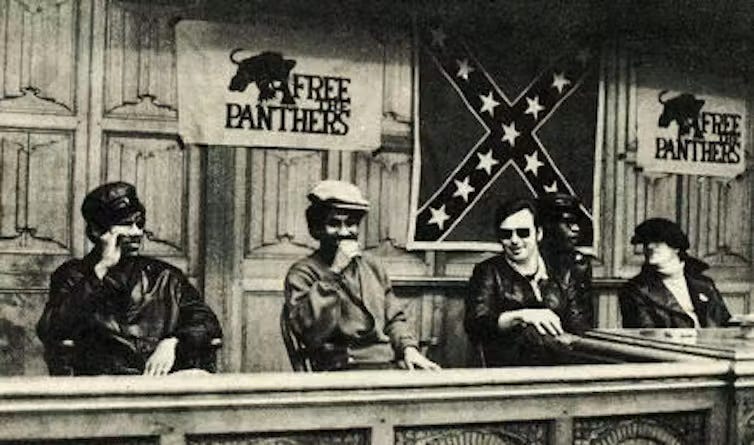
On December 4, 1969, 14 police officers raided Hampton’s apartment before dawn. They killed Mark Clark, who was twenty-two. They killed Fred Hampton in his bedroom. Police fired more than eighty rounds. The physical evidence identified only one shot from a Panther weapon, apparently discharged when Clark was struck and fell.
The officers knew the apartment’s layout. William O’Neal, an FBI informant embedded in the Panthers, had helped prepare a detailed floor plan identifying the rooms, their occupants, and the bedroom where Hampton slept. The FBI passed that intelligence to local law enforcement before the raid. [14] The litigation that followed lasted more than a decade and ended in a $1.85 million settlement paid jointly by the federal government, Cook County, and the City of Chicago.
Fred Hampton was twenty-one years old. He had led the Illinois Black Panthers for barely a year. He had already created free breakfast programs, negotiated peace among rival gangs, and helped bring poor Black, Puerto Rican, and white communities into an alliance.
That was the threat.
The broader campaign against movements like Hampton’s was not an isolated abuse. It was part of a documented federal program, and it had a name.
COINTELPRO.
From 1956 to 1971, the FBI conducted covert operations intended not merely to investigate political organizations, but to disrupt, discredit, divide, and neutralize them. Forged letters. Anonymous accusations. Informants placed inside leadership. Pressure on employers and landlords. Fabricated claims that activists were informants, traitors, thieves, or sexual predators. Carefully planted suspicions designed to make people fear the person standing beside them. [15]
COINTELPRO targeted several movements, but Black organizations received particular attention. FBI memoranda described preventing the emergence of a leader capable of unifying and energizing them as an explicit objective.
In November 1964, the FBI sent Martin Luther King Jr. a package containing surveillance recordings and an anonymous letter. It told him that he was finished. It warned that his private life would be exposed. It said there was only one thing left for him to do and gave him thirty-four days to do it. The message was unmistakable: kill yourself before we destroy you.
It arrived shortly before King traveled to Oslo to accept the Nobel Peace Prize. [16]
Another FBI memorandum proposed creating the impression that an agent stood behind every mailbox. The purpose was psychological. Make every organizer wonder who was listening. Make every leader suspect the people closest to them. Make communication dangerous and trust impossible.
Be clear about what this accomplished. It inflicted terrible damage.
Organizations were fractured. Leaders were discredited. People lost jobs, homes, friendships, freedom, and sometimes their lives. Movements spent years fighting suspicions the government had deliberately manufactured.
The Chicago Panthers never recovered what had been taken from them.
But the direction survived because it had never belonged to one leader or one organization.
The FBI wiretapped King, tried to destroy his standing, and attempted to turn religious leaders, journalists, donors, and allies against him.
The Voting Rights Act passed anyway.
King was murdered in Memphis on April 4, 1968. Six days later, the House passed the civil-rights legislation containing the Fair Housing Act. President Johnson signed it the following day. King did not live to see it become law.
But the pressure he helped build did not die with him.
Power could destroy leaders. It could cripple organizations. It could delay victories and make the price of participation feel unbearable.
What it could not easily destroy was a direction held across thousands of churches, unions, neighborhoods, campuses, courtrooms, newsrooms, and individual acts of courage.
How the COINTELPRO Secret Broke Open
On the night of March 8, 1971, much of America was watching Muhammad Ali fight Joe Frazier. In Media, Pennsylvania, eight people broke into a small FBI office. They called themselves the Citizens’ Commission to Investigate the FBI. They had no national institution behind them, no wealthy donors, no payroll, and no movement headquarters authorized to act in their name. They took approximately one thousand documents and mailed copies to selected journalists and members of Congress.
One of those documents contained an unfamiliar word:
COINTELPRO. [17]
The FBI had used that word internally for years. Most Americans had never heard it, and the Bureau offered no meaningful public explanation.
Carl Stern, NBC’s Justice Department correspondent, found the acronym in one of the stolen documents and began asking what it meant. Officials refused to tell him. He pursued the question through the Justice Department and eventually filed a lawsuit under the Freedom of Information Act.
In September 1973, federal judge Barrington Parker ordered the government to release key documents describing the program.
On December 6, Stern reported to the country that the FBI had operated a nationwide effort to disrupt and neutralize domestic political movements.
In January 1975, the Senate created the committee that became known as the Church Committee. Its investigation exposed decades of surveillance, infiltration, disruption, and abuse by American intelligence agencies.
Count the links in that chain.
Eight citizens acting together in secret. A journalist who never met them. A judge. A Senate committee.
No headquarters directed the entire sequence. No common organization selected every participant. No single authority approved the next step.
Each acted independently. Each carried the truth far enough for someone else to carry it farther.
The FBI had built a hidden network to isolate movements and destroy trust. A loose chain of citizens and institutions brought that network into daylight.
That, too, was convergence.
Sources:
Hampton v. Hanrahan, 600 F.2d 600 (7th Cir. 1979); Chicago Reader and contemporaneous coverage of the December 4, 1969 raid and the 1982 settlement.
Senate Select Committee to Study Governmental Operations (Church Committee), Final Report, Book III, 1976. https://www.intelligence.senate.gov/resources/intelligence-related-commissions
FBI “suicide letter” to Martin Luther King Jr., November 1964; released in unredacted form by the National Archives, 2014.
Betty Medsger, The Burglary: The Discovery of J. Edgar Hoover’s Secret FBI, 2014.
The cleanest case study of loosely coupled convergence in American history may be April 22, 1970.
Senator Gaylord Nelson, a Wisconsin Democrat, envisioned a national environmental teach-in. He recruited Pete McCloskey, a Republican congressman from California, as co-chair and asked twenty-five-year-old Denis Hayes to organize it.
Hayes left graduate school and assembled a national staff of eighty-five. [18]
They built coordination, not command.
The national team chose a date, spread information, recruited participants, and gave thousands of communities a reason to act at the same time. It did not hand every town an approved program or wait for permission from a central authority.
Students organized teach-ins. Churches held services. Scientists gave lectures. Unions, neighborhood organizations, conservationists, farmers, teachers, and families created events reflecting the environmental threats where they lived.
Different places. Different organizations. Different demands.
One day. One direction.
Twenty million Americans participated, nearly ten percent of the country’s population, on a Wednesday.
In New York City, Mayor John Lindsay closed Fifth Avenue from Fourteenth Street to Fifty-ninth Street, and the people filled it. Across the country, rallies, teach-ins, marches, and community events made the first Earth Day the largest organized demonstration in American history to that point. [18]

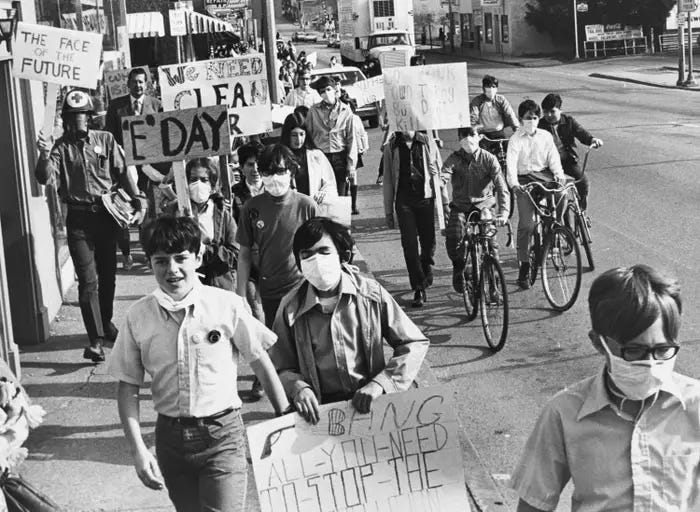
Earth Day did not single-handedly create the environmental laws that followed. Scientists, organizers, communities, legislators, and conservation groups had worked for years to expose pollution and demand federal action.
Earth Day did something indispensable. It made the constituency visible.
By the end of 1970, the Environmental Protection Agency existed and the modern Clean Air Act had become law. The sweeping Federal Water Pollution Control Act Amendments, commonly known as the Clean Water Act, followed in 1972. The Endangered Species Act followed in 1973.
The Clean Water Act deserves its own paragraph because Richard Nixon vetoed it.
He called its twenty-four-billion-dollar price tag “unconscionable” and appealed for one-third plus one member of either chamber to sustain his veto. [19] That same day, the Senate overrode Nixon, fifty-two to twelve. The following day, the House did the same, two hundred forty-seven to twenty-three.
The president said no. The political pressure built beneath him had already changed the arithmetic. Twenty million people had not joined the same organization. They had not adopted the same platform, accepted the same leadership, or agreed about every environmental question. They had made one fact impossible to ignore: the public would no longer quietly absorb the cost of private pollution.
No headquarters commanded them. But Congress heard them.
That is what convergence does. It turns rising concern into a political cost power can no longer afford to ignore.
Sources:
Earthday.org and Harvard Gazette interviews with Denis Hayes on the first Earth Day, April 22, 1970. https://www.earthday.org/earth-day-50-years-on-qa-with-denis-hayes-coordinator-of-the-first-earth-day/
Richard Nixon, “Veto of the Federal Water Pollution Control Act Amendments of 1972,” October 17, 1972. https://www.presidency.ucsb.edu/documents/veto-the-federal-water-pollution-control-act-amendments-1972; override votes October 17–18, 1972.
Richard Nixon did not create the Environmental Protection Agency out of reverence for rivers. He did not sign OSHA because he lay awake worrying about a machinist’s hand, or Title IX because he was devoted to equality for women and girls.
This was a president who kept an enemies list, authorized illegal surveillance, and used the machinery of government against his opponents. Yet some of the most consequential environmental, workplace, and educational protections in American history became law during his presidency.
Not because power had suddenly developed a conscience.
Because refusal had become more expensive than action.
The history of OSHA shows how that arithmetic worked, though not as a simple transaction.
The fight for federal workplace protections had begun years before the Hard Hat Riot. Nixon had proposed his own, weaker workplace-safety plan in 1969. Organized labor opposed important parts of it and pressed Congress for stronger enforcement.
Then, in May 1970, Nixon saw another political opportunity.
Seven months before he signed the Occupational Safety and Health Act, construction workers attacked antiwar students in lower Manhattan. Twelve days later, as many as 150,000 construction workers and supporters marched through the city in support of Nixon’s war policies.
On May 26, Peter Brennan of the Building and Construction Trades Council brought twenty-two union leaders to the White House and presented Nixon with a hard hat. Nixon’s private response was, “Thank God for the hard hats.” His administration immediately began working to convert that support into votes for 1972. [20]
That December, Nixon signed OSHA into law.
The hard hat did not purchase the legislation. OSHA was the product of years of organizing, testimony, worker pressure, congressional struggle, and political compromise. But Nixon understood that working people had become a constituency he needed. He saw a bloc worth courting and an issue on which federal action had become politically valuable.
The environmental movement gained leverage by making twenty million people visible in the streets. Labor gained leverage by becoming a constituency Nixon could not afford to dismiss.
Different routes. Same arithmetic.
Organized pressure does not require power to become moral.
It changes the price of saying no. That arithmetic is in front of us again.
Our first objective is defensive.
The SAVE America Act passed the House 218–213 on February 11, 2026. In March, a Senate cloture vote connected to the legislation failed 53–47, seven votes short of the sixty required. Its supporters are now demanding that the Senate abolish the filibuster or find another way around it. [21] What happens next will depend partly on political cost: whether senators believe supporting voter suppression inherent in the Act will strengthen their power or threaten their political futures.
Our convergence must make that choice expensive.
The second objective is November 3.
It is not to persuade those who have repeatedly demonstrated contempt for democracy, justice, and equality. It is to replace them with a Congress that will defend those principles and honor its oath of office.
In the 1960s and 1970s, loosely coupled movements communicated through mimeograph machines, church basements, union halls, newsletters, telephone trees, and long-distance calls they could barely afford. They lacked our speed. They lacked our reach. They lacked the ability to speak instantly across a country.
What they possessed was the discipline to use what they had in the same direction.
We possess tools they could scarcely have imagined.
What remains to be seen is whether we possess their courage, patience, and will.
Sources:
David Paul Kuhn, The Hardhat Riot: Nixon, New York City, and the Dawn of the White Working-Class Revolution; Rick Perlstein, Nixonland; New York Times contemporaneous coverage of the May 20, 1970 march and the May 26, 1970 White House meeting.
H.R. 22 and the SAVE America Act, 119th Congress; House roll call, February 11, 2026; Senate cloture vote, March 2026.
Not agreement. Not friendship. Five things.
A political platform asks people to negotiate every difference before they can act together. A direction asks a simple question: Are we moving toward democracy, justice, equality, dignity, and shared power, or away from them?
You can move in a direction with someone whose position on Gaza, guns, charter schools, or a hundred other questions might end a dinner party. You do not have to resolve every disagreement before defending the right to vote, opposing authoritarian power, protecting a targeted community, or demanding that the law apply equally to everyone.
Convergence does not require organizations to surrender their names, leadership, donors, culture, or priorities. It requires dependable ways to exchange information, share resources, defend people under attack, and show up when another struggle reaches a decisive moment. Support the fight that may not appear to be yours. Bring what you can. Then return to your own work, stronger because neither of you had to stand alone. That is not a merger. It is convergence.
The first Earth Day succeeded because national organizers coordinated a date and a direction without dictating every local action. A town in Nebraska did not need Washington to tell it what its river, air, school, workplace, or neighborhood required. Share the direction. Let communities determine how to move toward it. Local knowledge is not an obstacle to convergence. It is what makes convergence real.
The conservative institutional movement was not built to win one election. Its donors and organizers funded legal networks, think tanks, academic programs, media outlets, leadership pipelines, and political organizations. Then they funded them again the next year, and the year after that, through defeats, scandals, and administrations of both parties.
Conservative institutions multiplied. The direction remained.
That sustained investment helped shape the courts, Congress, the media, and the boundaries of what American politics considered possible.
We must defend the next election while building institutions capable of surviving the next generation and those yet to come.
In 1970, much of the connective tissue of public life ran through union halls, churches, campuses, neighborhood organizations, local newspapers, libraries, and public meeting rooms. Those institutions were imperfect. Many excluded people and reflected the prejudices of their time. But much of that infrastructure was rooted in communities rather than engineered to monetize outrage, anger, and division.
Today, much of our public conversation passes through systems controlled by a small number of corporations and billionaires. Their profits grow with our attention, and conflict holds attention better than cooperation. The places where convergence might occur have been designed to divide us, provoke us, surveil us, and sell our data.
A democratic movement cannot permanently depend on infrastructure owned by people who benefit from its fragmentation.
We must build and sustain public-interest alternatives: independent journalism, civic technology, community organizations, libraries, unions, faith networks, local gathering places, and trusted digital spaces where people can find one another without being manipulated or sold.
Convergence does not ask us to become one thing.
It asks us to build enough shared direction, reciprocal courage, and common infrastructure that power can no longer isolate us one struggle at a time.
The wedge wins by making every fight look separate.
Convergence begins when we refuse to fight alone.
Take an inventory of the ordinary morning you just had.
The air outside your window is cleaner than it would have been before the Clean Air Act. The water from your tap is tested against enforceable standards, and your community has a right to know what is in it. Someone you love may receive medical care through Medicare or Medicaid.
The bald eagle, reduced to 417 known nesting pairs in the lower forty-eight states in 1963, came back.
None of that was inevitable. None of it was handed down by leaders who suddenly discovered wisdom or compassion. It was earned against fierce political resistance by people who organized, marched, struck, litigated, boycotted, voted, and refused to go home. They often distrusted one another. They belonged to different movements and marched under different banners. Some had fought one another in the street.
Still, their pressure moved in the same direction long enough to change the conditions of an ordinary American life. And not one of those victories is self-sustaining. A right requires enforcement. A standard requires updating. A program requires funding. An agency requires scientists, inspectors, attorneys, nurses, administrators, and public servants willing and able to carry out the law.
Remove the staff and the law can remain on the books while becoming nearly meaningless. That is repeal without a roll-call vote.
It is quieter than overturning a law, cheaper than winning an argument, and harder for the public to see. The protection remains in name while its capacity to protect disappears. That process has been underway for the last 18 months.
The Trump-Vance administration has ordered large-scale reductions across the federal workforce and is dismantling environmental protections the government itself once credited with cleaner air, safer water, and longer lives. It is supported by the cowardice of a Republican Congress that has repeatedly declined to defend the independence and capacity of the institutions it is responsible to oversee, and by the Roberts Court that has narrowed the federal government’s power to protect the public against the interests of private enterprise.
Trump is not incidental damage to the American system. He is one result of the architecture described in the previous article: decades of concentrated wealth, institutional investment, deliberate division, and redirected anger. The machine did not begin with him. It produced the conditions in which someone like him could rise, return, and govern with fewer restraints.
History does not honor the movements of the 1960s and 1970s because their members were right about everything. They were not. It does not honor them because they achieved unity. They did not.
It remembers them because enough people applied enough pressure in a shared direction, for long enough, to move the country toward democracy, justice, equality, and human dignity.
Working people also possessed forms of collective power we have allowed to erode. At the beginning of the 1960s, close to three in ten American workers belonged to unions. By the end of the 1970s, the share was closer to one in four. Today, it is one in ten. Wealth followed power upward. In the first quarter of 2026, the wealthiest one percent of American households held 31.6 percent of the nation’s household wealth. The entire bottom half of households held 2.5 percent. [22][23]
And while many measures of public violence are lower than they were half a century ago, our children face a danger that should be unthinkable. In 2022, firearm injuries were the leading cause of death among Americans ages one through nineteen. [24]
We inherited cleaner air, safer water, voting protections, workplace standards, civil rights laws, environmental protections, Medicare, Medicaid, and institutions created to make those promises real.
We did not inherit them permanently.
We inherited the responsibility to defend them.
For fifty years, the architecture of division has taught us to see immigration, climate, reproductive freedom, LGBTQ+ rights, racial justice, labor rights, public education, and voting rights as separate fights competing for limited attention. They are not separate to the people dismantling them. They should not be separate to us.
What earlier generations earned through courage, sacrifice, and convergence can be defended only the same way. Not by agreeing on everything.
By standing together when power expects us to stand alone.
Sources
Bureau of Labor Statistics, union membership rates, 1983–2026; historical union density estimates for earlier years.
Federal Reserve Distributional Financial Accounts, share of net worth held by the top 1 percent, Q1 2026.
CDC WONDER, leading causes of death, ages 1–19, 2022.
Defend the people being told they no longer belong.
The wedge rarely comes for you first. It comes to you as an invitation: accept that someone else is less deserving, less American, less human, and you may remain safely inside. Stand beside the person the wedge was meant to separate. That is defend.
Support the fight that is not yours. A union drive. A school board. A legal defense fund. A threatened library. A community being targeted because power believes the rest of us will look away. Show up not because you have joined every cause or accepted every position, but because no struggle for democracy, justice, or equality should be forced to stand alone. That is support.
Build the infrastructure that belongs to all of us, not Murdoch, Musk, Zuckerberg, Ellison, Trump, Vance, Thiel, or anyone else who profits from keeping us angry, isolated, and divided. Build independent journalism. Trusted civic spaces. Local organizations. Public-interest technology. Networks through which people can find one another, share information, coordinate action, and defend the truth without being manipulated or sold. Our public institutions cannot defend themselves. Our civic infrastructure will not rebuild itself. Both require our attention, our participation, our funding, and our care. That is build.
This is the Architecture of Convergence:
We do not have to agree on everything. We do not have to join the same organization, follow the same leader, or become one thing.
We must become impossible to divide.
If you find this article of value, please do share with friends, associates, & others who have an interest in the content.
Please note that my articles and subscriptions are not paywalled. This stems from a guiding principle -that any meaningful democracy requires an informed, educated, and engaged society. It is also to honor the life of Aaron Swartz.
Aaron held firmly to the belief that research and knowledge intended for the betterment of humanity should be freely shared.
If the problem is extraction, then the response must be construction.
I am building Civic Works and its core platform, civ.works, as a direct alternative to the systems that have captured our data, our attention, and our civic life. This is a 501(c)(3) effort to create infrastructure that serves the public, not exploits it.
The goal is simple and necessary. A subscriber-supported, ad-free civic network where people can access trusted information, engage constructively, and take meaningful action without being tracked, manipulated, or sold.
No ads. No data harvesting. No hidden incentives.
Just people, information, and the tools to participate in a functioning democracy.
This kind of infrastructure will not be built by the same forces that benefit from the current system. It has to be built by us.
That is why we are asking for direct public support.
If this work resonates with you, I am asking you to make a simple commitment. Visit the pledge page and commit to supporting civ.works at launch. A small monthly contribution, combined across thousands of people, creates the independence required to build this platform without compromise.
https://civ.works/pledge/pledge.html
This is not just about funding a project. It is about proving that a different model is possible. One where civic infrastructure is accountable to the people who use it, not the interests that seek to exploit it.
If you believe the current system is failing, this is one way to begin rebuilding it.
And if you cannot contribute financially, sharing this effort with others is just as important.
The system we have was built deliberately.
What comes next can be built the same way.
Aside from writing, mentoring others, and projects related to democracy, economics, and social innovation, I’m dedicated to Civic Works, a 501c3 non-profit organization building and managing technology that blends social networking and civic engagement. Our core effort is around civ.works. When complete, it will be a subscriber-supported, ad-free social network that does not betray subscriber trust by selling or sharing data with marketers or sinister political operatives.
I’m incredibly grateful for all who contribute to the civ.works effort through our secure payment processor, Stripe, and all who help us gain visibility by sharing the project with journalists and others to move the effort forward.
Special appreciation for all who continue to recommend my rants and musings, restack articles that are found to be worthy, and share with friends and family. And the following are some special recommendations for stacks I value -
Liz Oyer, Former DOJ Pardon Attorney
Comments
Nothing yet. Say the first thing.
Sign in to join the conversation.