
When Jeff McMahan, Francesca Minerva and I founded the Journal of Controversial Ideas, we hoped that it would not be needed for very long.
We therefore have mixed feelings about reaching the fifth anniversary of the launch of the journal. On the one hand, we are pleased to continue to give the authors an opportunity to share arguments and ideas that would have been difficult, and in some cases impossible, to publish elsewhere. On the other hand, we were hoping that five years would be enough for freedom of thought and discussion to return to its central role in academia, or, even better, to become its guiding principle.
We are not there yet.
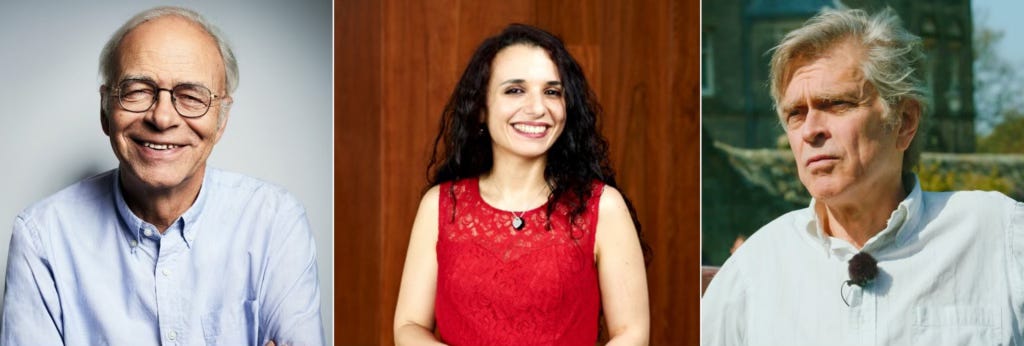
In March 2026, over 2000 people, including students and academics, signed a petition to the University of Ghent urging it not to hire Nathan Cofnas. At least 45 philosophers from the philosophy department at the same university signed a similar petition. The petitions were unsuccessful: Cofnas was hired. But he had previously been the target of an attempt to have him dismissed from his position at the University of Cambridge, and had endured the withdrawal of his fellowship at Emmanuel College.
Why does Cofnas elicit such unwelcoming reactions whenever he moves to a new university? His new colleagues at Ghent argued that Cofnas’s beliefs about demographic differences in average IQ levels are a form of racism, that research on IQ differences is “pseudoscience”, and that the scientific community agrees that this whole area of research is “rubbish”.
This topic is considered taboo, we believe, for the pernicious effects it could have. If some groups have, on average, higher IQ than others, then individual members of groups with a lower average IQ could be discriminated against. This is a genuine concern, and we do not underestimate its importance. But we need to ask ourselves whether, if we are concerned about potential discrimination, trying to prevent research on this topic is the best course of action.
This is the core question of “The Equality Paradox,” the lead paper in the May 2026 issue of the JCI. It is a regrettable sign of the times that the author has felt the need to use a pseudonym, but given the problems that Cofnas has had to face, that is an understandable choice.
The second paper in this issue, by Alan Sokal, asks when we have epistemic and methodological reasons to deny someone an academic platform. Sokal discusses when an area of research can be dismissed as “pseudoscience” or “rubbish”. According to Sokal, when we use a sociological, rather than an epistemic, criterion to address the legitimacy of a researcher, or of a whole area of research, we lack a solid basis for dismissing it.
The point is not that every controversial claim is true, or that every controversial speaker deserves a platform in every setting. The point is that serious claims should be assessed by argument, evidence, and reasoning, not by petitions, reputational pressure, or the desire to make certain questions untouchable.
This problem is not confined to academia.
For my podcast Lives Well Lived, I spoke with Meg Smaker, the documentary filmmaker behind The UnRedacted, formerly known as Jihad Rehab. Her film follows former members of Al Qaeda who had been captured by the US and imprisoned in Guantánamo Bay because of their roles in the September 11, 2001 attack on the World Trade Center and the Pentagon, undergoing rehabilitation in Saudi Arabia. It asks viewers to consider men we have heard much about, but rarely heard from directly.
After the film premiered at Sundance, it became the target of intense backlash and cancellation attempts. There are legitimate questions to ask about any documentary, especially one dealing with terrorism, Islam, detention, rehabilitation, and representation. But asking hard questions about a film is not the same as ensuring that audiences cannot see it and judge it for themselves.
Meg’s case raises the same issue that led us to found the Journal of Controversial Ideas: are we still willing to allow difficult subjects to be examined openly, or do we increasingly prefer to make them untouchable?
I have some personal experience of this. Over the years, some of my own views have led to protests and attempts to prevent me from speaking. That has made me more aware of how easily opposition to a view can slide from legitimate criticism into an attempt to make that view, or the person who holds it, inadmissible.
The fact that some forms of speech may cause offense is not, by itself, sufficient reason to censor them.
We should be especially cautious when our first impulse is to condemn. Before rejecting an argument, we should understand it; before denouncing a film, we should see it; before excluding a speaker or scholar, we should ask whether their claims deserve to be stated openly and then answered by evidence and reason.
Freedom of speech matters most when we are confronted with ideas we find disturbing, offensive, or wrong.
This post includes portions of an editorial co-authored by Francesca Minerva, Jeff McMahan and myself for the May 2026 issue of the Journal of Controversial Ideas: https://journalofcontroversialideas.org/volumes_issues/6/1
Listen to our conversation with Meg Smaker on Lives Well Lived:
Comments
Nothing yet. Say the first thing.
Sign in to join the conversation.