
Kia ora and congratulations on making it to Saturday morning! I’ve got a stacked newsletter for you, so grab a coffee and enjoy my interview with a 22-year-old who hit it big on Spotify at a very young age. First, there are some big headlines to get through…
Lume has landed. The all-local music platform is available on app stores with 25 artists on board, including albums by Bic Runga, Fur Patrol and Dick Move, and exclusive releases by Voom, Isla Noon and Swallow the Rat. Each “lume” costs $24.99 and comes packaged with bonus material like b-sides, videos, live performances and photographs unavailable on other platforms. Earlier this week I became the first journalist to trial the app and found plenty of surprises. You can read my thoughts on The Spinoff.
Australia’s No. 1 song, a cover of Madonna’s Like a Prayer’ by the DJ and producer Josh Fawaz, was made using AI. Backlash grew after an ABC investigation forced Fawaz to add AI credits to his song. The controversy comes as the Australian government vows to protect creatives from AI theft with the creation of an AI Office, The Guardian reports. Your move, Luxon.
Anyone in Tāmaki Makaurau tonight has a smorgasbord of live music to feast upon. The Come Together collective performs Radiohead’s OK Computer at The Civic, both YHWH Nailgun and Billy Woods are at The Tuning Fork in separate, staggered shows, and Daffodils play their new, unreleased album (I’ve heard it; it riiips) at Double Whammy for just $10. Also, if you feel like staring at stars, Stardome Observatory & Planetarium hosts Pink Floyd’s Dark Side of the Moon.
In tour news, Queens of the Stone Age play Spark Arena on December 20 with Primus (tickets are here); Northern Bass has its line-up for a 15th anniversary New Year’s party; Boyz II Men, Salt-N-Pepa and Bell Biv Devoe team up for a one-off Spark Arena show on December 1 (tickets); Razorlight play The Powerstation on October 3 (tickets); and Great Sounds Great adds Beastwars and Pitch Black to its already-stacked one-day festival line-up (tickets).
If you’re looking to take in a movie this weekend, I would absolutely recommend The Odyssey, Christopher Nolan’s epic that pummelled me for three straight hours on Wednesday night. It’s big and weird and fucked-up, a sonic boom of a movie that left my ears ringing and my eyes stinging. See it in iMax so you can experience the full impact of this rumbling beast; it might be a perfect film.
Speaking of films, the NZIFF programme is out and there are several music-related movies in the mix, including a documentary about competitive whistling. Whee!

Early in 2019, Letoaalii Hughes connected a pair of AirPods to his laptop. Sitting in his small bedroom at his sister’s house in Mt Roskill, Hughes was supposed to be doing schoolwork. But he’d loved hip-hop since competing in “friendly diss rap battles” with his mates back in Samoa. Inspired by rappers he’d met online, including Pōneke’s SXMPRA and Te Atatū’s Lil Bubblegum, Hughes made a beat based around a flamenco guitar riff and thick slabs of bass. Then he started rapping over it.
His skills back then, Hughes says, weren’t great. “We were so young,” he says. “It was mixed horribly.” He finished his song quickly, called it ‘Slatnoslime’ then submitted it to the popular YouTube hip-hop curation channel Dolo. At school later that day, he received an email that said, “I put your video up”. On the train ride home, Hughes checked Dolo’s YouTube page. His song had taken off. “It had 40,000 views in an hour. I was showing my friends, like, ‘What the hell is going on?’”
‘Slatnoslime’ now has 3.3 million YouTube streams and many millions more on other platforms. But it is no one-off. Under the name Letoa, Hughes kept making music from his bedroom during Tāmaki Makaurau’s lengthy Covid-19 lockdowns. Those songs racked up huge numbers. A collaboration with LilBubblegum called ‘Guap’ has 38 million streams. ‘Ice Cold,’ a song based around a piano riff and strings, has 36 million streams. ‘E Girl,’ another collaboration with Lil Bubblegum, has 25 million streams. “The numbers don’t lie,” says Hughes.
All those numbers meant money began arriving – fast. At just 16, Hughes received his first big cheque from streaming royalties. He remembers thinking, “Jesus!” “I showed my mum and dad. They were like, ‘Are you sure that’s real?’,” he says. Receiving all that money at such a young age was “a very weird thing for a 16-year-old to go through,” he admits. His sister advised him to save it, and Hughes made a budget. But he struggled to stick to it. “At that age you want to buy all the clothes,” he says. “Naturally, any 16-year-old would have done that.”
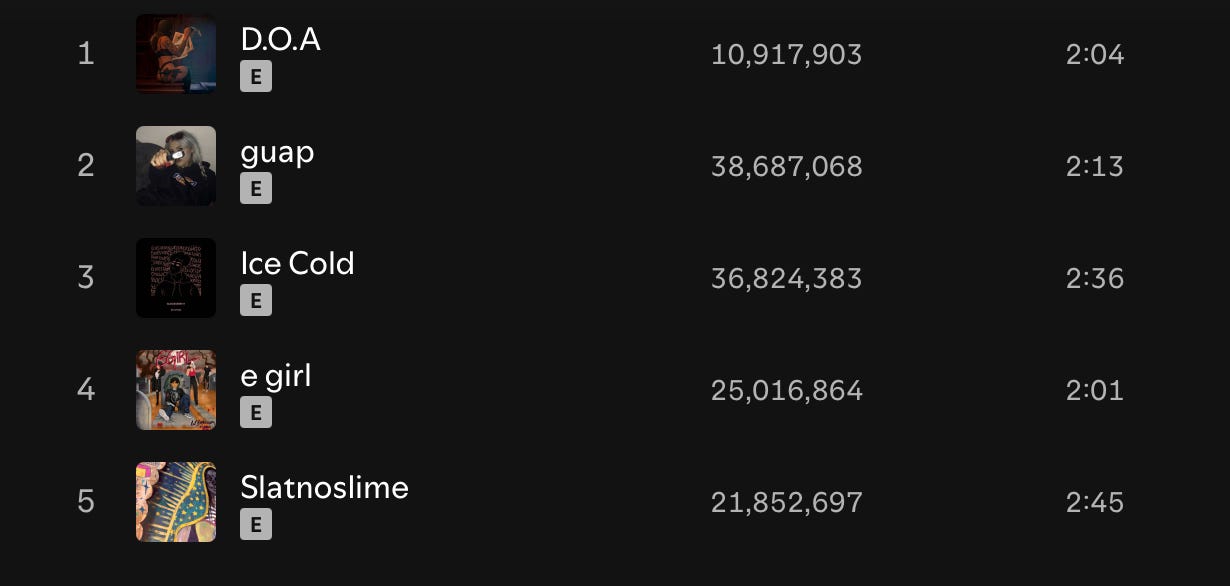
Now 22, Hughes – who calls himself a Samoan, Australian and Aotearoa artist – has crafted a career that would be the envy of many musicians. While many struggle with Spotify and its opaque algorithms and low pay rates, Hughes has made streaming work for him, racking up hit after hit. He has 275,000 monthly listeners, more than household names like Shihad, Tom Scott and Home Brew. He has long since jacked in his job at Footlocker. He doesn’t need it when he estimates ‘Slatnoslime’ still gets 20,000 streams a day.
Hughes clocked Spotify almost by chance. He puts his success down to luck and timing. He grew up as part of the Soundcloud rap – some call it “aesthetic rap” – movement that blew up during the pandemic. “It was definitely rooted in music made in bedrooms,” Hughes says. “Everyone knew each other. Everyone was based online.” He looks back on this time fondly. “I was just skipping school work and making music and talking to my friends. ‘What should we make this song about? Do you want to hop on this song?’ It was a really cool time.”
But becoming a rare Spotify success story doesn’t mean Letoa’s an instant hit across other areas of the music industry. Hughes can’t command huge live audiences. He’s only ever played one headlining show in Aoteaora. Like SXMPRA and Lilbubblegum, Letoa doesn’t receive industry recognition or awards. This, Hughes tells me at his sister’s kitchen table, is his first interview. “My music doesn’t resonate here. It doesn’t catch on,” he shrugs. “My main focus is international. If I moved to Melbourne, my sound would be more welcome and supported.”
So, Hughes is pivoting and chasing a more traditional music career. He’s always released his music as one-off singles to hit the algorithms but last week he released his first full-length album. Called Glocstarr2, it plays with moods, genres and textures, refusing to stick to the aggressive moods of his initial releases. He recently received NZ on Air funding for the first time. He knows the Soundcloud rap era has passed, but he’s grateful for the start it gave him. “One thing I’ve learned as I’ve gotten older is that times change and you have to change with the times,” Hughes says.
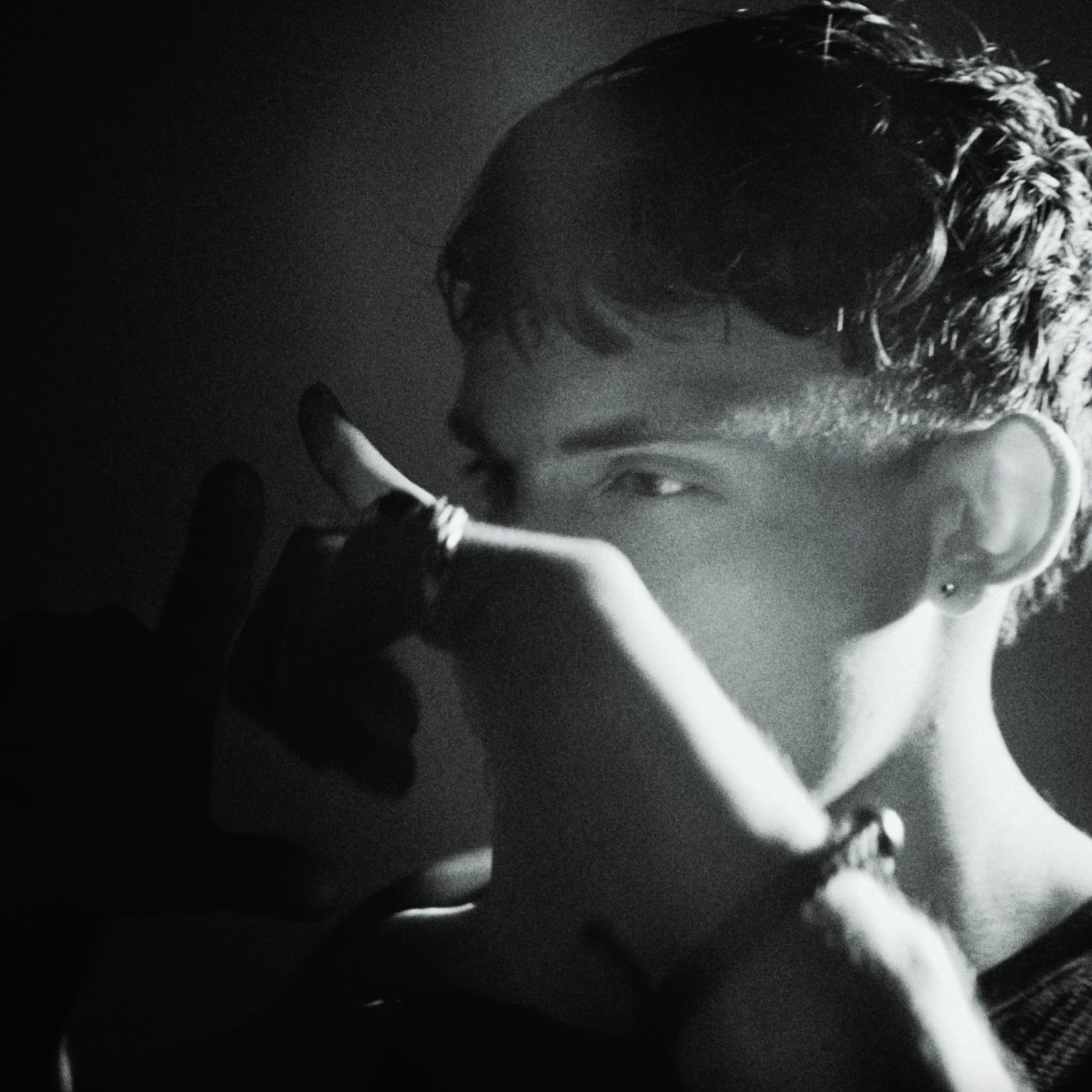
Now, when he meets young fans or fellow artists and they ask him for advice, Hughes tells them this: “Music is one of the most unforgiving industries. It’s based on the people. If they like it, they like it. If they don’t, oh well. There’s a lot of luck involved.” He sighs. “At the end of the day, this is what I want. I have to hustle for it … I don’t know anyone else in Samoa on a laptop making really dark rap music.”
If you’re new here, you can sign up below to receive all of my newsletters direct to your inbox. If you’ve been here a while and it won’t cause financial difficulty, I’d love it if you’d consider supporting me, either through a subscription or a donation. I’m an independent Aotearoa music journalist covering the best and worst and everything in-between of this thorny industry. Thank you to everyone already doing this. We’ll talk again soon!
Comments
Nothing yet. Say the first thing.
Sign in to join the conversation.