
Welcome to Bohring. Here, we look at the universe, life, and science education through a physicist’s lens. If you’re new here, consider joining our community of curious minds:
My premium deep-dives are not just summaries of headlines. Whether I’m breaking down the latest discovery or a historical paper, I don’t shy away from talking about the real thing: mathematics. I know how it feels to understand the conceptual part of a paper and then suddenly hit a wall of integrals or differential equations. And if you open almost any influential physics paper from the last three hundred years, you’ll notice it is written in calculus—a branch of mathematics developed by Newton and Leibniz in the second half of the 17th century.
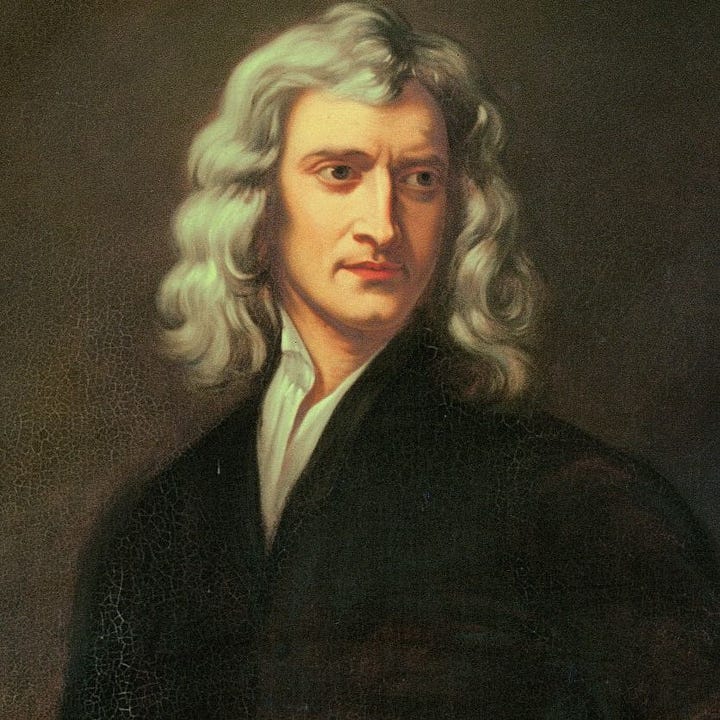
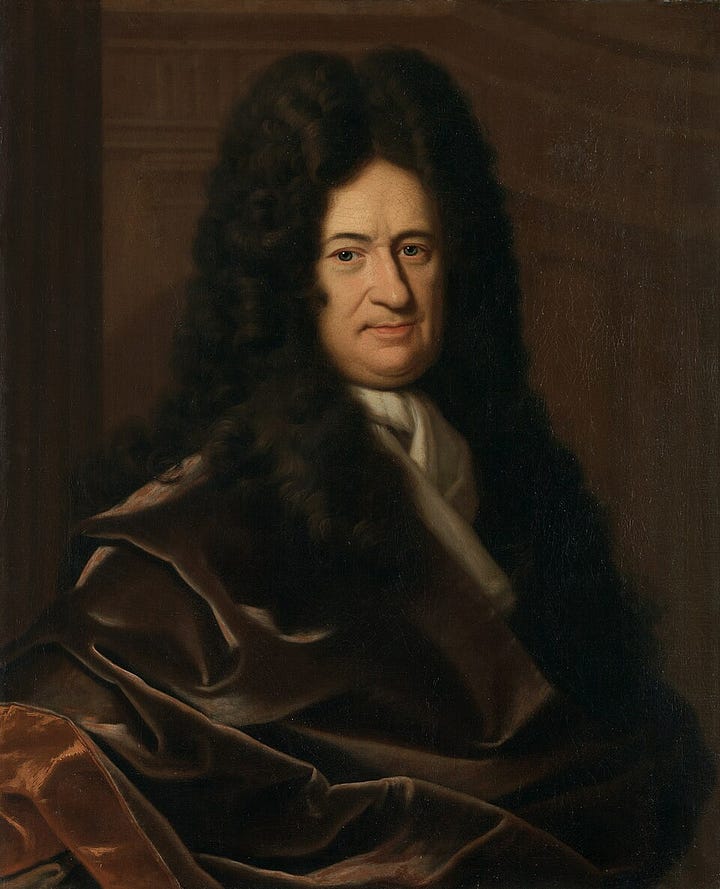
Calculus is simply the mathematical framework designed to handle continuous change by breaking impossible dynamic problems into infinite, microscopic, solvable pieces.
Honestly, this article can go on and on. Calculus is very vast. My aim here is to cover the fundamentals of this topic, which will make it easier for you to understand the papers that I demystify in my deep dives.
Okay, let’s begin.
Standard algebra calculates average change—such as driving 120 miles in 2 hours to average 60 mph. Differential calculus allows us to calculate instantaneous change—for example, exact speed at a split second.
Algebra works smoothly when things stay constant. If a car moves at 60 miles per hour for 2 hours, it travels 120 miles. Simple. Nature, however, is rarely static:
Planets speed up as they loop closer to the Sun and slow down as they move away.
A dropped ball accelerates continuously under gravity.
A hot cup of coffee cools down rapidly at first, then more slowly as it approaches room temperature.
The fundamental laws governing nature—from fluid dynamics and heat transfer to electromagnetism and orbital mechanics—are written in the language of calculus. Building stable skyscrapers, predicting weather patterns, and launching satellites are all impossible without calculus.
Standard algebra can easily calculate areas of uniform shapes like triangles but breaks down when boundaries curve or values fluctuate continuously, which is where calculus comes to our rescue.
Whenever a curve reaches its highest or lowest point, its rate of change briefly hits zero. Calculus uses this property to solve optimization problems, for example, minimizing material cost in manufacturing or maximizing fuel efficiency in aerodynamics.
Algebra can’t help us determine instantaneous values. Why? Because finding a value at a single instant means dividing by zero change in time. Anything divided by zero is undefined.
So what do we do? We use a concept called a limit.
We don’t ask: “What happens exactly at an instant t = t0?”
We ask: “What happens within the infinitesimal time interval (t - ε, t + ε), where ε is very small (very near zero)?”
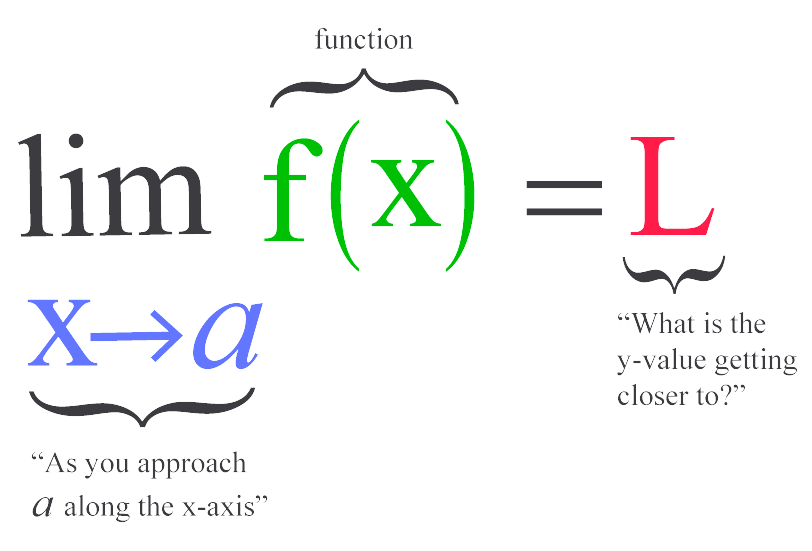
For example, if an object’s position is given by x(t), its average speed over a small time step Δt is:
\(\text{Average Speed} = \frac{x(t + \Delta t) - x(t)}{\Delta t}\)
To find the true instantaneous speed, we take the limit as Δt approaches zero:
\(v(t) = \lim_{\Delta t \to 0} \frac{x(t + \Delta t) - x(t)}{\Delta t} = \frac{dx}{dt}\)
where dx and dt denote infinitesimal distance and time, respectively.
Limits allow us to inspect physical reality under an infinitely fine microscope.
💻 A note for my free community:
This is a premium deep dive for paid Bohring members. Below, I discuss:
The physical meaning and essential formulae to master derivatives and integrals.
The theorem that connects the two processes
The relevance of calculus in physics.
To unlock the rest of this deep dive and support Bohring, consider upgrading to a paid membership!
Comments
Nothing yet. Say the first thing.
Sign in to join the conversation.