
Welcome to Bohring. Here, we look at the universe, life, and science education through a physicist’s lens. If you’re new here, consider joining our community of curious minds:
I know you didn’t expect to see this on a physics blog. But Substack is a place where people aren’t hungry for information alone; they want to connect with the minds behind the writing. I know you want to see what inspires me as a person. Christopher Nolan does. Having waited three long years for this since Oppenheimer, I finally got to experience it.
So, I thought of sharing my experience here with you.
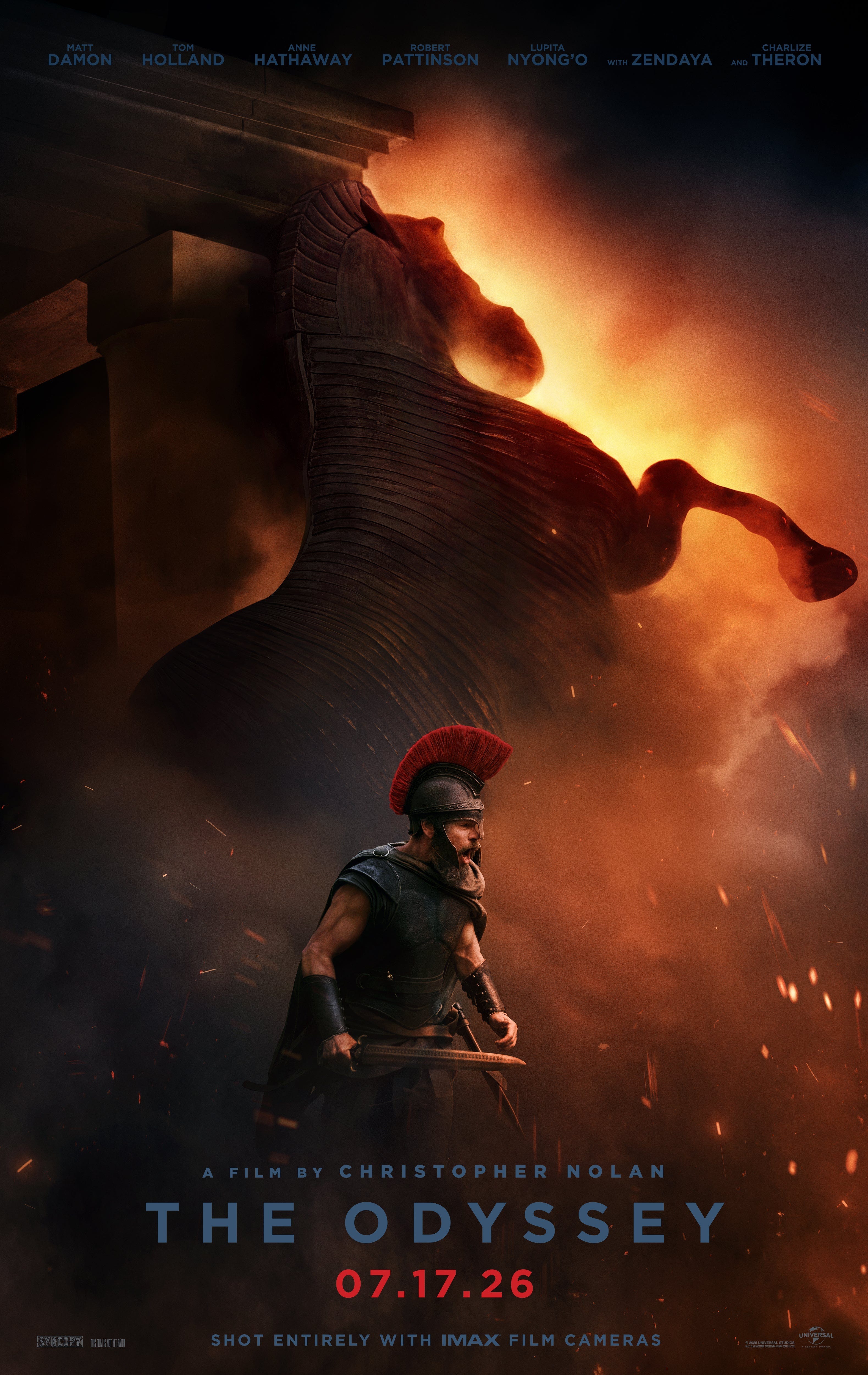
I am not a fan of Christopher Nolan. I am his well-wisher. I am a die-hard admirer of his work. Because of that, I offer honest reviews and genuine criticisms. I want my hero to get better every single time—though, thankfully, he seems to manage that all on his own without any pushing from us.
Before diving in, a few quick notes to establish my context:
Source material: I haven’t read the original book yet, though after walking out of the theater, I immediately ordered the Penguin Classics edition from Amazon.
Venue: I didn’t watch it on IMAX. India doesn’t have a true 70mm IMAX screen, so I caught it at the Cinepolis at Nexus Mall in Amritsar.
Comparison: I will be comparing this directly to his last work, Oppenheimer, because there are striking parallels. Both are adaptations of massive, historically significant books. Both tackle some of the greatest stories in human history. Yet, neither fits the typical “Nolan theme” of sci-fi or psychological thrillers; they are based on narratives many people already know.
And most importantly, there are no spoilers ahead. So feel free to read on!
When The Odyssey was first announced, I was instantly reminded of the exact feeling I had when Oppenheimer was unveiled. The latter marked a massive departure from Nolan’s usual choice of material, given that the story of the atomic bomb was already universally known. Back then, it got me thinking: “How is Nolan going to pull a gripping, unpredictable narrative out of a history book?” Well, we all know how that turned out.
The Odyssey, by contrast, presents a story that is arguably less familiar to modern, global mainstream audiences, so maintaining a sense of mystery wasn’t the primary challenge here. Instead, the project seemed to clash with a defining hallmark of the Nolan brand: grounded realism. For the first time in his career, how on earth was a director obsessed with practical effects and physical reality going to adapt a sweeping piece of ancient mythology?
Nonetheless, my experience with Oppenheimer left me entirely confident that he was about to deliver something marvelous.
Okay, so… let’s begin.
In short, the movie follows Odysseus’s perilous journey back home to Ithaca after the Trojan War, where he and his crew face the wrath of various gods, monsters, and witches. Meanwhile, back home, a handful of aggressive suitors are trying to marry his wife, Penelope, to prevent their son, Telemachus, from inheriting the throne. The core conflict is simple: will Odysseus make it home alive?
Nolan’s approach to the opening is worth noting when compared to his previous film. Oppenheimer begins with a brilliant first shot that instantly establishes its core theme: a young Oppie watching raindrops, mirroring the ripple effect of the nuclear arms race his invention would trigger.
The Odyssey, by contrast, takes some time to set up. It opens with Travis Scott—one of the film’s more controversial casting choices—narrating the story of the long-lost king. The first 20 minutes are pure, slow-burn drama. If you lack the patience necessary to truly appreciate cinema, you might find yourself getting bored early on.
But then, Nolan effectively declares: “How dare you say you are bored by my film? Watch this…”
And oh my god. How do I even describe it? Nolan, Ludwig Göransson, and the entire crew instantly shift into God mode.
The story of The Odyssey is not limited to Odysseus alone. It is a profound philosophy about the real world and the modern human condition.
The first question that naturally arises is this: Why is it so incredibly difficult for Odysseus to just go home? He has just survived and won a brutal, ten-year-long war. The hard part should be over. Returning home should be the easy piece.
Without giving away any spoilers, here is the deeper truth:
The brilliant, ruthless strategy that ultimately won the Trojan War was Odysseus’s own brainchild. But in achieving victory, he broke a very sacred law. In the ancient world, winning by absolute devastation and defying the natural order enrages the divine; in a modern psychological sense, it damages the soul. The wrath of the gods represents the universe striking back against human hubris—the dangerous belief that we can control everything and “win at all costs.” The ten-year journey home isn’t just a physical voyage; it is the agonizingly long penance required to wash away the stains of war before one is allowed to return to peace.
The scenes featuring Circe (played by Samantha Morton) and Athena (played by Zendaya) act as a sharp philosophical commentary on the very nature of men and humanity as a whole.
Once Odysseus’s journey home begins, the film pivots entirely into the fantasy-horror genre. Yes, you heard that right—the rest of the first half is straight-up horror. Nolan did horror! Now I completely understand why people are saying he should direct a full-fledged horror film. Modern horror movies rarely terrify me, but this did. The encounters with monsters, giants, and witches are deeply unsettling.
The second half transitions into a more action-oriented, emotional experience as the puzzle pieces begin to line up. We finally start to understand why certain abstract scenes were placed in the first half.
However, compared to Oppenheimer, The Odyssey’s second half feels like a slight letdown for two main reasons:
The bar was set too high: The first half is simply out of this world—unlike anything ever put on film. Standing against that, the second half naturally feels a bit weaker.
Pacing and Tension: In Oppenheimer’s second half, the successful Trinity test gives way to a gripping political drama. The tension remains sky-high as we watch the war’s aftermath take a heavy toll on Oppenheimer’s career. In The Odyssey, the momentum feels a bit loose and, dare I say, slightly predictable.
This predictability is exactly where Nolan’s non-linear structure saves the day. By scrambling the timeline, he shifts our focus away from what happens next and anchors it to the emotional value of the connections. Even when the tension dips, you remain completely engrossed in watching everything tie back together: from Antinous and Sinon to Penelope and Odysseus’s dog, Argus.
We see the same shots repeated throughout the film, but their meaning shifts entirely as we gain new context and plot details. This technique acts as the emotional glue of the film. Every time an older shot resurfaces, it triggers a spectacular “Oh, okay! So that’s why…” payoff.
The climax fight is quite long but amazingly executed. I just had one minor complaint: at the beginning of the film, Eumaeus teaches Telemachus a specific one-on-one combat strategy. When Telemachus finally has to fight at the end, Nolan doesn’t show a flashback or have him use that exact trick to defeat the enemy. Including that visual callback would have made the earlier training scene feel much more relevant and rewarding.
Finally, the ending marks a fascinating departure from other Nolan films. His stories usually conclude with terrifying, haunting thoughts—like creating your own reality in Memento, remaining trapped in a dream in Inception, or the chilling future of nuclear warfare in Oppenheimer.
By contrast, The Odyssey has a happy ending. Frankly, I wanted the ending to terrify me; I felt it would have been much more effective that way. Then again, maybe there's a deeper layer to it that I didn’t fully grasp on my first viewing.
Make no mistake: The Odyssey is an incredibly emotional film. In fact, I’d dare say it is Nolan’s most emotional work since Interstellar. Odysseus is no ordinary protagonist—many of you might not even consider him a traditional hero at all. He is a cunning, ruthless warrior who will do whatever it takes to survive and make it home. It is his carrying of guilt and tragedy that makes this film so worth revisiting, especially with a few major characters meeting deeply tragic ends (one of which doubles as a massive plot twist).
You don’t usually have to comment individually on the acting in a Nolan film because he always assembles a stellar ensemble cast, but I have to exclusively praise Elliot Page. He completely silenced every critic with this performance. Massive respect to him.
Furthermore, Travis Scott proved to be a perfect casting choice. I honestly cannot imagine anyone else narrating Odysseus’s myths in a way that fills the theater hall better than he did.
When I first saw Oppenheimer, I understood about 80% of it. A Nolan film is seldom fully digested on the first viewing, but in that case, it was also because I wasn’t fully equipped with the historical nuances of the American Communist Party or the mechanics of a congressional security hearing.
I suffered from a similar blind spot here. Having not read the book, it is difficult to grasp the true weight of certain characters, like Athena or the twin sisters (played by Lupita Nyong’o). However, coming in blank also meant I didn’t fall into the trap of constantly comparing the film to its source material; I was experiencing something entirely fresh. Plus, it gives me a perfect excuse to watch it again.
Finally, let’s talk about the theater experience. Nolan has been aggressively pushing audiences to see this on the biggest screen possible. Now I know what he meant.
Even in a standard theater, the sound design was spectacular. Best of all, I didn’t have the usual complaint of inaudible dialogue associated with Nolan’s films. The audio mixing was perfect. The audio design was hypnotic. While extreme loudness can often be a negative point in a film, here, the sheer sonic scale is what makes the horror and tragic scenes so deeply visceral. It conveys the raw, overwhelming wrath of the Gods perfectly. I absolutely loved it.
If I had watched this on a laptop or a phone, I would have entirely missed its brilliance. Once I read the original text, my opinions on specific narrative details might shift slightly. But as for the criticism coming from unemployed internet trolls? It doesn’t matter at all.
Right now, I am in no mood to talk. Even after a night’s sleep, I feel completely engrossed by what I witnessed yesterday. I expect I'll stay stuck in this headspace for a week, at least until the book arrives and I start reading.
This is the standard cycle of a Christopher Nolan release: he makes a film, we watch it, and we walk out feeling like we’ve witnessed something entirely unprecedented. We wonder if he can ever top it. Then he drops his next project and proves that he can do even better. How he manages to consistently deliver films that are entirely out of this world is beyond me. Ranking his filmography is impossible. The man is a genius.
Nolan makes only one film every three years. Genuine greatness takes time, and we should be thankful to him for the cinematic boundaries he keeps pushing.
So if you can afford the price of a ticket, you have two choices: go watch it in a theater or don’t watch it at all. If you choose to stream it on a tiny screen, you honestly have no right to post a review. It is an experience built exclusively for cinema.
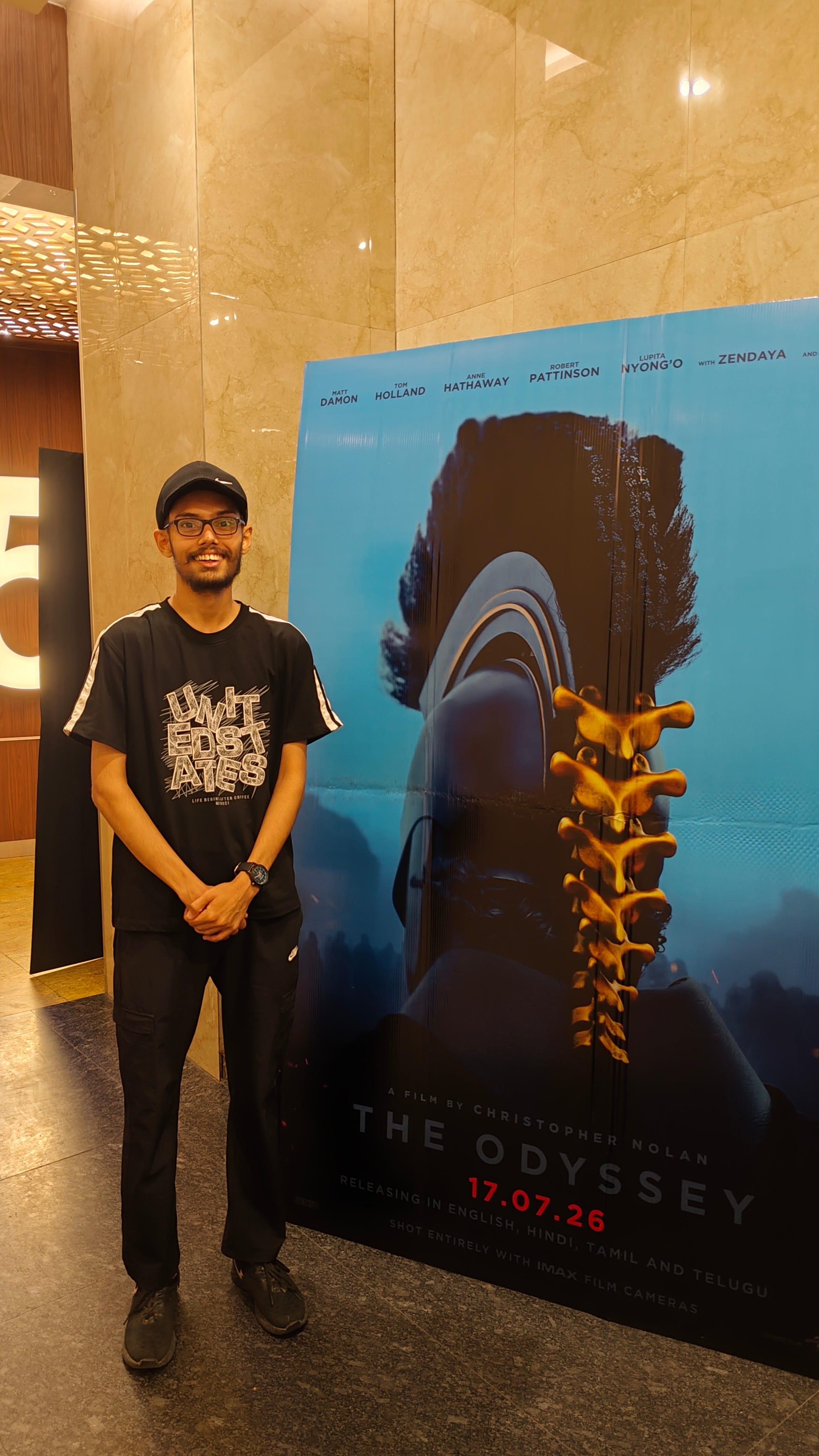
If you have watched it, I’d love to know your experience in the comments below!
You can also follow my movie logs on Letterboxd:
https://letterboxd.com/Samreet_Dhillon/
And yes, I’m back! I was completely buried under rigorous exam preparation recently, but now I will be back to writing regularly. Stay curious!
Thank you for reading. If my reflections resonated with you today and you’d like to support my independent writing without committing to a monthly subscription, you can drop a small tip in my digital jar. It keeps me motivated.
You Can Also Read:
No posts
Comments
Nothing yet. Say the first thing.
Sign in to join the conversation.